Why Is My Peace Lily Not Blooming?
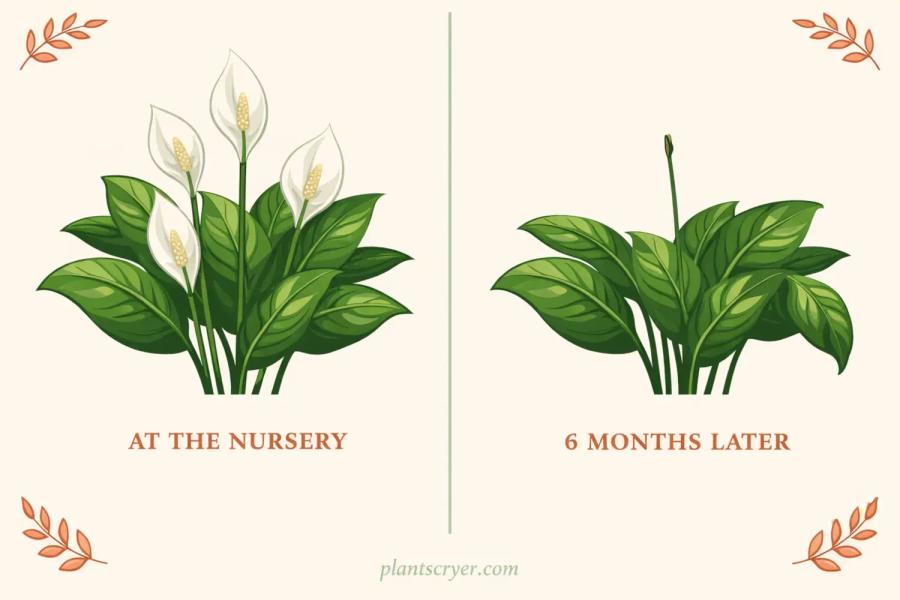
If you bought your Peace Lily in bloom and it hasn't flowered since, there's a reason most care guides skip over: the plant was chemically forced to bloom before you got it.
Garden centers treat Peace Lilies with gibberellic acid, a naturally occurring plant hormone that triggers flowering on demand. Nurseries spray it on the plant, and flowers appear roughly 70 to 110 days later — which is why the plant looked so good in the store regardless of the season. Once those forced blooms finish, the plant returns to its natural rhythm, which is slower and less predictable. Your plant isn't broken. It just needs time to find its footing and bloom on its own schedule.
One more thing worth knowing upfront: larger varieties like Sensation and Mauna Loa are naturally harder to rebloom indoors than smaller compact varieties. If yours is one of these, expectations need adjusting — you may get occasional blooms rather than regular ones, and that's just how that cultivar behaves.
That said, real care conditions determine whether and when your Peace Lily flowers again. Most are fixable.
First: is your plant old enough to bloom?
Peace Lily doesn't flower until it's mature, typically 1 to 3 years old. Young plants put energy into roots and foliage first. If yours is less than a year old, healthy, and not flowering, that's probably just where it is in its life cycle. Give it time.
If the plant is mature and still not blooming, work through the causes below.
1. Not Enough Light
This is the most common reason a healthy, mature Peace Lily won't bloom. The plant survives in low light but needs medium to bright indirect light to have enough energy to produce flowers. Dark corners keep it alive, they don't trigger blooming.
- Leaves are very deep, almost dark green with little new growth
- Plant hasn't bloomed in over a year despite otherwise good care
- Located more than a few feet from any window
Move to a brighter spot. An east-facing window is ideal, or a few feet back from a south-facing one. The light should be bright enough to read comfortably, but no direct sun on the leaves. Give it 6 to 12 weeks before expecting a response.
If natural light is limited, a full-spectrum grow light running 10 to 12 hours a day works well. This is the single highest-leverage change you can make for blooming.
A useful signal: spathes that stay green rather than turning white are a sign of too much light, not too little. White spathes mean the light level is right.
2. Plant Age or Pot Size Issues
Two situations stop blooming that aren't actually problems:
- Too young: Plants under 1 to 2 years old rarely bloom no matter what you do. If yours was small when you bought it, wait.
- Recently moved to a much larger pot: Peace Lily blooms more reliably when slightly pot-bound. Move it into a significantly larger pot and it shifts energy toward filling that new root space rather than flowering. This can delay blooming by a full growing season.
If the plant is young, wait it out. If you recently upsized the pot substantially, give it a full season to settle before expecting flowers. Next time, go up only one pot size.
3. Too Pot-Bound
A mildly pot-bound plant blooms better, but a severely pot-bound one eventually stops. When roots completely fill the container, the plant struggles to take up water and nutrients efficiently even with consistent care.
- Roots growing out of drainage holes or circling the soil surface
- Plant droops within a few days of watering
- No new leaf growth alongside no blooming
Repot into a container 1 to 2 inches wider using fresh indoor potting mix. Do this in spring. Blooming should resume after one growing season.
4. Not Enough Fertilizer
Peace Lily isn't a heavy feeder but it needs nutrients to support flowering, particularly phosphorus. A plant sitting in the same soil for years without feeding will eventually run low.
- Plant hasn't been fertilized in over a year
- Leaves are healthy green but no blooms
- Older foliage looks slightly faded
Feed monthly during spring and summer with a balanced liquid fertilizer at half strength. For a targeted blooming push, look for a formula with a higher middle number in the NPK ratio during spring. Don't over-fertilize — excess nitrogen pushes leafy growth at the expense of flowers.
5. Too Much Fertilizer
Heavy feeding, especially with nitrogen-rich formulas, shifts the plant toward producing foliage rather than flowers. If you've been fertilizing frequently or at full label strength, this may be working against you.
- Lots of lush dark green growth, no blooms
- Feeding more than once a month or at full strength
Flush the soil thoroughly by running water through it for several minutes to clear excess fertilizer salts. Skip feeding for 2 to 3 months, then resume at half strength, spring and summer only.
6. No Seasonal Temperature Shift
Peace Lily naturally blooms in response to seasonal change. In its native habitat, a slight temperature drop signals the start of a flowering period. The natural blooming window runs roughly February through September. In a consistently climate-controlled home with no seasonal variation, the plant may never receive that trigger.
- No blooming despite good light and care
- Room temperature stays the same year-round
- Plant has been in stable conditions for over a year
Give it a mild cool period in late winter. Move it to a slightly cooler room, around 55 to 60°F, for 2 to 4 weeks. Then return to normal conditions and resume feeding. This mimics the seasonal shift that prompts spring blooming. Keep it away from cold drafts and AC vents — those stress the plant rather than trigger it.
7. The Plant Is Under Stress
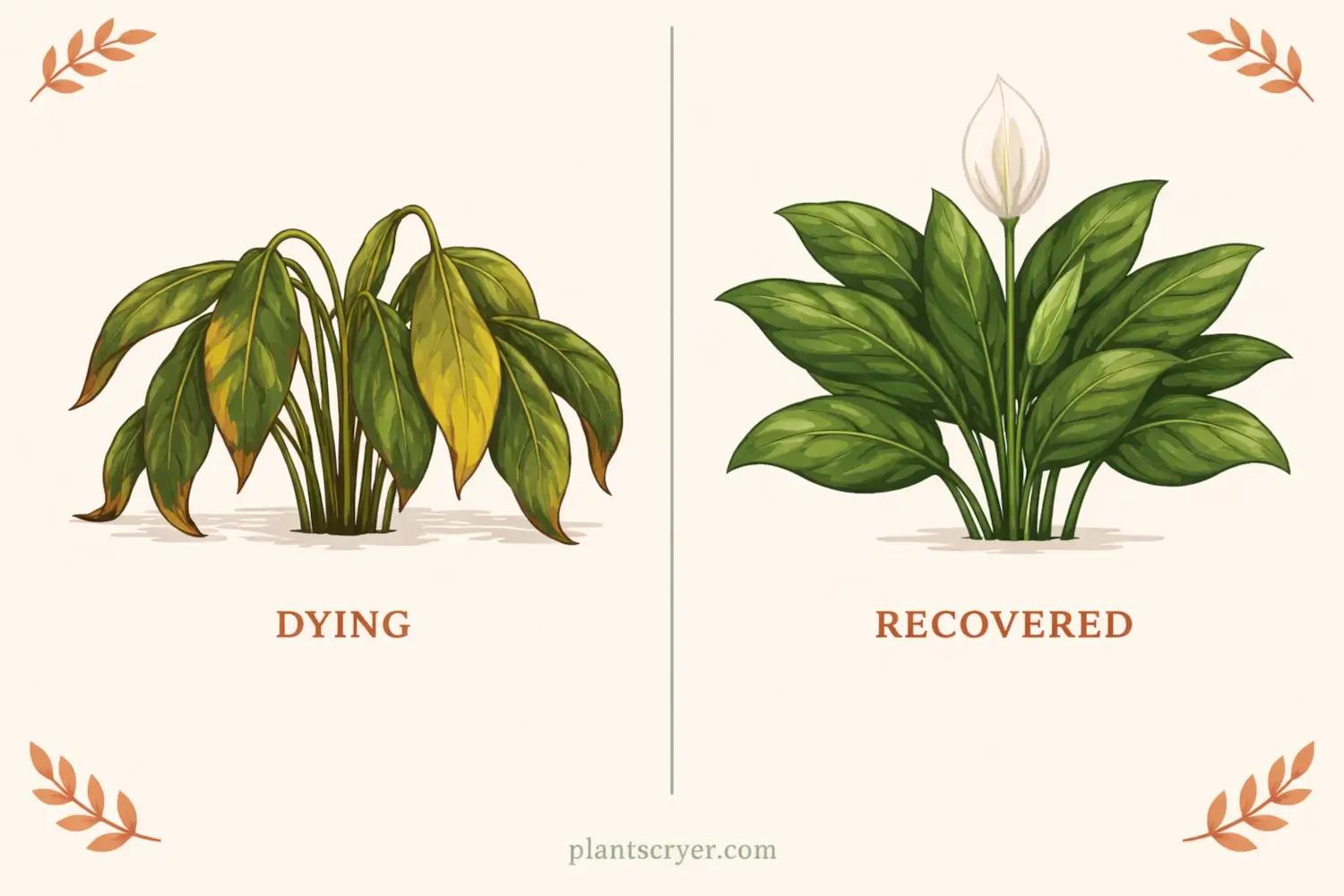
A Peace Lily dealing with pests, root rot, drought, or recent repotting redirects all its energy to survival and stops flowering entirely. If the plant looks unhealthy alongside not blooming, fix the health problem first. Blooming follows once the plant stabilizes.
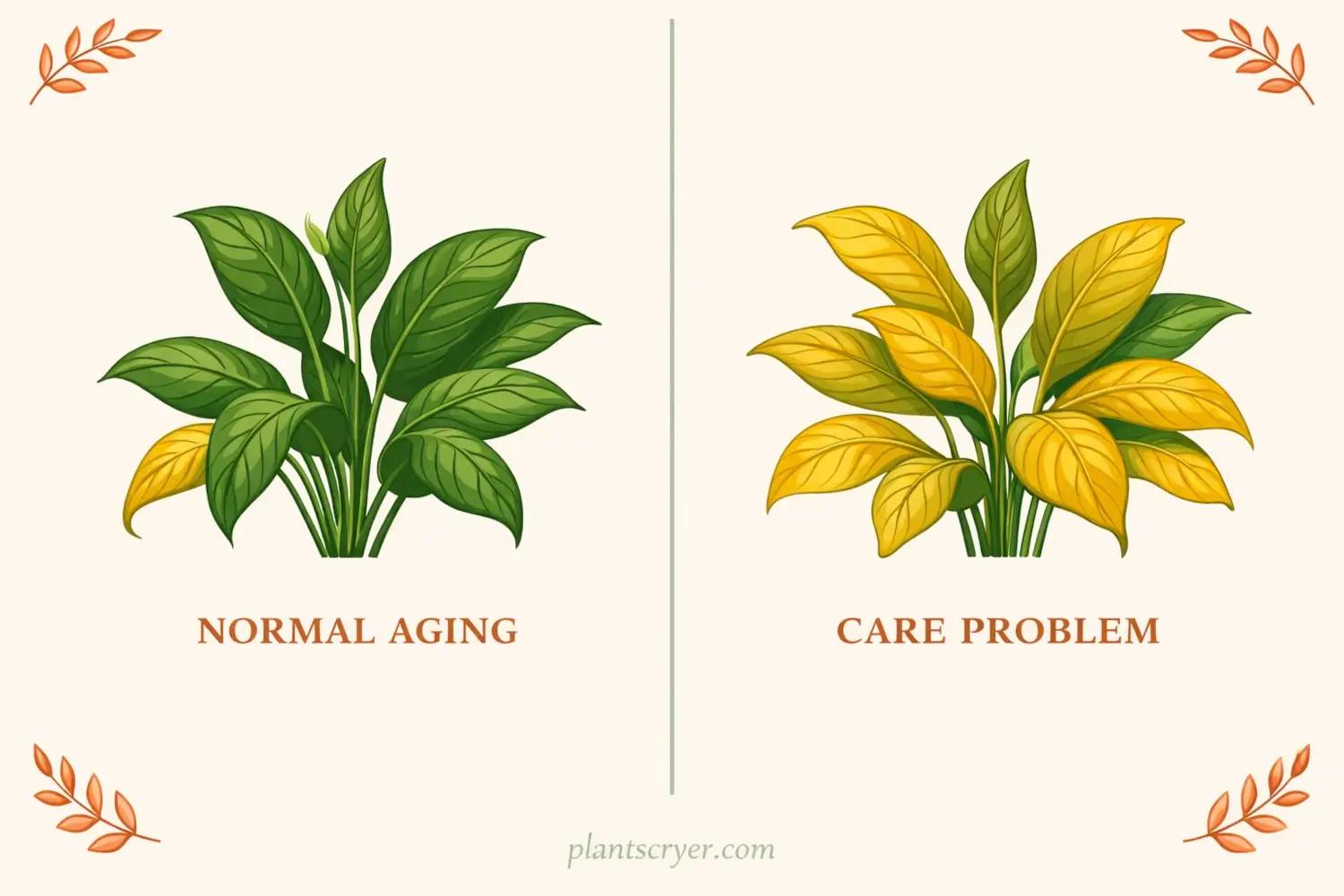
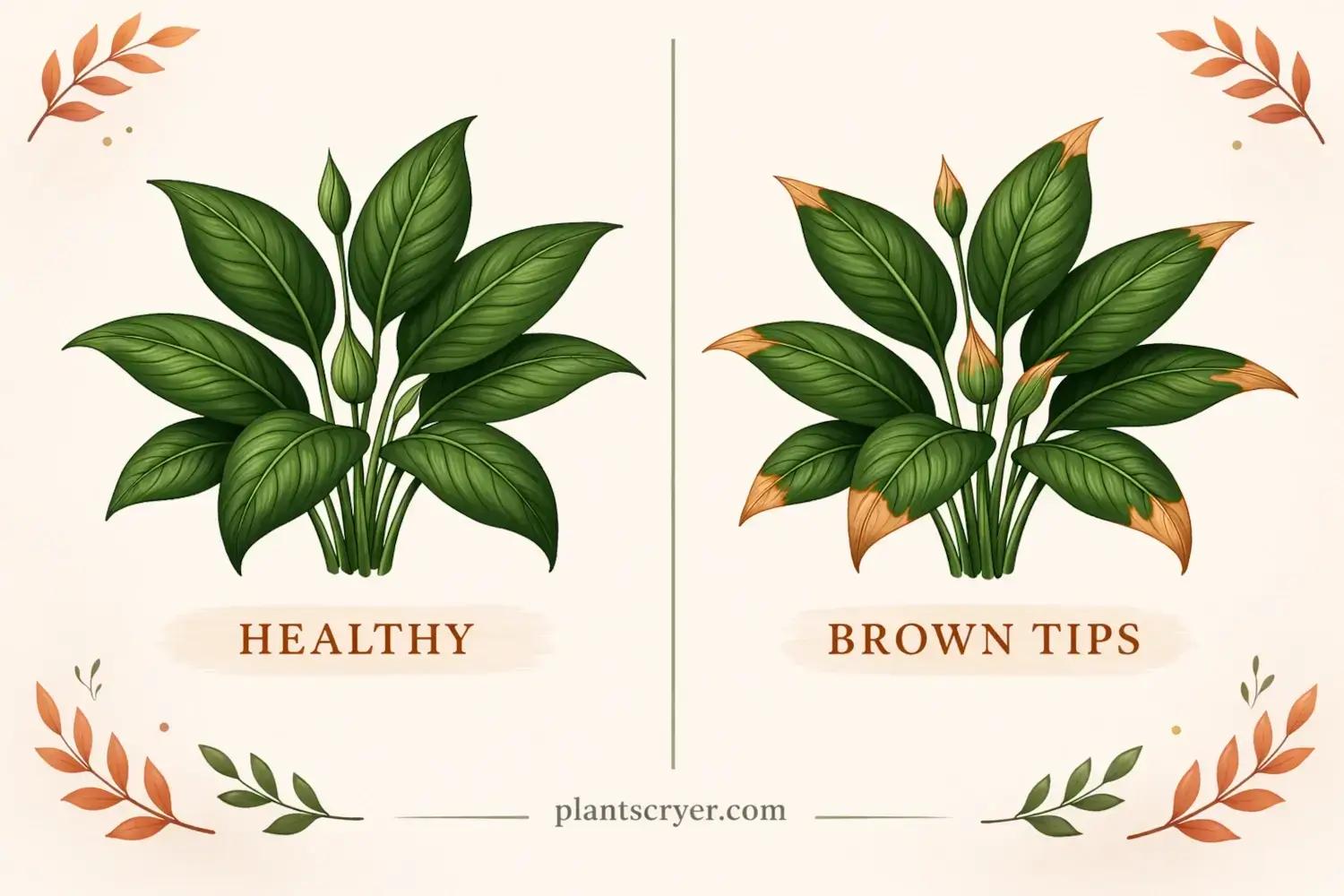
- Yellowing, drooping, or brown-tipped leaves alongside no flowers
- Plant was recently moved, repotted, or treated for pests
Address the underlying issue first. If the plant is drooping, see our Peace Lily drooping guide. For a broader health check, see our Peace Lily care guide. Blooming is something a thriving plant does, not a struggling one.
Full checklist to encourage blooming
If your plant is mature and healthy but still not flowering, work through these in order:
- Move to brighter indirect light — this is the fix most often needed
- Check it's only slightly pot-bound, not severely root-bound
- Feed monthly with a balanced fertilizer during spring and summer
- Try a mild cool period in late winter if room temperature is very stable year-round
- Remove spent spathes promptly by snipping at the base of the stem
- Wait — after changing conditions, allow 6 to 12 weeks before expecting a response
Why are my peace lily flowers green instead of white?
This is a separate but common question. Spathes that stay green or turn green quickly are usually a sign of too much light. The plant produces the spathe but doesn't fully develop it under excess light. Move to slightly less direct light. Green spathes also appear on older blooms as they naturally age — that's normal and nothing to worry about.
Frequently Asked Questions
Under good conditions, once or twice a year. The natural season runs February through September, with spring being the most likely time. Some well-maintained plants bloom more frequently. Plants treated with gibberellic acid at the nursery may never match that initial display, but regular natural blooming is realistic with the right conditions.
Probably not. If it was treated with gibberellic acid before purchase, it needs time to mature and settle before blooming naturally. Focus on getting light, watering, and feeding right, and give it a full growing season. If it's been 2 or more years with no flowers despite good care, light is almost always the cause.
It can help once the plant has enough light to trigger blooming, but fertilizer alone rarely fixes the problem. A plant in a dark corner won't flower no matter what you feed it. Get the light right first, then consider a phosphorus-rich fertilizer as a secondary step.
Yes. Snip finished spathes at the base of the stem once they've faded. Removing spent blooms signals the plant to produce new ones and keeps the plant looking tidy.
Almost certainly the gibberellic acid treatment from the nursery. That first bloom was forced. Natural blooming requires maturity and the right conditions — primarily adequate light. It will bloom again, just on a longer and less predictable cycle.
Technically yes, it's available in small quantities online, but it's tricky to apply correctly. Overapplication can damage the plant or produce distorted blooms. It's not recommended for home use and isn't necessary if conditions are right.
For full care instructions to keep your recovered plant healthy, see our Peace Lily Care Guide.