Why Is My Peace Lily Dying?
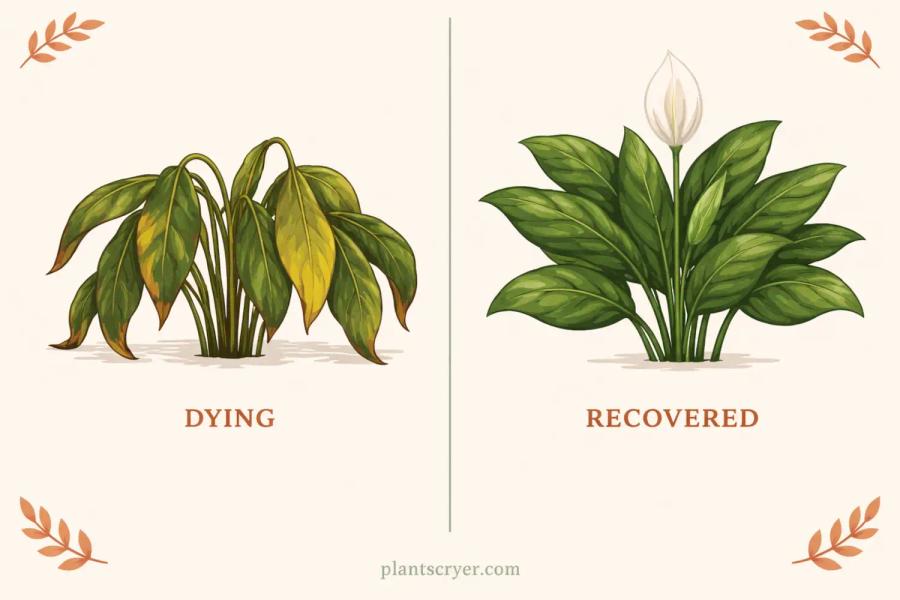
Peace Lily is tougher than it looks. A plant with every leaf collapsed and all foliage brown can sometimes still be rescued if the roots are alive. Before giving up on it, check the roots.
This page covers serious decline — the kind that doesn't bounce back from a single watering. If your plant is drooping but still looks otherwise okay, start with the Peace Lily drooping guide instead. If leaves are yellowing, see our yellow leaves guide. This page is for plants that are genuinely in trouble.
First: is it actually dying?
Some things that look like dying are normal:
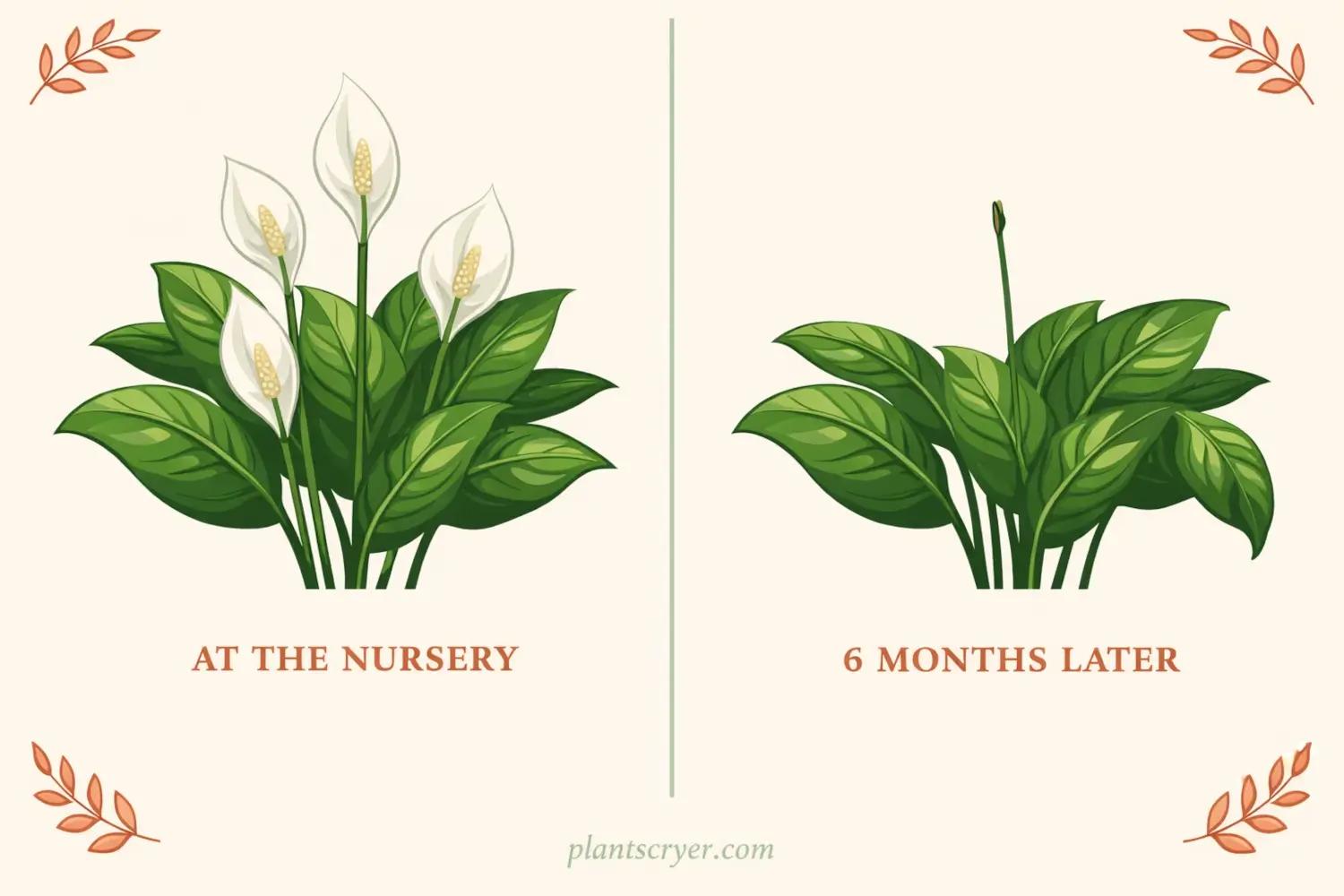
- Flowers turning green then brown — spathes age and die. Cut the stem at the base, this is completely normal.
- A few lower leaves yellowing — natural leaf turnover on older plants.
- Wilting after moving or repotting — likely transplant shock. Give it 2 to 4 weeks before assuming the worst.
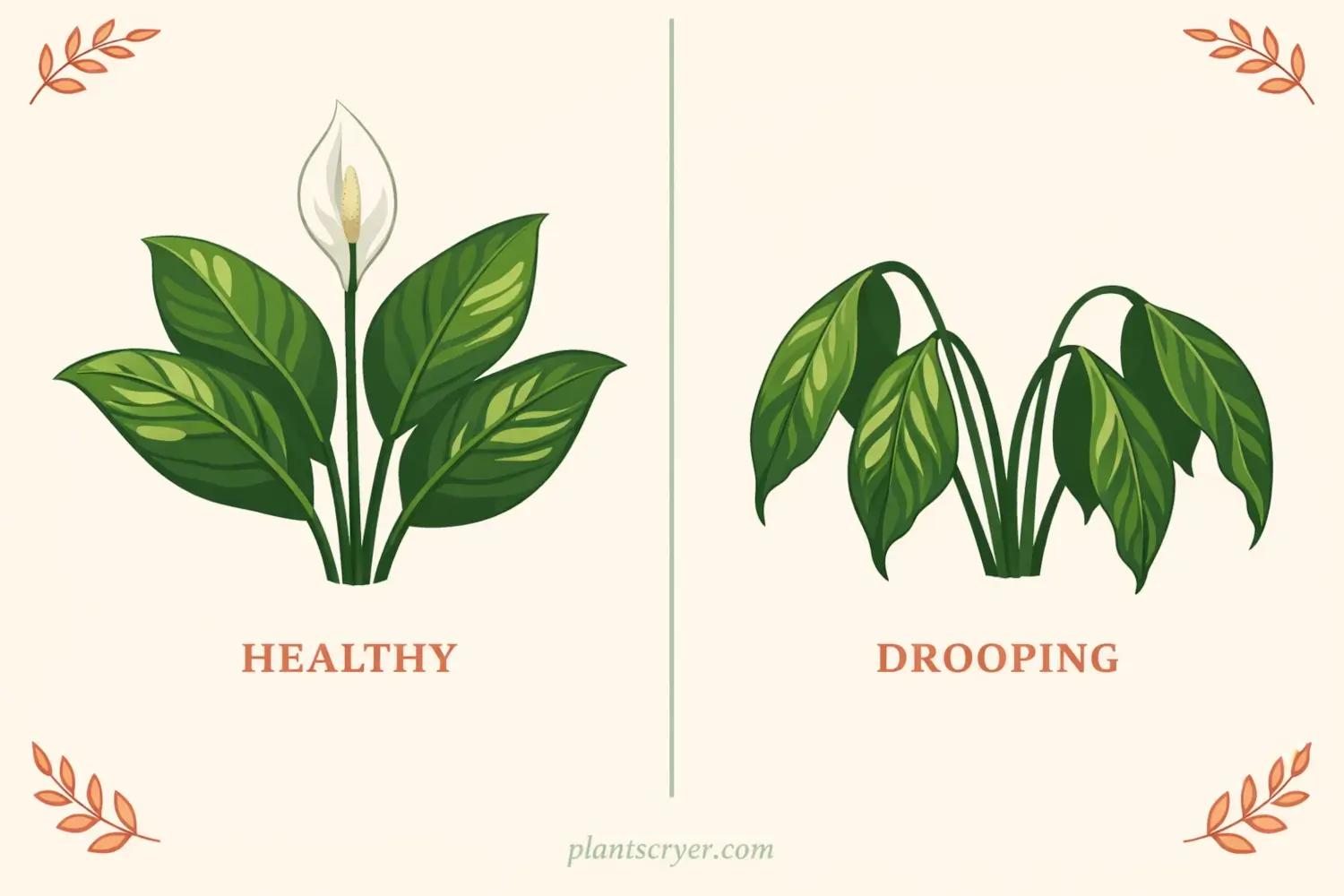
- All leaves collapsed but still green — almost certainly underwatering. Water thoroughly and check back in a few hours.
If leaves are yellowing, browning, and not recovering after correct watering, stems are soft, or the soil smells bad — that's genuine decline. Keep reading.
How to tell if your plant can still be saved
The roots decide everything. Unpot the plant and look:
- White or light tan, firm — healthy. The plant can recover.
- Brown but firm — stressed but alive. Recovery is likely.
- Brown, mushy, or slimy — root rot. Partial recovery is possible if some healthy roots remain.
- All black, falling apart, foul smell — severe root rot. Very unlikely to recover. Division from any surviving section is the last option.
Any white or firm roots mean the plant is worth saving.
1. Root Rot
Root rot is behind most cases of a genuinely dying Peace Lily. Prolonged overwatering or poor drainage creates conditions that kill the root system. Once roots stop functioning, the plant can't take up water or nutrients no matter what you do on the surface. Cylindrocladium root rot — caused by Cylindrocladium spathiphylli — can destroy an entire root system within weeks and is difficult to catch early because leaf symptoms often don't appear until the roots are severely damaged.
- Leaves yellowing and wilting despite moist soil
- Stems soft or mushy at the base
- Soil smells sour or rotten
- Roots brown, black, or slimy when unpotted
- Unpot immediately. Don't wait.
- Rinse the root ball under lukewarm water to see the roots clearly
- Using clean scissors, trim all soft, brown, or black roots back to healthy white or firm tissue. Be thorough — leaving rotted roots behind lets the fungus keep spreading
- For advanced rot, apply a diluted hydrogen peroxide solution (1 part 3% hydrogen peroxide to 4 parts water) to the remaining roots to kill residual fungal spores
- Let the root ball air dry for an hour
- Repot in fresh, dry indoor potting mix in a clean pot with drainage holes — not the original pot, which may still harbor fungal spores
- Hold off watering for 3 to 5 days, then water lightly
- Keep in bright indirect light at a stable temperature while recovering
Recovery takes 2 to 6 weeks if a reasonable amount of healthy root tissue remains. New leaf growth is the signal the plant has turned a corner.
2. Severe Underwatering
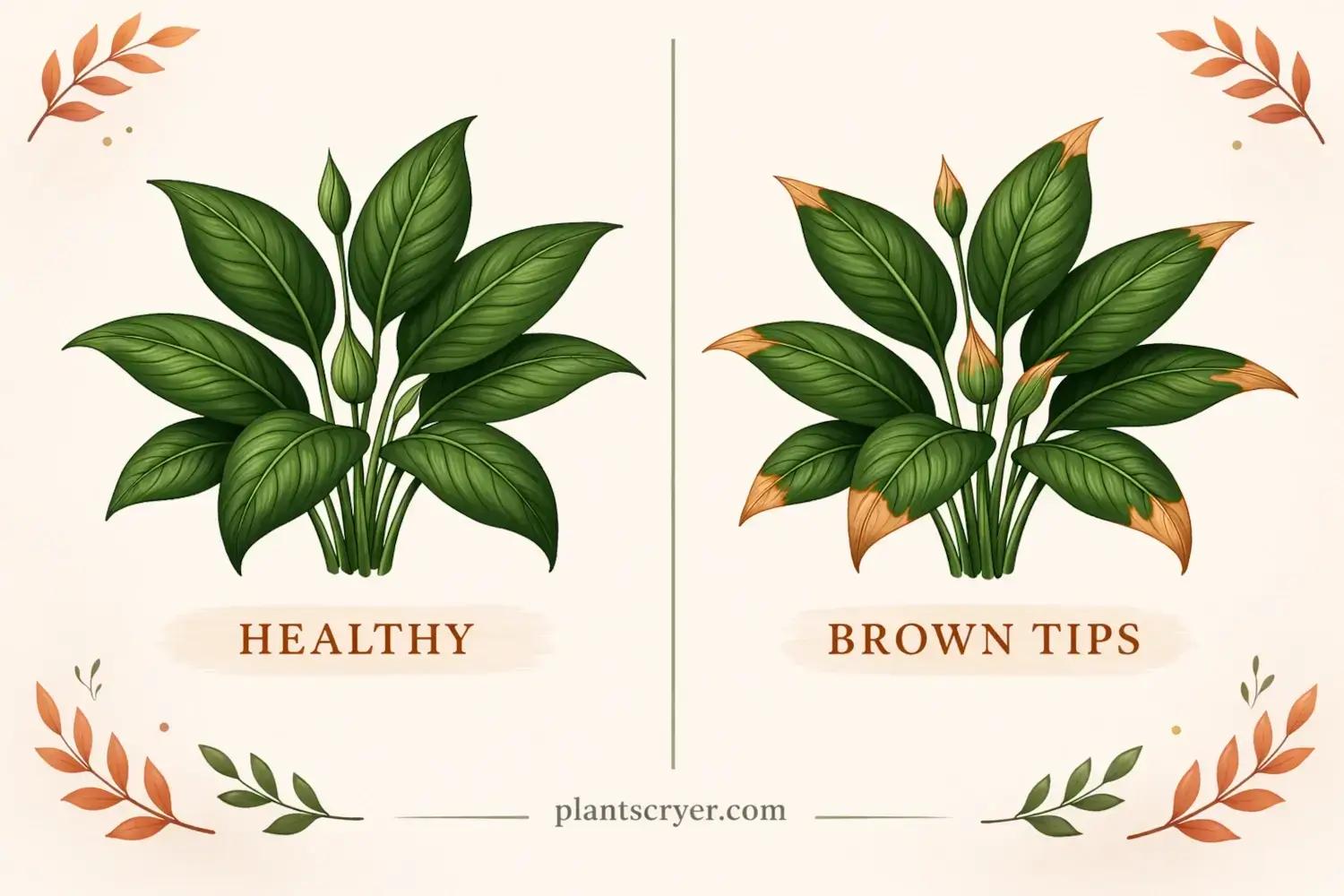
A Peace Lily left completely dry for weeks will collapse entirely — leaves go limp, then brown at the tips, then crispy. If you catch it before the roots have fully desiccated, recovery is fast.
- All leaves collapsed and limp
- Soil completely dry and pulling away from the pot edges
- Pot feels very light when lifted
- Leaves still green or only lightly browned at tips
- Don't just pour water on top — severely dry soil becomes water-repellent and water runs straight through without soaking in
- Place the pot in a bowl of room-temperature water for 30 to 45 minutes so the root ball rehydrates from the bottom
- Drain completely, then return to its spot
- Leaves should start recovering within a few hours. Full recovery takes 24 to 48 hours
- Brown leaf tips won't recover — trim with clean scissors following the natural leaf shape once the plant has stabilized
If the plant has been severely dry repeatedly over months, roots may have partially desiccated and recovery will take weeks rather than hours.
3. Cold Damage
Temperatures below 50°F (10°C) cause cell damage that looks like sudden death — leaves turn black, collapse, and don't recover. This happens most often near a cold window overnight, after being placed outside in cool weather, or after a blast of cold air from an exterior door.
- Leaves turned black rapidly rather than gradually yellowing first
- Incident happened near a cold source — window, door, or AC vent
- Some leaves black while others are still green
Move to a warm spot immediately, 65 to 80°F. Don't water heavily — cold-damaged roots are vulnerable to secondary rot. Remove blackened leaves at the base with clean scissors. If the growing point at the center of the plant is still green and firm, new leaves will emerge. If it's black and soft, recovery is unlikely.
Cold-damaged leaves are permanently lost — they won't recover. A plant with an intact growing point will push new growth once conditions stabilize.
4. Fertilizer Burn
Over-fertilizing causes salt buildup in the soil that draws moisture out of roots through osmosis. The plant dehydrates from the roots up despite moist soil. Leaves brown at the tips and edges first, then across the whole leaf, and the plant declines progressively.
- Brown leaf tips and edges spreading to whole-leaf browning
- White crusty deposits on soil surface or pot edges
- Plant has been fertilized frequently or at full label strength
- Decline started after a recent fertilizing session
Flush the soil thoroughly by running water through the pot for several minutes to push excess salts out through the drainage holes. Hold off all fertilizing for 2 to 3 months. If the soil is very salt-damaged, repotting in fresh indoor potting mix is the faster option. Going forward, fertilize at half strength, once a month, spring and summer only.
5. Severe Pest Infestation
Minor pest problems don't kill Peace Lily but a heavy untreated infestation can cause serious decline, especially if the plant is already weakened. Cylindrocladium root rot can also be introduced through infected soil or tools, so isolating any sick plant is important.
- Yellowing, stippled, or mottled foliage that doesn't respond to watering adjustments
- Fine webbing on stems or leaf undersides (spider mites)
- White cottony masses at leaf joints (mealybugs)
- Sticky residue on leaves or the surface below the pot (scale or aphids)
Isolate the plant immediately. Treat with neem oil or insecticidal soap, covering leaf undersides and stem joints thoroughly. Repeat every 5 to 7 days for 3 to 4 weeks — one application won't eliminate eggs. For mealybugs, remove visible clusters manually with a cotton swab dipped in rubbing alcohol before applying neem oil.
A plant that was healthy before the infestation recovers relatively quickly once pests are eliminated. One that was already stressed will take longer.
6. Natural End of Life
Peace Lily typically lives 3 to 5 years indoors, though well-maintained plants can last much longer. Very old plants gradually decline — growth slows, flowering stops, and leaves die faster than new ones emerge.
- Plant is several years old
- Decline is gradual, not sudden
- No obvious pest, watering, or environmental cause
- New growth is sparse or absent
Division is the best response. When repotting, look for healthy offshoots at the base with their own roots and leaves. Pot these separately in fresh mix — they grow into vigorous new plants while the parent plant naturally declines.
Quick diagnosis guide
If you're not sure which cause applies, work through this in order:
Check the soil first. Wet and smells bad = root rot. Bone dry = underwatering. Then lift the pot — heavy means wet, light means dry, regardless of surface feel.
Check the roots. White and firm = recoverable. Brown and mushy = root rot rescue needed. All black = likely too late.
Check for recent events. Did you just repot, fertilize, move it near a cold window, or treat for pests? Sudden decline after any of these has a clear cause.
Check the leaves. Black leaves that appeared rapidly = cold damage. Tips browning and spreading inward = fertilizer burn or drought. Yellowing lower leaves with wet soil = overwatering.
After rescue: what to expect
Recovery is rarely fast. A plant coming back from root rot or severe stress will look worse before it looks better. Damaged leaves won't recover, and the plant may drop more before new growth emerges. That's normal.
Signs the rescue is working: existing green leaves firm up and stop drooping, and eventually a new leaf emerges from the center. That new leaf is the clearest signal the root system has recovered enough to support growth. Until then, keep conditions stable and resist the urge to fertilize or repot again.
Frequently Asked Questions
If any healthy roots remain, often yes. A plant with completely collapsed foliage but intact white roots will frequently recover fully with correct watering. Even partial root rot can be rescued if caught before it's complete. The one situation that's very hard to recover from is when all roots are completely black and mushy with no healthy tissue remaining.
Remove leaves that are fully brown or yellow — they won't recover and the plant wastes energy on them. Leave any that still have green sections, even partially. Cut at the base of the stem using clean scissors.
Wilting after repotting is usually transplant shock, not root damage. Keep it in stable indirect light, water only when the top inch of soil is dry, and don't fertilize. Most plants recover within 2 to 4 weeks. If stems feel soft or the soil smells bad, unpot and check the roots — dense or waterlogged potting mix after repotting causes problems quickly.
Underwatering: a few hours to 48 hours. Root rot: 2 to 6 weeks depending on how much healthy root tissue remains. Cold damage: several weeks before new growth emerges. Pest recovery: 3 to 6 weeks after the infestation is fully controlled.
When all roots are completely black and mushy with nothing white or firm remaining, and there's no green growing point at the center of the plant. If any green or firm root tissue exists, the rescue is worth attempting.
For full care instructions to keep your recovered plant healthy, see our Peace Lily Care Guide.