Why Does My Peace Lily Have Brown Tips?
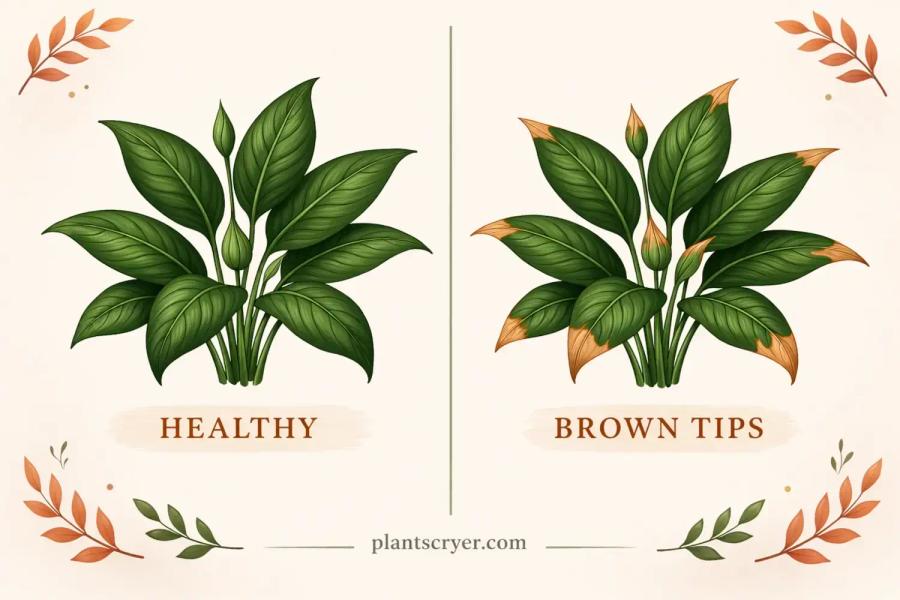
Brown tips are one of the most common Peace Lily complaints, and one of the more frustrating ones because they tend to come back even after you've trimmed them. The good news is there's almost always a fixable cause. The trick is identifying the right one, because the wrong fix does nothing.
Before anything else, look at where the browning is happening:
Brown at the very tip only, crispy — most often low humidity or tap water mineral buildup.
Brown edges running along the sides of the leaf — usually underwatering, low humidity, or cold drafts.
Brown patches in the middle of the leaf surface — often sunscorch. Not a tip problem.
Brown tips alongside yellow leaves — check for overwatering first. Yellow plus brown together usually points to watering or root issues rather than humidity.
One thing applies to every cause: browned tissue is permanent. It won't turn green. The goal is to fix the underlying issue so new growth comes in clean, then trim the damaged portions neatly with scissors following the natural leaf shape.
1. Low Humidity
Peace Lily comes from humid tropical rainforest air. Most homes, especially in winter with heating running, are much drier than this plant prefers. When humidity drops, leaf tips lose moisture faster than the roots can replace it and the tips dry out first.
- Crispy brown tips, often on the outermost leaves
- Worse in winter or in heavily air-conditioned rooms
- Soil moisture seems correct
- Other humidity-loving plants in the room are also struggling
Raise the humidity around the plant. A pebble tray with water sitting just below the pot's drainage level is a simple passive option. Grouping the plant with others helps a little. A cool-mist humidifier is the most reliable fix if the room is consistently dry. Aim for above 40% humidity. A hygrometer placed nearby is the most accurate way to check.
One thing worth knowing: misting looks like it should help but gives only a few minutes of relief. It also risks leaf spot if the leaves stay wet overnight. The pebble tray or humidifier approach is much more effective for sustained improvement.
Bathrooms and kitchens tend to have naturally higher humidity from showers and cooking and often work well for Peace Lily if there's enough indirect light.
2. Tap Water — fluoride and mineral buildup
Peace Lily is particularly sensitive to fluoride in tap water. Fluoride doesn't evaporate and it doesn't off-gas. It accumulates in the soil over time and eventually concentrates in leaf tips where it damages and kills tissue. Chlorine and chloramines (used by many municipal systems instead of plain chlorine) can also affect root health and soil biology over months of consistent use. This is a slow, cumulative process. If you've been using tap water for a year or more, mineral buildup is very likely contributing even if nothing else seems wrong. One myth worth clearing up: leaving water out overnight allows chlorine to off-gas, but it does nothing for fluoride or chloramines. It's a partial fix at best. Also worth knowing: water softeners replace calcium and magnesium with sodium, which is also damaging to Peace Lily. Softened water is not a good substitute for filtered or distilled water.
- Brown tips that persist or keep returning despite correct watering and humidity
- White crusty deposits on the soil surface or pot edges
- Long-term use of unfiltered tap water
Switch to filtered, distilled, or rainwater. A water filter pitcher that removes fluoride is the most practical ongoing option. Standard carbon filters like Brita reduce chlorine but don't fully remove fluoride, so check the product specs. Distilled water or reverse osmosis water removes both.
Flush the soil every 2 to 3 months by running approximately 3 times the pot's volume of filtered or distilled water through it to clear accumulated mineral deposits. New growth after switching water will come in without brown tips. Existing damage won't reverse.
3. Underwatering
When Peace Lily doesn't get enough water consistently, it can't maintain moisture to the leaf margins and tips, which dry out and brown. This is different from the dramatic drooping you see with acute thirst. Chronic mild underwatering shows up as tip browning before the plant dramatically collapses.
- Brown tips alongside crispy or papery leaf edges
- Soil is dry when you check
- Pot feels light when lifted
- Plant may also be drooping slightly; see our Peace Lily drooping guide if drooping is also present
Water when the top inch of soil feels dry. Water thoroughly until it drains from the bottom, then empty the saucer. Check the soil every few days rather than following a fixed day-of-week schedule. Peace Lily should never fully dry out between waterings.
4. Overwatering and Root Damage
Overwatering causes brown tips through a less obvious route. When roots are damaged by sitting in waterlogged soil, they can't deliver water properly to the leaves even though the soil is wet. Tips and edges brown as the leaf tissue dehydrates from the inside out.
- Brown tips alongside yellowing leaves; see our yellow leaves guide if yellowing is also a concern
- Soil feels wet several days after the last watering
- Pot feels heavy
- Musty smell from the soil
Stop watering. Let the soil partially dry out. Make sure the pot has drainage holes and the saucer is emptied after each watering. If yellowing is present and the soil smells bad, check the roots for rot and see our Peace Lily dying guide for recovery steps.
5. Fertilizer Salt Buildup
Too much fertilizer, or fertilizing at full label strength, causes salt accumulation in the soil. These salts draw moisture out of root tissue and eventually damage leaf tips. White crusty deposits on the soil surface or pot rim are a reliable indicator.
- Brown tips alongside white crusty deposits on soil or pot
- Plant has been fertilized frequently or at full strength
- Tip browning appeared or got worse after a feeding session
Flush the soil by running water slowly through the pot for several minutes to push excess salts out through the drainage holes. Hold off fertilizing for 2 to 3 months, then resume at half the recommended strength, once a month in spring and summer only. Peace Lily is a light feeder and consistently responds better to less fertilizer rather than more.
6. Direct Sun or Heat Stress
Direct afternoon sun scorches leaf tissue and causes browning — usually more of a patch or streak than a crispy tip, but it can appear at the tips if those are catching the most light. Heat from nearby radiators or heating vents has a similar drying effect on leaf tips.
- Brown areas on the side of the leaf facing the window
- Browning looks bleached or patchy rather than crispy
- Plant is near a south- or west-facing window
- Problem appeared or worsened during summer months
Move to bright indirect light. An east-facing window or a spot pulled back from a south-facing one is ideal. Keep the plant away from heating vents and radiators in winter.
7. Cold Drafts
Cold air from drafts, AC vents, or cold windows causes leaf tissue to brown at the tips and edges. Worth checking: leaves touching a cold single-pane window in winter can be exposed to much lower temperatures than the rest of the room. The tips nearest the glass often brown first while the rest of the plant looks fine.
- Brown tips on the leaves closest to a window or exterior door
- Problem noticeably worse in winter
- Plant otherwise looks healthy
Move away from cold sources. Keep the plant in a stable spot between 65 and 80°F (18 to 27°C). Check that leaves are not physically touching the window glass in winter.
How to trim brown tips
Use clean, sharp scissors and cut just into the healthy green tissue at an angle that follows the natural shape of the leaf. A gently curved cut looks much more natural than a straight horizontal one and is far less obvious. Don't cut into more healthy green tissue than necessary.
If more than half a leaf is brown, remove the whole leaf at the base of the stem. A mostly-brown leaf isn't contributing meaningfully to photosynthesis and the plant is better off redirecting that energy.
A good pair of pruning shears makes a real difference here — clean cuts heal faster and look neater than cuts made with dull scissors.
Why do brown tips keep coming back?
If you've trimmed the tips and they keep returning on new growth, the underlying cause hasn't been fully fixed. The most common reasons:
- Humidity is still too low. A pebble tray alone may not be enough in a very dry room — try a humidifier.
- Still using tap water. Fluoride buildup is slow but persistent. Switch water sources and flush the soil regularly.
- Fertilizer salts still in the soil. Flush more thoroughly and hold off feeding longer.
- The pot is near a heat vent or cold window. Check the microclimate around the plant, not just the general room temperature.
- Water softener in use. Softened water's sodium content damages Peace Lily just like fluoride does.
Frequently Asked Questions
No. Browned tissue is dead. Trim the affected areas and focus on fixing the cause so new leaves grow in clean.
Both are common and often happen together. In a dry home with years of tap water use, both are probably contributing. Fixing humidity is faster to see results. Switching water and flushing accumulated fluoride from the soil takes longer to show improvement, sometimes several weeks.
A hygrometer placed near the plant is the most accurate check. Aim for above 40%. Without one, signs of low humidity include crispy leaf tips, curling leaf edges, and the plant looking worse in winter when heating runs.
Tap water mineral buildup is the most likely culprit when watering and humidity seem correct. Switch to filtered or distilled water and flush the soil. If the browning is patchy rather than crispy at the tips, check for direct sun exposure. If yellowing is also present, check for overwatering or root damage.
As needed. Trim when the browning is visually bothersome or when more than a quarter of a leaf tip has browned. Use clean scissors each time.
Partially. Sitting water overnight allows chlorine to off-gas, which helps. But it does nothing for fluoride or chloramines. For a Peace Lily with persistent brown tips from tap water, switching to filtered or distilled water is the more complete fix.
For full Peace Lily care instructions, see our Peace Lily Care Guide.