Why Is My Peace Lily Drooping?
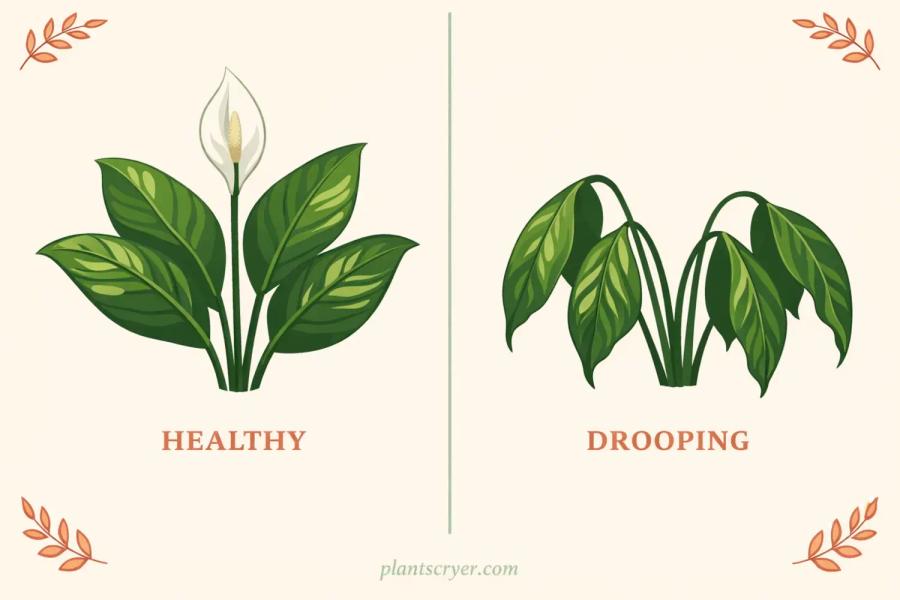
Peace Lily droops to communicate. It's one of the more expressive houseplants you can own, and when something is off, the leaves go limp quickly. The good news: it recovers just as fast once you fix the right thing.
The tricky part is that drooping has several causes, and the two most common ones require opposite fixes. Watering a plant that's already waterlogged will make things worse, not better.
Before doing anything, look at the leaves. Are they drooping green or drooping yellow?
- Green and drooping — most likely underwatering. The plant is thirsty. Jump to Underwatering section ->
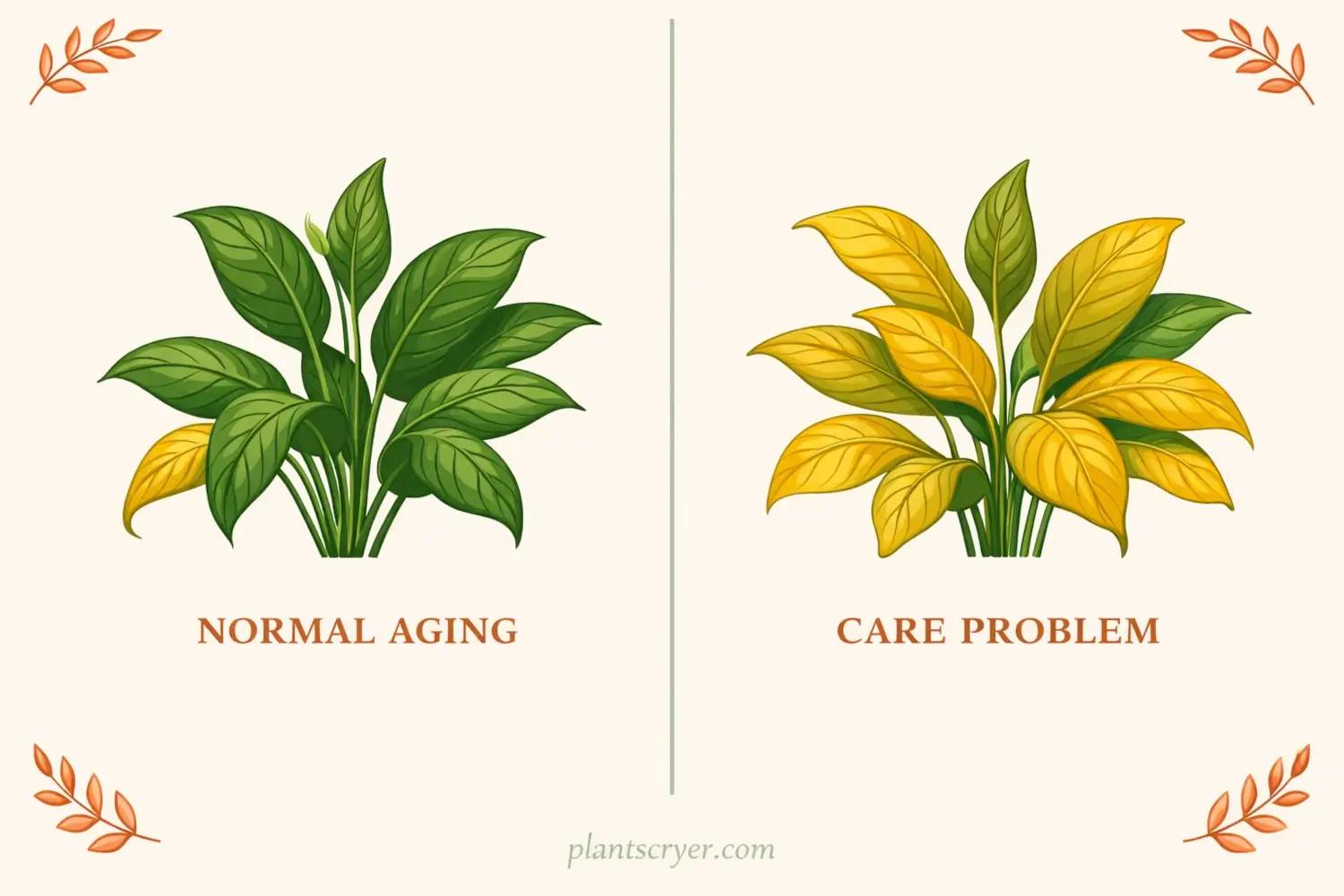
- Yellow and drooping — most likely overwatering. The roots are struggling. Jump to Overwatering section ->
That one observation cuts the diagnosis in half. Start there, then work through the causes below if it isn't immediately obvious.
1. Underwatering
The most common reason Peace Lily droops is simply that it needs water. The soil dried out too much, the roots can't supply enough moisture to the leaves, and they collapse. It looks dramatic but it's usually the easiest fix.
- Leaves drooping but still green
- Soil feels dry in the top inch
- Pot feels light when you lift it
- Leaves perk back up within a few hours of watering
Water thoroughly until it drains from the bottom of the pot. If the soil has become very dry or compacted and water is running straight through without soaking in, place the pot in a bowl of room-temperature water for 20 to 30 minutes so the root ball rehydrates from the bottom. Drain completely afterward.
Going forward, check the soil every few days rather than sticking to a fixed schedule. Water when the top inch feels dry.
Worth noting: Peace Lily uses its droop as a watering signal, which is convenient. But catching it just as it starts to wilt is better than waiting until it's fully collapsed. Repeated severe drying eventually causes brown leaf tips that won't recover.
2. Overwatering
Overwatering causes drooping that looks almost identical to underwatering, which is why people often make it worse by adding more water. When soil stays constantly wet, oxygen gets pushed out of the root zone. Roots can't function, nutrient uptake fails, and the plant wilts even though it's sitting in moisture.
- Leaves drooping and yellowing together
- Soil feels wet or soggy several days after the last watering
- Pot feels heavy when you lift it
- Musty smell from the soil
- Plant doesn't recover after watering
Stop watering. Let the top inch dry out before the next watering. Make sure the pot has working drainage holes and the saucer isn't holding standing water underneath. If the soil smells bad or the stems feel soft at the base, root rot may have already set in — see cause 3.
A moisture meter can help if you're consistently misjudging when to water. They're not foolproof, but useful while you're building a feel for this plant's needs.
3. Root Rot
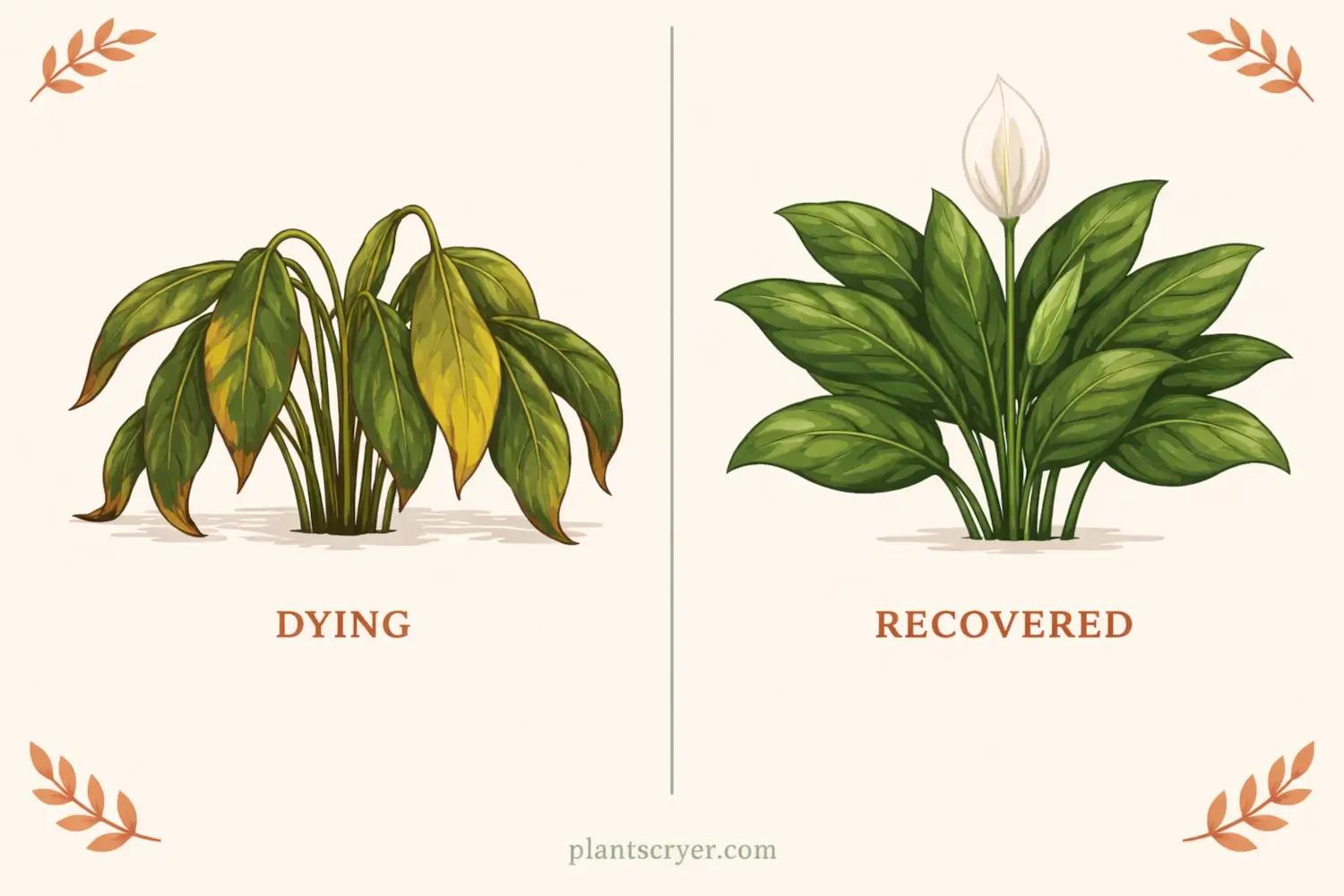
Root rot is what happens when overwatering goes on long enough. The roots turn brown and mushy and can no longer move water to the plant. Leaves droop and stay drooped regardless of what you do with watering.
- Drooping that doesn't improve after several days
- Stems feel soft or mushy near the soil line
- Roots are brown, black, or slimy when you unpot the plant (healthy roots are white and firm)
- Soil smells sour or rotten
Unpot the plant immediately. Trim all soft, brown, or black roots back to healthy white tissue using clean scissors. Let the root ball air dry for about an hour, then repot in fresh dry potting mix in a pot with drainage holes. Hold off watering for a few days. The plant may droop further before it recovers — this is normal as long as the remaining roots are healthy.
For a full recovery guide, see our Peace Lily dying guide.
4. Root-Bound
When Peace Lily outgrows its pot, the roots fill the entire container and there's barely any soil left to hold moisture. The plant dries out within days of watering and droops repeatedly. A telltale sign: it perks up briefly after watering, then droops again within 12 to 48 hours.
- Drooping less than a week after a thorough watering
- Roots emerging from drainage holes or circling the top of the soil
- Pot feels solid and packed when you press the sides
Repot into a container 1 to 2 inches wider than the current pot using fresh indoor potting mix. Spring is ideal but you can repot whenever the plant clearly needs it. After repotting, water thoroughly and return it to the same location — changing spots at the same time adds stress on top of root disturbance.
5. Cold Drafts or Temperature Stress
Peace Lily is a tropical plant and reacts badly to cold air. Temperatures below 55°F (13°C), cold drafts from windows or exterior doors, and AC vents blowing directly on the plant all cause wilting. In cold conditions root activity slows, and the plant can't move water efficiently to the leaves.
- Drooping appeared after a cold spell, a window left open, or a move to a new spot
- Some leaves may show dark or blackened patches alongside the wilting
- Problem is worse on the side of the plant nearest a cold source
- Soil moisture seems fine
Move the plant away from drafts, exterior doors, and AC vents. Aim for a consistent spot between 65 and 80°F (18 to 27°C). Cold-damaged leaves won't recover — trim any blackened ones at the base — but the plant will stop drooping once conditions stabilize.
6. Low Humidity
In dry indoor air, Peace Lily loses moisture through its leaves faster than the roots can replace it, causing wilting even when the soil is correctly watered. This gets worse in winter when heating systems run constantly and indoor humidity drops.
- Drooping alongside brown leaf tips or crispy leaf edges
- Worse in winter or in heavily air-conditioned rooms
- Soil moisture seems fine
Raise the humidity around the plant. A pebble tray with water sitting just below the pot's drainage level works well for a localized boost. Grouping it with other plants helps. A cool-mist humidifier is the most reliable option if the room is consistently dry. Misting gives brief relief but doesn't meaningfully raise ambient humidity and can cause leaf spots if leaves stay wet overnight.
Bathrooms and kitchens are naturally more humid and often work well for this plant if there's enough indirect light.
7. Transplant Shock
If drooping started in the days after repotting or being moved to a new home, transplant shock is the likely cause. Root disturbance temporarily interrupts the plant's ability to take up water, even when the new conditions are perfectly fine.
- Drooping started within a week of repotting or purchase
- Soil moisture seems correct
- No yellowing, soft stems, or bad smell
Leave it alone. Keep conditions stable — indirect light, consistent moisture, normal temperature — and don't fertilize or repot again. Most Peace Lilies recover from transplant shock within 2 to 4 weeks. Consistent care is what the plant needs here, not intervention.
8. Too Much Direct Sun
Direct afternoon sun causes Peace Lily leaves to lose moisture faster than the roots can keep up, causing wilting even when the soil is properly watered. Less common than watering issues but worth checking if the plant is near a south- or west-facing window.
- Drooping worst in the afternoon, better in the morning
- Leaves may show pale, bleached, or scorched patches
- Soil dries out faster than expected
Move to bright indirect light — an east-facing window or further back from a south-facing one. Existing scorch marks won't reverse but the drooping will stop once the plant is out of direct sun.
Still drooping after watering? Work through this.
If you've watered and the plant hasn't recovered within a few hours, the cause isn't thirst. Check these in order:
- Push your finger 2 to 3 inches into the soil. The surface can feel dry while deeper soil is still wet. If it's wet lower down, stop watering.
- Lift the pot. Heavy means wet, light means dry. More reliable than surface feel alone.
- Check the base of the stems. Soft or mushy at soil level points to root rot. See our Peace Lily dying guide.
- Look at the location. Cold draft, direct sun, or AC vent nearby?
- Check the roots. If it's been over a year since the last repot and drooping is happening repeatedly, the plant may be root-bound.
How long does recovery take?
- Underwatering: a few hours after a thorough watering, fully normal within 24 hours
- Overwatering: 3 to 7 days once drainage is corrected
- Root rot: 2 to 6 weeks if caught before most roots are gone
- Transplant shock: 2 to 4 weeks
- Cold damage: drooping stops once moved to warmth; blackened leaves won't reverse
Frequently Asked Questions
If it stays drooped after watering, more water isn't the fix. Check for overwatering (heavy pot, wet soil), root rot (soft stems, bad smell), or a root-bound pot. Work through the checklist above.
A brief midday wilt is normal in warm weather, especially near a window. The plant temporarily loses more moisture through its leaves than the roots can keep up with during the hottest part of the day. If it recovers on its own by evening, it's not a problem. If it stops recovering, check soil moisture and move it back from the window.
Only if the soil is dry. Check the top inch and lift the pot before deciding. If the soil is wet or the pot is heavy, watering will make it worse.
Usually yes. Even significant root rot can often be rescued if some healthy roots remain. Peace Lily is tougher than its drooping suggests — the drama is communication, not collapse.
Not always. Flower stalks droop naturally as they finish blooming — snip those at the base. A mild midday wilt that recovers by evening is generally nothing to worry about.
For full care instructions to keep your recovered plant healthy, see our Peace Lily Care Guide.