How to Care for String of Turtles
Peperomia prostrata
 Save
Save
Peperomia prostrata
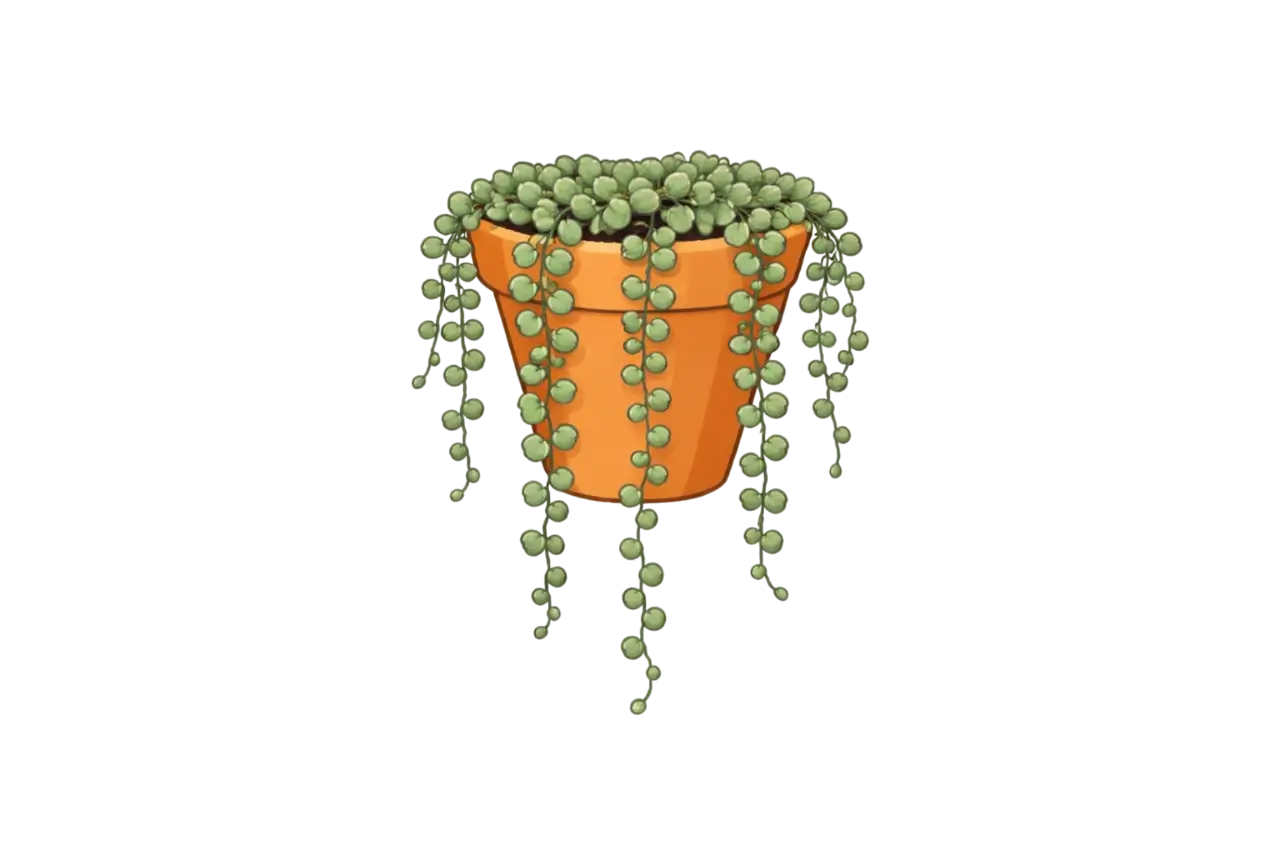
String of Turtles (Peperomia prostrata) is a petite trailing plant native to the rainforests of Brazil, celebrated for its adorable, round leaves patterned like tiny turtle shells. Each vine carries dozens of these intricate leaves (dark green with silvery-white veining that mimics a tortoiseshell) making it one of the most visually distinctive houseplants you can own. It stays compact, grows slowly, and is completely non-toxic, making it a great pick for households with pets or children.
Here's what makes this plant a little different from most trailing houseplants: it's an epiphyte, meaning it naturally grows on other plants and trees rather than in soil. This is why it craves humid air but hates wet roots: a combination that trips up a lot of beginners. Get that balance right and it's an easy, rewarding plant. Get it wrong and it declines fast.
One more thing worth knowing: String of Turtles is a slow grower. It takes 3–5 years to reach full maturity. Don't mistake slow growth for a struggling plant. That's just its pace.
Quick Info
- LightMedium
- WaterMedium
- Size1–2 inches tall, vines up to 1–2 feet
- HumidityHigh
- Temp65–80°F (18–27°C)
- FloweringYes
- TypeSucculent, Tropical, Vine
- Dog SafeYes
- Cat SafeYes
- Kid SafeYes
Toxicity Info
String of Turtles Care Guide
Light
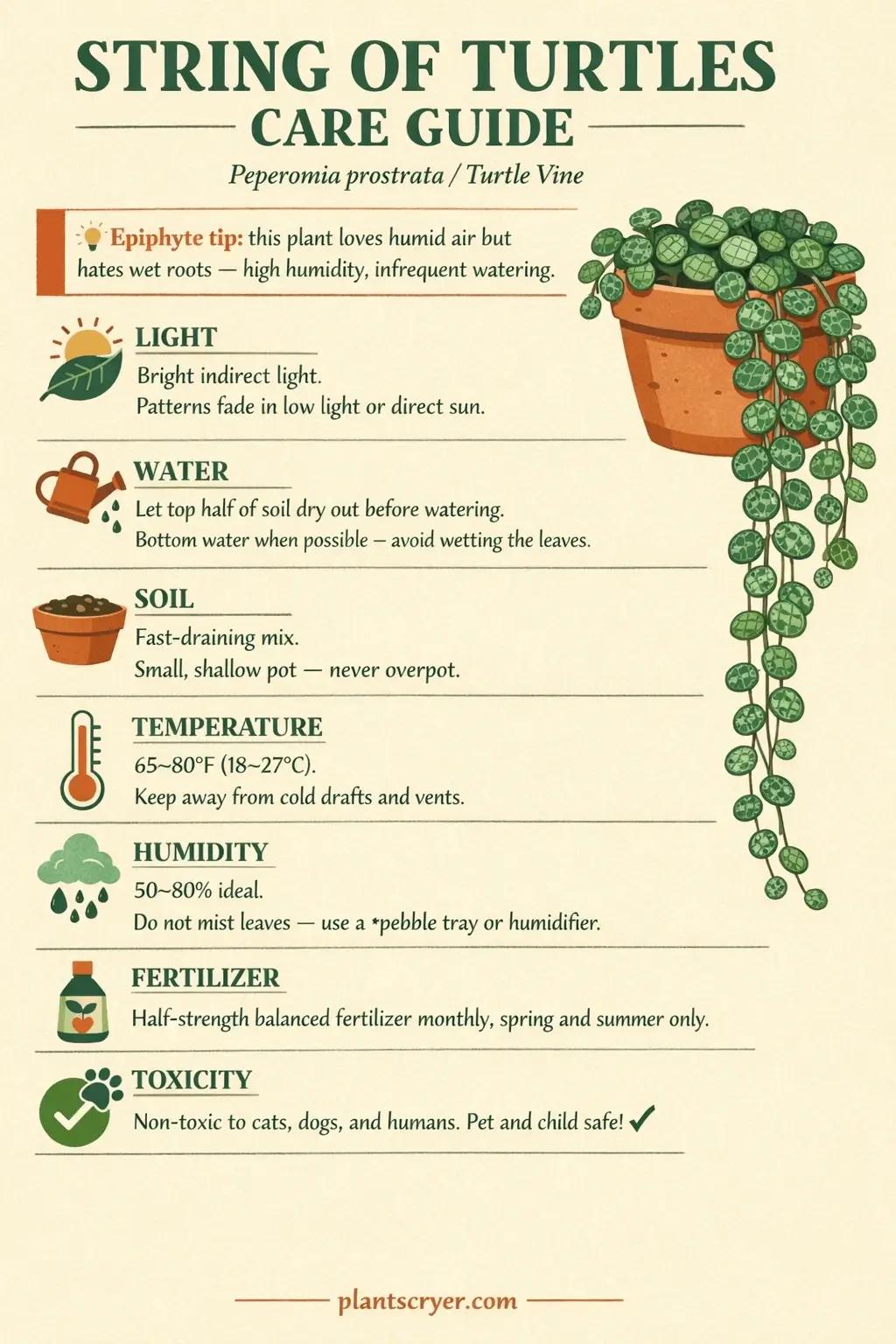
String of Turtles does best in bright, indirect light. This is where it grows fastest and where the turtle shell patterning on the leaves is most vibrant and distinct. In lower light, the patterns fade to a more uniform green and growth slows to almost nothing.
Direct sun is a problem. It scorches the delicate leaves and bleaches out the pattern. An east-facing window or a spot a few feet back from a south or west-facing window is ideal. If you only have low light available, a grow light works well and this plant responds to it readily.
One nuance: if the leaf patterns are fading and light isn't the issue, it can also be a fertilizer deficiency: more on that below.
Watering
Watering is where most people go wrong with String of Turtles, and the mistake is almost always too much, too often.
As an epiphyte with semi-succulent leaves, this plant stores moisture and its roots need to breathe. Let at least the top half of the soil dry out before watering again. Not just the top inch. The pot should feel noticeably light before you water. In spring and summer this might mean every 10–14 days; in fall and winter, even less.
When you do water, water thoroughly. Then let it drain completely and never let it sit in a saucer of water.
Bottom watering is worth considering for this plant specifically. Wetting the foliage regularly encourages rot, because water sitting on the dense mat of leaves and stems doesn't evaporate quickly. Place the pot in a tray of water for 20–30 minutes to let the soil absorb from below, then remove it.
Signs of overwatering: yellow or mushy leaves, scab-like raised bumps on leaves (called edema, see Common Problems), soft stems, or a smell of rot from the soil.
Signs of underwatering: deflated or shriveled leaves, very dry and lightweight pot, little to no new growth.
Soil & Potting
String of Turtles has a shallow, fine root system that is very sensitive to staying wet. Standard potting mix holds too much moisture for it. You want something that drains fast and dries out quickly.
Best mix: a cactus and succulent mix, or a standard potting mix heavily amended with perlite (roughly 50/50). Some growers prefer a fully soil-free mix for these, which all but eliminates overwatering risk.
Pot choice matters a lot here. Two rules:
- Never overpot. A pot even slightly too large will hold excess moisture the roots can't use, dramatically increasing rot risk. Keep the pot snug. This plant actually likes being slightly root-bound.
- Use a shallow pot rather than a standard depth pot. Because the roots are shallow and fine, a deep pot just means a lot of wet soil below the root zone that never dries out.
Terracotta is an excellent choice for this plant. It breathes and dries faster than plastic or ceramic.
Repotting: every 2–3 years, or when roots are visibly circling the bottom. Spring is best. Go up only one pot size.
Fertilizing
String of Turtles is a light feeder, but fertilizing does make a noticeable difference: particularly for leaf pattern vibrancy. Faded or dull turtle shell markings with no obvious light issue are often a sign the plant needs feeding.
One thing most care guides skip: Peperomia benefit from calcium, which most standard houseplant fertilizers don't include. A fertilizer that contains calcium (such as a foliage-focused formula) will produce bigger, stronger leaves. If you're using a standard balanced fertilizer, it will still work: just dilute to half strength.
Feed once a month during spring and summer. Stop entirely in fall and winter. Because this is a slow grower, fertilizer salts build up more easily than with fast-growing plants: flush the soil with plain water every few months to clear any buildup, and always apply fertilizer to moist (not dry) soil to avoid root burn.
Humidity & Temperature
String of Turtles loves humidity. This is one area where it's more demanding than most houseplants. A range of 50–80% humidity is ideal. Normal household air is usually too dry, especially in winter with heating running.
Good options for boosting humidity:
- Bathroom or kitchen placement (naturally higher humidity)
- Grouping with other plants
- Pebble tray with water beneath the pot
- Small humidifier nearby
Do not mist the leaves directly. This is a common mistake with this plant. Water sitting on the dense foliage encourages fungal rot. Use ambient humidity methods instead.
Temperature should stay between 65–80°F (18–27°C). It can tolerate down to about 50°F (10°C) but will stop growing and may suffer below that. Keep away from cold drafts, air conditioning vents, and heating vents.
Display
String of Turtles stays compact (vines typically trail 1–2 feet) so it works best in smaller displays where the detail of the leaves can actually be appreciated up close:
- Small hanging baskets. Ideal, lets the vines trail and the pattern is visible from below
- Shelves at eye level. Gets the light it needs and the leaves are easy to admire
- Terrariums: an excellent fit, especially closed or semi-closed terrariums that maintain high humidity naturally
- Desktop pots. Works well while young; give it a bright windowsill spot
Because it's slow-growing and stays small, it doesn't need much space. It's one of the better plants for tighter spots or small collections.
Propagation
String of Turtles propagates readily from stem cuttings and is a satisfying plant to multiply. The turtle-shell patterned leaves are just as charming in miniature on a fresh cutting as they are on a full trailing plant.
The most reliable method is stem cuttings in soil: snip a 4–6 inch vine just below a node, remove the bottom few leaves, and plant the bare stem end in a small pot of well-draining cactus mix. Cover loosely with a humidity dome or plastic bag while roots form. This plant's rainforest origins mean it needs higher humidity during propagation than most houseplants. Expect roots in 3–4 weeks.
Vine layering is equally reliable and even more forgiving, since the cutting stays attached to the mother plant until fully rooted. Water propagation works too, though it tends to be slower for this species than soil.
For step-by-step instructions on all three methods including common mistakes to avoid, see our full String of Turtles propagation guide.
Common Problems
Common Problems
Yellow or mushy leaves Almost always overwatering. Check the soil: if it's still moist when you water again, extend the time between waterings significantly. Make sure the pot has drainage and isn't sitting in water. Repot in fresh, drier mix if the soil smells or looks waterlogged.
Edema (raised bumps on leaves) A specific and common String of Turtles problem. Small, scab-like or blister-like protrusions appear on the leaves when roots have been absorbing more water than the leaves can release: usually from overwatering or inconsistent watering. It's not a disease or pest. Let the soil dry out more thoroughly before watering and the new growth should come in clean.
Fading leaf pattern The turtle shell markings lose contrast and the leaves go more uniformly green. Causes: too little light (most common), too much direct sun (which bleaches them), or under-fertilizing. Move to brighter indirect light first; if that doesn't help, try feeding.
Deflated or shriveled leaves Underwatering. Water thoroughly and the leaves should plump back up within a day or two.
Leaf drop Sudden leaf drop is usually caused by a change in environment: temperature fluctuation, cold draft, or being moved to a much darker spot. Gradual leaf drop from the base is normal aging. Widespread drop alongside yellowing points to overwatering.
Leggy growth with small leaves Not enough light. Move to a brighter spot. You can also trim back leggy vines to encourage new growth from lower nodes.
Mealybugs The most common pest on this plant. Look for white cottony masses on stems and leaf joints. Treat with insecticidal soap or neem oil, repeating applications weekly for at least a month. Isolate the plant immediately to prevent spread.
Stem rot Usually a result of water sitting on the stems and foliage. Switch to bottom watering and make sure the plant has good airflow around it.
FAQs
It's semi-succulent. It stores some moisture in its leaves like a succulent, but unlike true succulents it needs higher humidity and more consistent moisture. It's closer to a tropical epiphyte in its care needs than a cactus or echeveria.
No. Peperomia species are non-toxic to cats, dogs, and humans, confirmed by the ASPCA.
Yes. It's an excellent terrarium plant. The high humidity in a closed or semi-closed terrarium suits it perfectly. Make sure there's still some airflow to prevent fungal issues.
Prune back leggy vines to just above a node. This triggers branching and new growth. Root the cuttings in the same pot to fill it out. Bright light also helps significantly.
The most common cause is overwatering combined with a pot that's too large or soil that doesn't drain well. Check the roots: if they're brown and mushy, repot into a smaller pot with fast-draining mix and cut back watering significantly.
Most likely not enough light. Move it closer to a bright window. If light isn't the issue, try feeding with a balanced fertilizer. Nutrient deficiency can also dull the markings.