How to Care for Easter Cactus
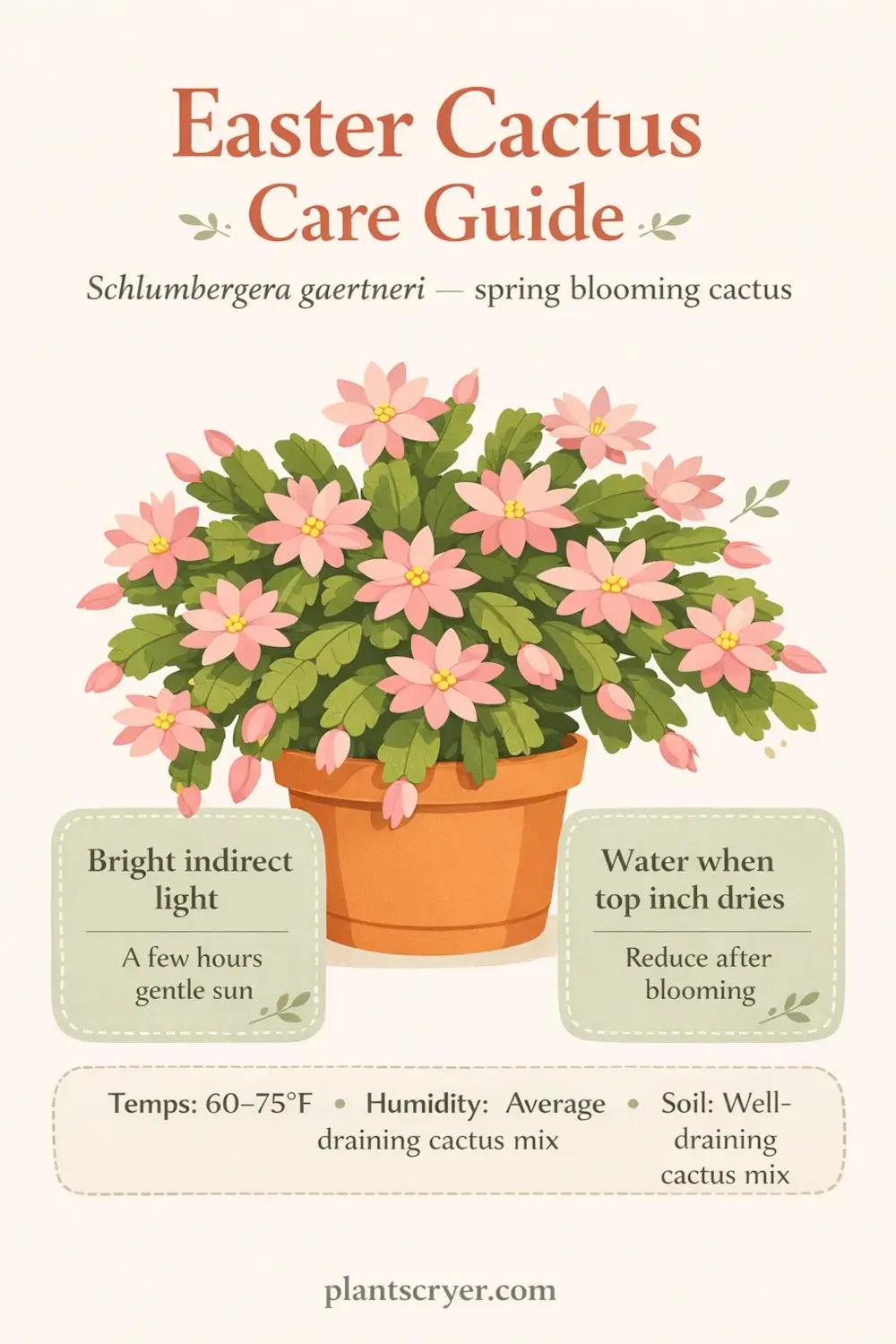
Hatiora gaertneri
 Save
Save
Most people buy an Easter Cactus in full bloom, enjoy it for a few weeks, and then watch it sit there doing nothing for the next eleven months. The trick this plant keeps from casual owners is that those spring flowers depend entirely on what you do (or don't do) during winter. Give it 8–10 weeks of cool temperatures and long nights starting in late fall, and you'll get a repeat performance every year. Skip that step, and you've got a perfectly nice foliage plant that never flowers again.
Native to the coastal mountain rainforests of southern Brazil, Hatiora gaertneri grows as an epiphyte on tree branches, tucked into moss and organic debris in dappled shade. Indoors, it stays compact at 6–12 inches tall but can spread 18–24 inches wide over several years, with arching, segmented stems that spill over pot edges. Growth is slow but steady during the warm months.
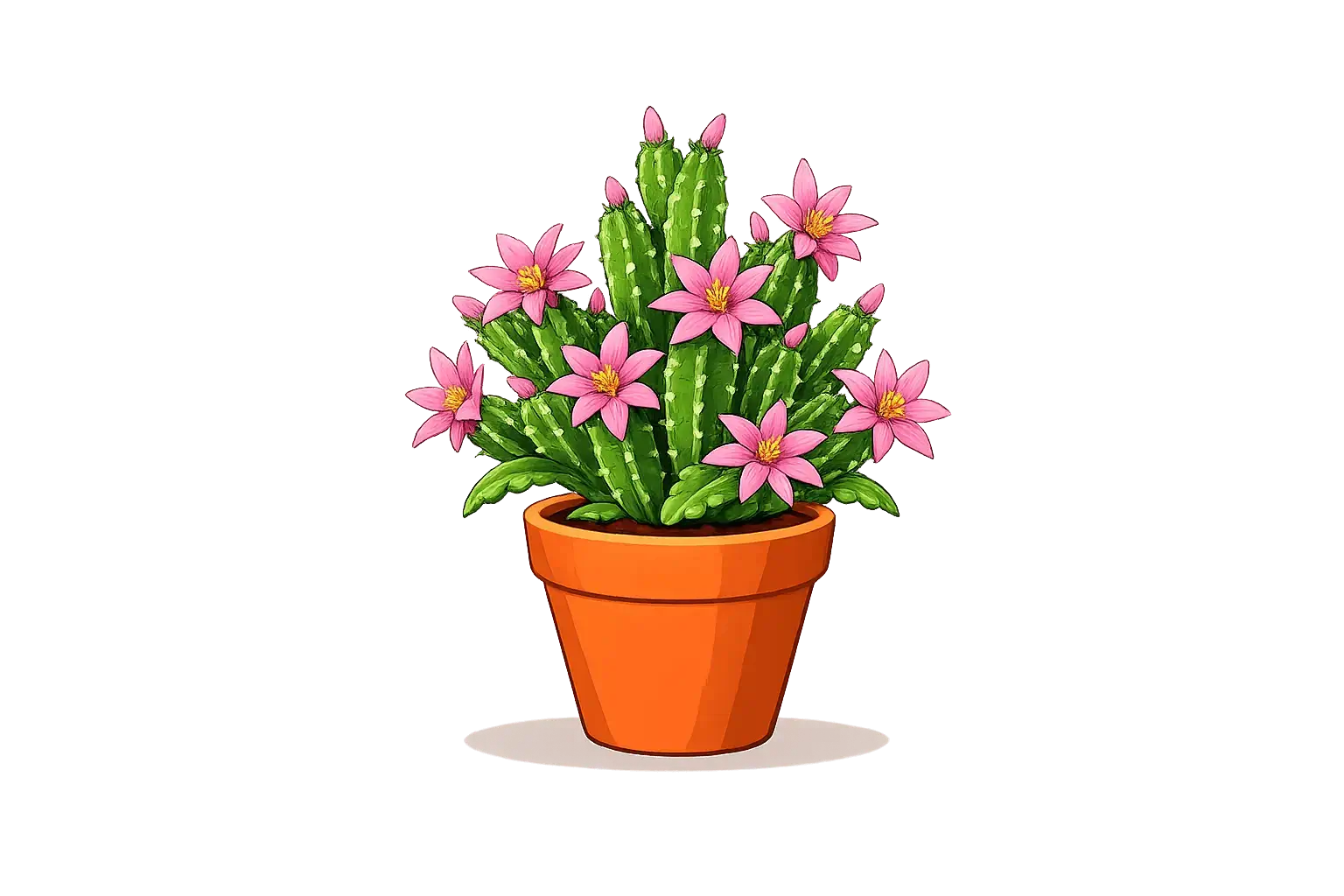
The easiest way to tell an Easter Cactus apart from its relatives the Christmas Cactus and Thanksgiving Cactus is the stem segments. Easter Cactus segments have smooth, rounded edges with small bristles at the tips. Thanksgiving Cactus segments have pointed, claw-like teeth along the margins. Christmas Cactus falls in between with scalloped edges. The bloom timing is the other giveaway: Easter Cactus flowers from late March through May, well after its holiday cousins have finished.
This plant is non-toxic to cats, dogs, and humans, so placement is unrestricted. It does well in hanging baskets where the stems can cascade, or on a shelf edge where the arching growth habit shows off.
Quick Info
- LightMedium
- WaterMedium
- Size6–12 inches tall, 18–24 inches wide
- HumidityModerate
- Temp60–75°F (16–24°C)
- FloweringYes
- TypeCactus, Tropical
- Dog SafeYes
- Cat SafeYes
- Kid SafeYes
Is Easter Cactus Toxic?
Pets: Non-toxic to cats and dogs
Kids: Non-toxic to humans
Easter Cactus Care Guide
Light
Easter Cactus needs bright, indirect light year-round. An east-facing window is ideal; a north-facing window works if unobstructed. West or south-facing windows are fine as long as sheer curtains filter the harshest afternoon rays. In its native Brazilian cloud forests, this plant grows in the dappled shade beneath a tree canopy, so direct midday sun is the one thing to avoid.
Too much direct sun turns the stem segments reddish-purple, a stress response that signals you need to move the plant back or add a filter. Too little light produces pale, elongated growth and dramatically reduces flowering. If you're not getting blooms despite the winter cool-down, insufficient light during the growing season is the most likely culprit.
During the winter rest period, keep the plant in its usual spot. The shorter natural daylight hours are part of what triggers bud formation. Avoid placing it near lamps or overhead lights that extend the "day" past about 10 hours during this period.
Watering
This is where Easter Cactus diverges from desert cacti. As a rainforest epiphyte, it likes consistently moist soil during the growing season (spring through early fall). Water when the top inch of soil feels dry, then water thoroughly until it drains from the bottom. Empty the saucer afterward. Use room-temperature water; cold water shocks the roots and can cause segment drop.
During the winter rest period (October through early February), cut watering back significantly. Let the top third of the soil dry before watering again. The plant's growth slows almost to a stop in cool conditions, and wet soil at low temperatures is a fast track to root rot. A moisture meter takes the guesswork out of this transition.
Reading the segments: Shriveling or wrinkling segments mean the plant is thirsty. Soft, translucent segments that detach easily signal overwatering or root rot. If segments are dropping for no obvious reason, check whether you recently moved the plant or changed its watering schedule.
Soil
As an epiphyte rather than a ground-dweller, the roots need air as much as moisture. A standard cactus and succulent mix amended with orchid bark (roughly 2 parts cactus mix to 1 part bark) creates the loose, fast-draining medium this plant prefers. Adding a handful of perlite improves aeration further.
Avoid heavy potting soils that hold water. If you squeeze a handful of your mix and water drips out, it's too dense. The goal is a medium that stays lightly moist for a few days after watering, then begins to dry. Soil pH should be slightly acidic to neutral (5.5–6.5), which most cactus mixes already provide.
Temperature and Humidity
During the growing season (spring through early fall), standard room temperatures of 60–75°F (16–24°C) are ideal. Keep the plant away from heating vents, radiators, and cold drafts from windows. Temperature swings are one of the fastest triggers for bud drop.
The winter rest period is where temperature matters most. For 8–10 weeks starting around October or November, move the plant to a cooler spot: 45–55°F (7–13°C). An unheated spare room, enclosed porch, or garage that stays above freezing all work. This cool period, combined with naturally shorter days, is what triggers flower bud formation. Without it, no blooms.
Humidity should stay at 50% or above. In winter with heating running, humidity often drops below 30% indoors. A pebble tray beneath the pot or a nearby humidifier helps prevent the segment shriveling and edge browning that dry air causes. Misting is less effective but better than nothing.
Fertilizing
Feed once a month from spring through early fall with a balanced liquid fertilizer (10-10-10 or 20-20-20) diluted to half the label rate. Some growers switch to a low-nitrogen, higher-phosphorus formula (like 2-7-7) in late summer to encourage bud set, though this isn't strictly necessary if the plant gets a proper cool period.
Stop fertilizing entirely from October through February during the winter rest. Feeding during dormancy pushes weak growth that the plant can't sustain at low temperatures and low light. Resume when you see new segment growth in spring.
Repotting
Repot every 2–3 years in late spring or early summer, after flowering finishes. Easter Cactus actually blooms better when slightly root-bound, so there's no rush to upsize. When roots are circling the bottom of the pot or poking out of drainage holes, move up to a pot 1 inch wider than the current one. Oversized pots hold excess moisture the roots can't use.
Shallow, wide pots suit the spreading root system better than deep ones. Terracotta pots are a good choice because they wick excess moisture and help prevent the waterlogging this plant resents. Always use a pot with drainage holes.
How to Get Easter Cactus to Bloom
This is the section most owners need. Easter Cactus blooms are triggered by a combination of cool temperatures and short days. The process starts in late fall and pays off in spring.
Step 1 (October–November): Move the plant to a cool location (45–55°F). Reduce watering to just enough to keep segments from shriveling. Stop fertilizing. The plant needs 14 hours of uninterrupted darkness each night during this period. If the room has artificial lighting in the evening, cover the plant or move it to a closet overnight.
Step 2 (January–February): After 8–10 weeks of cool rest, move the plant back to its normal warm, bright location. Resume regular watering and wait. Buds typically appear within a few weeks at the tips of the stem segments.
Step 3 (March–May): Once buds are visible, do not move the plant. Bud drop is the most common complaint with Easter Cactus, and it's almost always caused by relocating the plant, inconsistent watering, or a sudden temperature shift after buds have formed. Keep conditions stable and enjoy the show.
Some experienced growers also place their Easter Cactus outdoors in a shaded, sheltered spot from June through August. The outdoor exposure to natural temperature fluctuations and humidity hardens the new growth, which seems to improve bud set the following winter. Bring it back inside well before nighttime temperatures drop below 50°F.
How to Propagate Easter Cactus
The best time to propagate is late spring or early summer, about two months after flowering finishes. This gives the mother plant time to recover from blooming and puts the cuttings into the warm growing season when rooting is fastest.
Stem cuttings in soil (the standard method)
Select a healthy stem and twist off a section of 2–3 segments at a natural joint. Twisting gives a cleaner separation than cutting and reduces tissue damage. Let the cutting sit on a dry surface for 2–3 days until the cut end forms a dry callus. Planting before the callus forms invites rot.
Insert the calloused end about half an inch into moist cactus mix. You can optionally dip the end in rooting hormone first, though Easter Cactus roots readily without it. Keep the soil barely moist (not wet) and place in bright, indirect light. Roots develop in 2–4 weeks. You'll know it's rooted when the cutting resists a gentle tug.
Water propagation
After callusing, place the cutting in a small jar with the bottom segment partially submerged in room-temperature water. Change the water every few days to prevent bacterial buildup. Roots appear in 2–3 weeks. Transfer to soil when roots reach about an inch long. Don't wait for extensive root growth, as water roots are fragile and longer ones break during transplant.
Common Easter Cactus Problems
Bud drop The most frustrating Easter Cactus problem, and the most common. Buds form and then fall off before opening. The usual causes are moving the plant after buds appear, inconsistent watering during bud development, or a sudden temperature change. Once you see buds, leave the plant exactly where it is and keep watering on a steady schedule.
No blooms Almost always caused by skipping the winter cool-down period or giving the plant too much artificial light during fall and winter evenings. The plant needs both cool temperatures (45–55°F) and long, uninterrupted nights (14 hours of darkness) for 8–10 weeks to set buds. Insufficient light during the growing season can also reduce flowering.
Shriveling or wrinkling segments Underwatering or very low humidity. Easter Cactus needs more water than desert cacti, and dry winter air compounds the issue. Increase watering frequency and add a pebble tray or humidifier. If the roots are healthy, the segments plump back up within a day or two of a good drink.
Soft, mushy segments or segment drop Overwatering or root rot. Check the roots: healthy roots are white and firm; rotted roots are brown and soft. If rot is present, trim affected roots, let the base dry for a day, and repot in fresh, fast-draining mix. Reduce watering going forward.
Reddish-purple stem segments Sun stress from too much direct light. Move the plant to a spot with filtered or indirect light. The color will return to green over a few weeks.
Pests Mealybugs and scale are the most common visitors, typically appearing as white cottony clusters (mealybugs) or brown bumps (scale) along segment joints. Treat with isopropyl alcohol on a cotton swab for small infestations, or apply neem oil for broader coverage. Check segment joints and undersides regularly.
FAQs
Give it 8–10 weeks of cool temperatures (45–55°F) and 14-hour nights starting in October or November. Reduce watering during this period and stop fertilizing. Move it back to normal conditions in January or February, and buds should appear within a few weeks. Without this winter rest, the plant won't set flower buds.
No. They're related but different species. Easter Cactus (Hatiora gaertneri) has smooth, rounded stem segments and blooms in spring (March–May). Christmas Cactus (Schlumbergera bridgesii) has scalloped segments and blooms in winter (November–January). Thanksgiving Cactus (Schlumbergera truncata) has pointed, toothed segments and blooms earliest, in late fall.
Bud drop is almost always caused by moving the plant after buds form, inconsistent watering, or a sudden temperature change. Once buds appear, keep the plant in one spot, water on a consistent schedule, and avoid placing it near heating vents or drafty windows.
During spring and summer, water when the top inch of soil feels dry, roughly every 7–10 days depending on conditions. In winter during the cool rest period, cut back to watering only when the top third of the soil is dry. Always use room-temperature water and drain the saucer after watering.
Yes. Easter Cactus is non-toxic to cats and dogs according to the ASPCA. It's also non-toxic to humans. Ingesting a large amount of any plant material can still cause mild stomach upset in pets, but the plant itself contains no harmful compounds.
Yes, and many growers find it improves blooming. Place it in a shaded, sheltered spot outdoors from June through August. The natural temperature swings and humidity harden the new growth, which helps with bud set later. Bring it back inside before nighttime temperatures drop below 50°F.
Reddish or purplish segments are a sun stress response. The plant is getting too much direct light. Move it to a spot with bright, indirect light, and the color will gradually return to green. Some slight reddening at segment tips is normal in cool temperatures during the winter rest period.