How to Care for String of Bananas
Senecio radicans
 Save
Save
String of bananas is one of the more forgiving trailing succulents you can grow indoors. The banana-shaped leaves are thicker-walled than string of pearls, the stems don't snap at the soil line as easily, and the plant bounces back faster from inconsistent watering. If you've killed a string of pearls and want to try again with something in the same family, this is the plant.
Native to South Africa, Namibia, and Lesotho, it grows as ground cover in rocky, arid terrain, which tells you most of what you need to know about how to care for it. Bright light, infrequent water, and fast-draining soil.
String of Bananas vs. String of Pearls
These two come from the same genus and look similar at a glance, but string of bananas is the more forgiving of the two.
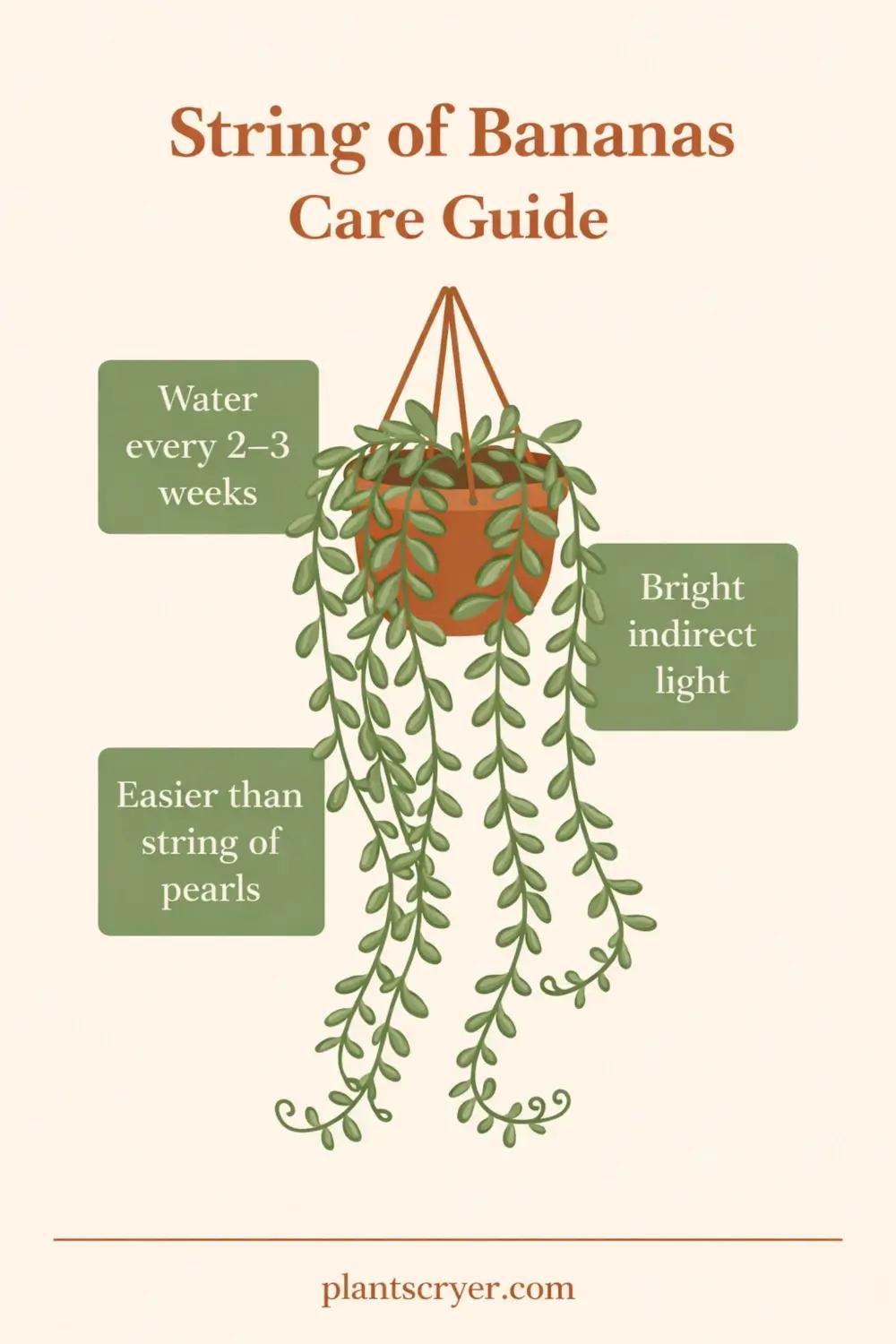
The practical differences: string of bananas has thicker stems that are less prone to rotting at the soil line, and the leaves don't fall off at the slightest touch the way pearls do. It also tolerates inconsistent light better and grows faster overall. If you've struggled with string of pearls, string of bananas is worth trying.
The one tradeoff: string of pearls has a more distinctive look that tends to draw more attention, and it's more widely available in stores.
Quick Info
- LightMedium
- WaterLow
- SizeVines can reach 2–3 feet
- HumidityLow
- Temp60–80°F (15–27°C)
- FloweringYes
- TypeSucculent, Vine
- Dog SafeNo
- Cat SafeNo
- Kid SafeNo
Toxicity Info
Pets: Toxic if eaten. Senecio species contain pyrrolizidine alkaloids, the toxic principle behind the genus-wide warning, so keep trailing stems out of reach of a cat inclined to chew them.
Kids: Senecio species contain pyrrolizidine alkaloids, which are bioactivated in the liver and are hepatotoxic to people as well as animals. Its sibling Senecio rowleyanus, the string of pearls, is flagged the same way on this site, and the two should be treated alike.
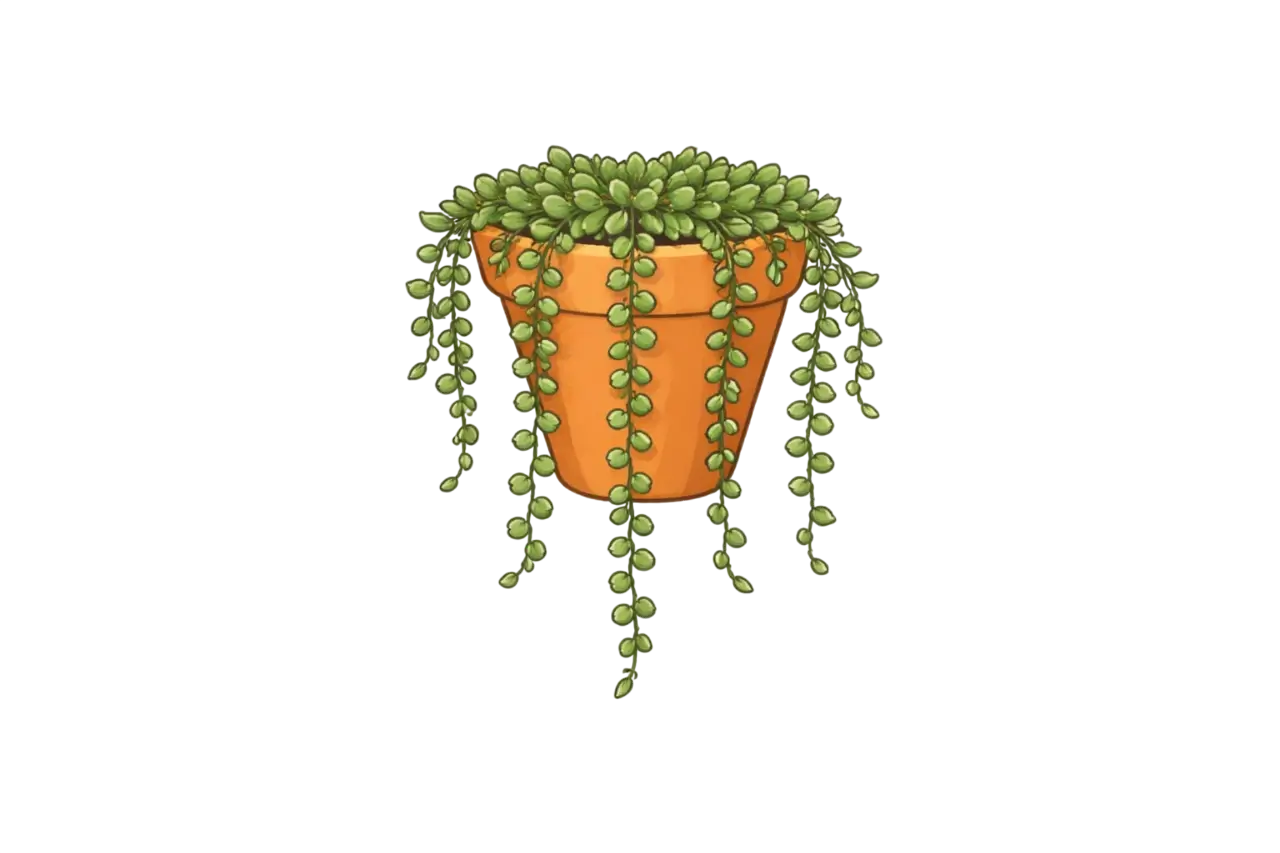
String Of Bananas Care Guide
Light
String of bananas needs more light than most people give it. Bright indirect light keeps it alive, but some direct morning sun (an east-facing window is ideal) is what gets you dense, compact growth with plump leaves. A south or west window with a sheer curtain works well too.
If the vines start stretching with wide gaps between leaves, that's a light problem, not a watering problem. Move it closer to the window before you change anything else.
Avoid hot afternoon sun through unshaded glass in summer. The leaves will bleach and develop papery patches. A few hours of gentle direct sun is very different from sitting in a south-facing window at 2pm in July.
Watering
The most common mistake is watering on a schedule instead of checking the soil. In summer you might water every 10–14 days. In winter when growth slows, you can go 3–4 weeks between waterings without any problem.
The right method: water thoroughly until it drains from the bottom, then leave it alone until the top half of the soil is dry. Don't give it a light sprinkle. The whole root zone needs to wet and then dry out between cycles.
If the banana-shaped leaves start to wrinkle or feel slightly soft, the plant is telling you it's thirsty. String of bananas stores water in its leaves and draws on those reserves when dry. A thorough soak should firm them back up within a day or two.
Yellow, mushy leaves point the other direction. That's overwatering, and it usually means the soil isn't draining fast enough or the pot is sitting in water.
Soil and Potting
Use a cactus or succulent mix with extra perlite added: roughly 2 parts cactus mix to 1 part perlite. The goal is a mix that dries out completely between waterings rather than staying damp around the roots.
Terracotta pots help here. They wick moisture through the walls and give roots slightly better airflow than plastic or glazed ceramic. If you're using plastic, be more conservative with how often you water.
One detail that most guides skip: don't plant the crown too deep. The point where all the stems emerge should sit no more than an inch below the rim. Buried stems rot. This is one of the more common reasons these plants die in the first few months after purchase.
Don't rush to repot. String of bananas is fine slightly root-bound. When you do repot, go up one pot size only. A pot that's too large holds excess moisture that takes too long to dry out, and that's where rot starts.
Temperature and Humidity
String of bananas is comfortable anywhere between 60–80°F indoors. It handles warm conditions well but dislikes cold drafts and anything below freezing. Keep it away from air conditioning vents in summer and heating vents in winter. Both create dry, moving air that pulls moisture out of the plant faster than your normal watering schedule accounts for, and the leaves will shrivel as a result.
Humidity isn't something you need to manage. Standard indoor air is fine, even on the drier side. High humidity is actually more of a risk than low. It slows soil drying and pushes up rot risk.
Fertilizing
String of bananas doesn't need much. A diluted liquid succulent fertilizer once a month during spring and summer is enough. Cut the dose to half of what the label says. This plant isn't a heavy feeder, and too much fertilizer tends to produce weak, leggy growth rather than dense trailing vines.
Don't fertilize in fall or winter.
Flowers
String of bananas does flower, though plenty of indoor growers never see it. The blooms are small, white, and brush-like with a faint cinnamon scent. Easy to miss until you get close. They typically appear in late winter or early spring. If you want to encourage blooming, let the plant experience cooler nights closer to 60°F through fall and early winter, and ease back on watering during that same period.
Propagation
String of bananas propagates easily from stem cuttings. Snip a healthy section 3–4 inches long, let the cut end dry out for a day or two, then lay it on top of moist succulent soil or press the cut end lightly into the mix. Roots usually develop within 2–3 weeks.
You can also coil a long trailing vine on top of a pot of soil without cutting it. It will root at the leaf nodes and you can sever it from the parent once it takes hold.
For a full walkthrough with both soil and water methods, see the propagation guide →
Common Problems
Shriveling or wrinkled leaves Usually underwatering. The plant has drawn down its water reserves and the leaves have gone soft. Water thoroughly and they should firm up within a day or two. Less commonly, shriveling happens from heat stress or dry air from a nearby vent. If a good soak doesn't fix it within 48 hours, check where the plant is sitting.
Yellow or mushy leaves Overwatering or poor drainage. Check that the pot has drainage holes and that soil isn't staying wet for more than a week after watering. If the base of the stems feels soft, you may be dealing with stem rot. Take cuttings from any healthy sections and start fresh in dry soil.
Leggy growth with gaps between leaves Not enough light. Move it to a brighter spot. Those stretched stems won't compact back, but new growth from a better-lit location will come in fuller.
Bare stems at the base Common in older plants. String of bananas naturally loses lower leaves over time and the base goes woody. It won't regrow from bare stems, but you can propagate the healthy trailing sections and layer them back into the pot to fill it out again.
FAQs
It's closely related to string of pearls, which is listed as toxic to cats and dogs, and is generally treated the same way. Keep it in a hanging basket out of reach rather than on a low shelf.
Usually underwatering. Water thoroughly and the leaves should firm up within a day or two. If watering doesn't help, check whether the plant is near a heat or AC vent, which pulls moisture from the plant faster than a normal watering schedule accounts for.
Faster than most trailing succulents. In good light during the growing season, vines can put on several inches a month. Indoors in lower light, growth slows considerably.
It will survive in medium-low light but won't do well. Expect slow, leggy growth with wider spacing between leaves. Bright indirect light with some direct morning sun is where it performs best.