
How to Propagate String of Bananas
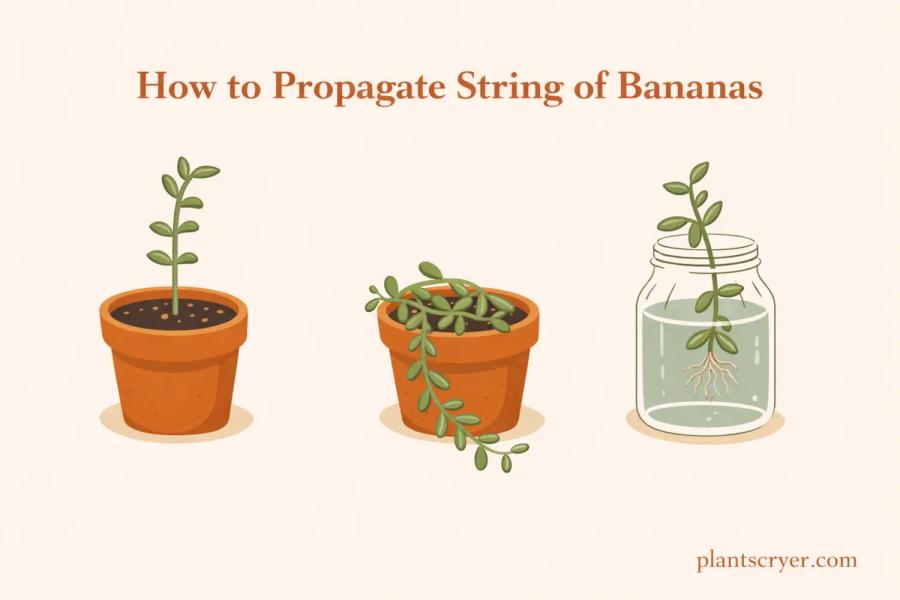
String of bananas propagates faster and more reliably than most trailing succulents. The stems root at the leaf nodes — the small points where each banana-shaped leaf attaches — which means you don't need a perfect cutting or even a cut end in soil. You just need living stem tissue in contact with the right conditions.
You have three options: stem cuttings in soil, the coil method, and water propagation. All three work. Soil is the most straightforward and produces roots that are ready to grow in their permanent home. Water is useful if you want to watch the roots develop before committing to a pot. The coil method is the easiest of all and the best option when you have a long trailing vine and don't want to cut it.
What You'll Need
- Clean scissors or pruning snips
- Small pot with drainage holes
- Cactus or succulent mix
- Perlite (optional but helpful)
- Clear glass or jar (for water method)
Method 1: Stem Cuttings in Soil
This is the most reliable method and the one to use if you want to fill out a sparse pot or start a new plant from scratch.
Step 1: Take the cutting Choose a healthy stem — firm, plump leaves, no signs of rot or shriveling. Cut 3–5 inches long. Longer cuttings aren't necessarily better; a 3-inch cutting with 6–8 healthy leaves will root just as well as a longer one.
Step 2: Strip the lower leaves Remove the leaves from the bottom inch or so of stem. This exposes the nodes where roots will form and prevents buried leaves from rotting in the soil.
Step 3: Let the cut end dry String of bananas stems are thin, so they don't need much time. An hour or two in a dry spot out of direct sun is enough in most conditions. If your home is humid, give it a full day. The goal is for the cut end to seal over — you'll see it lose the fresh green color and go slightly papery.
Step 4: Plant Fill a small pot with cactus mix, optionally amended with perlite. Make a hole with a chopstick or pencil and press the cut end in about an inch. The cutting tends to be top-heavy and will lean — floral pins or a folded piece of wire work well to hold it upright without damaging the stem.
Step 5: Water and wait Let the pot sit for a few days before watering to give the cut end time to settle without sitting in moisture. After that, water lightly — just enough to moisten the top inch of soil — and let it dry completely before watering again. Don't treat the cutting the same way you'd water an established plant. Roots develop faster when the soil dries slightly between waterings because the stem reaches for moisture.
Keep it in bright indirect light, no direct sun. Roots typically form in 2–4 weeks. You can check by giving the cutting a gentle tug — resistance means roots have taken hold.
Method 2: The Coil Method
If you have a vine that's gotten long and leggy, or you just want to fill out the pot the plant is already growing in, this is the easiest approach. No cutting required.
Take a long trailing stem and coil it on top of the soil in the same pot or a new one. Press it lightly into the surface so the stem has contact with the soil at multiple points. You can use small stones or bent wire pins to hold it in place.
Water as you normally would for the parent plant. Roots will develop at the nodes wherever the stem touches soil. Once you can see new leaf growth emerging — usually 3–5 weeks — the new sections have established roots. At that point you can cut the coiled section free from the parent if you want a separate plant, or leave it attached to fill in the pot.
This method works because string of bananas roots naturally along its length in the wild, spreading as ground cover across rocky terrain. You're just replicating that behavior in a pot.
Method 3: Water Propagation
Water propagation is slower than soil and requires an extra step at the end, but it's useful if you want to see the roots before potting — or if you've had soil cuttings fail and want to try something different.
Step 1: Prepare the cutting Same as the soil method — 3–5 inches long, lower leaves stripped.
Step 2: Place in water Use a clear glass or jar so you can monitor root development. Fill with room-temperature water and rest the cutting so the bare stem section is submerged but the leaves stay above the waterline. Leaves sitting in water will rot.
Step 3: Maintain Change the water every 3–4 days to keep it oxygenated and prevent bacterial buildup. Keep the jar in bright indirect light. Roots usually appear within 2–3 weeks.
Step 4: Transition to soil carefully This is the step most guides skip. Water roots are structurally different from soil roots — they're thinner-walled and adapted to pulling oxygen from water rather than air. If you drop a water-rooted cutting straight into dry succulent mix and treat it like an established plant, the roots often die and the cutting has to start over.
Instead: pot it into lightly moistened succulent mix and keep the soil barely damp for the first week or two. Not wet — just not bone dry. This gives the roots time to adapt before you switch to the normal dry-out-completely watering schedule. After 2–3 weeks you can ease into the standard routine.
When to Propagate
Spring and summer are the best times. The plant is actively growing, temperatures are warm, and cuttings root faster. That said, string of bananas will propagate year-round — it just takes longer in winter when growth slows. If you're propagating indoors in winter and the cutting sits for 6+ weeks without any sign of roots, that's usually normal rather than a failure.
Troubleshooting
Cutting is wilting or collapsing Usually too much moisture too soon. Let the soil dry out fully and check that the pot drains. If the base of the stem feels mushy, the cutting has rotted — take a new one and let it callous longer before planting.
No roots after 4+ weeks Check light first. Cuttings in low light root slowly or not at all. Move to a brighter spot. Also check that the soil is actually drying between waterings — consistently damp soil slows root development.
Leaves yellowing and dropping Often a sign the cutting is stressed from overwatering or too much direct sun. Strip any affected leaves and move it somewhere with bright indirect light. If the stem still looks firm and green, it will likely recover.
Roots formed but plant looks bad after potting Common with water-rooted cuttings. Give it 2–3 weeks in slightly moist soil before assuming it's failing. The transition period is rough but most cuttings pull through.
Frequently Asked Questions
Technically possible but not worth attempting. The success rate is very low and it takes much longer than stem cuttings. Stick to stem sections of at least 2–3 inches.
No. String of bananas roots readily without it. Rooting hormone can speed things up slightly, but it's not necessary and won't save a cutting that's been overwatered or placed in low light.
Yes, and it's a good idea if you want a full-looking plant quickly. Use 4–6 cuttings in a 4-inch pot. Plant them at slightly different angles so the trails spread out naturally as they grow.
When you see new leaf growth emerging from the tip of the cutting, the roots are established enough to support growth. That's the signal to start watering normally — thoroughly, then wait for the soil to dry out before watering again.
If your cuttings keep failing, it's often a care issue with the parent plant rather than a propagation problem. A stressed, underwatered, or light-deprived plant produces weaker stems that root poorly. The full care guide covers what healthy growing conditions look like.