How to Care for Heartleaf Philodendron
Philodendron hederaceum
 Save
Save
Heartleaf philodendron (Philodendron hederaceum) is the plant that gets recommended to every beginner, and for good reason. It tolerates low light, inconsistent watering, dry air, and general neglect better than almost any other tropical vine. But "tolerates" undersells what this plant does in good conditions. Give it bright indirect light and something to climb, and the leaves double or triple in size compared to the trailing growth most people are used to seeing.
Native to the tropical forests of Central America and the Caribbean, heartleaf philodendron grows as an epiphytic vine that climbs tree trunks toward the canopy. In the wild, mature climbing leaves can reach 12 inches. Indoors, trailing leaves stay 2 to 4 inches, but climbing leaves on a moss pole regularly hit 6 to 8 inches. The growth habit (climbing vs trailing) changes the leaf size more than any other single care factor.
You may see this plant sold under the old names Philodendron scandens or Philodendron oxycardium. These are the same species reclassified. The care is identical regardless of which name is on the label. Popular cultivars include 'Brasil' (green and lime-yellow variegation) and 'Micans' (velvety bronze leaves), both of which follow the same care guide with the note that variegated types need slightly more light to maintain their colour.
Toxic to cats, dogs, and humans. Contains calcium oxalates that cause oral irritation and swelling if chewed or ingested. The sap can irritate skin. Keep out of reach of pets and children.
Quick Info
- LightMedium
- WaterMedium
- SizeVines reach 4 to 10 feet indoors; leaves 2 to 4 inches trailing, up to 8 inches climbing
- HumidityModerate
- Temp60–85°F (16–29°C)
- FloweringNo
- TypeTropical, Vine
- Dog SafeNo
- Cat SafeNo
- Kid SafeNo
Is Heartleaf Philodendron Toxic?
Pets: Toxic to cats and dogs. Contains insoluble calcium oxalates that cause oral irritation, drooling, vomiting, and difficulty swallowing if ingested. Keep out of reach of pets.
Kids: Toxic if ingested. Causes mouth and throat irritation. The sap can irritate skin. Keep out of reach of young children.
Heartleaf Philodendron Care Guide
Light
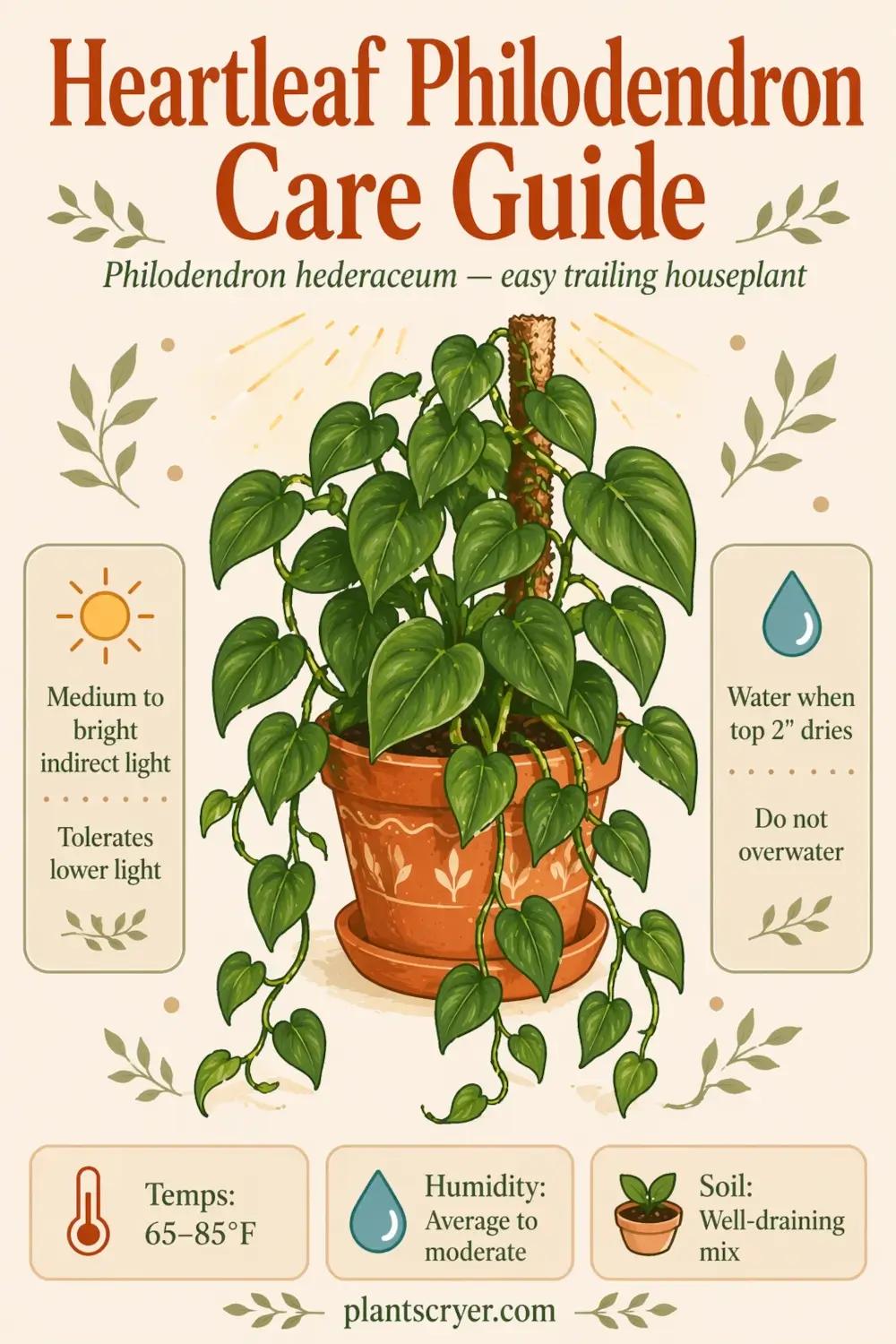
Bright indirect light for the best growth. An east- or west-facing window is ideal. Heartleaf philodendron tolerates low light better than most tropicals, surviving in north-facing rooms and corners that get minimal sun. But in low light, growth slows, vines stretch with longer gaps between leaves, and leaf size stays small. The difference in leaf size and vine density between a plant in low light and one in bright indirect light is dramatic.
Avoid direct afternoon sun, which scorches the thin leaves. Morning direct sun from an east window is fine and beneficial. Variegated cultivars like 'Brasil' need brighter light than the solid green type to maintain their colour; in low light the variegation fades toward green. A grow light running 10 to 12 hours daily works well in rooms without adequate natural light.
Watering
Water when the top 2 inches of soil feel dry. In bright conditions this is roughly once a week in spring and summer, every 10 to 14 days in winter. Water thoroughly until it drains from the bottom, then empty the saucer. Heartleaf philodendron is forgiving of the occasional missed watering (it wilts visibly when thirsty and perks back up within hours of a drink) but rots if the soil stays wet for extended periods.
Yellow leaves on heartleaf philodendron almost always mean overwatering. If leaves are yellowing from the base of the vine upward and the soil is damp, reduce watering frequency. A moisture meter helps distinguish between overwatering and other causes, especially in winter when the soil dries more slowly.
Soil
Chunky, well-draining mix. Two parts standard potting soil, one part perlite, one part orchid bark is a good blend. The orchid bark provides the aeration that epiphytic roots prefer, and the perlite prevents compaction over time. Heartleaf philodendron is not fussy about soil, but heavy, dense mixes that stay wet for days cause root rot. The pot must have drainage holes.
Temperature and Humidity
60 to 85°F (16 to 29°C). Normal room temperatures are fine year-round. Keep above 55°F; cold exposure causes slow growth and leaf yellowing. Avoid cold drafts and air conditioning vents blowing directly on the plant.
Humidity of 40 to 60% is ideal, but heartleaf philodendron handles typical indoor humidity (30 to 40%) without visible distress. In very dry winter air (below 30%), leaf tips may brown slightly. A humidifier nearby helps, especially for climbing plants where higher humidity encourages stronger aerial root attachment to the moss pole.
Fertilizing
Feed with a balanced liquid fertilizer at half strength once a month during spring and summer. Stop in fall and winter. Heartleaf philodendron grows fast enough that it benefits from regular feeding during the growing season, but over-fertilizing causes salt buildup and leaf tip burn. If you see white deposits on the soil, flush with plain water.
Repotting
Every 2 to 3 years, or when roots circle the bottom of the pot or push out of the drainage holes. Go up 2 inches in pot diameter. Spring is the best time. Heartleaf philodendron is not particularly sensitive to repotting and recovers quickly. This is a good time to refresh the soil mix and prune any leggy or bare vines.
Pruning
Regular pruning keeps the plant full and bushy instead of long and sparse. Cut vines back to just above a leaf node with clean pruning snips. The plant branches from below the cut, producing two or more new growing tips. Every trimmed section can be propagated (see below), so pruning generates free plants. Prune any time during the growing season. The sap can irritate skin, so wash hands after handling.
Climbing vs Trailing
Heartleaf philodendron is a climbing aroid in the wild. When given a support to climb, the leaves grow significantly larger and the internodes shorten, producing denser, fuller growth. A moss pole, coir pole, or bamboo support all work. Guide the vine upward and secure with soft plant ties until the aerial roots attach. Keep the moss pole damp to encourage attachment. Climbing heartleaf philodendron produces leaves 2 to 3 times larger than trailing growth from the same plant. If you want the classic hanging-basket look with small cascading leaves, trailing is fine. If you want bigger, bolder foliage, give it something to climb.
Propagation
One of the easiest houseplants to propagate. Cut a vine section 4 to 6 inches long with at least one node (the small bump where a leaf attaches) and one or two leaves. Remove the lowest leaf to expose the node. Place in a jar of water with the node submerged. Change the water weekly. Roots appear in 1 to 3 weeks. Transfer to soil when roots reach 2 inches. Water propagation is so reliable with this plant that it is the standard recommendation for beginners learning to propagate anything.
Soil propagation: insert the cut end directly into moist potting mix with the node buried. Keep the mix lightly moist. Roots establish in 2 to 4 weeks. Planting multiple rooted cuttings back in the same pot is the fastest way to create a full, bushy plant.
Common Heartleaf Philodendron Problems
Yellow leaves Almost always overwatering. Yellow leaves from the base of the vine working upward with damp soil is the classic pattern. Let the soil dry more between waterings. If only one or two older leaves at the base yellow while the vine tips grow actively, that is normal leaf cycling and not a problem. Why are my plant's leaves turning yellow covers the full diagnosis.
Leggy, sparse vines Not enough light. The stems stretch with long gaps between leaves. Move to brighter indirect light. Prune the leggy vines back to a node; the plant branches from the cut and the trimmed sections can be rooted and replanted for a fuller pot. Regular pruning every few months prevents the bare-stem cycle.
Wilting despite moist soil Root rot. The plant wilts because the roots can no longer absorb water, even though the soil is wet. Unpot and check the roots. Trim any brown, mushy roots, let the base dry, and repot in fresh well-draining mix. Root rot vs soil mold covers how to confirm.
Small leaves Usually a combination of low light and trailing growth. Give the plant a moss pole or other support to climb. The leaves will grow significantly larger on climbing growth compared to trailing. Increasing light also helps. A plant in bright indirect light on a moss pole produces the largest leaves.
Pests Mealybugs, spider mites, and fungus gnats are the most common. Mealybugs hide at leaf nodes and stem joints. Spider mites cause fine stippling on the undersides of leaves. Fungus gnats breed in consistently wet topsoil. Treat with neem oil for mealybugs and spider mites. Let the soil dry more between waterings to address fungus gnats.
FAQs
When the top 2 inches of soil feel dry. In bright conditions this is roughly once a week in spring and summer, every 10 to 14 days in winter. The plant wilts visibly when thirsty and perks back up within hours after watering, so it gives you a clear signal. Overwatering (yellowing leaves, soggy soil) is more common than underwatering.
Yes, significantly. Climbing heartleaf philodendron produces leaves 2 to 3 times larger than trailing growth from the same plant. This is the species' natural climbing habit; the aerial roots attach to the support and the plant transitions to its mature growth form. Keep the moss pole damp to encourage root attachment.
Yes. It contains insoluble calcium oxalates that cause oral irritation, drooling, vomiting, and difficulty swallowing if chewed or ingested. The sap can also irritate skin. Keep the plant out of reach. If you suspect a pet has ingested any part of it, contact your vet or the ASPCA Poison Control hotline.
Cut a vine section 4 to 6 inches long with at least one node and a leaf or two. Place in water with the node submerged. Change the water weekly. Roots appear in 1 to 3 weeks. Transfer to soil when roots reach 2 inches. This is one of the easiest houseplants to propagate and an ideal starter for learning water propagation.
Not enough light. The stems stretch with long gaps between leaves when light is insufficient. Move to brighter indirect light. Prune leggy vines back to a node and the plant will branch from the cut point. Root the cuttings and replant them in the same pot for immediate fullness.
Yes, better than most tropicals. It survives in north-facing rooms and low-light corners where many plants would fail. But survival and healthy are different. In low light, growth slows, vines stretch, leaves stay small, and the plant gradually thins out. Bright indirect light produces noticeably faster, fuller, and larger-leafed growth.
No, though they are frequently confused. Heartleaf philodendron (Philodendron hederaceum) has thinner, more matte, heart-shaped leaves with a more pronounced point at the tip. Golden pothos (Epipremnum aureum) has thicker, glossier, more asymmetrical leaves. The care is similar but they are different genera. Both are toxic to pets.