How to Care for Arrowhead Plant
Syngonium podophyllum
 Save
Save
Arrowhead plant (Syngonium podophyllum) is a tropical vine that shapeshifts as it grows. Young plants produce the arrow-shaped leaves that give it its common name: simple, pointed, often variegated in white, pink, or silver. As the plant matures and starts to climb, the leaf shape transforms entirely. Mature climbing leaves split into 5 to 11 separate lobes, can reach 6 to 12 inches across, and look nothing like the juvenile foliage most people bought the plant for.
This transformation is not a problem. It is how the plant grows in the wild. Native to the tropical forests from Mexico through South America, Syngonium climbs tree trunks using aerial roots and transitions to its mature leaf form as it reaches higher light levels in the canopy. Indoors, you control which version you get. Prune the climbing stems regularly and the plant stays compact and bushy with juvenile arrowhead leaves. Give it a moss pole and let it climb, and it produces the larger, multi-lobed mature foliage.
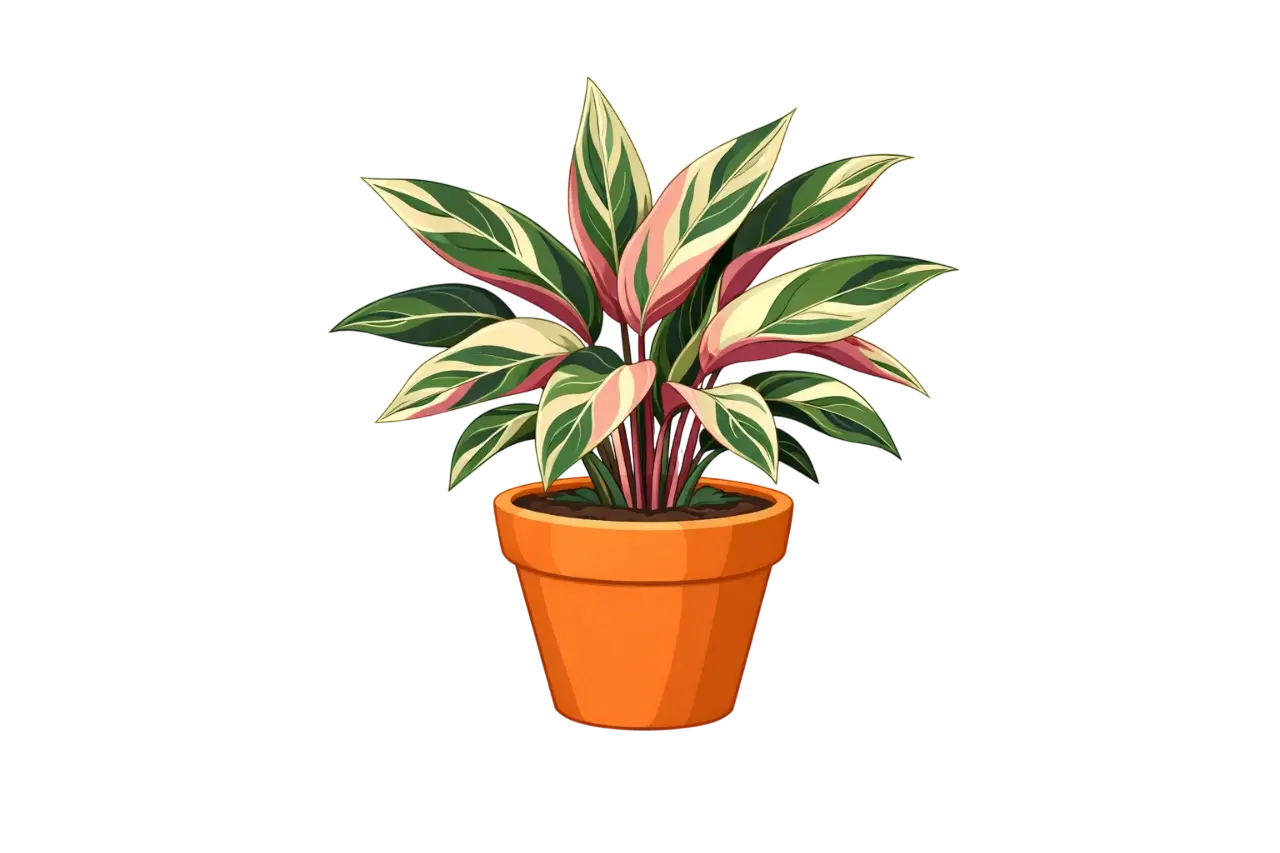
Dozens of cultivars exist in colours ranging from deep green to bright pink to near-white. The care is the same across all of them, with one adjustment: heavily variegated and pink varieties need brighter light to maintain their colour. In low light, variegation fades toward green as the plant produces more chlorophyll to compensate.
Toxic to cats, dogs, and humans. Contains calcium oxalates that cause oral irritation and swelling. Keep out of reach of pets and children.
Quick Info
- LightMedium
- WaterMedium
- Size3 to 6 feet tall climbing; stays compact if pruned
- HumidityHigh
- Temp60–85°F (16–29°C)
- FloweringYes
- TypeTropical, Vine
- Dog SafeNo
- Cat SafeNo
- Kid SafeNo
Is Arrowhead Plant Toxic?
Pets: Toxic to cats, dogs, and horses. Contains insoluble calcium oxalates that cause oral irritation, drooling, vomiting, and difficulty swallowing. In rare cases, upper airway swelling can occur. Keep well out of reach.
Kids: Toxic if ingested. Causes mouth and throat irritation. Sap can irritate skin. Keep out of reach of young children.
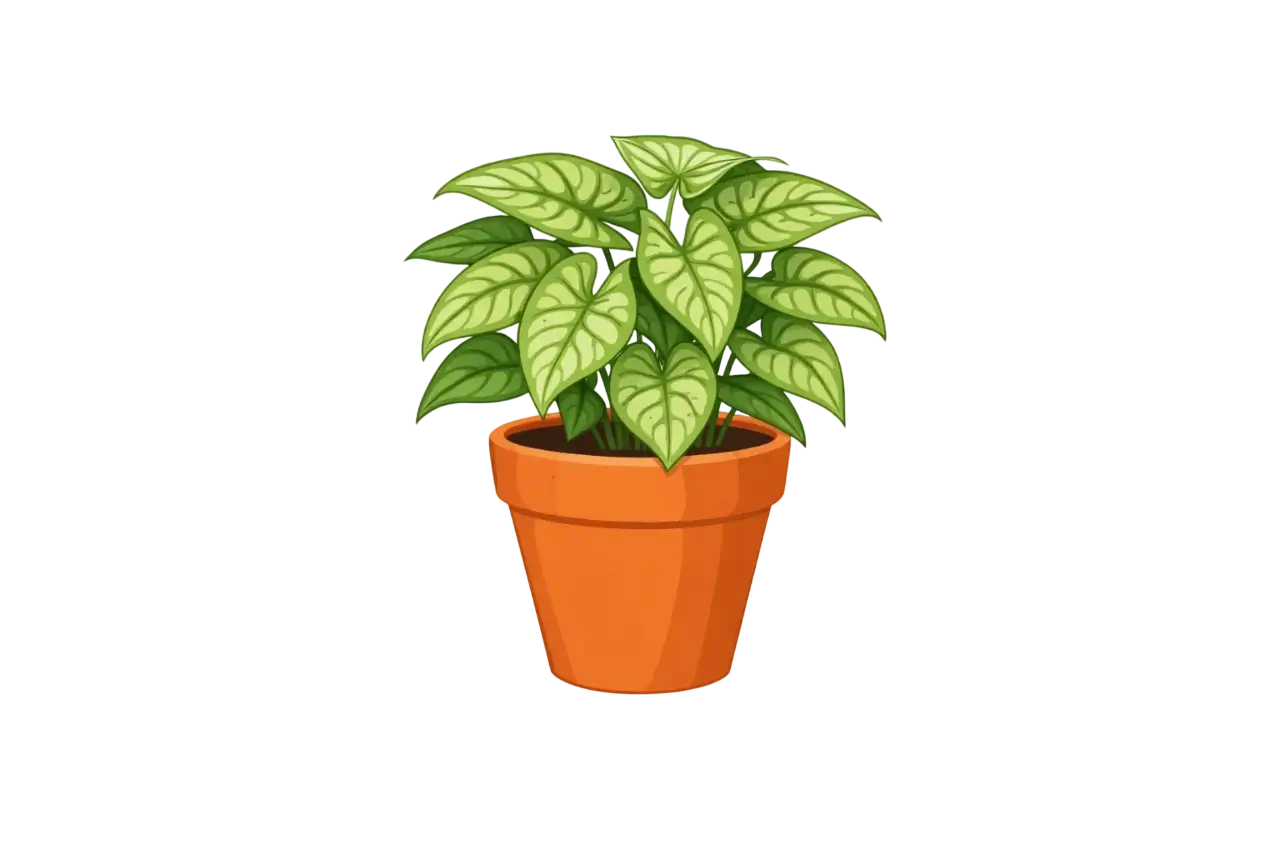
Arrowhead Plant Care Guide
Light
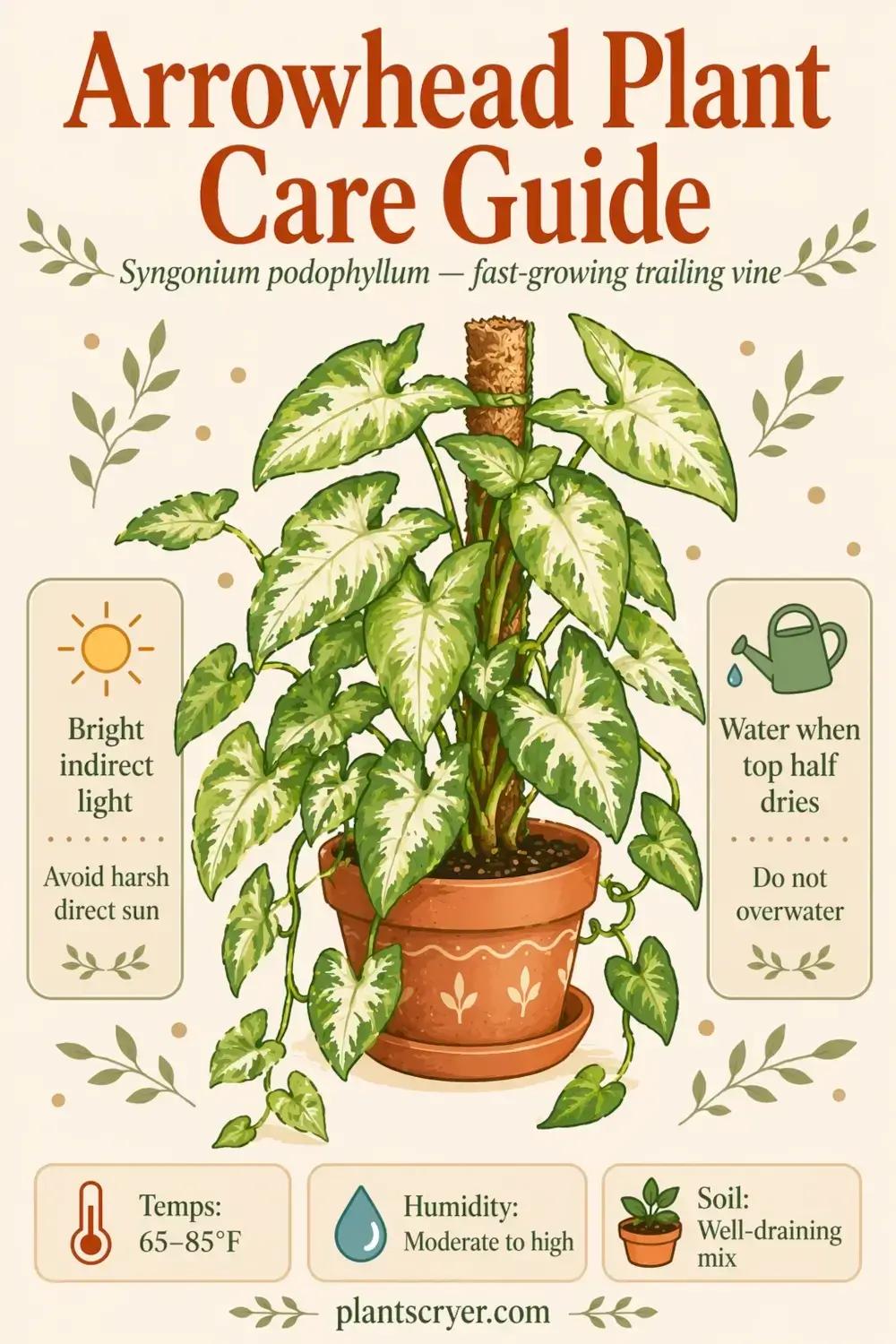
Bright indirect light. 4 to 6 hours of bright indirect light daily is ideal. An east- or north-facing window works for solid green varieties. Pink, white, and heavily variegated cultivars (like 'Pink Allusion', 'White Butterfly', 'Neon Robusta') need brighter conditions, closer to a west or south-facing window with filtered light, to hold their colour.
Avoid direct afternoon sun, which scorches the thin leaves, especially on lighter-coloured varieties. Arrowhead plant tolerates lower light better than most tropicals and survives in dim rooms, but growth slows, vines stretch, and variegation fades. A grow light running 10 to 12 hours daily is especially useful for maintaining pink and white cultivars through winter.
Watering
Water when the top half of the soil feels dry. Arrowhead plant likes more consistent moisture than most aroids but still rots in waterlogged soil. In bright conditions this is roughly once a week in spring and summer, every 10 to 14 days in winter. Water thoroughly until it drains, then empty the saucer.
The plant wilts visibly when it needs water and recovers quickly after a drink, which makes it forgiving of the occasional missed watering. Consistent soggy soil is harder to recover from: it leads to bacterial soft rot at the base, which spreads fast and is often fatal. A moisture meter helps find the balance, especially in winter when drying times slow.
Soil
Light, chunky, well-draining mix. Standard potting soil amended with perlite and orchid bark (roughly 2 parts potting soil, 1 part perlite, 1 part bark) provides the drainage and aeration that the semi-epiphytic roots prefer. The mix should hold some moisture without staying soggy. The pot must have drainage holes. A pot slightly larger than the root ball is fine; arrowhead plants are not particularly sensitive to being slightly rootbound.
Temperature and Humidity
60 to 85°F (16 to 29°C). Normal room temperatures work year-round. Keep above 55°F; cold exposure causes leaf drop and slowed growth. Avoid cold drafts and air conditioning vents.
Humidity of 50 to 60% is ideal. Arrowhead plant comes from humid tropical forests and shows it. In dry air (below 40%), leaf edges crisp and brown, and the plant becomes more susceptible to spider mites. A humidifier near the plant is the most effective fix. Grouping with other tropicals helps raise local humidity. Misting provides a brief boost but does not meaningfully change the ambient level.
Fertilizing
Feed with a balanced liquid fertilizer at half strength every 2 to 4 weeks during spring and summer. Reduce to once a month in fall and stop in winter. Arrowhead plant grows fast in good conditions and responds well to regular feeding. Over-fertilizing shows up as brown leaf tips and salt crust on the soil surface.
Repotting
Every 1 to 2 years in spring, or when roots fill the pot and start circling. Go up 2 inches in diameter. Arrowhead plant grows fast enough that younger plants may need annual repotting. Refresh the soil mix at each repotting to maintain drainage. Wear gloves when handling; the sap irritates skin.
Pruning and Growth Control
This is where you choose your plant's form. For a compact, bushy plant with arrowhead leaves: prune the climbing stems as they develop. Cut back to a leaf node with clean pruning snips. The plant branches from the cut and stays in its juvenile form with the simple, arrow-shaped leaves. This is the most common way people grow it indoors.
For mature, lobed foliage: give the plant a moss pole, coir pole, or bamboo support and let it climb. As the vines ascend, they transition to the mature growth form: larger, multi-lobed leaves that look dramatically different from the juvenile foliage. This is the plant's natural growth pattern in the wild and produces the most impressive specimens. Keep the moss pole damp to encourage aerial root attachment.
Propagation
Stem cuttings root easily in water or soil. Cut a section 4 to 6 inches long with at least one node and a leaf. Remove the lowest leaf. In water: submerge the node, change water weekly, and roots appear in 1 to 3 weeks. Transfer to soil when roots reach 2 inches. In soil: insert the node into moist potting mix and keep lightly damp. Roots establish in 2 to 4 weeks. The cuttings from regular pruning are all propagatable, so maintaining a bushy plant generates a steady supply of new starts.
Common Arrowhead Plant Problems
Leggy, reaching vines Not enough light, or the plant has not been pruned. Arrowhead plant grows vigorously and will extend long, sparse vines if not managed. Prune back to a node to encourage branching and a bushier shape. Move to brighter indirect light to prevent regrowth from stretching the same way.
Variegation fading Insufficient light. Pink, white, and cream-variegated cultivars revert toward green in low light because the plant needs more chlorophyll to compensate. Move to brighter indirect light. Once a leaf has reverted, it will not regain its variegation, but new growth will come in coloured if light is adequate.
Yellow leaves Usually overwatering. If the soil is consistently damp and leaves are yellowing, reduce watering frequency and check for root rot. A few older lower leaves yellowing while new growth looks healthy is normal leaf cycling. Why are my plant's leaves turning yellow covers the full diagnosis.
Bacterial soft rot Mushy, foul-smelling stems at the base. Caused by chronically wet soil, especially in cooler conditions. Spreads fast and is often fatal once it reaches the main stem. Prevention is the best approach: let the soil dry between waterings and ensure good drainage. If caught early, cut above the rot and propagate the healthy top section.
Brown leaf edges Low humidity. Arrowhead plant prefers 50 to 60% humidity. Dry indoor air in winter causes crispy brown margins. A humidifier fixes this more effectively than misting.
Spider mites and mealybugs Spider mites flourish in dry air and produce fine webbing on leaf undersides. Mealybugs hide at the leaf nodes and stem joints. Raising humidity reduces spider mite risk. Treat both with neem oil or rubbing alcohol on a cotton swab for targeted treatment.
FAQs
This is normal. Arrowhead plants produce simple, arrow-shaped leaves when young. As the plant matures and starts to climb, the leaves transition into larger, multi-lobed forms with 5 to 11 segments. If you want to keep the arrowhead shape, prune the climbing stems regularly. If you want the mature lobed leaves, give it a moss pole and let it climb.
When the top half of the soil feels dry. In bright conditions this is roughly once a week in spring and summer, every 10 to 14 days in winter. The plant wilts visibly when thirsty and bounces back quickly, so it gives a clear signal. Consistently wet soil causes rot, which is harder to fix.
Yes. It contains insoluble calcium oxalates that cause oral irritation, drooling, vomiting, and difficulty swallowing if chewed or ingested. In rare cases, upper airway swelling can occur. Keep the plant out of reach of pets and children.
Bright indirect light. Pink and variegated cultivars need more light than solid green varieties to maintain their colour. In low light, the variegation fades toward green. An east or west window with good indirect light, or a grow light running 10 to 12 hours daily, keeps the pink tones vibrant.
Prune the climbing stems back to a leaf node whenever they start to vine. The plant branches from below each cut, producing a fuller, bushier shape. Every cutting can be rooted in water or soil, so pruning generates free plants. Pruning also keeps the plant in its juvenile arrowhead-leaf form.
Yes, and it roots reliably. Cut a stem with at least one node and a leaf, submerge the node in water, and change the water weekly. Roots appear in 1 to 3 weeks. Transfer to soil when roots reach 2 inches. This is one of the easiest houseplants to water-propagate.
It depends on the look you want. A moss pole encourages climbing and triggers the transition to mature, multi-lobed leaves that are larger and more dramatic. Without a pole, the plant stays in its juvenile form with simple arrowhead leaves (as long as you prune climbing stems). Both growth forms are healthy; it is a style preference.