How to Care for Ponytail Palm (Beaucarnea recurvata)
Beaucarnea recurvata
 Save
Save
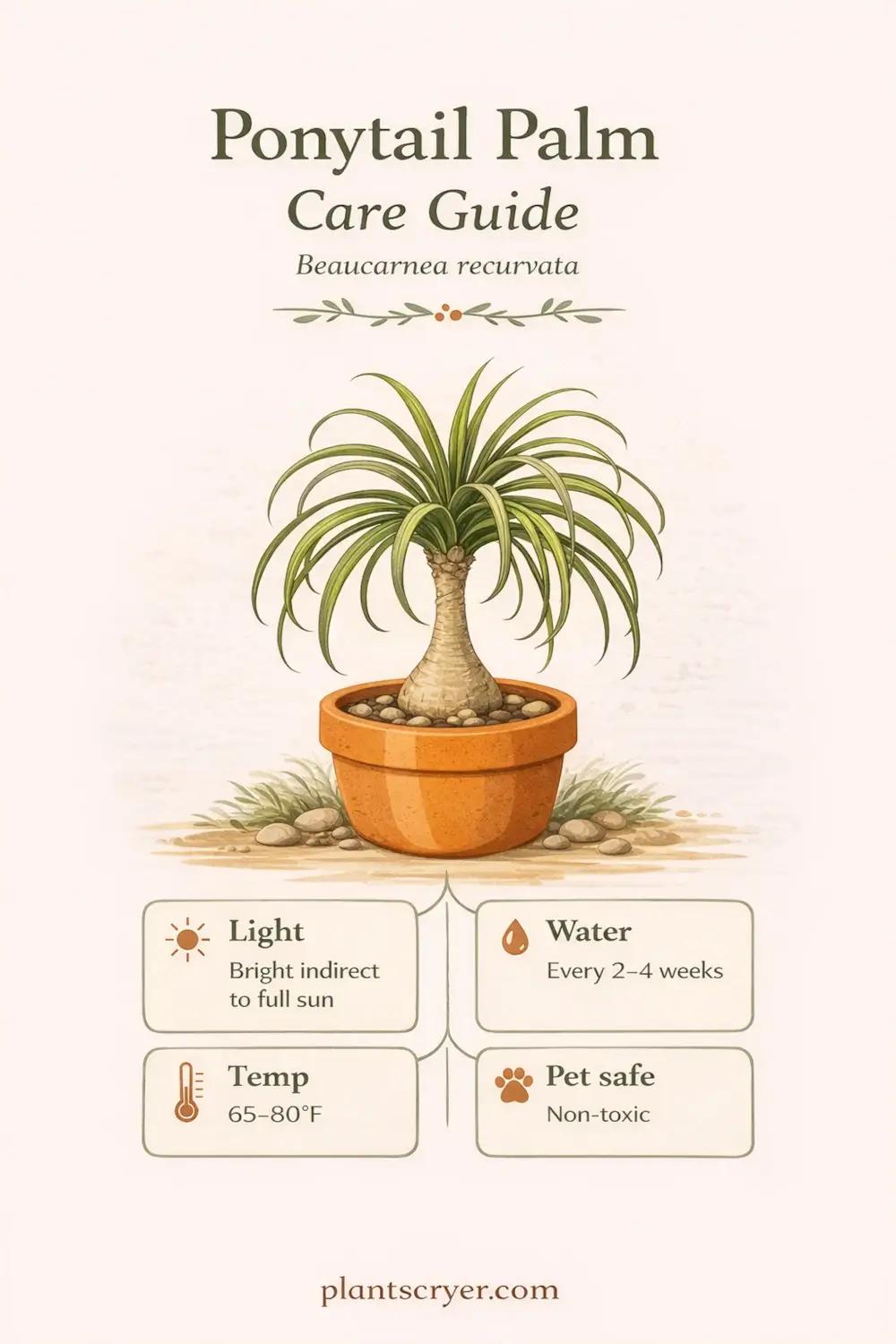
The ponytail palm isn't actually a palm. It's a semi-succulent in the Asparagaceae family, related to agave and yucca, native to the semi-desert regions of eastern Mexico. Wild plants in Veracruz are listed as critically endangered by the IUCN. Habitat loss and overharvesting for the ornamental plant trade have hit wild populations hard. Every ponytail palm sold as a houseplant was grown in cultivation.
Indoors it grows slowly to around 4–6 feet over many years. The swollen base, called the caudex, stores water and lets the plant go long stretches between waterings. It's one of the few common houseplants that's non-toxic to cats, dogs, and people. Though the leaf edges are serrated and sharp enough to cut skin during repotting.
Quick Info
- LightBright
- WaterLow
- Size2–4 feet indoors
- HumidityLow
- Temp60–85°F (16–29°C)
- FloweringYes
- TypeSucculent, Tree
- Dog SafeYes
- Cat SafeYes
- Kid SafeYes
Toxicity Info

Ponytail Palm Care Guide
Light
Ponytail palm wants as much light as you can give it. A south or west-facing window is the best spot. It tolerates some direct sun through glass and does better with it than without. In low light, growth slows to nearly nothing, the leaves go limp and thin, and the stem stretches upward as the plant reaches toward the light source. That stretched growth won't revert.
East-facing windows work but growth will be minimal. North-facing windows aren't enough long-term.
Rotate it a quarter turn each time you water so all sides get even light exposure. If natural light is limited, a grow light positioned close and running 10–12 hours a day is a practical solution.
Watering
Overwatering kills more ponytail palms than anything else. The caudex stores enough water to carry the plant through long dry periods. It does this in the wild, and it'll do it in your living room too.
Water deeply when the soil is completely dry, not just dry at the surface. Push a finger 2–3 inches into the soil. If there's any moisture, wait. A moisture meter takes the guesswork out of it, especially for a plant where the consequences of overwatering are serious.
In spring and summer, that usually means watering every 2–4 weeks. In fall and winter the plant goes dormant. You can cut back to once a month or even less. Some growers suspend watering almost entirely in winter, giving just enough to keep the caudex from shriveling.
When you water, keep it off the trunk. Water directed at the base of the stem or into the leaf crown can sit on the caudex and trigger rot. Water the soil only, let it drain fully, and empty the saucer.
If you're not sure whether your trunk is trying to tell you something, read: Why Is My Ponytail Palm Trunk Shrinking?
Use our Succulent Watering Calculator to dial in a schedule based on your conditions.
Soil and pot
Use a cactus or succulent potting mix. Regular potting soil holds far too much moisture. To improve drainage further, cut it with perlite or coarse sand.
Pot size matters. Ponytail palm prefers to be slightly root-bound. An oversized pot holds excess soil that stays wet after watering, which is how rot starts without obvious warning signs. When repotting, move up only one pot size and leave roughly an inch of space around the trunk.
Terracotta pots are a good choice. The porous walls help the soil dry out faster between waterings, which suits this plant well. Whatever pot you use, drainage holes are non-negotiable.
Don't bury the caudex below the soil line. It should sit at or above the surface. Planting it too deep traps moisture against it and creates conditions for rot to develop at the base.
Repotting
Every 2–3 years is typical, and only when the caudex is pressing against the pot wall or roots are coming out of the drainage holes. Repot in spring at the start of the growing season.
Use fresh cactus mix, go up only one pot size, and don't plant the caudex any deeper than it was sitting before. Wait at least a week before watering after repotting to let any disturbed roots settle.
Temperature and humidity
Comfortable at normal indoor temperatures. 65–80°F is the range to aim for. Keep it away from cold drafts, heating vents, and air conditioning. Temperatures in the low 50s can kill it. It's not frost-hardy and only survives outdoors year-round in USDA zones 9–11.
Low humidity is fine. This plant is adapted to dry desert conditions and doesn't need misting. Moisture near the base of the leaves or on the caudex can cause problems, so skip the humidifier and keep it dry.
Fertilizing
Light feeder. A diluted liquid cactus or succulent fertilizer every other month during spring and summer is enough. Half strength is the right dose. Overfertilizing causes brown leaf tips and soft, weak growth. Don't fertilize in fall or winter when the plant is dormant.
Propagation
The only practical method at home is removing pups: small offsets that occasionally sprout from the base of the caudex. Not every plant produces them, and some never do. Propagation from seed is possible but takes years and requires consistently warm conditions; it's not worth attempting for most home growers.
Wait until pups are at least 4 inches tall before removing them. 6 inches is better. By then they'll have started forming their own root base. In spring, use a clean sharp knife to cut the pup away from the parent. Let the cut end callous over for a few days. If the pup has minimal roots, dust the cut end with rooting hormone before planting.
Pot it in dry cactus mix, don't water for the first week, and keep it out of direct sun until established. Growth is slow, be patient.
Common Problems
Trunk shrinking or wrinkling. The caudex is drawing down its water reserves. A firm but deflated trunk just means it's time to water. A soft or mushy trunk is rot. These need different responses, and confusing them will make things worse. Full breakdown: Why Is My Ponytail Palm Trunk Shrinking?
Brown leaf tips. The most common cosmetic issue. Multiple causes: underwatering, overwatering, overfertilizing, or mineral buildup from tap water. Check the soil and your watering frequency first before adjusting anything else. Full breakdown: Why Are My Ponytail Palm Leaves Turning Brown?
Yellowing leaves. Usually overwatering. Stop watering, let the soil dry out completely, and check that the pot is draining properly.
Leggy, weak growth: not enough light. The stem stretches toward the light source and the leaves go thin and limp. Move it to a brighter window. The stretched growth won't revert but new growth in better light will be more compact.
Mealybugs: white cottony clusters at leaf bases or on the trunk. Wipe off with a cotton swab dipped in rubbing alcohol. Check surrounding plants, they spread.
Scale: small brown bumps along leaves and stem. Scrape off with a soft brush and treat with neem oil or insecticidal soap.
FAQs
Yes. Non-toxic to cats and dogs according to the ASPCA. The serrated leaf edges can irritate a pet's mouth if they chew on it, but the plant itself isn't poisonous.
Slowly. A few inches per year in good conditions. In low light, growth can be nearly undetectable from one year to the next. This is why larger specimens are expensive. They've taken a long time to get there.
Yes, and it benefits from it. Acclimate it gradually. Start in a shaded or covered spot for a week before moving to more light. Outdoor light is significantly more intense than indoor light and the plant can scorch if moved abruptly. Bring it back inside before nighttime temperatures drop below 55°F.
Check the soil 2–3 inches down. If there's any moisture, wait. Also look at the caudex. A slightly deflated but firm trunk is a normal sign it's ready. A moisture meter is the most reliable tool for this plant given how costly overwatering mistakes are.
Either it was cut at some point and branched below the cut (a deliberate technique some growers use to create a fuller look) or it's naturally producing multiple growth points as it matures. Both are normal.
A very long time. Wild specimens in Mexico have been recorded at over 350 years old. As a houseplant with reasonable care it can easily last decades. It's one of the most long-lived houseplants you can own.