Why Is My Ponytail Palm Trunk Shrinking?
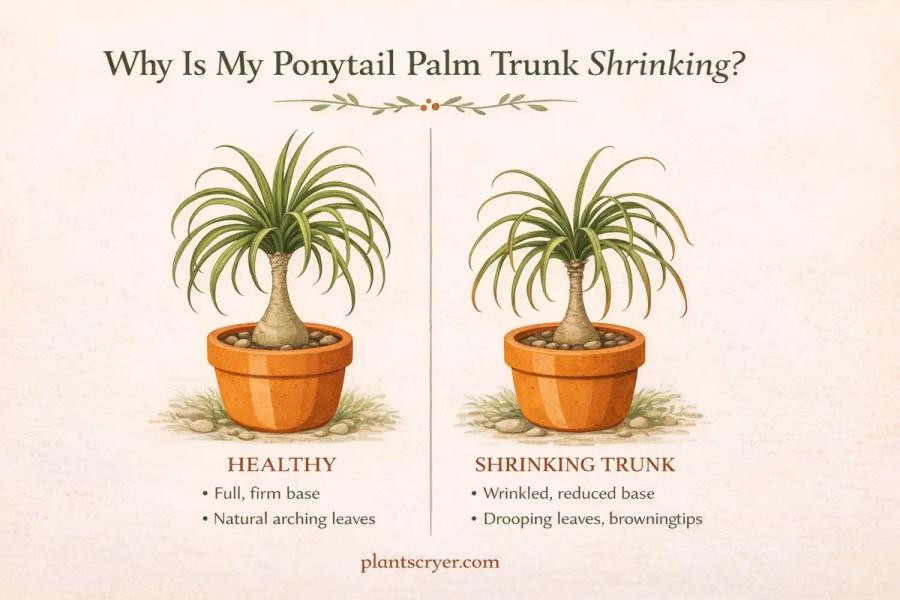
The ponytail palm stores water in its trunk. That swollen base called the caudex is essentially a built-in reservoir — it fills up when you water, and the plant draws from it between waterings. When the trunk starts shrinking or wrinkling, the caudex is running low. Most of the time that's completely normal. Sometimes it's not.
Here's how to tell the difference.
A slightly smaller trunk is normal
After watering, the caudex fills out. As the plant uses that stored water, it deflates a little. You might notice the trunk looks slightly less round, or some faint wrinkling in the bark. This is the plant doing exactly what it's designed to do.
If the shrinkage is minor, the leaves still look healthy, and the soil is dry, it just means it's time to water. Give it a deep soak and the trunk should fill back out within a day or two.
Significant shrinking and wrinkling means underwatering
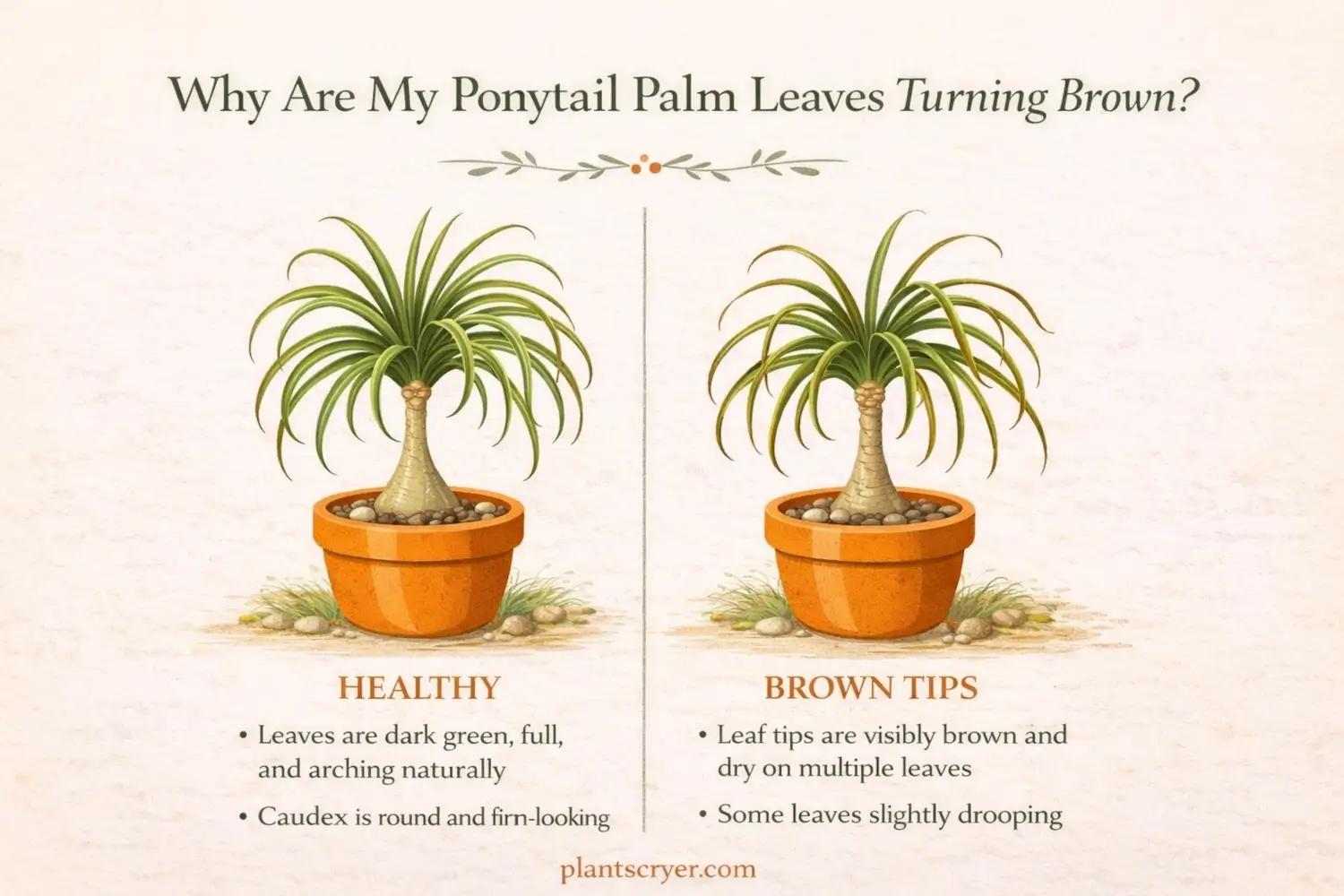
If the trunk has shrunk noticeably and the bark is visibly wrinkled, the caudex has used most of its reserves. You'll usually see the leaves reacting too — browning at the tips and starting to curl inward.
One thing worth knowing: brown leaf tips on their own aren't a reliable indicator. Too much direct sun causes brown tips too, without any trunk shrinkage. And if the leaves have brown tips but they're not curling, that can actually point to overfertilization rather than thirst. The trunk and the soil are your best diagnostic tools. Press the caudex gently — if it's firm but slightly deflated, the plant is just dry. Check the soil 2–3 inches down. Bone dry and a pot that feels light? Underwatering is your answer.
How to fix it: Bottom water the plant. Place the pot in a tray or sink with 3–4 inches of room temperature water and leave it for 45 minutes. The soil will draw moisture up through the drainage holes. Once the top 2–3 inches of soil feel damp, take the pot out and let it drain fully before putting it back in its spot.
Pouring water in from the top doesn't always work when the soil is severely dry — water tends to run straight down the sides and out the bottom without actually reaching the roots. The soak method gets moisture to the whole root zone.
The trunk should start filling back out within a few days. If it doesn't fully recover after one soak, repeat after a week. A moisture meter takes the guesswork out of knowing when to water again.
Soft or mushy shrinking means rot
This is the one you don't want. If the trunk is shrinking and the base feels soft, squishy, or yields when you press it, that's rot — not dehydration. The two can look similar from across the room but feel completely different.
Rot usually starts at the roots from overwatering or poor drainage, but it can also develop at the base of the caudex if water pools there or if the plant was set too deep in the pot when it was last repotted. Either way, by the time you can see and feel it at the surface, it's often been going on for a while underneath.
Other signs that point toward rot rather than underwatering:
- Leaves yellowing and going limp rather than browning and curling
- Soil that's wet or smells sour
- Dark discoloration at the base of the trunk
How to fix it: Unpot the plant and check the roots. Healthy roots are white or tan. Rotted roots are brown, black, and mushy. Cut everything rotted back to healthy tissue with clean scissors or a knife. Let the plant sit unpotted in a dry spot for a day to let the cuts callous over. Then repot in fresh, dry cactus or succulent mix in a terracotta pot with drainage holes. Terra cotta is worth using here because the porous walls help the soil dry out faster. Don't water for at least a week after repotting.
If the rot has made it all the way into the center of the caudex — soft all the way through when you press it — the plant is unlikely to recover.
Quick comparison
How to keep the trunk healthy going forward
The caudex will always fluctuate some between waterings — that's just how the plant works. To avoid the more serious scenarios:
Water deeply but infrequently. Let the soil dry out completely before watering again — not just the top inch, but 2–3 inches down. In spring and summer that's typically every 2–4 weeks. In winter the plant goes dormant and barely needs anything — every 4–8 weeks or even less depending on your conditions.
Use cactus or succulent potting mix and a pot with drainage holes. Standard potting soil holds way too much moisture for this plant. Terra cotta pots help the soil dry faster between waterings.
Don't oversize the pot. Excess soil around the roots stays wet long after watering, which is exactly how rot gets started without you noticing. Go up only one pot size when repotting.
Don't bury the trunk. The caudex should sit at or above the soil line. Planting it below the surface traps moisture against it and creates conditions for rot at the base.
Frequently Asked Questions
If it's underwatering, yes. A deep soak and the trunk should start filling back out within a few days. If it's rot caught early, you can often save the plant by cutting the affected roots and repotting in fresh dry mix. If rot has made it to the center of the caudex, recovery is unlikely.
Usually 1–3 days. If you've done a proper bottom water soak and the trunk looks the same after a week, check the roots for rot.
Yes and it's actually one of the most useful things you can do. A healthy caudex feels firm. One that's deflated from normal water use feels slightly less taut but still firm. A soft trunk that gives when you press it is the warning sign for rot.
This is the rot scenario. When roots are rotting they can't absorb water, so the caudex depletes its reserves even though moisture is in the soil. Unpot and check the roots.
Some texture and surface wrinkling is normal, especially as the plant ages. What you're looking for is a change from how it usually looks — if it's noticeably more wrinkled than before alongside visible shrinkage, that's your cue to water.
New to ponytail palms or want to make sure you're getting the basics right? Our Ponytail Palm Care Guide covers light, watering, soil, and everything else you need to keep one healthy long-term.