Why Are My Ponytail Palm Leaves Turning Brown?
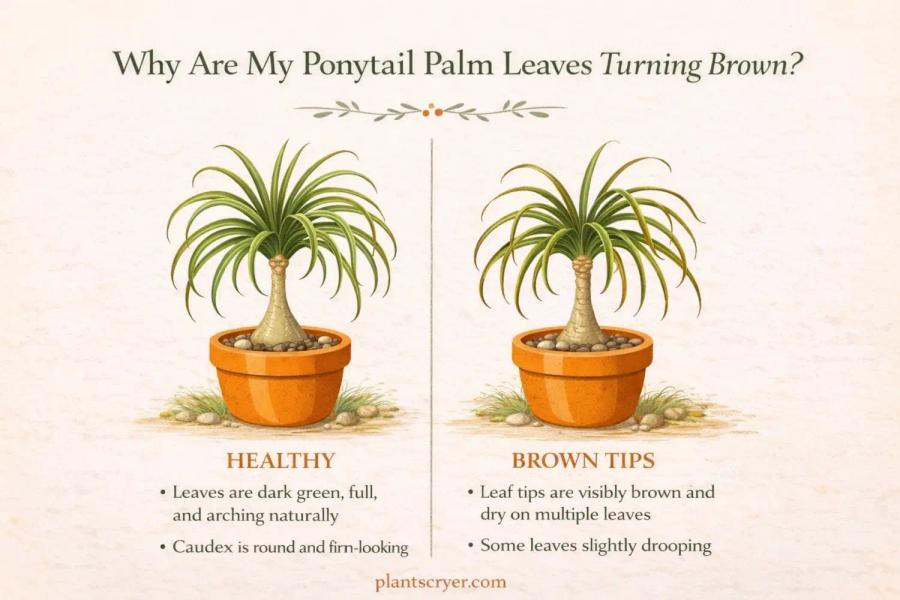
Brown leaves on a ponytail palm are common, and the frustrating part is that several different problems produce the same symptom. Overwatering, underwatering, too much fertilizer, tap water minerals, sun exposure, and normal aging can all cause browning — and the fix for one will make another worse.
The pattern of the browning tells you more than the color alone. Here's how to work through it.
Brown tips, leaves curling inward — underwatering
This is the classic underwatering pattern. Tips go brown and crispy, and the leaves start to curl inward toward the stem. Check the soil 2–3 inches down. If it's bone dry and the pot feels light, the plant needs water.
Fix: Bottom water the plant. Place the pot in 3–4 inches of room temperature water for 45 minutes. The soil will pull moisture up through the drainage holes. Once the top 2–3 inches feel damp, take it out and let it drain fully before putting it back. Pouring water from the top doesn't always work when the soil is severely dry — it runs straight down the sides without reaching the roots.
The brown tips won't go back to green. Once you've corrected the watering, trim them with sharp scissors or pruning shears following the natural taper of the leaf so the cut blends in.
Brown tips with yellow edges or yellowing leaves — overwatering
This reads differently from underwatering. Instead of crispy brown tips on otherwise green leaves, you'll see yellowing at the leaf edges or whole leaves going yellow before browning. Leaves go limp rather than curling.
Check the soil. If it's still wet or damp, you're watering too often. Also press the base of the trunk — if it feels soft or mushy, rot has set in and that needs addressing separately.
Fix: Stop watering and let the soil dry out completely before the next watering. Don't water again until you've confirmed the soil is dry 2–3 inches down with your finger or a moisture meter. If the pot sits in a saucer with standing water, empty it — that's what drives root rot.
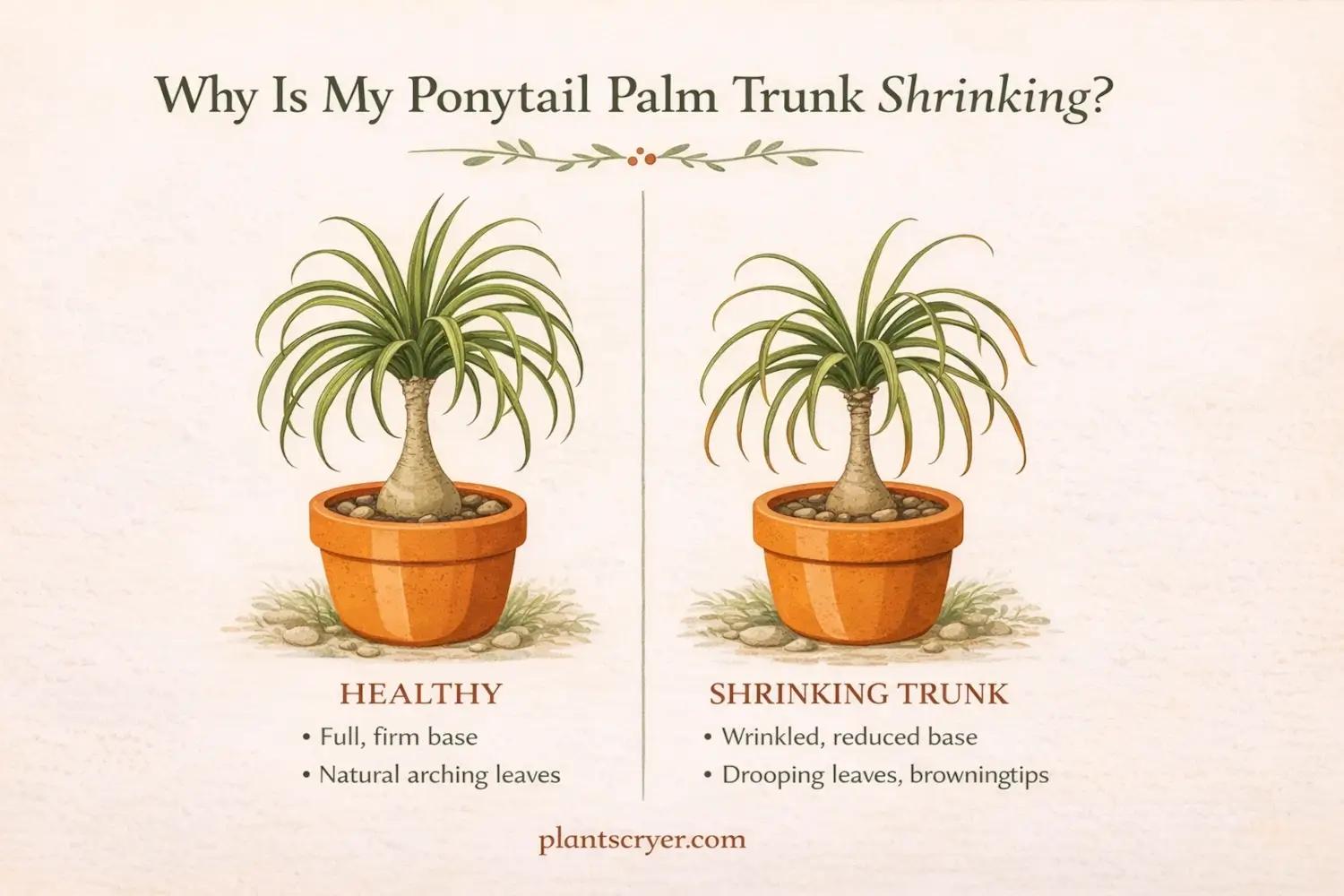
If the caudex feels soft, read: Why Is My Ponytail Palm Trunk Shrinking?
Brown tips on straight leaves — overfertilizing or mineral buildup
Here's a distinction most care guides skip. Brown tips from underwatering come with curling leaves. Brown tips from overfertilizing or mineral buildup show on straight, otherwise healthy-looking leaves.
Fertilizer salts build up in the soil over time and burn leaf tips from the roots outward. Tap water is another culprit — municipal water contains fluoride and chlorine that accumulate in the soil. One thing worth knowing: letting tap water sit overnight reduces some chlorine but does nothing for fluoride. Fluoride only comes out with distilled, reverse osmosis, or rainwater.
Fix for overfertilizing: Flush the soil by running several pot-volumes of water through it slowly, letting it drain each time. Skip fertilizing for the rest of the season and come back at half strength the following spring.
Fix for mineral buildup: Switch to distilled or filtered water. If the plant has been in the same soil for more than 2 years, a repot into fresh cactus mix clears accumulated buildup faster than flushing alone.
Brown patches, not just tips — sun damage
If the browning is appearing as patches rather than just at the tips, and it's on the side facing the window, sun scorch is likely. This happens most often when a plant is moved outdoors without a gradual adjustment period, or when it's sitting in intense afternoon direct sun through glass.
Fix: Move it away from direct afternoon sun. If you're taking it outside for summer, start it in a shaded or covered spot for a week before gradually increasing sun exposure. Damaged patches won't recover, but new growth in the adjusted spot will be clean.
Brown lower leaves — normal aging
If the browning is limited to the lowest, oldest leaves and the rest of the plant looks healthy, this is just normal leaf cycling. Ponytail palms naturally shed older leaves from the bottom of the leaf crown as they grow. Nothing to fix.
Pull fully brown leaves off cleanly at the base or trim with clean scissors. Don't pull leaves that are still partially green — that can damage the trunk.
Brown tips after moving indoors from outside
Every fall this catches people off guard. A plant that's been outside all summer often responds to coming back indoors with brown tips as it adjusts to lower light and drier air. The stress is real — it's going from strong outdoor light to indoor conditions in one move.
The browning usually stabilizes within a few weeks. Put it in the brightest indoor spot available and don't change the watering routine in response to the tips. It doesn't need more water; it needs time to adjust.
How to trim brown tips without damaging the plant
Brown leaf tissue won't go back to green. But trimming keeps the plant looking tidy and redirects energy to new growth.
Use sharp, clean scissors. Cut at an angle that follows the natural taper of the leaf — mimic the leaf's shape so the cut doesn't stand out as a blunt flat edge. Wipe the blades with rubbing alcohol between cuts if you're going through multiple leaves.
Don't remove more than 20% of the foliage in one session. If you have a lot of browning across many leaves, work through it in stages over a few weeks rather than all at once.
Quick reference
Frequently Asked Questions
No. Once the tissue dies it stays dead. Trim the brown parts off and the plant will put out new healthy leaves from the top — the damaged ones won't change.
Most likely tap water minerals or old fertilizer buildup. Brown tips on straight, otherwise healthy leaves with soil at the right moisture level usually point to fluoride or salt accumulation. Switch to distilled water and skip fertilizing for a full season.
It reduces chlorine a little, but it doesn't remove fluoride. Fluoride is what most sensitive plants actually react to, and it only comes out with distilled water, RO filtration, or rainwater. If you're seeing persistent tip browning despite correct watering, the water source is worth switching.
No more than 20% of the plant's foliage in one go. If there's extensive browning across many leaves, space the trimming out over a few weeks.
Usually not. Brown tips are the most common cosmetic issue with this plant and are almost always correctable. A dying ponytail palm shows more serious signs — yellowing throughout, a soft or mushy trunk base, or leaves dropping in large numbers. Tips browning on their own is rarely an emergency.
New to ponytail palms or want to make sure you're getting the basics right? Our Ponytail Palm Care Guide covers light, watering, soil, and everything else you need to keep one healthy long-term.