How to Care for Peperomia Hope
Peperomia tetraphylla ‘Hope’
 Save
Save
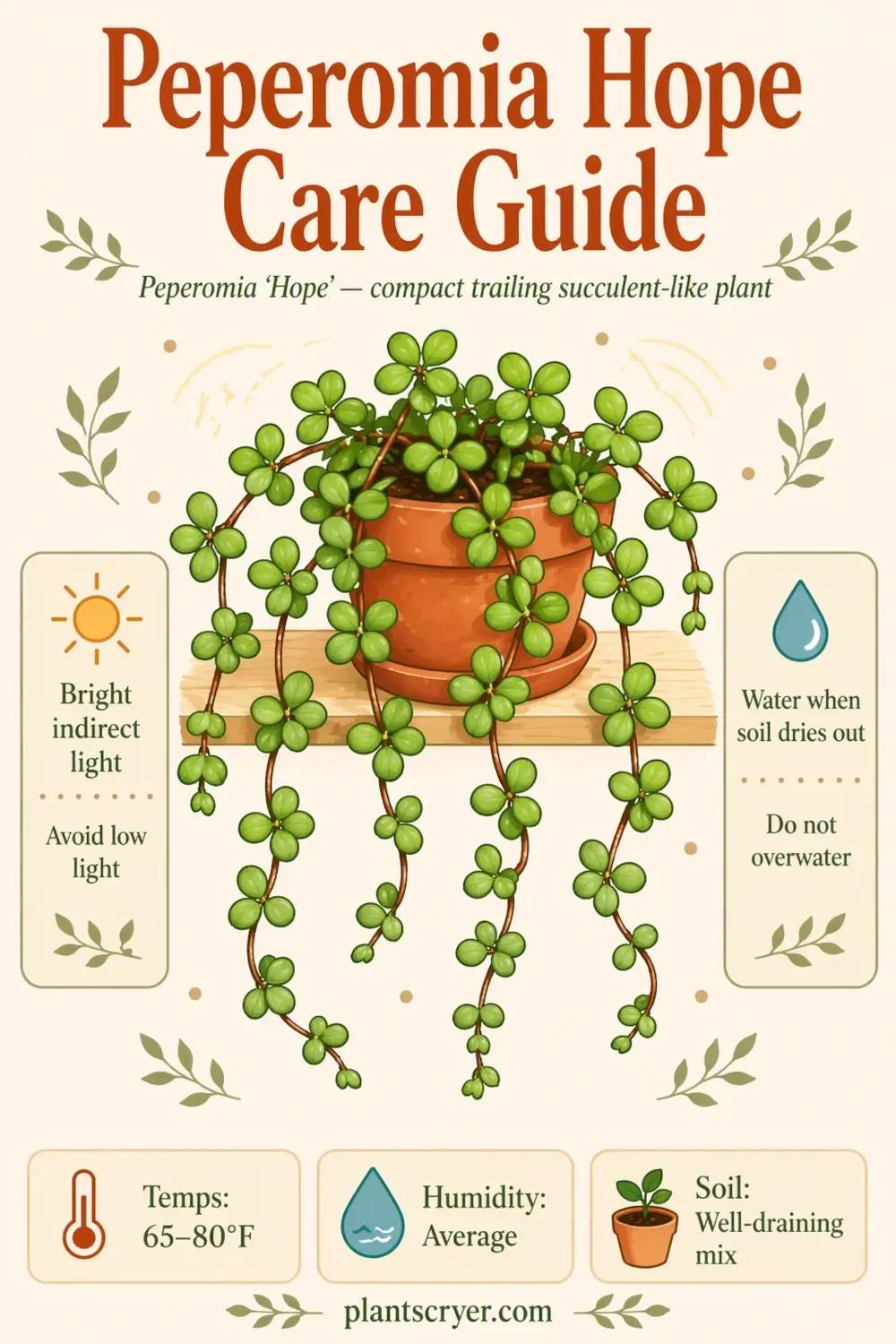
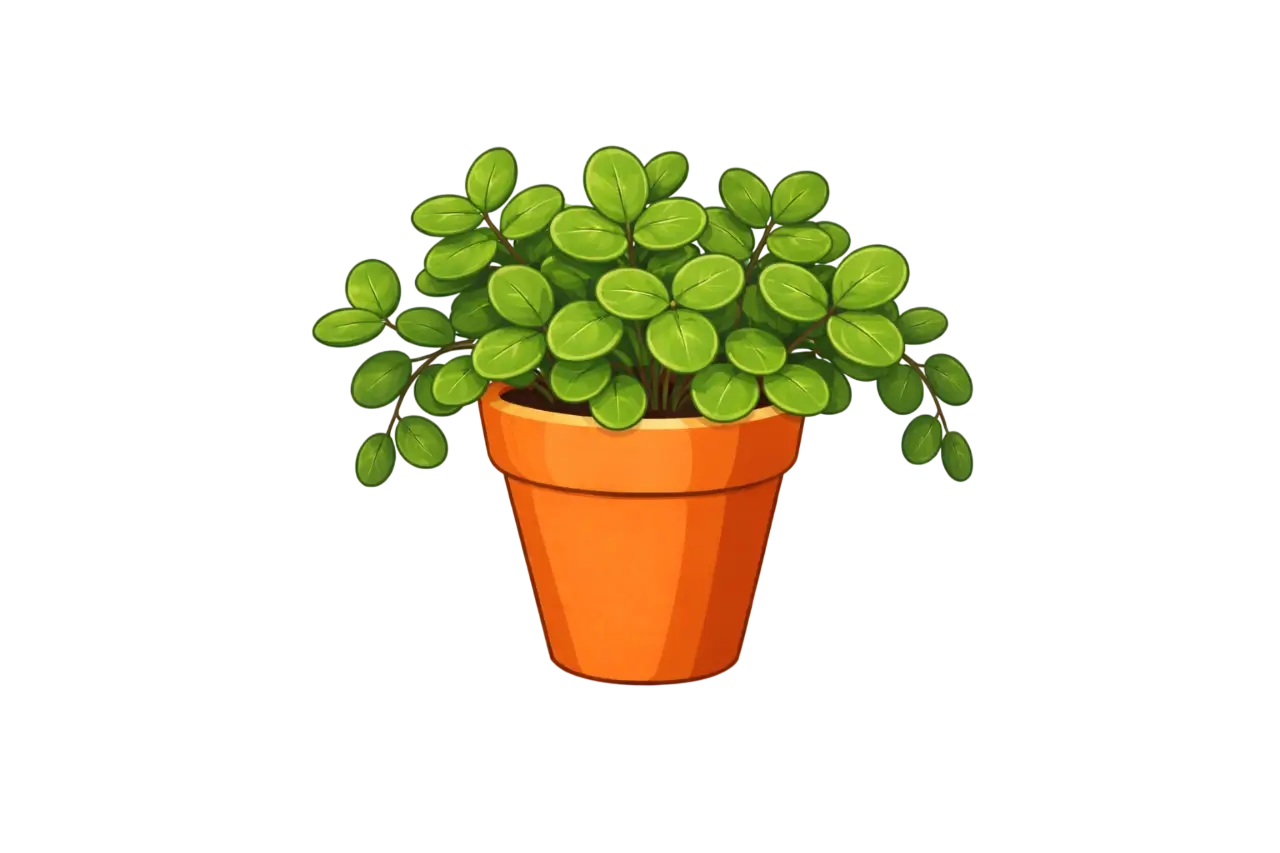
Peperomia Hope is a hybrid trailing peperomia (a cross of P. deppeana and P. quadrifolia) with small, round, fleshy leaves arranged in whorls of three or four along thin stems. The stems trail and cascade, making it a natural fit for hanging baskets, shelf edges, and elevated pots where the growth can spill over.
The thick leaves are a clue to how the plant wants to be watered. Peperomia Hope is semi-succulent: it stores water in its leaves and stems the way a succulent does, even though it comes from a tropical family. That means it needs less water than most tropical houseplants but more light and humidity than most succulents. Getting the category wrong in either direction leads to the two most common problems: overwatering (treating it like a tropical) or stretching (treating it like a succulent and putting it in full sun with no humidity).
The parent species are semi-epiphytic in the wild, growing on tree branches and mossy rocks in Central and South American forests. That epiphytic origin means the roots are small and shallow, the plant prefers airy soil, and it does not need a large pot. Peperomia Hope actually blooms better when slightly rootbound.
Non-toxic to cats, dogs, and horses per ASPCA. One of the safest trailing plants for homes with pets.
Quick Info
- LightMedium
- WaterLow
- Size6 to 12 inches tall, trails up to 18 inches
- HumidityModerate
- Temp55–80°F (13–27°C)
- FloweringYes
- TypeTropical
- Dog SafeYes
- Cat SafeYes
- Kid SafeYes
Is Peperomia Hope Toxic?
Pets: Non-toxic to cats, dogs, and horses per ASPCA. One of the safest trailing plants for pet households.
Kids: Non-toxic. Safe around children.
Peperomia Hope Care Guide
Light
Bright indirect light. 4 to 6 hours of bright indirect light daily is the target. An east- or west-facing window works well. Peperomia Hope tolerates some gentle direct morning sun (east window) but scorches in strong afternoon sun. It also tolerates lower light better than many succulents, but growth slows, stems stretch, and the leaf spacing widens.
If the plant is getting leggy (long gaps between leaf whorls, stems reaching outward), it needs more light. A grow light running 10 to 12 hours daily works well, especially through winter when natural light drops. Avoid deep shade; the plant survives but barely grows and eventually thins out.
Watering
Less than you think. Let the top 1 to 2 inches of soil dry before watering, then water thoroughly until it drains. During the growing season this is roughly every 7 to 14 days. In winter, every 2 to 3 weeks. The fleshy leaves store water, so the plant tolerates some drought. It does not tolerate wet feet. Overwatering is the number one killer of peperomia.
The leaves are your best diagnostic tool. Firm, plump leaves mean the plant has enough water. Soft, slightly wrinkled leaves mean it is time to water. Yellowing leaves that feel mushy mean you have been watering too much. A moisture meter is useful for checking the bottom of the pot before you add water, especially in cooler months when the top dries faster than the bottom.
Soil
Light, airy, and fast-draining. A cactus and succulent mix with added perlite works well. Some growers add orchid bark for extra aeration, which suits the semi-epiphytic roots. The mix should feel loose and chunky, not dense or moisture-retentive. Standard potting soil holds too much water for this plant. Use a small pot with drainage holes; peperomia has a compact root system and does not need much room.
Temperature and Humidity
55 to 80°F (13 to 27°C). Normal room temperatures are fine. Keep above 55°F; cold drafts and sudden temperature drops cause immediate leaf drop (green leaves falling off suddenly, which is different from overwatering leaf drop where leaves yellow first). Keep away from cold windows in winter and air conditioning vents.
Moderate humidity (40 to 60%) is ideal. Peperomia Hope does not need tropical humidity, but very dry winter air (below 30%) can cause leaf edges to crisp. A humidifier nearby helps through winter. Grouping with other plants also raises the local humidity. Avoid misting the leaves directly; water sitting on the thick leaves promotes fungal issues.
Fertilizing
Light feeder. Apply a balanced liquid fertilizer at half strength once a month during spring and summer. Stop in fall and winter. Over-fertilizing causes salt buildup in the small pot, which burns the shallow roots. If you see white crusty deposits on the soil surface, flush with plain water and skip the next feeding.
Repotting
Every 2 to 3 years, or when roots fill the pot. Peperomia Hope prefers being slightly rootbound and actually blooms better in a snug pot. When you do repot, go up only 1 inch in diameter. Use a shallow pot; the root system is compact and does not need depth. This is a good time to refresh the soil mix, which breaks down and loses drainage over time. Wait 3 to 5 days after repotting before watering.
Propagation
Stem cuttings are the easiest and most reliable method. Cut a stem section 3 to 4 inches long with at least 2 to 3 nodes (the points where leaves attach). Remove the lowest set of leaves to expose the node. Place the cutting in water with the node submerged, or insert directly into moist, airy potting mix. In water, roots appear in 2 to 4 weeks; transfer to soil when roots reach 1 to 2 inches. In soil, keep barely moist (not wet) and roots establish in 3 to 4 weeks.
Leaf cuttings: Individual leaves can root if placed on moist soil, but the success rate is lower than stem cuttings and the process is much slower. Stem cuttings with nodes are the faster, more reliable option for Peperomia Hope specifically.
Common Peperomia Hope Problems
Leaf drop (yellow, mushy) Overwatering. The leaves yellow, go soft, and fall off. The stems may also feel mushy at the base. Stop watering and let the soil dry completely. If stems are mushy, check for root rot: unpot, trim dark mushy roots, let the base dry, and replant in fresh airy mix. How to save an overwatered plant covers the full recovery process.
Leaf drop (green, sudden) Cold draft or sudden temperature change. Unlike overwatering leaf drop (where leaves yellow first), cold-induced leaf drop happens suddenly: green, healthy-looking leaves fall off without any colour change. Check for cold drafts from windows, doors, or AC vents. Move to a warmer, draft-free spot.
Leggy, stretched stems Not enough light. The stems elongate with wide gaps between leaf whorls. Move to brighter indirect light. Prune the leggy stems back to encourage bushier growth, and root the cuttings to fill the pot back in. The stretched portions will not compact.
Curling leaves Usually inconsistent watering. The leaves curl inward when the plant swings between too dry and too wet. Establish a consistent watering routine based on soil dryness rather than a fixed schedule.
Mealybugs White cottony clusters at the leaf nodes and in the whorls where leaves meet the stem. Treat with rubbing alcohol on a cotton swab or neem oil sprayed along the stems. The dense leaf whorls provide hiding spots, so inspect regularly.
FAQs
Every 7 to 14 days during spring and summer, every 2 to 3 weeks in winter. Let the top 1 to 2 inches of soil dry before watering. The fleshy leaves store water, so the plant handles some drought but rots quickly in wet soil. Use the leaves as a guide: firm and plump means hydrated, soft and wrinkled means time to water.
Two patterns with different causes. Yellow, mushy leaves falling off means overwatering or root rot. Green, healthy-looking leaves falling suddenly means cold exposure or a draft. Check the soil moisture and the plant's proximity to cold windows or vents to determine which one is happening.
No. Peperomia species are non-toxic to cats, dogs, and horses per ASPCA. Peperomia Hope is one of the safest trailing plants for pet households. Eating large amounts of any plant material may cause mild stomach upset, but no toxic compounds are present.
Stem cuttings are the easiest method. Cut a 3 to 4 inch section with at least 2 to 3 nodes, remove the lowest leaves, and place in water or moist potting mix. Roots appear in 2 to 4 weeks. Stem cuttings with nodes are more reliable than individual leaf cuttings for this variety.
Not enough light. The stems stretch with wide gaps between leaf whorls when light is insufficient. Move to brighter indirect light (east or west window). Prune the leggy stems back and root the cuttings to fill the pot. A grow light helps in rooms without strong natural sun.
Yes. It produces thin, spike-like flower stalks that are characteristic of the Piperaceae family. The flowers are small and not particularly showy. The plant is more likely to flower when slightly rootbound and receiving consistent bright indirect light.
No. Peperomia Hope has a small, shallow root system and prefers being slightly rootbound. A pot only 1 inch wider than the root ball is ideal. Oversized pots hold excess moisture around the roots, which promotes rot. Repot only every 2 to 3 years when roots have filled the container.