
How to Save an Overwatered Plant
Most overwatered plants can be saved. How much work it takes depends on two things: how long the overwatering has been going on, and whether root rot has already set in. Catch it early and you may just need to stop watering for a week. Catch it late and you're looking at emergency repotting and root surgery.
Overwatering kills more houseplants than underwatering. The reason is counterintuitive — roots need oxygen as much as they need water. Soil that stays constantly wet pushes air out of the root zone, roots suffocate, and the plant starts to decline even though it's sitting in moisture. The earlier you spot it, the better the odds.
How to Tell if Your Plant Is Actually Overwatered
Assess the Severity First
Not every overwatered plant needs to be repotted. The right response depends on how far things have gone.
Mild — yellowing leaves, consistently damp soil, no wilting
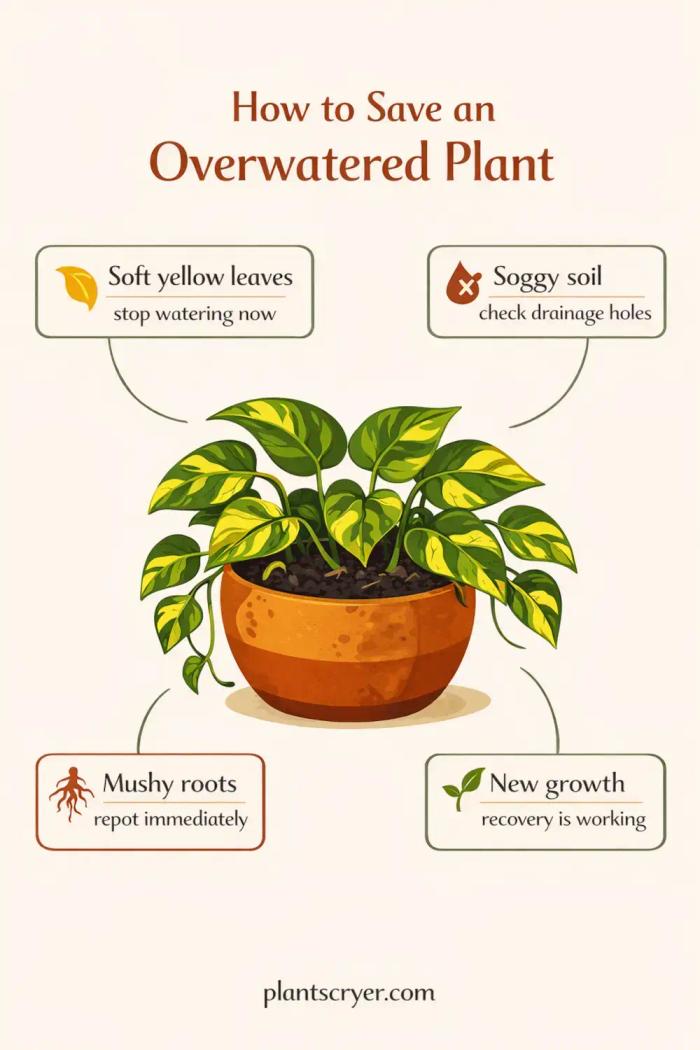
The plant is showing early stress but the roots are likely still intact. You do not need to repot. Simply stop watering, move the plant to a spot with good airflow and bright indirect light, and let the soil dry out completely before watering again. Most plants at this stage recover within one to two weeks with no further intervention.
Moderate — wilting despite wet soil, some leaf drop, soil staying soggy for more than a week
The roots are struggling. Wilting while the soil is still wet is a key signal — it means the roots can no longer move water effectively even though it's right there. Stop watering immediately and check whether the drainage holes are blocked. If the soil smells musty or the pot has been sitting in a saucer of standing water, root damage is likely. You'll need to unpot and inspect.
Severe — stems soft at the base, foul smell from soil, roots brown or mushy when you check
Root rot has set in. This is the point where most plants are lost, but recovery is still possible if some healthy roots remain. Immediate action is required — every day matters at this stage.
Step-by-Step Rescue Guide
1. Stop watering immediately
This sounds obvious but many people keep watering a wilting plant because it looks thirsty. If the soil is wet, more water will kill it faster. Put the watering can down and leave it alone.
2. Move it and improve airflow
Bright indirect light speeds up evaporation from the soil. Good airflow — near an open window or a fan on low — helps too. Avoid direct sun while the plant is stressed, as that adds another stressor on top of the root damage. A shaded outdoor spot on a warm dry day works well if you have one.
3. Check and clear drainage
Empty any standing water from the saucer immediately. Check that drainage holes aren't blocked — poke a chopstick or skewer through each one. If the pot has no drainage holes at all, the plant needs to be moved to one that does. A pot without drainage is why you're here.
4. For mild to moderate cases — create airspace in the soil
If the roots look okay but the soil is just waterlogged, you can sometimes save the repotting step. Tilt the pot gently on its side and tap the outside — this loosens the soil from the pot walls and creates small air pockets that allow oxygen back into the root zone. Paper towel under the base of the pot helps wick excess moisture. Check the soil every two or three days and only water once it's dry two inches down.
5. For severe cases — unpot and inspect the roots
Gently slide the plant out of its pot. Healthy roots are white or cream and firm. Roots with rot are brown, black, soft, and may smell bad. If you see rot, it needs to be dealt with now.
Using clean scissors — wiped with rubbing alcohol before you start — trim away every root that is soft, brown, or black. Cut back to healthy white tissue. Be thorough. Leaving even a small section of rotten root gives the rot a place to continue from. Once you've trimmed, let the root ball sit out in the open air for 30 to 60 minutes to dry slightly before repotting.
6. Repot in fresh dry mix
Use a well-draining indoor potting mix and add a generous amount of perlite — roughly 20 to 30 percent of the total volume — to improve drainage and prevent the same thing happening again. Use a pot with drainage holes, ideally terracotta if you tend to overwater, as the porous clay wicks moisture away from the root zone passively. Don't go up a pot size — a larger pot holds more moisture and increases risk. Same size or slightly smaller is better during recovery.
7. Hold off watering after repotting
Wait three to five days before watering after a repot. The roots need time to settle without being hit with more moisture immediately. When you do water, water lightly and only once the top two inches of soil feel dry. A soil moisture meter is useful here — it removes the guesswork while the plant is still fragile.
How Long Does Recovery Take
It depends on how severe the damage was.
Mild overwatering: one to two weeks. The plant resumes normal growth once the soil dries out and you correct the watering routine.
Moderate with some root damage: two to four weeks. You'll see the plant stop declining within a week, then slow new growth starting to emerge.
Severe root rot with repotting: four to eight weeks, and that's if it pulls through. Some plants don't. The signal that recovery is working is new growth — a new leaf unfurling, a new shoot at the base. Until you see that, the plant is still in triage mode.
When It's Too Late
This is the part most guides skip. Not every overwatered plant can be saved and it's worth knowing when to stop.
Signs the plant is probably gone:
- All roots are black, soft, and slimy — no white or firm tissue anywhere
- The stem collapses at soil level and feels hollow
- The foul smell persists even after repotting in fresh soil
- No new growth after four or five weeks of correct care post-repotting
If you're at this point, check whether any stems still have firm green sections. If they do, take cuttings before the whole plant goes. Many common houseplants — pothos, peace lily, spider plant — can be propagated from healthy stem sections even when the parent plant is dying. See our propagation guides for your specific plant.
How to Prevent It Happening Again
The single most effective habit is checking soil moisture before every watering rather than going by a fixed schedule. Push your finger two inches into the soil — if it still feels damp, wait. If it's dry, water thoroughly.
A few structural changes also help:
Pots with drainage holes are non-negotiable. If a pot doesn't have them, drill some or use it as a cachepot with a nursery pot inside that you can lift out to drain.
Terracotta dries faster than plastic or glazed ceramic — if you consistently overwater, switching pot material does a lot of the work for you.
Watering frequency drops significantly in fall and winter as growth slows. Many people keep their summer schedule year-round and that's when the rot sets in. Adjust down as the days shorten.
For plant-specific watering schedules, see our guides for peace lily, golden pothos, and the snake plant watering calculator.
Frequently Asked Questions
Can a plant recover from overwatering?
Yes, most can if you catch it early enough. The key factor is whether the roots still have healthy sections. A plant with even a few firm white roots has a good chance of recovery if you repot into fresh dry soil and correct your watering routine.
How long does it take for an overwatered plant to recover?
Mild cases recover in one to two weeks. Moderate cases with some root damage take two to four weeks. Severe root rot cases take four to eight weeks and some don't make it. New growth is the clearest sign recovery is underway.
Should I repot an overwatered plant?
Not always. If the plant is just showing early yellowing and the roots are healthy, let the soil dry out without repotting. Repotting adds stress on top of stress. Only repot if you find root rot when you inspect the roots, or if the soil is so waterlogged it isn't drying out at all.
What does overwatering look like compared to underwatering?
Both can cause drooping and yellowing but the texture tells them apart. Overwatered leaves are soft and limp. Underwatered leaves are dry and crispy. The soil confirms it — wet and heavy means overwatering, bone dry and light means underwatering.
Should I water after repotting an overwatered plant?
Wait three to five days first. The roots need to settle after the trauma of being handled and trimmed. Water lightly once the top two inches feel dry, then resume normal care from there.
Can root rot spread to other plants?
The fungi that cause root rot live in soil and water, not in the air, so they don't spread between plants the way pests do. That said, don't use soil from a plant that had root rot in another pot, and clean any tools that touched rotten roots with rubbing alcohol before using them elsewhere.