Inch Plant (Tradescantia zebrina) Care Guide
Tradescantia zebrina
A note on the name before anything else, because this page used to carry the old one. The plant was known for decades as the wandering jew, a name taken from a medieval antisemitic legend, and the trade has largely retired it. NC State lists the common names as inch plant, silver inch plant, wandering dude and zebra plant, and does not include the old one at all.
The RHS sells it as silver inch plant. The ASPCA has retitled its own toxicity entry to inch plant. Three independent authorities have landed in the same place, so this page follows them, while keeping the old address so anyone searching the former name still arrives here.
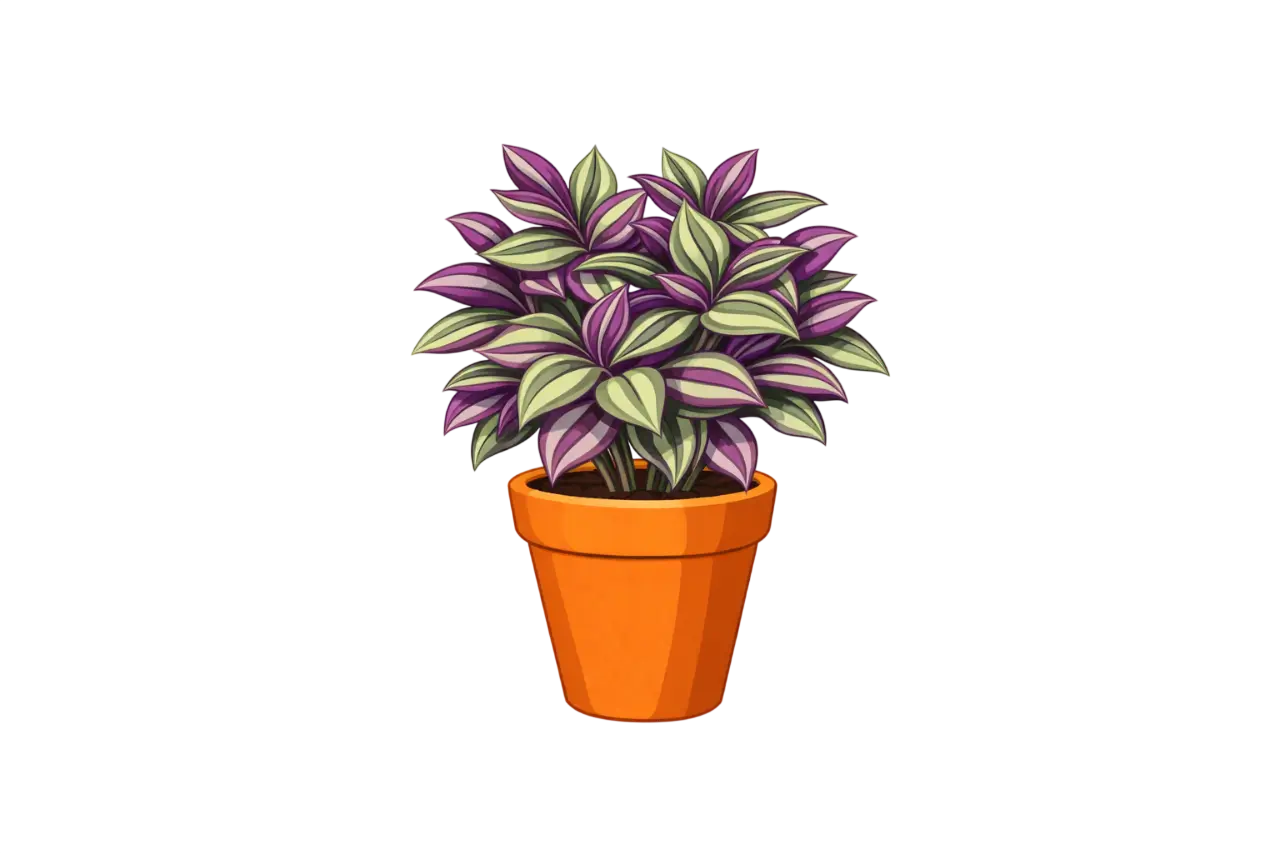
What you have is Tradescantia zebrina, a spiderwort from a range running from Mexico down to Colombia. NC State describes leaves 1 to 3 inches long, ovate-oblong to lanceolate, green with lengthwise white or silver stripes and purple undersides, somewhat succulent and edged with fine hairs. The plant itself stays 6 to 9 inches tall and spreads 1 to 2 feet, trailing further than that over the side of a pot. Growth is rapid and the stems are tough, which makes it far less precious to handle than a string of hearts.
The colour is the reason to grow it and light is what pays for it. NC State puts the plant in full sun at six or more hours or partial shade at two to six, and notes that the greatest colour intensity comes in bright light. That is a brighter brief than most trailing plants get, and it is the single thing that decides whether you end up with a vivid purple-and-silver plant or a washed-out green one. The same page notes that in very hot southern positions the colour can fade the other way, so there is a ceiling as well as a floor.
It is also one of the easier houseplants to own, with a caveat. NC State lists it as tolerating a wide range of growing conditions and rates it drought and heat resistant. The caveat is that it goes bare and straggly without regular pruning, since growth runs from the tips. Pinching it back is not tidying, it is the only way to keep a full plant, and every piece you remove roots in about a week.
Quick Info
- LightBright
- WaterMedium
- Size6-9 inches tall, spreading 1-2 feet, trailing further in a pot
- HumidityLow
- Temp65-75°F (18-24°C); no frost tolerance
- FloweringYes
- TypeTropical, Vine
- Dog SafeNo
- Cat SafeNo
- Kid SafeNo
Is Inch Plant Toxic to Pets?
Pets: The ASPCA lists inch plant as toxic to dogs, cats and horses with dermatitis as the clinical sign, filed under the congener Tradescantia fluminensis. NC State rates Tradescantia zebrina itself as low severity and records the toxic principle as unknown. So the realistic risk is a skin reaction from the sap rather than poisoning, which is why gloves are worth using when you cut it back.
Kids: The sap is a known contact irritant across the genus, with dermatitis the symptom the ASPCA records. Low severity, but worth keeping off small hands and worth washing after pruning.
Inch Plant Care Guide
Light, and the Colour Fades First
Bright, and brighter than people expect for a trailing plant. NC State gives full sun at six or more hours of direct light, or partial shade at two to six, and says the greatest colour intensity comes with bright light. An east, south or west window all work. This is not a plant for a dim corner, and the penalty for putting it in one is visible within weeks.
The failure mode is colour, not health. In insufficient light the purple drains out of the undersides, the silver stripes dull, and the stems run on with widening gaps between the leaves. None of that reverses on growth already made, so judge any change of position by what the newest few inches look like. If the brightest spot you have is still not enough, a grow light holds the colour through winter.
Watering, and Why Not to Wet the Leaves
NC State asks for moist but well-drained soil, watering regularly while allowing the mix to dry between waterings, and reducing through winter. The plant is rated drought resistant, so a missed watering is not a crisis: the slightly succulent leaves go limp and recover within a day of a soak. A moisture meter is useful mainly if the plant hangs somewhere you cannot easily feel the compost.
The real risk sits at the wet end. NC State names root rot and stem rot in soggy soil, and stem rot on a trailing plant tends to take out whole lengths of vine at once, starting where the stems lie against damp compost. Water the soil and not the crown, let the surface dry, and empty the saucer. Recovering an overwatered plant is the way back.
There is nothing to do on this front. NC State sets no humidity requirement for the species and rates it drought and heat resistant, not the profile of a plant that needs damp air. Average indoor air suits it perfectly well.
Misting is worth avoiding for a specific reason here. NC State lists fungal leaf spot from overcrowding among the problems, and a dense trailing plant with wet foliage sitting in still air is exactly those conditions. If the plant needs cleaning, rinse it at a tap and let it drain fully before hanging it back.
Mix, and the Hanging-Basket Problem
Loam or sand with good drainage, per NC State, which also records the plant as tolerant of acid, neutral and alkaline pH. In practice any ordinary houseplant compost works, and this is not a species that rewards a custom mix. The one thing to get right is that water can leave.
Hanging pots change the arithmetic. A plastic hanging planter sitting in still air holds water considerably longer than a pot on a shelf, so the same watering habit that suits one drowns the other. Whatever you hang it in needs a working drainage hole that the fitting does not block.
Pinching, and a Word on the Sap
Pinch or cut the stems back whenever they get longer than you want, using clean snips. Cutting above a node forces branching from that point, the only way to keep the plant full, and there is no bad time to do it during the growing season. Everything you remove is a usable cutting.
Wear gloves if your skin is at all reactive. The ASPCA records dermatitis as the clinical sign for inch plant, and the sap is a recognised contact irritant across the genus, so a session of heavy pruning is the moment it would show up. Washing your hands afterwards is enough for most people.
Feeding, and Keeping Growth Tight
A balanced liquid feed every four weeks or so in spring and summer, and none over winter. A rapid grower that you are also cutting back regularly does make use of a feed, so this is one of the trailing plants where feeding shows in the result.
Mix it no stronger than the label says. Overfeeding pushes out soft growth with longer internodes. A plant fed too generously in a good window can finish up looking exactly like one starved of light, and cutting it back is the only answer to either. Steady modest feeding plus good light is what keeps the stems compact.
Temperature, and Cold Glass
NC State puts the comfortable range at 65 to 75°F and the hardiness at USDA zones 9a to 11b, which stops short of anywhere that actually freezes. Ordinary room temperature suits it year round, and the plant is rated heat resistant at the upper end. The practical risk on a trailing plant is the window. Vines hanging against cold glass sit several degrees below the room temperature, so a plant that is comfortable at its hook can have a foot of growth in the cold. Pull the trailing ends back from the glass in winter instead of relocating the whole plant.
Repotting, and the Bare Centre
Every year or two in spring, going up one size, though many people never repot at all and simply restart the plant from cuttings instead. Given how fast it roots, a tired three-year-old plant is often better replaced by a potful of its own cuttings than rejuvenated.
If you do repot, take the chance to deal with a bare centre. Lay a few trimmed stems across the surface of the fresh compost so they root in and fill the middle of the pot. That bare centre is the one fault an older inch plant reliably develops.
How to Propagate an Inch Plant
Stem cuttings, and almost nothing else is needed. NC State lists stem cuttings as the propagation method, and this is one of the fastest-rooting houseplants there is. Snip a length of stem with several nodes, strip the lowest leaf, and put it in water or straight into damp compost. Roots appear within about a week in the growing season.
Put several cuttings into one pot. A single rooted stem takes a long time to look like anything, while five or six cuttings around a small pot give you a full plant almost immediately. This is also the sensible way to replace an old, bare plant: take a dozen cuttings from the healthy tips and start over instead of nursing the parent.
Water rooting works and so does soil. Water is easier to watch and lets you see when roots have formed; soil avoids the brief check that transplanting a water-rooted cutting causes. Neither is wrong, and for a plant this willing the choice barely matters. Gloves again for a large propagation session, since the ASPCA records dermatitis for inch plant and you will be handling a lot of cut stems. Use clean snips, and discard any cutting from a stem showing the fungal leaf spot described above instead of passing the problem on.
Common Inch Plant Problems
Fading colour, with the purple leaving the undersides and the silver stripes going dull, is the signature complaint and it means light. NC State ties the greatest colour intensity to bright light, so move the plant to a brighter window. Existing leaves stay faded, so judge the fix on new growth.
Long bare stems with widely spaced leaves is the same light problem plus a pruning problem. The plant grows from the tips and will not fill in behind itself, so cutting back above a node is the only remedy. When growth has really stalled covers the cases where something else is wrong.
Mushy stems collapsing in sections, often where vines lie against the compost, is stem rot, which NC State names along with root rot for soggy soil. Cut back into firm tissue, let the compost dry, and root the healthy pieces as insurance. Overwatering recovery is the next step.
Brown crisp leaf tips on an otherwise healthy plant usually follow a spell of inconsistent watering and not dry air, given that NC State rates the species drought resistant and sets no humidity requirement. The remedy is simply to water more evenly through the growing season.
Spots on the leaves, especially on a dense plant, point at the fungal leaf spot NC State attributes to overcrowding. Thin the plant out, stop any misting, and give it better air movement.
Aphids, mealybugs, scale, whiteflies and spider mites are all on NC State’s list for this plant, longer than most. Dense trailing growth gives them cover, so part the vines when you inspect. Identifying houseplant pests separates them.
Pale, washed-out leaves on a plant in a very hot, very bright position are the other end of the light problem. NC State notes that southern locations may see colour fading, so there is an upper limit as well as a lower one. Filtered light in the hottest part of the day solves it.
A plant that looks worse every year despite good care has usually just aged out. Older stems go woody and bare at the base and never recover, so this species is best restarted rather than nursed along. Take cuttings and begin again.
FAQs
Because the name comes from a medieval antisemitic legend, and the horticultural world has moved away from it. NC State lists the common names as inch plant, silver inch plant, wandering dude and zebra plant, without the old one. The RHS sells it as silver inch plant, and the ASPCA has retitled its own toxicity entry to inch plant. It is the same plant, Tradescantia zebrina, under a name that three independent authorities now use.
Not enough light, in almost every case. NC State ties the greatest colour intensity to bright light and puts the plant in full sun at six or more hours, or partial shade at two to six. That is brighter than most trailing houseplants want. Move it to a brighter window and judge the result by the newest growth, since leaves that have already faded stay that way.
Treat it as mildly so. The ASPCA lists inch plant as toxic to dogs, cats and horses with dermatitis as the clinical sign, filed under the related Tradescantia fluminensis, while NC State rates Tradescantia zebrina itself low severity with the toxic principle unknown. The documented hazard is therefore a skin reaction to the sap and not real poisoning, which is why gloves are sensible when you prune it heavily.
Prune it, and more often than feels necessary. The plant grows from the tips and never fills in behind itself, so stems left alone go bare at the base while the ends keep running. Cutting above a node forces branching at that point. Combine that with the brightest position you can give it, since poor light widens the gaps between leaves and makes the problem worse.
Rapidly, which NC State states outright and which sets it apart from most trailing houseplants. The plant reaches 6 to 9 inches tall with a spread of 1 to 2 feet, trailing further over the side of a pot, and cuttings root in about a week during the growing season. That speed is why it is better treated as a plant to restart from cuttings every few years than one to keep going for ever.
Cut a stem with a few nodes, strip the lowest leaf, and put it in water or damp compost. Roots show in roughly a week in spring or summer. NC State lists stem cuttings as the method and there is no need for anything more elaborate, including rooting hormone. Put five or six cuttings in one pot, since that gives you a full plant straight away instead of a single thin stem.
No. NC State sets no humidity requirement for the species and rates it both drought and heat resistant, so ordinary indoor air suits it. Misting is worth avoiding in particular, because NC State lists fungal leaf spot from overcrowding among its problems and wet foliage on a dense trailing plant in still air is how that starts.
Occasionally, and the flowers are small. NC State describes tiny three-petalled lavender-purple flowers with yellow anthers, noting they appear infrequently indoors while blooming intermittently year-round outdoors. They are a pleasant surprise and not a reason to grow the plant, which is all about the striped foliage and the magenta undersides.