Zebra Plant Care Guide
Aphelandra squarrosa
 Save
Save
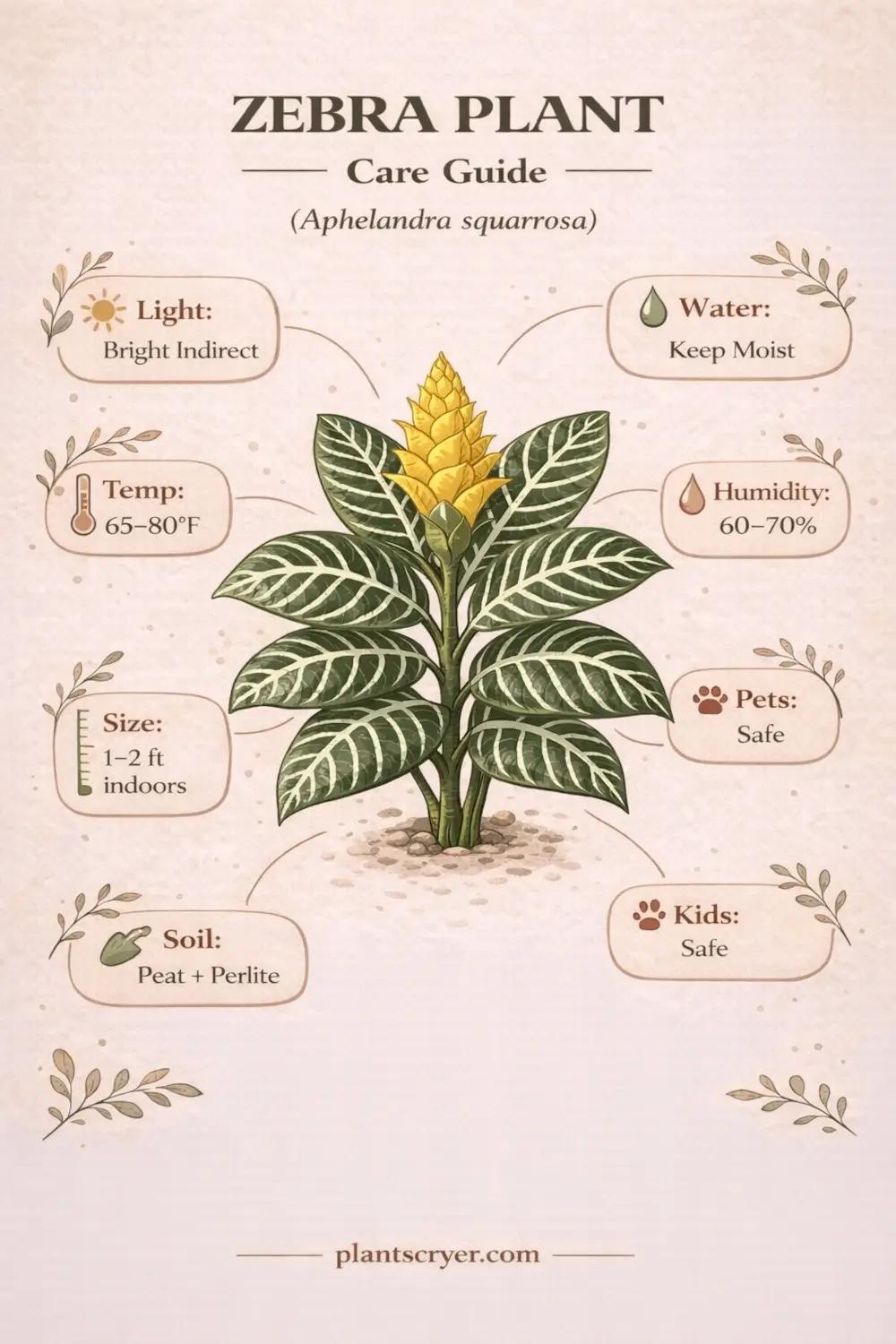
The Zebra Plant (Aphelandra squarrosa) is one of the most visually striking houseplants you can own — its large, glossy, dark green leaves can reach up to 9 inches long and are laced with bold white veins that create an unmistakable striped pattern. When it blooms, it produces dramatic golden-yellow cone-shaped bracts that persist for 4–8 weeks, making it one of the longer-flowering tropicals you can keep indoors. It also goes by the nickname Saffron Spike, a nod to those golden blooms.
Native to the Atlantic Forest of Brazil — specifically the understory of humid tropical forests — Aphelandra squarrosa grows naturally to about 6 feet tall, but as a houseplant it stays compact, typically reaching 1–2 feet. Most plants sold in shops are the cultivar 'Dania', selected for its especially vivid white veining and reliable indoor blooming.
It's a moderately demanding plant. Not unpredictable the way calatheas can be, but specific in what it wants: consistent moisture, genuine high humidity, and bright indirect light. Learn to read its signals — it communicates clearly through its leaves — and this plant is very manageable.
Good news for pet owners: Aphelandra squarrosa is listed as non-toxic to dogs, cats, and horses by the ASPCA, making it one of the few bold, flowering tropicals that's genuinely pet-safe.
Quick Info
- LightBright
- WaterMedium
- Size1 to 2 feet tall and wide
- HumidityHigh
- Temp65–75°F (18–24°C)
- FloweringYes
- TypeTropical
- Dog SafeYes
- Cat SafeYes
- Kid SafeYes
Toxicity Info
Zebra Plant vs. Calathea Zebrina vs. Haworthia: Which Do You Have?
"Zebra Plant" is one of the most overloaded common names in houseplants. Three very different plants share it, and care requirements differ significantly between them:
Aphelandra squarrosa (this guide) — large, paddle-shaped, glossy dark green leaves with white veins running lengthwise; produces dramatic golden-yellow cone-shaped flower bracts. Moderate-high care needs. Non-toxic to pets.
Calathea zebrina / Goeppertia zebrina — a prayer plant relative (Marantaceae family) with velvety elongated leaves featuring alternating dark and light green horizontal banding. Folds its leaves at dusk. Recently reclassified from Calathea to Goeppertia, though "Calathea zebrina" is still widely used. No significant indoor flowers. Generally considered more finicky than Aphelandra. Non-toxic to pets.
Haworthiopsis attenuata / Haworthia fasciata (Zebra Haworthia or Zebra Succulent) — a small, rosette-shaped succulent from South Africa with white horizontal bumpy banding on fleshy green leaves. Completely different care: bright direct sun, minimal water, no humidity requirements. Non-toxic to pets.
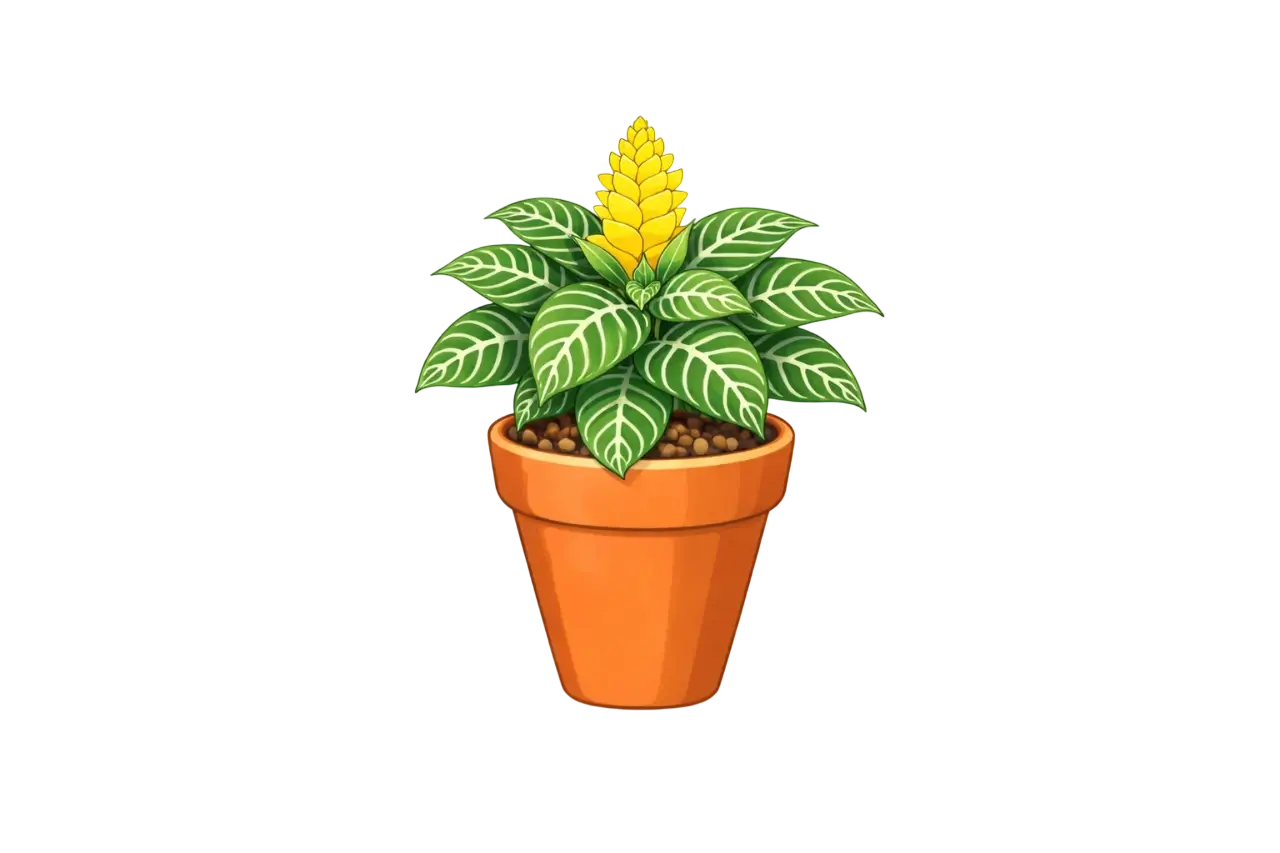
If your plant has large glossy leaves with white veins running lengthwise and produces yellow cone-shaped flower bracts, you have Aphelandra squarrosa — you're in the right place.
Popular Varieties
Most Zebra Plants sold in shops are the cultivar 'Dania' — compact, with especially vivid white veining and a reliable tendency to bloom indoors. It's the standard you'll find in most garden centers.
'Red Apollo' features red-tinged stems and reddish leaf undersides alongside the classic white-veined foliage, giving it a more jewel-toned, dramatic appearance. Care is identical to 'Dania'.
Care Instructions
Light
Zebra Plants need bright, indirect light — ideally near an east- or west-facing window. This mirrors their natural habitat growing under the rainforest canopy: plenty of ambient brightness, no direct sun.
Too little light and the plant becomes leggy, the white veins fade toward plain green, and flowering becomes unlikely. Too much direct sun scorches the leaves, causing brown patches and curling.
A north-facing window is generally too dim unless the plant is very close to the glass. A south-facing window works if the plant is set back 2–3 feet or filtered through a sheer curtain.
Grow lights: Full-spectrum LED lighting positioned 6–12 inches above the plant for 12–14 hours daily maintains foliage quality and can trigger blooming. Light intensity — not day length — is the primary flowering trigger for this plant, so supplemental light is genuinely useful here, not just a backup.
How to Water a Zebra Plant
The Zebra Plant sits in a narrow zone between too wet and too dry, and it drops leaves immediately when either happens. The watering principle: keep consistently moist, never soggy, never bone dry.
Water when the top inch of soil feels dry to the touch. Then water thoroughly until it drains from the bottom. Empty the saucer — never let the plant sit in standing water. Unlike succulents or drought-tolerant plants, this one should never fully dry out: a completely dry root ball triggers immediate leaf drop.
Frequency over volume: Wikipedia notes that this plant does best with frequent, lighter waterings rather than occasional heavy soaks. Check every few days rather than setting a fixed weekly schedule, especially in summer.
Tap water sensitivity: Fluoride, chloramine, and chlorine in tap water accumulate in the leaf tissue over time, eventually causing brown tips and edges. Use filtered, distilled, or overnight-rested tap water, always at room temperature. Cold water shocks the roots and can cause leaf drop on its own.
Seasonal adjustment: Reduce frequency in winter as growth slows, but maintain slightly moist soil — don't let it go fully dry even during dormancy.
Humidity
Target 60–70% humidity. This is the single most impactful environmental factor for this plant. Below 50%, leaf edges brown and curl; below 40%, the plant declines rapidly and becomes vulnerable to spider mites.
The most effective approaches, roughly ranked:
A cool-mist humidifier nearby provides the most reliable sustained humidity. A pebble tray (pot sitting above water level on pebbles, not in it) creates a localized humid zone around the plant. Grouping with other tropicals creates a shared humid microclimate. A naturally humid room — bathroom or kitchen — works well if light is sufficient.
On misting: Brief and surface-level, misting doesn't meaningfully raise ambient humidity around the roots and stems. It also risks fungal issues if water sits on leaves overnight. Use it as a supplement, not a primary method.
Temperature
Keep between 65–80°F (18–27°C). Never let it drop below 60°F (15°C) — exposure to temperatures below this damages foliage and triggers leaf drop. Keep away from cold drafts, air conditioning vents, and cold window glass in winter.
Soil
Use a well-draining, moisture-retentive mix with a slightly acidic pH of 5.6–6.5. A 50/50 blend of standard potting soil and African Violet mix works well — it holds enough moisture to prevent drying out between waterings while draining freely enough to prevent waterlogging. Adding perlite (about 20–25%) improves aeration further.
Alternatively: one part coarse perlite, one part garden soil, two parts peat moss — a simple mix that multiple sources endorse.
The pot must have drainage holes. Ceramic or terracotta helps moderate moisture; plastic works if you monitor watering carefully.
Fertilizing
Feed every 2–4 weeks during spring and summer with a balanced liquid fertilizer (10-10-10 or 20-20-20) diluted to half strength. Reduce to monthly in early autumn as growth slows. Stop feeding in winter.
Tip: Always water the plant before fertilizing to avoid burning roots on dry soil. Every few months, flush the pot thoroughly with plain water to clear accumulated mineral salts.
Zebra Plants are heavier feeders than many foliage tropicals — producing flower bracts demands significant energy. Consistent feeding through the growing season is one of the key variables in achieving rebloom.
Pruning and Managing Leggy Growth
Zebra Plants naturally develop bare, leggy stems over time, especially at the base. Regular pruning keeps the plant full and encourages new branching.
After flowering, cut stems back to just one or two pairs of healthy leaves near the base. This isn't destructive — it triggers the plant to branch from the remaining nodes, producing two or three shoots where there was one, and sets up the next bloom cycle. The cut stems become your propagation material (see below).
Throughout the year, remove dead leaves, spent bracts, and any crowding stems to maintain airflow and keep the shape tidy.
How to Get a Zebra Plant to Flower
The Zebra Plant's natural bloom season is late summer through autumn. The golden-yellow structure is a bract — a modified leaf, not a true flower. The bracts persist for 4–8 weeks; the tiny white true flowers nestled inside them last only a few days.
What triggers flowering:
- Light intensity is the primary driver — not day length. The plant needs bright indirect light (or grow light supplementation) for at least 3 months of sustained bright conditions to initiate bract development
- Consistent feeding through spring and summer provides the energy for bract production
- Warmth and humidity throughout the growing period — gaps in either disrupt the cycle
The seasonal reset: After the bract dies, cut it off and move the plant to a slightly cooler, dimmer spot for 6–8 weeks of rest. Reduce watering and stop fertilizing. Then in late spring, return to a bright spot and resume regular care. This rest-and-reactivation is what makes reliable annual reblooming possible. Without the rest period, the plant often grows well but skips blooming.
What to Do After Your Zebra Plant Blooms
Post-bloom is the phase most care guides skip — and it's where most growers either lose the plant or miss their chance at the following year's bloom.
Once the bract starts to brown:
- Cut the spent bract off, trimming the stem back to just 1–2 pairs of healthy leaves
- Move to a slightly cooler, dimmer location for 6–8 weeks of rest
- Reduce watering and stop fertilizing during this rest
- In late spring, return to bright conditions, resume regular watering and feeding, and the plant will produce new growth that leads to the next bloom cycle
The stems you remove make excellent propagation cuttings — don't discard them.
Repotting
Repot every 1–2 years in spring, or when roots are visibly escaping the drainage holes. Zebra Plants don't need to be upsized aggressively — choose a pot 1–2 inches wider than the current one. They actually perform well when slightly rootbound and tend to flower more reliably in a snug pot than an oversized one.
Give the plant a thorough watering 24 hours before repotting to reduce root stress. Handle roots gently — transplant shock is a real risk with this plant and looks identical to underwatering (wilting, yellowing, stunted growth). After repotting, keep conditions stable for 1–2 weeks before resuming normal care.
How to Propagate a Zebra Plant
The best time to propagate is spring or early summer, ideally right after post-bloom pruning — those cut stems are free propagation material you'd otherwise discard.
Stem tip cuttings (recommended method)
Take a 4–6 inch cutting from a healthy, non-flowering stem with at least 2 leaf nodes. Cut just below a node at a slight angle with clean, sterilized scissors. Remove the bottom set of leaves, leaving 2–3 at the top, and let the cut end sit in a warm shaded spot for 1–2 hours to dry slightly — this reduces rot risk when the cutting goes into the medium.
Optionally dip in rooting hormone powder or gel. Not required, but it speeds root development.
Plant in a small pot with a moist mix of 50% perlite and 50% peat moss or coco coir — the lean, soil-less mix encourages the cutting to invest energy into root development. Bury the node fully.
Cover with a clear plastic bag or propagation dome — this is not optional. Zebra Plant cuttings wilt and fail quickly without sustained high humidity; a dome is the difference between success and failure here. Place in bright, indirect light. A heat mat under the pot (targeting around 72–75°F substrate temperature) significantly speeds rooting for this tropical.
Keep the growing medium consistently moist, allowing only the very top surface to dry slightly between misting. Roots develop in approximately 4–6 weeks. Visible new leaf growth takes 8–12 weeks — a firm, green cutting is not failing just because no new leaves have appeared yet. Once new growth shows, gradually open the dome over several days before removing entirely.
Water propagation (optional)
Prepare the cutting identically, then place the node end in a narrow glass of room-temperature distilled water, changing it every 2–3 days. Roots appear in approximately 4–6 weeks; transfer to soil once at least 1 inch long. Water propagation works, but is slower and less reliable than soil for this plant — if you have multiple cuttings, root at least one in soil.
Common Problems
Leaves dropping suddenly The most dramatic Zebra Plant response — and it has several triggers. Check in this order: is the soil completely dry (underwatering — water immediately)? Is the soil soggy (overwatering — let dry and inspect roots for rot)? Has the plant been moved or repotted recently (relocation/transplant shock)? Was it exposed to a cold draft or cold window? Post-bloom leaf drop is also normal as the plant redirects energy. Identify the cause before treating.
Brown, crispy leaf edges Low humidity or tap water mineral buildup (fluoride, chlorine). Raise humidity to 60–70% and switch to filtered or distilled water. Brown edges already present won't recover, but new growth will come in clean once conditions improve.
Yellowing leaves Overwatering, poor drainage, inconsistent watering, or over-fertilizing. Check soil moisture and ensure the pot drains freely.
Fading white veins / loss of striping Insufficient light. Move to a brighter position — bright indirect light is essential for maintaining the vivid pattern.
Leggy, bare stems at the base Normal over time. Prune back to healthy leaf pairs after bloom to encourage branching. Regular pruning keeps the plant full.
Wilting or drooping despite moist soil Root rot from chronic overwatering. Unpot and inspect — trim brown, mushy roots to healthy white tissue, allow to dry slightly, and repot in fresh mix.
Pests Spider mites (almost always a sign humidity is too low — fix the humidity and they typically resolve), aphids, mealybugs, whitefly, fungus gnats, and scale. Treat with neem oil or insecticidal soap; isolate affected plants first.
FAQs
The most common cause is the soil drying out completely — Zebra Plants drop leaves fast when their roots go dry. Check the soil immediately and water if dry. Other causes include relocation stress, cold drafts, overwatering (root rot gives the same symptom), and post-bloom energy reallocation. Identify which cause applies before treating.
No — Aphelandra squarrosa is listed as non-toxic to dogs, cats, and horses by the ASPCA. It's one of the few bold, flowering tropicals that's genuinely pet-safe. As with any plant, ingesting large amounts may cause mild stomach upset, but it is not classified as toxic.
They share a common name but are completely different plants. Aphelandra squarrosa has large glossy leaves with white veins running lengthwise and produces golden-yellow cone-shaped bracts. Calathea zebrina (now reclassified as Goeppertia zebrina) has velvety leaves with horizontal light-and-dark green banding, folds its leaves at dusk, and produces no significant indoor flowers. Their care requirements differ — Calathea/Goeppertia is generally more sensitive.
Light intensity is the primary trigger, not day length — provide consistent bright indirect light for at least 3 months. Feed regularly through spring and summer. After any bloom, give the plant 6–8 weeks of cooler, dimmer rest before returning it to bright conditions in late spring. Without that rest-and-reactivation cycle, reblooming is unlikely.
The golden-yellow bracts (the dramatic cone-shaped structure) last 4–8 weeks. The tiny true flowers nestled inside them last only a few days. It's the long-lasting bracts that make the display impressive — think of them as the show, not the true flowers.
Cut the spent bract off and trim the stem back to 1–2 pairs of healthy leaves. Move the plant to a slightly cooler, dimmer location for 6–8 weeks of rest, reducing watering and stopping fertilizer. Then return to bright conditions in late spring, resume regular care, and the plant can rebloom the following season.
Most commonly low humidity or tap water mineral buildup (fluoride, chlorine). Raise humidity to 60–70% and switch to filtered or distilled water. Brown edges already present won't reverse, but new growth will be clean once conditions improve.
Take a 4–6 inch stem tip cutting in spring from a non-flowering stem, remove lower leaves, let the cut end dry for an hour or two, optionally dip in rooting hormone, and plant in a moist 50/50 perlite-peat mix. A humidity dome is essential — this plant's cuttings wilt and fail without it. Use a heat mat if possible. Roots take 4–6 weeks; new leaf growth takes 8–12 weeks.