How to Care for a String of Hearts
Ceropegia woodii
NC State gives a number that turns the commonest complaint about this plant into something you can measure: the leaves sit roughly every three inches along the stem. That is the healthy spacing. When people say their string of hearts has gone leggy or sparse, what they mean is that the gaps have stretched well past that, and the cause is light. Growth already made will not close up again, so the spacing on the newest few inches of vine is the honest report card on where you have put it.
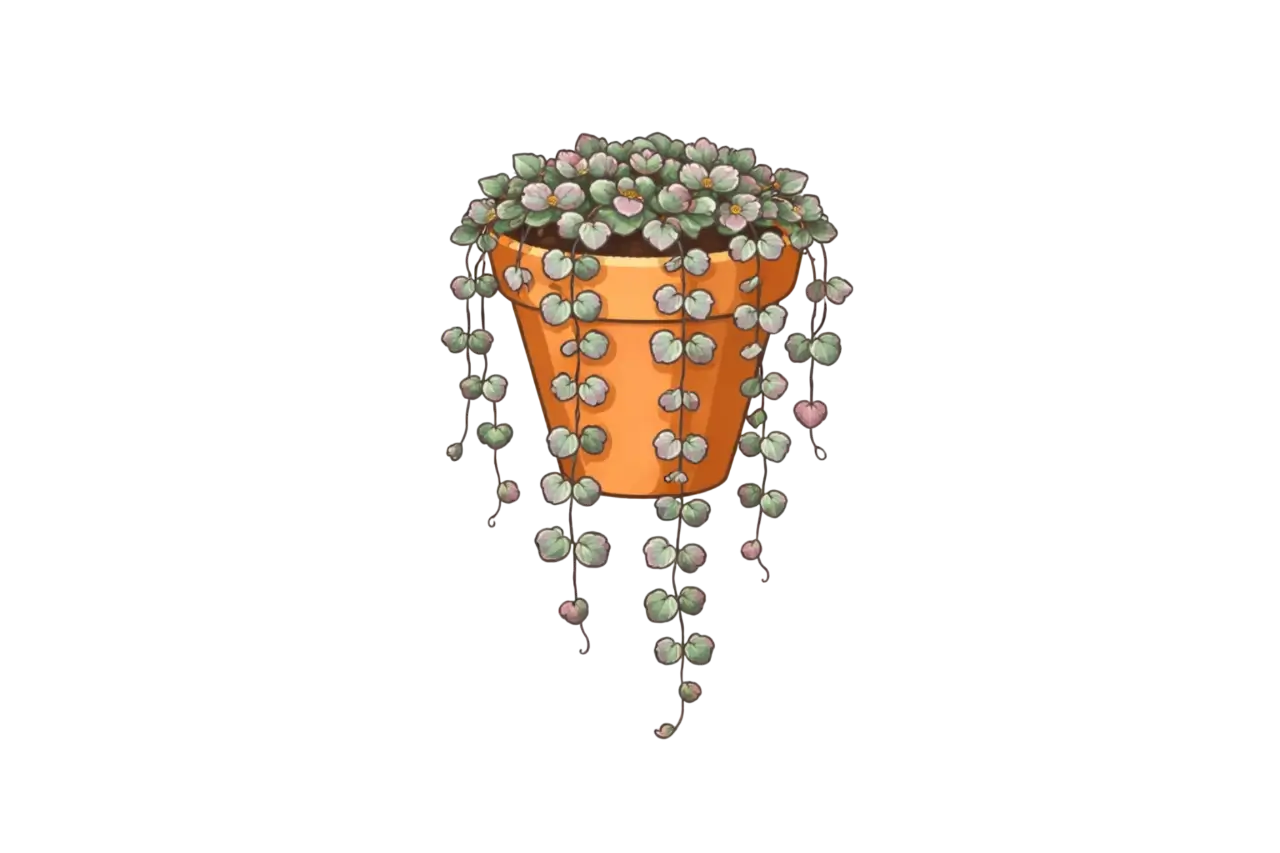
Ceropegia woodii is a succulent vine from southern Africa, ranging from Zimbabwe down through Mozambique, Eswatini and into the Cape Provinces, in the family Apocynaceae. The leaves are dark green etched with silver above and purple underneath, on wiry stems that NC State puts at about 3 feet cascading from a container, though wild plants reach up to 12 feet. The flowers are small, under an inch, tubular and purplish to purplish-white, appearing in summer and autumn.
One naming note, because this one runs backwards from what you will read elsewhere. NC State files the plant as Ceropegia woodii and lists Ceropegia linearis subsp. woodii as the former name, so woodii is the current one. Plenty of sources state the reverse. The plant has nothing to do with the string of pearls beyond a shared habit and a shared common-name formula; that one is an Asteraceae daisy relative and this is a milkweed cousin.
The best thing about owning it is that it propagates itself. Along the stems it forms small aerial tubers, and NC State records that these tubercles will root and produce another plant if the stem comes into contact with the soil. Lay a trailing vine across the surface of a neighbouring pot and you have a new plant without cutting anything. It is also a rapid grower by NC State’s rating, unusual among succulents and worth knowing if you were expecting something slow.
Quick Info
- LightBright
- WaterLow
- SizeVines about 3 feet indoors, to 12 feet in habitat
- HumidityLow
- Temp60-85°F (16-29°C); no frost tolerance
- FloweringYes
- TypeVine, Succulent
- Dog SafeYes
- Cat SafeYes
- Kid SafeYes
Is String of Hearts Toxic to Pets?
Pets: No toxic principle is recorded for Ceropegia woodii and NC State lists no toxicity for it. I could not confirm an ASPCA entry directly, so the rating rests on nothing being reported rather than on a listing. Trailing stems invite a cat to play regardless, and the stems snap easily.
Kids: Nothing recorded as poisonous and no irritant sap reported. The vines are fragile, so the plant is more at risk from a child than the other way round.
String of Hearts Care Guide
Light, and Leaf Spacing
Bright but filtered, and less sun than its succulent looks suggest. NC State files it under dappled sunlight, described as shade through an upper canopy all day, with bright indirect light as the preference, and lists leaf scorch from excess sunlight among the problems. So the common advice to put it in a south or west window needs qualifying: those positions work with a sheer curtain or a few feet of distance, and they scorch it against the glass.
Light is also the lever on leaf spacing. Below what the plant wants, the stems run on with leaves every five or six inches instead of every three, and the marbling washes out. An east window or a bright spot a little back from a brighter one is the sweet spot. A grow light holds the spacing tight through winter if your room is dim, and winter is when most of the stretching happens.
Watering, and the Tuber as Your Margin
NC State is unambiguous: the soil should be allowed to dry out completely between waterings, with less again during winter dormancy. Overwatering causes root rot and yellowing, and that is the single way most of these plants are lost. Our succulent watering calculator exists for this problem, and a plant whose needs shift this far between July and January is exactly the case it was built for.
The tuber at the base is your margin for error. These plants grow from a caudex that stores water, so a missed watering shows up as slightly soft, dulled leaves and recovers within days of a proper soak. There is no equivalent recovery from the other direction, and reversing an overwatered pot is a harder job than remembering to water a thirsty one.
Avoid misting in particular. Water collecting where the leaves meet the thin stems has nowhere to go quickly, and the stems are the part of this plant that rots. If the leaves look dusty, a gentle rinse under a tap with the pot held sideways beats spraying, and let it drain fully before hanging it back up.
Mix and the Hanging-Pot Problem
Sandy and well-drained at an acid to neutral pH, which is NC State’s description. A bagged cactus and succulent mix matches that closely enough, and extra grit does no harm if your watering tends toward the generous.
Hanging pots complicate this. A plastic hanging planter holds water far longer than a pot sitting in airflow on a shelf, so the same watering habit that works on a windowsill drowns a hanging plant. A terracotta pot is the easier option if you can hang the weight, and whatever you use needs a drainage hole that is not blocked by the hanger.
Feeding, Kept Modest
A cactus and succulent fertilizer at label strength, once a month while it is growing, then nothing at all from autumn while the plant is resting. NC State rates it a rapid grower, so unlike most succulents it does make use of a feed during the growing season.
Keep it modest all the same. Overfed vines put on soft growth with the leaves spaced further apart, so you arrive at the leggy look you were trying to avoid by a different route entirely. Flushing the pot with plain water every few months clears accumulated salts, which matters more in a small pot that never gets a thorough soaking.
Temperature, Humidity and the Cold Windowsill
Ordinary room temperature through the year. NC State limits the hardiness to USDA zones 10a to 12b, so cold is not something it carries any adaptation for, and the plant takes a winter rest in which it wants both less water and less warmth than it had in summer. There is no published optimum to aim at, which matters less here than it sounds: a plant that wants a cool winter rest is not asking for one steady number all year.
What to avoid is the cold windowsill, a real risk on a trailing plant. The vines hang down against the glass where it is several degrees colder than the room, so a plant that is comfortable at its hook can have a foot of growth sitting in the cold. Pull it back from the window in winter instead of moving the whole plant.
Humidity needs no management. This is a succulent from seasonally dry southern African habitat, and nothing published sets a humidity target for it. Average indoor air suits it, and dry air is not what causes the problems people blame on it.
Repotting and the Bald Crown
Every two or three years in spring, going up one size. These plants flower and trail happily when slightly tight, and the tuber at the base sits at or just below the surface, so there is no need for depth. A wide shallow pot suits the root system better than a deep one.
Repotting is also the moment to deal with a bald top, the usual reason a mature plant looks worse than it should. Lift it, untangle the vines, and lay a few stems across the surface of the fresh compost so their tubers can root in and fill the middle of the pot back in.
Pruning, and Handling Wire-Thin Stems
Trim whenever the vines get longer than you want, with clean snips. Cutting back encourages branching from further up the stem, the only real fix for a plant that has gone bare at the crown, and every piece you remove is a cutting. There is no bad time to do it during the growing season.
Handle the vines as little as you can manage. The stems are wire-thin and snap at a touch, the leaves detach easily, and a plant that gets moved and untangled often ends up thinner than one left alone. Hang it where it can trail without brushing against anything.
How to Propagate a String of Hearts
Layering is the easiest method and the plant does most of it. NC State lists layering alongside seed and stem cuttings, and explains the mechanism: the tubercles that form along the stems will root and produce another plant if the stem comes into contact with the soil. Lay a trailing vine across the surface of a pot of damp compost, weigh it down with a pebble, and leave it attached to the parent while it roots.
Stem cuttings work too and are quicker to arrange. Take a length of vine with several leaves, strip the lowest pair, and lay it on or just under the surface of gritty compost instead of burying it upright, since the roots come from the nodes along the stem.
Rooting hormone is unnecessary on a plant this willing. Keep the mix barely damp, because a cutting with no roots cannot use much water and rot is the usual failure.
The tubers themselves are a third route. Those pea-sized swellings along the stems are storage organs, and a tuber half-buried in compost will root and send up a new vine on its own. This is the method that needs no technique at all, and it is why an established plant tends to seed new plants into any pot it is allowed to trail across.
Seed is listed by NC State but there is little reason to use it. The plant flowers readily enough indoors, with small purplish tubular blooms in summer and autumn, but vegetative methods are faster, come true, and cost you nothing. Keep several cuttings in the same pot as the parent if you want a fuller plant instead of more plants.
Common String of Hearts Problems
Long gaps between the leaves is the complaint, and NC State gives you the benchmark: leaves sit about every three inches on a healthy stem. Wider than that means too little light. Move it brighter, out of direct sun, and judge by the newest growth, since stretched sections never close up. Yellowing on other plants covers a different set of causes.
Yellowing leaves with compost that stays damp is overwatering, which NC State names directly as causing root rot and yellowing. Let the mix dry right through, check the pot drains, and check the drainage hole has not been blocked by a hanging fitting. Overwatering recovery is the next step if the stems have softened at the base.
Scorched, bleached or crisped leaves come from excess sunlight, which NC State lists as a problem for this species. A south or west window directly against the glass is usually the cause. Pull the plant back or filter the light, and remember the vines nearest the window get the worst of it.
Wilting with dry compost is simple thirst and NC State lists it as such. The tuber gives the plant a buffer, so this is recoverable within days of a soak. Soft, dulled leaves plus a bone-dry pot is the signature; soft leaves plus a wet pot is the other problem entirely.
A bald crown with all the growth hanging below is the natural habit of a maturing plant and not a fault, though it is fixable. Cut some vines back hard to force branching nearer the top, and lay a few stems on the compost surface so their tubers root in and refill the middle.
Aphids, mealybugs and scale are the three NC State names. Mealybugs hide where the leaf stalks meet the stem and are easy to miss on a plant with this much tangled growth. Identifying houseplant pests separates them out.
Stems snapping or leaves dropping after you have moved the plant is mechanical, not cultural. The vines are thin and brittle and tolerate handling badly, and no amount of good care changes that. Hang it somewhere it can trail without being brushed past, and accept that any plant you untangle regularly will be thinner than one you leave alone. The string of turtles is no tougher, for what it is worth, so this is not a problem you solve by swapping plants.
FAQs
Not enough light, and there is a figure to compare against. NC State records that the leaves sit roughly every three inches along a healthy stem, so gaps of five or six inches mean the plant is reaching. Move it somewhere brighter but out of direct sun. Stretched growth never tightens up, so the test is whether the newest few inches come in with closer spacing.
No, and this is where it differs from most succulents. NC State files it under dappled sunlight, meaning shade through an upper canopy all day, prefers bright indirect light, and lists leaf scorch from excess sunlight among its problems. A south or west window works with a sheer curtain or a few feet of distance; pressed against the glass it burns.
Only once the soil has dried out completely, and less again in winter when the plant rests. NC State states the drying-out requirement plainly and names overwatering as the cause of root rot and yellowing. There is no fixed interval, because a plastic hanging pot holds water far longer than terracotta sitting in airflow on a shelf.
Aerial tubers, and they are the plant offering you free propagation. NC State notes that these tubercles will root and produce another plant if the stem comes into contact with soil. You can half-bury one in a pot of compost and leave it to root, or lay a whole vine across a neighbouring pot and let it do the work while still attached to the parent.
Ceropegia woodii is the current name, which catches people out because the change ran the other way to what most sources say. NC State treats Ceropegia woodii as current and files Ceropegia linearis subsp. woodii as the old name. The plant sits in Apocynaceae, the family that also holds milkweeds and oleander, so it is no relation to the string of pearls despite the matching common name.
Nothing suggests otherwise. No toxic principle is recorded for Ceropegia woodii, NC State lists no toxicity for it, and no source reports irritant sap. I could not confirm an ASPCA entry for it directly, so that rating rests on an absence of reports and not on a listing. The practical risk runs the other way: trailing stems are irresistible to cats and they snap very easily.
NC State gives about 3 feet cascading from a container, with wild plants reaching up to 12 feet. Indoor plants rarely approach the wild figure, and the longer a vine gets the more likely it is to go bare near the crown, so most people cut them back well before then. It is a rapid grower by NC State’s rating, so length comes faster than it does on most succulents.
It is the natural habit of a maturing plant, since growth extends from the ends of the vines and never fills in behind them. The remedy is to cut some stems back hard, which forces branching nearer the crown, and to lay a few trailing stems across the compost surface so their tubers root in and refill the centre. Doing both at repotting time is the efficient approach.