
Why Are My String of Pearls Turning White?
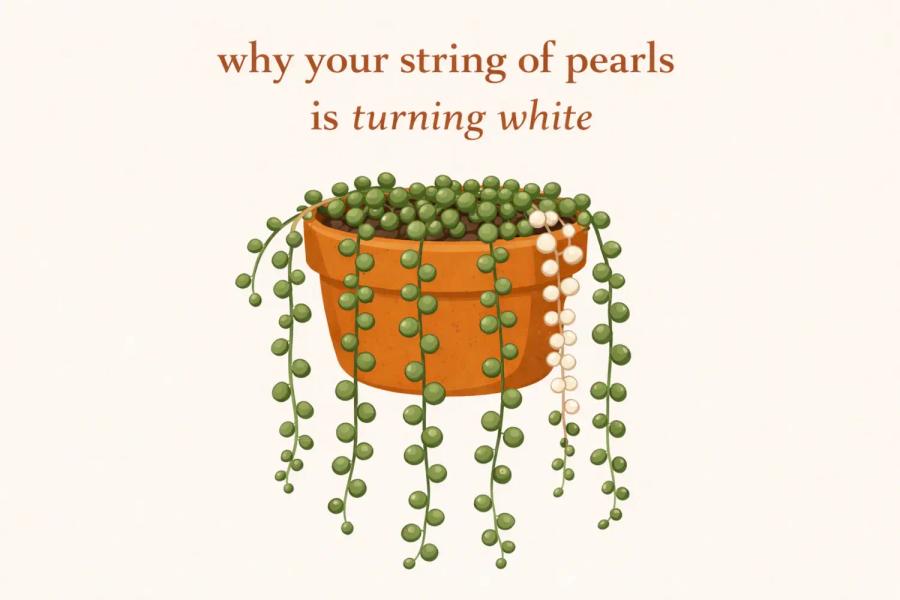
White or bleached pearls almost always mean too much direct sun. This plant needs bright light, but there's a difference between bright indirect light and harsh direct sun hitting the pearls for hours. When that line gets crossed, the pearls bleach out. Unlike some stress responses, sunburn damage doesn't reverse — the bleached pearls stay bleached.
A few other causes are worth ruling out, and the fix depends on which one you have.
Sunburn — the most likely cause
String of pearls grows wild in South Africa as a ground cover, often shaded by rocks and other vegetation. It tolerates some direct morning or late afternoon sun, but prolonged harsh midday sun — especially through glass — scorches the pearls.
Sunburned pearls look pale, bleached, or papery white with a dry, almost translucent quality. Some growers call this sunscald. The damage shows on the side facing the light source. Once a pearl bleaches, it stays that way — the cell damage doesn't heal. New growth will come in green once you move the plant, but the affected pearls won't recover.
If the plant is sitting in a south or west-facing window with direct sun for more than a couple of hours a day, that's almost certainly it.
The fix: Move it back from the window or filter the light with a sheer curtain. Bright indirect light is the sweet spot. Some morning sun from an east-facing window is fine.
Mealybugs
White cottony clusters on the stems or at leaf joints aren't bleaching — they're mealybugs. Up close they look like tiny white specks of fluff rather than bleached or papery pearls. If you see webbing or the white substance wipes off in clumps, that's pests not sun damage. Treat with a cotton swab dipped in 70% isopropyl alcohol, then follow up with neem oil. Isolate the plant from others immediately.
Stress blush going too far
String of pearls produces a pink or purple tinge as a stress response to mild drought or gentle direct sun. It's a pigment defense mechanism, harmless, and usually reverses when conditions ease.
Occasionally this shows up as pale or washed-out rather than a clear pink blush. Easy to mistake for sunburn. The difference: stress blush is even across the plant and the pearls stay firm. Sunburn affects the sun-facing side more and the pearls feel dry or papery.
If the pale color appeared gradually and the pearls are otherwise firm and healthy, ease up on direct sun and water slightly more regularly. Color usually returns to normal within a few weeks.
Overwatering combined with light stress
Overwatered pearls go soft and mushy, often yellowing before they turn pale or translucent. If the whitening comes with softness, a soggy pot, or pearls that squish when touched, overwatering is the likely culprit — or at least a factor alongside too much sun.
If the soil is still wet several days after watering, drainage is the problem. Repotting into a fast-draining cactus and succulent mix fixes it. Overwatering alone won't turn pearls crisp white — that's a sunburn look — but heat stress plus wet roots speeds up damage.
For a full watering breakdown by season, see the string of pearls watering guide.
Natural aging
Pearls at the base of older vines sometimes fade and pale as they age. If the whitening is limited to old pearls near the soil and new growth is coming in healthy and green, nothing needs fixing.
How to tell which cause you have
Window position matters more than most people realize. A south-facing window with direct sun from 10am to 3pm is too much. Pull the plant back a foot or two, or use a sheer curtain. It still gets the brightness without the intensity that bleaches the pearls.
If you're using a grow light, keep it at least 6–8 inches above the plant and run it 12–14 hours rather than trying to compensate with intensity.
For the full light requirements and care overview, see the String of Pearls Care Guide.
Frequently Asked Questions
Not if they're sunburned. The cell damage is permanent. New growth will come in green once you fix the light, but the bleached pearls won't change. If the whitening was mild stress rather than sunburn, color can return once conditions improve.
More than a couple of hours of direct midday sun, especially through glass. Morning sun from an east-facing window is fine. The problem zone is south or west-facing direct sun from late morning through afternoon.
Bleaching concentrated on one side of the plant — the side facing the window — points to sunburn rather than a whole-plant care issue. Rotate the pot and move it back from the window.
Yes. A pink or purple tinge is a normal stress response to mild drought or direct sun. It's not damage and usually reverses when conditions ease. White bleaching is different and means sunburn.
You don't have to. You can trim affected stems if the look bothers you — the plant will push new green growth from the nodes. Fix the light issue first before trimming.
White spots are usually mineral deposits from hard tap water, particularly if you water from above. The minerals dry on the pearl surface and leave white residue. It wipes off easily with a damp cloth and isn't harmful. Switch to bottom watering or use filtered water going forward to prevent buildup. If the spots are sunken, dry, and papery rather than surface residue, that's localized sunburn rather than mineral deposits.
For watering, soil, propagation, and full care, visit our String of Pearls Care Guide.