How to Care for String of Pearls
Senecio rowleyanus
 Save
Save
String of Pearls (Senecio rowleyanus, also accepted as Curio rowleyanus, and sometimes sold under the older synonym Kleinia rowleyana. Following a 1999 reclassification) is one of the most distinctive succulents you can grow. Its long trailing stems, lined with perfectly spherical pea-sized leaves, look unlike anything else. Native to the rocky, sun-baked terrain of the southwestern Cape of South Africa, it grows wild as a ground cover, its stems trailing across dry soil and rooting wherever they make contact.
Each "pearl" isn't just decorative. It's a water-storage organ, and each one has a thin translucent stripe called an epidermal window that lets light penetrate inside the leaf for photosynthesis. It's a clever desert adaptation that makes this plant unusually efficient with light and water.
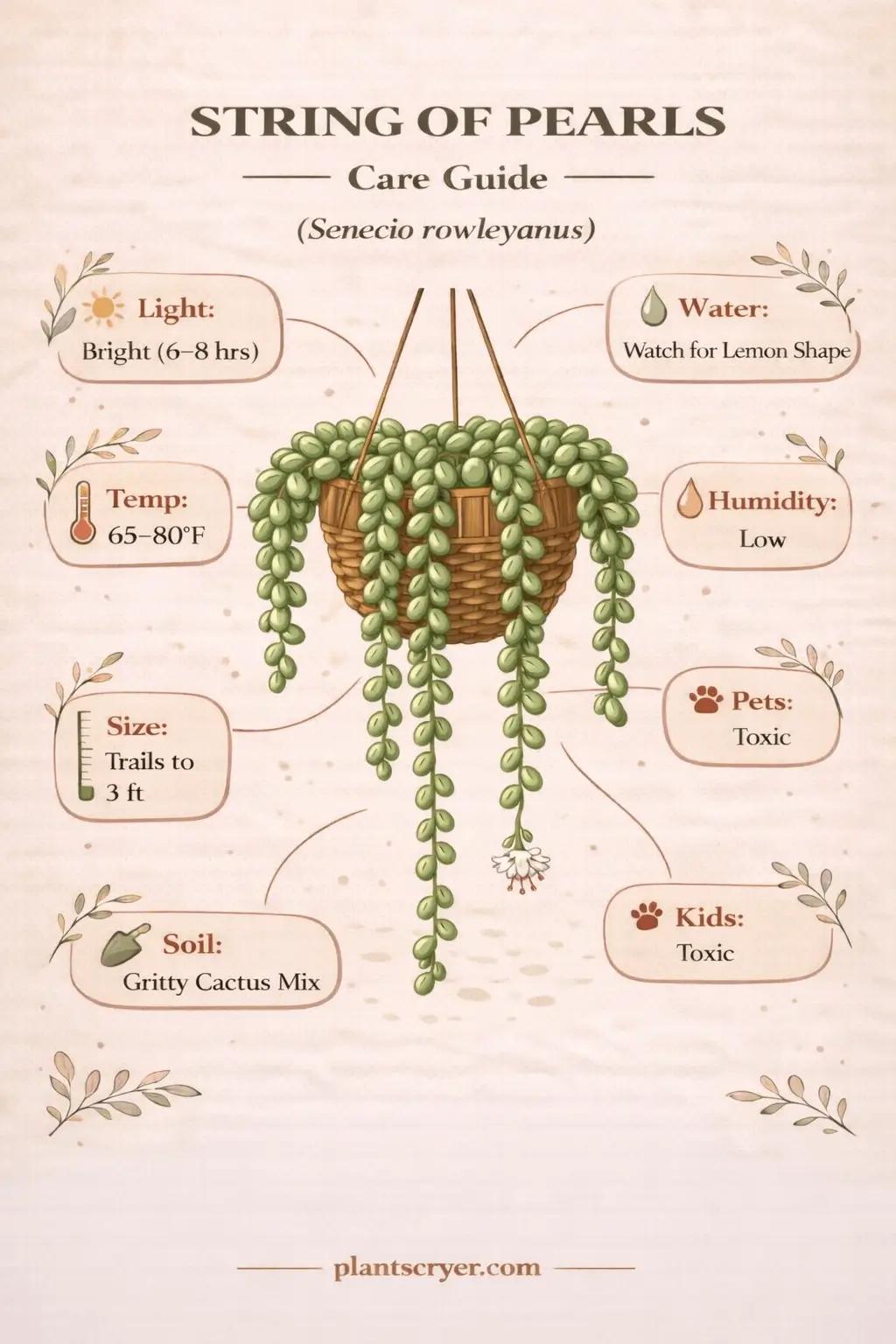
Indoors, String of Pearls is best displayed in a hanging basket or on a high shelf where its stems (which can trail up to 3 feet) can cascade freely. It's low-maintenance when its two non-negotiable needs are met: bright light and fast-draining soil. Get those right and it's highly forgiving. Get them wrong and it rots quickly.
One thing every owner should know: String of Pearls is a naturally short-lived plant, typically lasting 3–5 years. Propagating fresh cuttings every year or two is how you keep it going indefinitely, and it's easy enough that this shouldn't feel like a burden.
Keep out of reach of pets and children. All parts are toxic if ingested, causing vomiting and digestive upset; the sap can also cause skin irritation in sensitive individuals.
Quick Info
- LightBright
- WaterLow
- SizeVines 2–3 feet long
- HumidityLow
- Temp65–80°F (18–27°C)
- FloweringYes
- TypeSucculent, Vine
- Dog SafeNo
- Cat SafeNo
- Kid SafeNo
Toxicity Info
Pets: Toxic if ingested
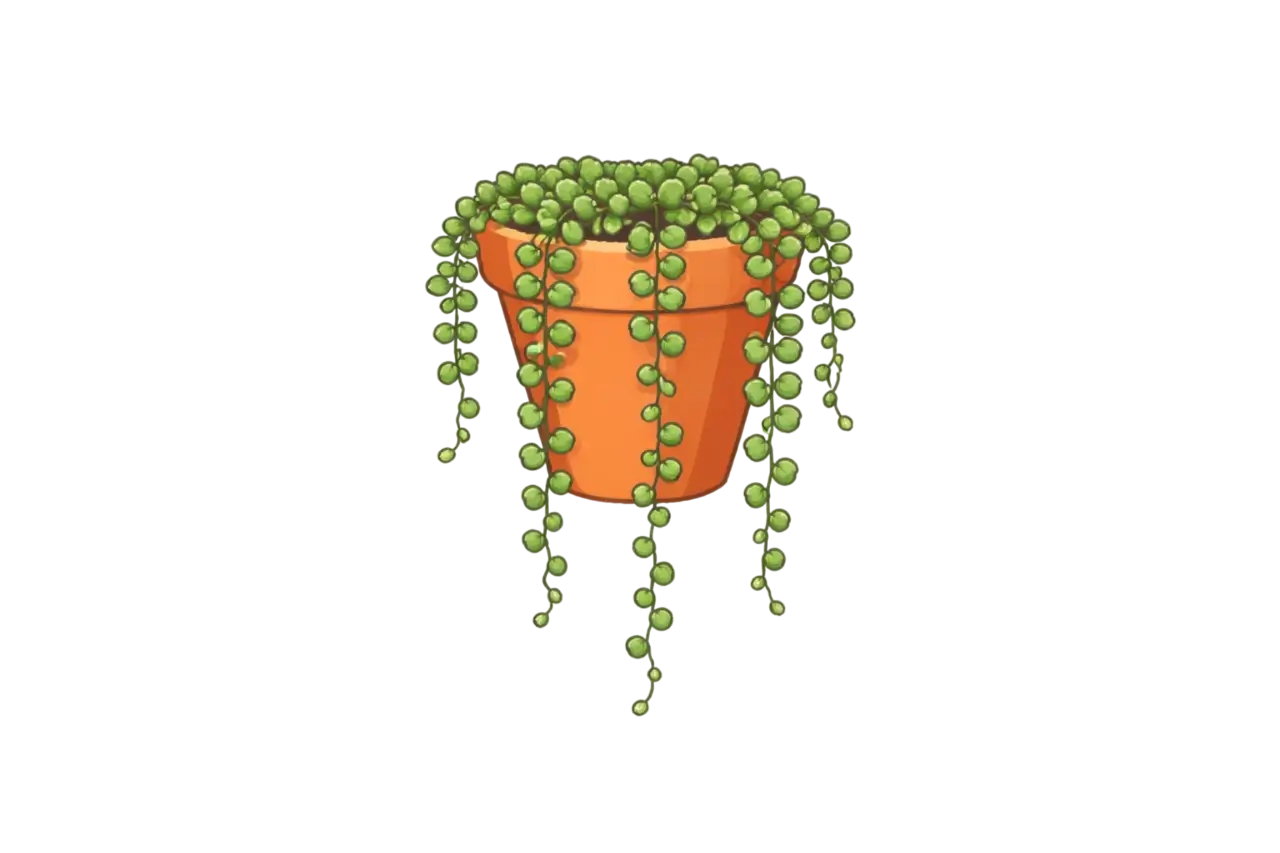
String of Pearls vs. String of Beads, Tears, and Dolphins: What's the Difference?
"String of Pearls" gets confused with several closely related trailing succulents. Here's how to tell them apart:
Curio rowleyanus (String of Pearls / String of Peas, this guide): perfectly spherical, smooth bright-green pearls on fine stems. The most widely sold variety.
Curio herreianus (String of Beads / String of Watermelons). Similar trailing habit but leaves are teardrop-shaped with vertical striping rather than perfectly round. Often sold mislabeled as "String of Pearls." Care is nearly identical.
Curio citriformis (String of Tears): small, plump, teardrop/cigar-shaped leaves with a pointed tip, more elongated than a pearl. Another frequent source of confusion at plant shops. Care is similar.
Curio × peregrinus (String of Dolphins): leaves shaped like small leaping dolphins with two tiny "fins." Slightly more demanding than standard String of Pearls.
Curio × radicans (String of Bananas): elongated, banana-shaped leaves on trailing stems. More drought-tolerant than String of Pearls.
String of Pearls Care Guide
Light
String of Pearls needs more light than most people give it: at least 6–8 hours of bright light per day. This is closer to a windowsill succulent than a shade-tolerant tropical. In lower light, the spaces between pearls stretch out, stems become thin and leggy, and the plant gradually declines.
Indoors: A south- or west-facing window is ideal. East-facing works if the plant sits very close to the glass. Some direct morning or late-afternoon sun is beneficial. It's prolonged harsh midday sun in summer that scorches the pearls.
Grow lights: Full-spectrum grow lights run 12–14 hours daily work well. A practical option for darker rooms or north-facing windows.
Stress blush: In response to mild drought stress or direct sun exposure, the pearls can develop a subtle magenta or pink tinge. This is a normal stress response, not damage. It typically reverses when conditions ease. Intense browning or bleaching of individual pearls is sunburn, which is different and indicates too much harsh direct light.
A reliable sign of insufficient light: elongated gaps between pearls and sparse, thin new growth. Move to brighter conditions promptly.
How to Water String of Pearls
String of pearls is highly sensitive to overwatering. It's the primary cause of death for this plant. The pearls store water efficiently and the roots are shallow, meaning wet soil for more than a few days causes rot quickly.
Read the pearls before reaching for the watering can. Well-hydrated pearls are round and firm. When they begin to flatten or elongate slightly, it's time to water. Visible wrinkling means the plant is overdue. Soft or mushy pearls mean overwatering.
In the growing season most plants need water every 10 to 14 days. In winter, once a month or less is normal. Some plants in cool dim rooms go 6 to 8 weeks without issue.
For a full seasonal breakdown, pot type guidance, and a calculator to find your specific interval, see our string of pearls watering guide.
Always water thoroughly until it drains from the bottom, then empty the saucer completely. Bottom watering is preferred. Place the pot in a shallow tray of water for 15 to 20 minutes, then drain. Never mist and never let the pot sit in standing water.
Soil and Pot
Soil: Use a very fast-draining mix, cactus/succulent mix, or a 1:1 blend of cactus mix and perlite. Some growers add coarse sand or pumice for extra drainage. The mix should dry out within 1–2 days of watering; if yours stays moist for a week, add more drainage material.
Pot depth: the most overlooked detail: String of Pearls has a shallow, weak root system that only occupies the top few inches of soil. A deep pot holds moisture in the lower layers where roots never reach, dramatically increasing rot risk. Use a shallow pot: a wide, low dish or a standard pot no more than 3–4 inches deep is ideal. Terracotta or unglazed clay allows evaporation through the sides, helping the soil dry faster than plastic or ceramic.
Plant the crown near the rim. The root ball should sit about 1 cm below the pot's top edge, with the pearl stems resting at or just below the rim. Planting too deep invites moisture pooling around the crown.
The pot must have drainage holes. No exceptions.
Temperature
Ideal indoor range: 65–80°F (18–27°C). Tolerates down to 50°F (10°C) in winter dormancy. Protect from temperatures below 50°F and from frost entirely. This plant has zero freeze tolerance. Avoid cold drafts, cold window glass in winter, and air conditioning vents.
USDA hardiness zones 9–12 can grow it outdoors year-round. Everywhere else it's a houseplant.
Humidity
Low. Standard indoor humidity (30–50%) is fine. High humidity with poor airflow is a rot and fungal risk. Do not mist.
Fertilizing
Light feeder. Apply a balanced liquid fertilizer at half strength once a month during spring and summer only. Stop completely in autumn and winter. Over-fertilizing causes soft, weak pearls and increases rot susceptibility. Signs of under-fertilization: unusually small or deformed pearls and pale coloring.
Pruning
Trim back leggy, stretched, or browning stems to encourage fresh growth from the base. The trimmings are free propagation material: never discard them. Pinching stem tips encourages branching, producing a fuller plant. After blooming, cut the flower stalks as close to the vine as possible without cutting the stem itself.
How Long Does String of Pearls Live?
String of Pearls is naturally short-lived: typically 3–5 years before it begins to decline. This isn't a care failure; it's the plant's nature.
The solution is propagation. Taking stem cuttings every 1–2 years and starting fresh plants means you always have a healthy specimen. When an older plant starts looking sparse or sad despite correct care, that's usually age. Propagate from the healthiest vines before the whole plant is lost.
How to Get String of Pearls to Flower
Indoors, flowering is possible but rare. The triggers are: a cool, bright winter rest (around 55–60°F, reduced watering, maintained in good light), followed by a return to normal warm conditions and regular fertilizing in spring. When conditions are right, small white daisy-like flowers appear on 1.5-inch stalks in summer. They're modest: white blooms with distinctive long red stamens and bright yellow anthers, but carry a sweet and spicy, cinnamon-like fragrance and are followed by fluffy cottony seed heads. Blooms typically last about a month.
Popular Varieties
Standard green (Curio rowleyanus): the classic with solid green spherical pearls. Most widely available.
Variegated (Curio rowleyanus f. variegatus). Pearls and stems show cream, white, and sometimes pink mottling alongside green. Slightly slower-growing; needs a little more light to maintain variegation. Same care otherwise.
How to Propagate String of Pearls
Because this plant is short-lived, propagation is routine maintenance, not a special project. Start new cuttings from your best-looking vines every 1–2 years.
Best time: spring or summer, though this plant roots readily enough that late summer works too.
Stem tip cuttings (most reliable)
Take 3–5 inch cuttings from healthy, actively growing stems. Strip the bottom 1–2 inches of pearls to expose bare nodes: roots form at those nodes. Let the stripped end callus in a warm, shaded spot for 1–2 days.
Insert the bare end about 1 inch deep into a small pot of moist cactus/perlite mix. For immediate fullness, push 3–4 cuttings into the same pot at once. They'll grow together and fill in quickly.
Wait 2–3 days before first watering, then water lightly, allowing soil to dry between waterings just as with a mature plant. Roots develop in approximately 3–4 weeks. No humidity dome needed.
Lay-flat / soil layering (easiest)
Lay a long healthy vine on top of moist cactus soil and gently press nodes into contact with the surface, pinning lightly with a hairpin. Roots form at each contact point over several weeks. Best for filling out a sparse hanging basket rather than starting an entirely new plant.
Water propagation (visual, beginner-friendly)
Prepare cuttings identically, then place the bare-node end in a narrow glass of room-temperature water. Remove any pearls that would touch the water. They'll rot and foul the glass. Roots form in approximately 3–4 weeks. Transfer to soil once roots reach at least half an inch. Water-rooted cuttings transition easily for this plant.
What to do with dropped pearls
Individual pearls that break off aren't wasted. Press them lightly tip-side down into the surface of moist cactus soil and mist occasionally. Many will root over several weeks and grow into new starter strings. A slower method, but good use of fallen beads.
Common Problems
Mushy, yellowing, or blackened pearls: mushy stem at soil level Overwatering or a pot that drains too slowly. The most common cause of death. If caught early: unpot, cut all mushy roots and stem tissue back to clean white tissue, let dry 1–2 days, then repot in fresh dry cactus mix. Don't water for a week. If more than half the plant is affected, propagate any remaining healthy vines before it's too late. Link to [drooping article] if wilt is present. If the plant is failing where the strands meet the soil, see why string of pearls dies at the base.
Shriveled, wrinkled pearls Underwatering. The pearls' water reserves are depleted. Water thoroughly immediately. Pearls should plump back up within 24–48 hours. If they've also gone soft or mushy, that's overwatering, not underwatering.
Yellowing pearls (not mushy) Can signal overwatering, underwatering, too much direct sun, or natural aging of lower pearls. Check soil moisture and light first.
Pearls turning pink or purple A normal stress response to mild drought or direct sun exposure. The plant produces pigments as a defense mechanism. Usually reverses when conditions ease. Distinguishable from sunburn (which causes bleaching or brown patches on individual pearls) by the even tint across multiple pearls.
Brown tips or shriveled brown pearls Most often sunburn from too much direct light or, less commonly, underwatering combined with low humidity. If pearls are turning white or bleached rather than brown, see our guide to string of pearls turning white.
Elongated gaps between pearls / leggy thin stems Insufficient light. The plant is stretching toward whatever light source it can find. Move to brighter conditions immediately. 6–8 hours of bright light daily is the minimum.
Pearl drop / shedding on contact Over-handling, sudden temperature change, cold drafts, or environmental shock from repotting. String of Pearls pearls are loosely attached. Minimize unnecessary movement and keep away from vents.
Stunted or no new growth Usually insufficient light or a plant approaching the end of its 3–5 year lifespan. Check both before adjusting care. If the plant is several years old, propagate fresh cuttings.
Pests Mealybugs (white cottony masses at stem joints) and aphids are most common; spider mites appear in very dry conditions. Treat with 70% isopropyl alcohol on a cotton swab for direct removal, followed by neem oil to prevent reinfestation. The dense cascade of stems creates hiding spots, inspect regularly.
FAQs
Watch the pearl shape rather than a fixed schedule. Water when the pearls first start shifting from perfectly round to a slightly elongated lemon shape: before visible wrinkling. In practice this is roughly every 10–14 days during the growing season and once a month or less in winter. When you water, water thoroughly until it drains from the bottom, then don't water again until the next shape check.
Shriveled, wrinkled pearls mean the plant is underwatered and its water reserves are depleted. Water thoroughly and the pearls should plump back up within 24–48 hours. If the pearls are soft and mushy rather than firm and wrinkled, the cause is overwatering: a very different problem requiring very different treatment.
Take 3–5 inch stem tip cuttings in spring or summer, strip the bottom 1–2 inches of pearls to expose nodes, let callus for 1–2 days, then insert into moist cactus mix. Roots develop in 3–4 weeks. Water propagation also works well: place the bare-node end in a glass of water, remove any pearls that would touch the water, and transfer to soil once roots reach half an inch.
String of Pearls is naturally short-lived: typically 3–5 years. When an older plant starts declining despite correct care, that's usually age rather than a solvable problem. Propagating fresh cuttings every 1–2 years is how you keep it going indefinitely.
Often used interchangeably, but botanically different species. String of Pearls (Curio rowleyanus) has perfectly spherical leaves. String of Beads or String of Watermelons (Curio herreianus) has teardrop-shaped leaves with vertical striping. Both are frequently sold under the same common name. Check the leaf shape to tell them apart. Care is nearly identical.
Yes. All parts are toxic if ingested, causing vomiting and digestive upset in pets and humans. The sap can also cause skin irritation in sensitive individuals. Keep out of reach of pets and children, and wear gloves when handling if you have sensitive skin.
Check two things first: is it overwatering (mushy pearls, blackened stems, soil staying wet), or is it age? String of Pearls only lives 3–5 years naturally. If it's overwatering, repot into fast-draining soil in a shallow pot and water only when pearls show the lemon-shape cue. If the plant is old and declining overall, propagate the healthiest vines now before it's completely lost.
No. This plant needs 6–8 hours of bright light daily, significantly more than most shade-tolerant houseplants. In low light the stems stretch, gaps between pearls elongate, and the plant gradually weakens. If your space doesn't get much natural light, a grow light run 12–14 hours daily is a worthwhile investment for this plant specifically.