
How Often to Water a String of Pearls

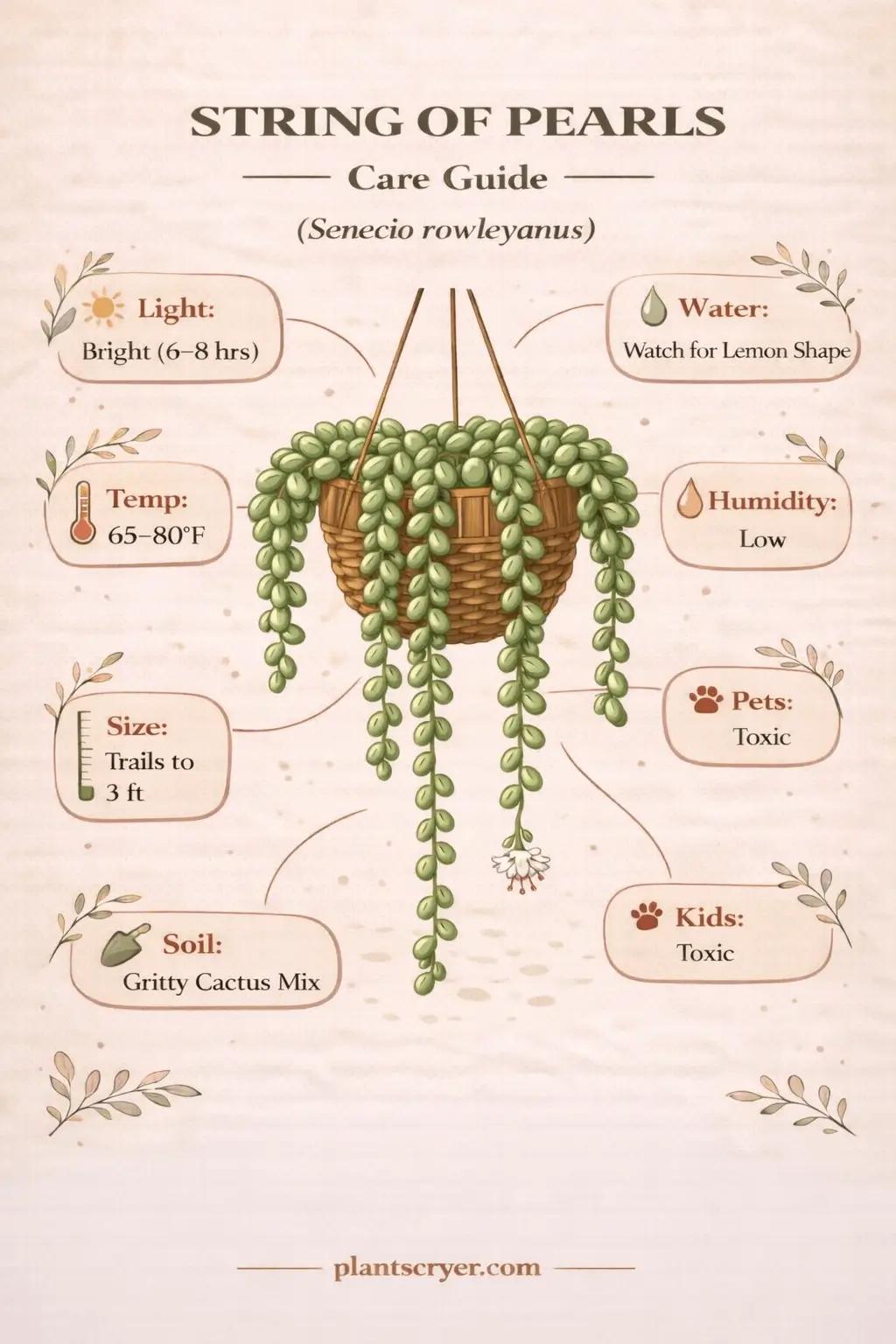
String of pearls needs water every 10 to 14 days during the growing season and once a month or less in winter. But a fixed schedule will get you into trouble with this plant faster than almost any other. The pearls themselves are a better guide than any calendar — and once you know what to look for, you’ll rarely get it wrong.
Overwatering kills string of pearls more reliably than anything else. The shallow root system, the water-storing pearl structure, and the fast-draining soil it needs all mean that wet soil lingering for more than a few days is a serious problem. The sections below explain how to read the plant and use the calculator to find your specific starting interval.
Find Your Watering Schedule
Light Level
Season
Pot Material
Pot Size
Humidity
Adjust the inputs for your light level, pot type, and season. The result is a conservative starting point — string of pearls can always handle going a little longer between waterings, but it won’t forgive being kept consistently wet.
How to Tell When Your String of Pearls Needs Water
This is more useful than any schedule. String of pearls communicates its water status through the pearls themselves.
- Round and firm — the plant is well hydrated. Don’t water yet.
- Slightly elongated or flattened — the pearls are beginning to lose their roundness. This is the ideal time to water. The plant is thirsty but not yet stressed.
- Visibly wrinkled — the plant is overdue. It will recover with a thorough watering but try not to let it get here regularly. Repeated severe drying stresses the shallow root system.
- Soft, mushy, or translucent — this is the opposite problem. Overwatering, not underwatering. Stop watering immediately and check the soil and roots.
If you look closely at each pearl, you’ll notice a thin translucent stripe along one side. This is the epidermal window — a desert adaptation that lets light into the interior of the leaf for photosynthesis. When the plant is well hydrated the window is clearly visible. As the pearl loses water and begins to flatten, the window becomes less defined. It’s a subtle cue but once you notice it you start seeing it automatically. More on the epidermal window and the plant’s biology on the care page.
What Actually Determines How Often You Water
Light level
More light means faster soil drying and more frequent watering. In bright indirect light near a south or west window, water every 10 to 14 days in summer. In lower light the soil dries slower, but the plant is also gradually declining — string of pearls in genuinely dim conditions doesn’t thrive long-term regardless of how carefully you water it. Don’t use low light as a reason to water less often and then wonder why the plant is struggling.
Season
String of pearls grows actively in spring and summer and slows significantly in fall and winter. In cool dim conditions in winter, some plants go 6 to 8 weeks between waterings without any sign of stress. Don’t feel compelled to water in winter just because it has been a few weeks. Check the pearls and let them tell you.
Pot type and material
Terracotta is the best pot choice for this plant — not just a preference but a genuine advantage. The porous clay wicks moisture away from the shallow root zone passively, which dramatically reduces root rot risk. If you’ve been struggling with this plant in plastic or ceramic, switching to a terracotta pot is the single most impactful change you can make. Hanging baskets dry out the fastest of all — if yours is in one, check it more frequently in summer. A note on self-watering pots: they can work for string of pearls but only if the reservoir is allowed to empty completely between refills. A reservoir that stays perpetually full is root rot waiting to happen.
Pot size
String of pearls actually does fine slightly rootbound. Don’t overpot — a pot that’s much larger than the root ball holds more soil than the roots can drink from, which keeps soil wet and invites rot. When repotting, go up one size only.
Humidity
Unlike tropical houseplants, string of pearls doesn’t need or particularly like humidity. High humidity slows soil drying and increases disease risk for this plant. If yours is in a bathroom or kitchen, move it somewhere drier. Average household humidity is fine — it’s high humidity that causes problems.
How to Water a String of Pearls
Bottom watering is the preferred method and for good reason — it keeps the pearls and stems dry while delivering water directly to the roots. Place the pot in a shallow tray or bowl of water for 15 to 20 minutes, let the soil absorb moisture from below, then drain fully and return the plant to its spot.
If top watering, water at soil level only. Don’t pour water over the pearls or stems. Water thoroughly until it drains from the bottom, then empty the saucer. Never leave the pot sitting in standing water.
Don’t mist. String of pearls doesn’t benefit from misting — the pearls don’t absorb water through their surface and sustained moisture on the stems encourages rot.
Use a well-draining cactus and succulent mix and consider adding perlite if your mix retains moisture longer than it should. The soil should feel completely dry before you water again.
If you want a precise read on soil moisture before deciding whether to water, a moisture meter is a low-effort way to check what’s happening deeper in the pot where your finger can’t reach easily.
String of Pearls Watering Schedule by Season
Spring and summer
Check the pearls every 7 to 10 days. Water when they start to show the first signs of flattening — don’t wait for wrinkling. Most plants in average household light land in the 10 to 14 day range. In brighter spots or during a heatwave, they may need water closer to weekly.
Fall
Growth starts to slow in September and October. Start stretching your intervals and pay more attention to the pearls than the calendar. The transition from summer to winter frequency is gradual.
Winter
Once a month is a reasonable starting point, but some plants in cool dim rooms go 6 to 8 weeks without needing water. Check the pearls first. If they’re still round and firm, leave it alone. When in doubt with this plant, always wait.
Signs You’re Getting It Wrong
Yellow or translucent pearls with wet soil almost always mean overwatering. Wrinkled pearls with bone dry soil mean underwatering. The soil and stem texture together confirm which direction you’ve gone. For immediate action steps see our overwatered plant rescue guide.
Explore more string of pearls guides
Frequently Asked Questions
Once a month is a reasonable baseline but some plants in cool, low-light rooms go 6 to 8 weeks without needing water. Check the pearls — if they're still round and firm, leave it alone.
Shriveling pearls can mean either overwatering or underwatering, which is why frequency is the key diagnostic. If you've been watering weekly or more often, overwatering is likely. If you've been watering monthly or less, underwatering is the more probable cause. Check the stems too — soft and mushy means overwatering, firm means underwatering.
Soft, mushy pearls almost always mean overwatering or root rot. Stop watering immediately, check the drainage holes are clear, and consider unpotting to inspect the roots. See our overwatered plant guide for next steps.
Yes, bottom watering is the preferred method. It delivers water directly to the roots while keeping the pearls and stems dry, which reduces rot risk. Place the pot in a shallow tray of water for 15 to 20 minutes, drain fully, and return to its spot.
Yes, regularly in summer and much longer in winter. String of pearls is highly drought tolerant and stores water in its pearls. Two weeks between waterings in the growing season is normal. In winter some plants go 6 to 8 weeks without any stress.
Check the pearls. Round and firm means wait. Slightly flattened or elongated means water soon. Visibly wrinkled means water now. This is more reliable than checking soil moisture for this plant because the pearls respond to water status more visibly than the soil surface does.