Why Is My Snake Plant Turning Yellow?
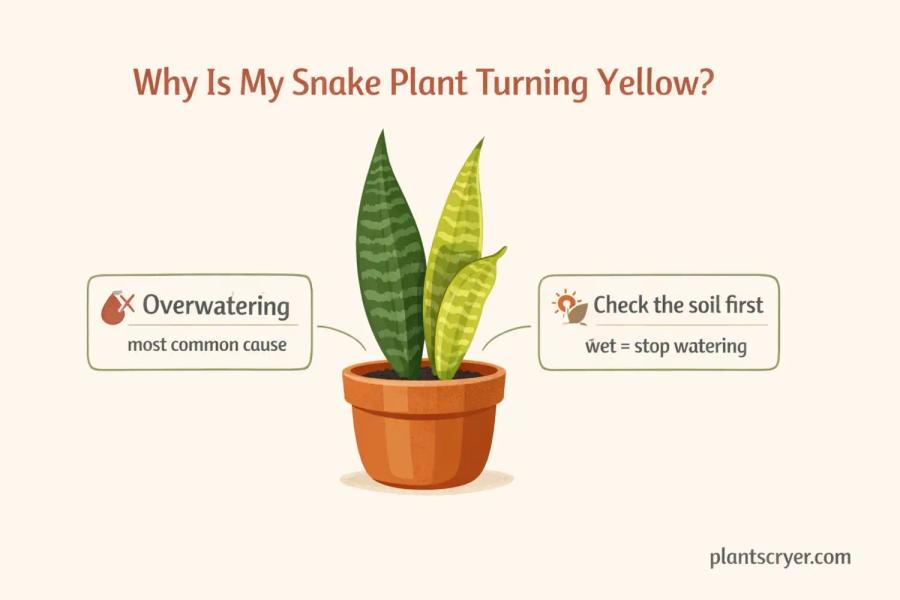
Yellow leaves on a snake plant almost always mean one of three things: too much water, not enough light, or natural aging. Snake plants are genuinely tough, and most bounce back well once you identify the right problem and fix it.
Before reaching for a solution, ask yourself one question: is the whole leaf turning yellow, or just the edges? Full leaf yellowing and edge yellowing have different causes with different fixes. Getting that wrong makes things worse.
Full Leaf Yellowing vs Yellow Edges: Start Here
Whole leaf turning yellow — overwatering, root rot, low light, or natural aging. The leaf loses colour uniformly, often starting from the base of the plant and working upward.
Yellow edges or tips only — fluoride or salt accumulation from tap water, sunburn, or fertilizer burn. The green centre of the leaf stays intact.
That distinction cuts the diagnosis in half. Use it as your starting point before reading further.
Overwatering
This is the most common reason snake plants turn yellow by a significant margin. Snake plants store water in their thick leaves and rhizomes and genuinely don't need much — a properly cared-for plant in average household conditions needs water every 2 to 6 weeks depending on light and season. Most yellowing happens because owners water on a fixed weekly or biweekly schedule regardless of what the soil is actually doing. When soil stays wet too long, roots lose oxygen and begin to rot. Once that starts, they can no longer move water and nutrients to the leaves. Yellowing begins at the base of the plant and works upward.
- Soil feels damp or soggy more than a week after watering
- Pot feels heavy when you lift it
- Yellowing starting from lower, older leaves first
- Soft or mushy stems at the base
- Musty smell from the soil
Stop watering. Let the soil dry out completely — push your finger 2 to 3 inches in and if there's any moisture at all, leave it alone. If the stems feel soft at the base, unpot and inspect the roots. Healthy roots are firm and pale. Rotten roots are brown, black, and soft. Trim any rotten roots with clean scissors, let the root ball air dry for an hour, then repot in fresh dry mix. See our overwatered plant rescue guide for the full recovery steps. For a watering schedule calibrated to your specific conditions, use the snake plant watering calculator.
Root Rot From Poor Drainage
Root rot and overwatering are related but not the same. You can cause root rot even with a reasonable watering frequency if the pot has no drainage holes, the soil mix retains too much moisture, or the plant sits in a saucer of standing water between sessions.
- Same symptoms as overwatering but you haven't been watering excessively
- Water drains slowly or pools on the soil surface
- Pot has no drainage holes, or plant is in dense regular potting mix
Repot into a pot with drainage holes using a fast-draining succulent and cactus mix. Never let the plant sit in standing water after watering — empty the saucer every time. See the root rot vs soil mold guide if you're unsure whether rot has already set in.
Not Enough Light
Snake plants survive in low light but they don't thrive there long-term. In genuinely dim conditions — a north-facing room, a dark hallway, far from any window — growth slows, leaves gradually lose their colour, and eventually yellow. Variegated varieties fade faster than solid green types.
- Yellowing is gradual and affects the whole plant rather than isolated leaves
- New leaves are thinner, paler, or more spaced out than older ones
- Plant is more than 8 to 10 feet from a window
Move to a spot with medium to bright indirect light. Don't make the move abruptly — a week or two of gradual adjustment prevents shock. A full-spectrum grow light run 10 to 12 hours daily works well in darker rooms or through winter.
Why Are My Snake Plant Leaf Edges Turning Yellow?
If only the edges and tips are yellowing while the centres stay green, this is a different problem from the causes above. The two most common culprits are fluoride accumulation from tap water and fertilizer burn. Dracaena species — which include snake plants since the 2017 reclassification — are known to be genuinely sensitive to fluoride in municipal tap water. With long-term tap water use, fluoride accumulates in leaf tissue and shows up as sharp yellow banding at the tips and margins, progressing inward over time. Fertilizer burn produces an identical pattern but appears 7 to 14 days after a heavy feed.
- Yellow or pale edges while leaf centres remain green
- White crusty residue on the soil surface
- You've been using tap water exclusively for months, or fertilizing frequently
Switch to filtered water or leave tap water in an open container overnight before using — this disperses chlorine but not fluoride. A filtered water pitcher is the simplest long-term fix. Flush the soil every few months by running a large volume of water through the pot to wash out accumulated salts. Cut fertilizing back to once a month at half strength during spring and summer only, and stop entirely in autumn and winter.
Too Much Direct Sunlight
Snake plants handle some direct morning sun but harsh afternoon sun scorches the leaves, leaving bleached yellow or pale patches. Unlike overwatering which yellows leaves uniformly, sunburn tends to affect only the side of the plant facing the window and appears as patches rather than full leaf yellowing.
- Yellow or pale patches on leaves facing a bright window
- Only one side of the plant is affected
- Problem appeared after moving to a sunnier spot
Move away from direct afternoon light. Bright indirect light or filtered sun is the sweet spot.
Cold Stress or Temperature Fluctuations
Snake plants prefer temperatures between 60 and 80°F (15 to 27°C). Consistent exposure to temperatures below 50°F or sudden cold from drafts, cold window glass in winter, or air conditioning vents causes yellowing and in worse cases blackening that won't recover.
- Yellowing appeared after a cold spell, a window left open, or a move near a vent
- Affected leaves may have soft or darkened patches alongside the yellow
- Problem is worse on the side of the plant nearest a cold source
Move away from drafts, exterior windows in winter, and AC vents. Cold-damaged leaves won't recover — remove them at the base — but the plant stops declining once conditions stabilise.
Natural Aging
The oldest lower leaves on a snake plant naturally yellow and die off as the plant puts energy into new growth. This is completely normal as long as it's limited to one or two leaves at a time and the rest of the plant looks healthy with new growth emerging from the centre. New leaves also sometimes emerge pale yellow or light green — this is just immaturity, not stress. They'll deepen to green as they mature.
- Only one or two of the oldest, lowest leaves are yellowing
- The rest of the plant looks healthy
- New growth is actively emerging from the centre
- No soggy soil, no pests, no recent care changes
Remove yellowing leaves by cutting at the base with clean scissors. No other action needed.
Quick Diagnosis Guide
Frequently Asked Questions
The most common cause is overwatering. Snake plants only need water every 2 to 6 weeks and their roots suffer quickly in consistently wet soil. If the soil is damp and leaves are yellowing, stop watering and let it dry completely before doing anything else.
No. Once a leaf has yellowed it won't revert. The fix is correcting the underlying cause so new healthy growth emerges. You can remove yellow leaves at the base once they've fully turned to keep the plant tidy.
Yellow edges with a green centre usually mean fluoride or mineral salt accumulation from tap water or over-fertilizing rather than a watering problem. Flush the soil, switch to filtered water, and cut back on fertilizer.
Yes, once a leaf is fully or mostly yellow it won't recover. Cut at the base with clean scissors. If only the tip is yellowing, trim just the affected portion following the natural leaf shape.
Yellowing that starts at the base and works upward is a classic sign of overwatering or root rot. The lower leaves are closest to the roots and show distress first. Check the soil — if it's wet, stop watering and unpot to inspect the roots if the lower stems feel soft.
Yes. Mother in law tongue is a common name for the same plant — Dracaena trifasciata, formerly known as Sansevieria trifasciata. The names are used interchangeably and the care is identical. If your mother in law tongue leaves are turning yellow, everything on this page applies.
Start by checking the soil. Wet soil means stop watering. Bone dry soil means water thoroughly. If the soil is fine, check light levels and whether the plant is near a draft or vent. The quick reference table above maps each symptom to its most likely cause.