Why Is My Snake Plant Falling Over? Causes and Fixes
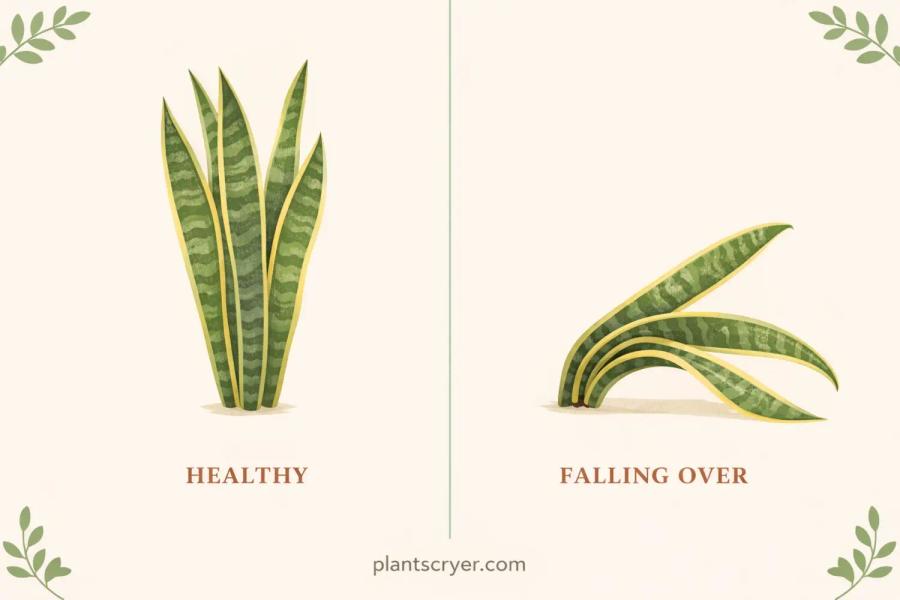
Snake Plant leaves grow straight up. That's not just aesthetic preference — it's structural. When they start leaning, flopping, or collapsing at the base, the plant is telling you something specific. The good news is that the cause is usually identifiable within a minute of looking closely at the plant.
Before working through the causes, check where the problem is happening:
One or two outer leaves falling over, the rest upright — often normal. Older outer leaves on tall varieties naturally cinch at the base as they age and fall from their own weight. Not always a care problem.
Multiple leaves falling over at once, soft or mushy at the base — overwatering or base rot. The most common serious cause and the one to rule out first.
Leaves leaning in one direction, still firm — usually a light issue. The plant is phototropic and grows toward its light source.
Whole plant tipping over, pot feels unstable — pot is either too small, too large, or the root structure is compromised.
1. Overwatering and Base Rot
Snake plants (Dracaena trifasciata, still widely called Sansevieria) store water in their thick leaves and rhizomes. When soil stays wet too long, the base of the leaf right at the soil line begins to soften and rot. The leaf loses its structural support, creases, and collapses. By the time leaves are falling over, the damage is usually well underway — sometimes the rot has been progressing for weeks without obvious surface signs. This is different from how overwatering affects most tropical houseplants. With snake plants, the collapse happens at the base of the leaf rather than as a general wilt, because that's where the water-storing tissue sits.
- Leaves soft, mushy, or slimy at the base near the soil
- The leaf bends or creases right at or just above soil level
- Soil feels wet or smells musty or sour
- Pot feels heavier than expected when you lift it
- Multiple leaves affected at once
Stop watering immediately. Unpot the plant and inspect the rhizomes and roots. Healthy rhizomes are firm and pale. Rotted ones are brown to black and mushy. Cut away all soft or rotted tissue with clean scissors. Let healthy sections air dry for a few hours, then repot in fresh cactus or succulent potting mix in a pot with drainage holes.
Hold off watering for at least a week after repotting. When you do resume, water around the inside edge of the pot rather than directly onto the leaves — keeping the base dry reduces rot risk significantly.
Bottom watering is worth considering going forward. Place the pot in a few inches of water for 10 to 15 minutes, let it soak from below, then drain fully. This encourages roots to grow downward, keeps the base of the leaves dry, and makes overwatering much harder to do accidentally. A moisture meter can help take the guesswork out of timing.
If a leaf has completely rotted at the base it cannot be saved, but the healthy upper portion can be propagated. See our full guide: How to Propagate a Snake Plant.
2. Pot Too Large
The most overlooked cause. When a snake plant sits in a pot significantly larger than its root system, the excess soil holds moisture far longer than the plant needs. The roots sit in wet conditions they didn't create, which leads to the same base softening as overwatering — even with careful watering habits.
- Plant was recently moved to a much bigger pot
- Soil stays wet for weeks after watering
- Leaves softening at the base despite infrequent watering
Repot into a pot only 1 to 2 inches wider than the root ball. Snake plants actually prefer being slightly tight in their pot and perform better that way. Use fresh cactus or succulent mix and a terracotta pot if possible — terracotta wicks moisture through the walls, giving extra insurance against staying too wet.
3. Natural Leaf Aging
On tall varieties like Laurentii and Zeylanica, individual outer leaves sometimes cinch or narrow at the base as they age. The top of the leaf stays wide and heavy while the base gets thinner, and eventually the weight pulls the leaf over. This happens on well-cared-for plants — typically one or two leaves at a time, once or twice a year on mature plants.
- Only one or two outer leaves affected
- The rest of the plant is upright and healthy
- The falling leaf looks healthy, not mushy or discolored
- Happens occasionally rather than all at once
None needed for the plant's health. Cut the leaf off at the base with clean scissors and propagate it if you want to keep it. The plant will produce new upright leaves from the rhizome. See our Snake Plant propagation guide for how to do it.
4. Low Light
Snake plants tolerate low light but they grow weaker in it. In very low light, leaves grow thinner and less rigid, and eventually start to lean toward the nearest light source rather than standing upright. This develops gradually over weeks or months, not suddenly.
- Leaves leaning in one direction, usually toward the nearest window
- Leaves look pale, thin, or stretched compared to when you got the plant
- Growth has slowed or stalled
- Plant is in a dark corner or well away from any window
Move to a spot with bright indirect light. An east or west-facing window works well. Recovery is slow so give it 4 to 6 weeks. New growth will come in more upright once light improves. Existing leaning leaves won't straighten on their own, but you can stake them temporarily with a bamboo cane and soft jute string while new upright growth establishes.
5. Underwatering
Less common than overwatering as a cause of falling over, but a severely underwatered snake plant will eventually use up enough of its stored moisture that leaves lose rigidity and start to droop. The key difference from overwatering: the leaves feel lighter and may look slightly wrinkled or shriveled, and the base of the leaf is still firm, not mushy.
- Leaves leaning but not soft at the base
- Leaves feel lighter than usual, possibly slightly wrinkled
- Soil is bone dry and pulling away from pot edges
- Pot feels very light when lifted
Water thoroughly until it drains from the bottom. For a severely dry plant, bottom watering for 15 to 20 minutes lets the root ball rehydrate evenly. Minor underwatering droop should resolve within a day or two. Note: if leaves have fully collapsed rather than just leaning slightly, staking will be needed even after watering — fallen leaves don't stand back up on their own once they've lost that much structural integrity.
Going forward, water when the soil is completely dry all the way through, typically every 2 to 4 weeks depending on season. Use our Snake Plant Watering Calculator for a personalized schedule.
6. Root-Bound
Snake plants tolerate being root-bound quite well and often prefer it. In rare cases where a plant has been in the same pot for many years, the roots completely fill the space and push the plant upward and outward, making it top-heavy and prone to tipping over.
- Plant has been in the same pot for 5 or more years
- Roots growing out of drainage holes or visible above the soil
- Plant tips easily when nudged
- Leaves are otherwise healthy and firm
Repot in spring into a pot 1 to 2 inches wider. Snake plants genuinely don't need repotting often — every 3 to 5 years is the normal cycle. Don't rush it.
What to do with fallen leaves
If a leaf has fallen over and is still firm, green, and healthy at the base, you have a few options:
Stake it: Push a bamboo cane into the soil near the base and tie the leaf loosely with jute string. Works as temporary support while you address the underlying cause, or for naturally aging leaves on otherwise healthy plants.
Cut and propagate: Cut the leaf off at the base, let the cut end callous for 1 to 2 days, then stand it in water or plant it about an inch deep in dry potting mix. Snake plant leaves root reliably this way. See our full propagation guide for step-by-step instructions.
Leave it: If it's a single outer leaf on an otherwise healthy plant and natural aging is the cause, leaving it while the plant grows normally is fine.
If a leaf is mushy at the base, staking won't help. The structural support is gone at the point of attachment. Remove it cleanly and focus on the root cause.
One important thing to know: fallen leaves won't stand back up on their own even after you fix the underlying problem. New growth will come in upright, but existing fallen leaves need staking or removal.
Frequently Asked Questions
If the leaf is still firm and green, yes — cut it off cleanly at the base and propagate it in water or dry potting mix. If it's mushy at the base, that leaf is lost but the plant can often still be recovered by removing rotted material and repotting in fresh dry cactus mix.
Almost always a combination of transplant shock and too-wet soil after repotting. Hold off watering for at least a week after repotting and make sure the new pot isn't significantly larger than the root ball. Snake plants are more vulnerable to overwatering right after their roots have been disturbed.
Sudden collapse of multiple leaves usually means the base has been rotting for some time and has finally lost enough structural integrity to give way. The rot progresses for weeks before visible symptoms appear on the leaves. Inspect the base of the affected leaves and the soil immediately.
Staking is a temporary measure, not a fix. It's useful while you address the underlying cause or while new upright growth establishes. Use soft jute string and a thin bamboo cane and don't tie too tightly — the leaves bruise easily.
Only if the cause was very mild underwatering and the leaves were just slightly drooping. Water thoroughly and they should firm up within a day or two. Leaves that have fully collapsed from base rot or natural aging won't straighten on their own — they need staking or removal.
Act immediately. Softness at the base means rot has started. Unpot the plant, trim all soft tissue with clean scissors, let it air dry for a few hours, and repot in fresh dry cactus mix. Don't water for at least a week. Catching it at this stage gives the plant a much better chance than waiting until leaves fall.
For full Snake Plant care instructions including watering, soil, and repotting, see our Snake Plant Care Guide.