
Why Is My Golden Pothos Turning Yellow?
Yellow leaves on golden pothos are almost always a watering problem. Overwatering is the most common cause by a wide margin, because the plant needs far less water than most people give it. The roots sit in wet soil, lose oxygen, start to rot, and the first visible symptom is yellowing that works up from the lower leaves.
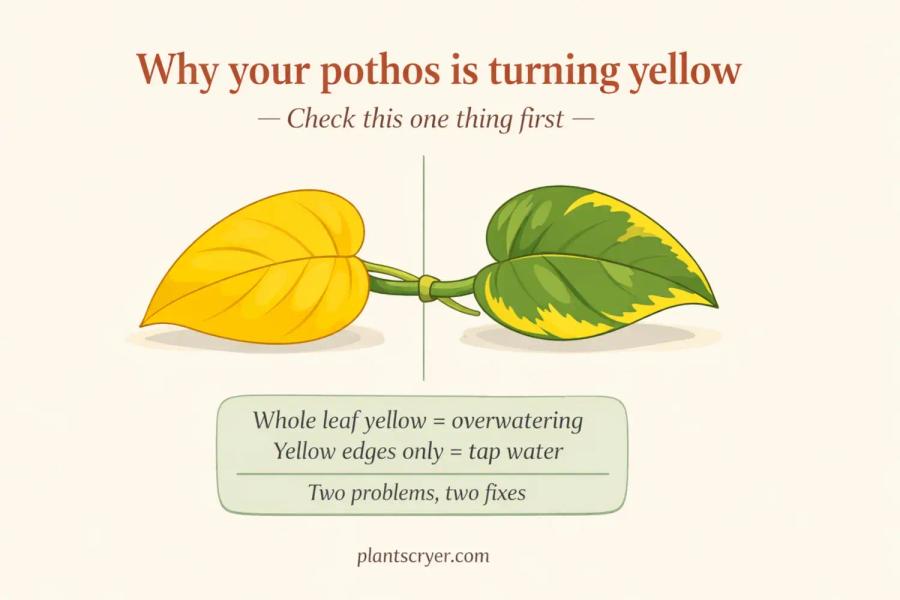
Before you change anything, look at the yellowing pattern. A whole leaf turning yellow is a different problem from yellow edges with a green centre. Full-leaf yellowing points to water, light, or age. Edge yellowing points to tap water chemistry or fertilizer. Getting that wrong sends you in the opposite direction from the fix.
Whole Leaf Yellow vs Yellow Edges: Start Here
Whole leaf turning yellow. Overwatering, root rot, low light, or natural aging. The leaf loses colour uniformly, often starting from the oldest leaves at the base of the vine and working toward the tips. If only one leaf is affected and the rest of the plant is growing normally, see what a single yellow leaf means.
Yellow edges or tips only: fluoride or mineral salt buildup from tap water, or fertilizer burn. The green centre of the leaf stays intact while the margins yellow and eventually crisp.
If your whole leaves are turning yellow, start with causes 1 through 4 and 7. If only the edges or tips are yellowing while the centre stays green, go straight to cause 5.
1. Overwatering
The most common cause of yellow leaves on golden pothos. The plant stores moisture in its thick stems and waxy leaves and does not need much water. In average indoor conditions, every 7 to 14 days is typical. Most yellowing happens because owners water on a fixed weekly schedule without checking whether the soil has actually dried. When soil stays wet for too long, roots lose access to oxygen and begin to rot. Once root function drops, the plant can no longer move water and nutrients to the leaves. Yellowing starts at the base of the vine on the oldest leaves and progresses upward. By the time you see three or four yellow leaves, the root system may already be compromised.
- Soil still damp or soggy more than a week after watering
- Pot feels heavy when lifted
- Yellowing starts on the oldest, lowest leaves and works up the vine
- Stems feel soft or mushy at the base
- Musty or sour smell from the soil
Stop watering and let the soil dry out completely. Push your finger 2 inches into the soil; if there is any moisture at all, leave it. If stems feel soft at the base, unpot and check the roots. Healthy roots are white and firm. Rotted roots are brown, soft, and may smell. Trim anything rotted with clean scissors, let the root ball air-dry for an hour, and repot in fresh, dry mix. For the full recovery process, see the overwatered plant rescue guide. Going forward, water only when the top 2 inches of soil feel dry. A moisture meter removes the guesswork. For a schedule tailored to your specific conditions, use the golden pothos watering calculator.
2. Root Rot From Poor Drainage
Root rot and overwatering are related but not identical. You can cause root rot even with a reasonable watering frequency if the pot has no drainage holes, the soil mix holds too much moisture, or the pot sits in a saucer of standing water between sessions. Golden pothos in decorative cache pots without drainage are especially vulnerable. Water pools at the bottom where you cannot see it, and the roots sit in it for days. The symptoms look identical to overwatering because the mechanism is the same: oxygen-starved roots.
- Same symptoms as overwatering, but you have not been watering excessively
- Water drains slowly or pools on the soil surface
- Pot has no drainage holes, or plant sits in a saucer of collected water
- Soil is dense, compacted, or has not been replaced in years
Repot into a pot with drainage holes using a well-draining potting mix. Adding perlite to the mix improves aeration and drainage. Never let the plant sit in standing water after watering. Empty the saucer every time. See the root rot vs soil mold guide if you are unsure whether rot has set in.
3. Not Enough Light
Golden pothos tolerates low light, but "tolerates" and "does best" are different. In dim conditions, the plant cannot photosynthesize enough to maintain all its foliage. It begins shedding older leaves by yellowing them, starting from the base of the vine. Low light also compounds overwatering problems. Less light means less transpiration, which means the soil stays wet longer. A pothos in a dark corner that gets watered on the same schedule as one near a window is far more likely to develop root rot.
- Yellowing is gradual and affects the whole plant rather than isolated leaves
- New growth is smaller, paler, or more spaced out than older leaves
- Variegation has faded toward solid green on recent growth
- Plant is more than 6 to 8 feet from a window or in a room with minimal natural light
Move to bright indirect light, within 3 to 6 feet of a window with good daylight. Avoid a sudden jump from dim to bright; transition over a week to avoid shock. If no bright spot is available, a grow light running 10 to 12 hours daily works well.
4. Too Much Direct Sunlight
Golden pothos handles some direct morning sun, but harsh afternoon sun through a south- or west-facing window scorches the leaves. Sunburn on pothos looks different from other causes: it appears as bleached, pale yellow, or white patches specifically on the leaves or sides of the plant facing the window. The rest of the plant usually looks fine.
- Yellow or bleached patches on leaves facing a bright window
- Only one side of the plant is affected
- Problem appeared after moving to a sunnier spot or after seasonal sun angle change
Move back from the window or filter the light with a sheer curtain. Bright indirect light is the sweet spot for golden pothos. Scorched patches will not recover, but new growth will come in healthy once light levels are corrected.
5. Tap Water Quality (Fluoride and Salt Buildup)
If only the leaf edges and tips are yellowing while the centre stays green, this is a different problem from the causes above. The two most common culprits are fluoride accumulation from municipal tap water and mineral salt buildup from fertilizer. Golden pothos is moderately sensitive to fluoride. With months of tap water use, fluoride accumulates in leaf tissue and shows up as sharp yellow-to-brown banding at the margins, progressing inward over time. Fertilizer burn produces a nearly identical pattern but typically appears 7 to 14 days after a heavy feed or after months of frequent feeding without flushing the soil.
- Yellow or brown leaf edges while the centre stays green
- White crusty residue on the soil surface (mineral salt deposits)
- You have been using unfiltered tap water for months
- Pattern worsened after a fertilizer application
Switch to filtered water or let tap water sit in an open container overnight before use. Overnight sitting disperses chlorine but not fluoride; for fluoride-heavy water, a filtered water pitcher is the more reliable fix. Flush the soil every few months by running a large volume of water through the pot to wash out accumulated salts. Cut fertilizer back to once a month at half strength during spring and summer only, and stop entirely in fall and winter.
6. Nutrient Deficiency
A golden pothos that has not been fed in six months or more, or that has been in the same soil for over a year without repotting, can develop yellowing from nutrient depletion. Nitrogen deficiency is the most common type: older leaves at the base yellow uniformly while newer leaves at the vine tips stay green because the plant redirects limited nitrogen to the newest growth. This looks similar to overwatering at first glance. The difference is the soil. If the soil is properly dry between waterings and the pot has good drainage, nutrient deficiency is the more likely cause.
- Oldest leaves yellow uniformly while new growth stays green
- Soil moisture and drainage are fine (this rules out overwatering)
- Plant has not been fertilized in 6 or more months
- Same soil for over a year without repotting
Resume feeding with a balanced liquid fertilizer at half strength every 2 to 4 weeks during spring and summer. If the soil is old and compacted, repot into fresh potting mix. New growth should come in greener within a few weeks of consistent feeding.
7. Natural Aging
The oldest leaves on a golden pothos vine naturally yellow and drop as the plant directs energy toward new growth at the vine tips. This is completely normal as long as it is limited to one or two leaves at a time, the rest of the plant looks healthy, and new growth is actively emerging. This is the one cause that requires no fix. If the pattern is one lower leaf yellowing every few weeks while the vine tips keep growing, your plant is fine.
- Only one or two of the oldest, lowest leaves on the vine are yellowing
- The rest of the plant looks healthy with active new growth
- No soggy soil, no pests, no recent care changes
- Pattern has been steady (one leaf every few weeks, not accelerating)
Remove yellowing leaves by cutting at the node with clean pruning snips. No other action needed. The plant is healthy.
Quick Diagnosis Guide
The Overwatering + Low Light Compound Problem
Low light and overwatering often happen together. Less light means less transpiration, so the soil stays wet longer on the same watering schedule. If your pothos is in a dim spot and showing yellow leaves, fix the light first. Once the plant gets more light, it will use more water, and you may not need to change your watering frequency at all.
Frequently Asked Questions
The most common cause is overwatering. Golden pothos needs water only when the top 2 inches of soil feel dry, typically every 7 to 14 days. If the soil is still damp and leaves are yellowing from the base of the vine upward, stop watering and let it dry out completely before doing anything else.
No. Once a leaf has yellowed it will not revert to green. The fix is correcting the underlying cause so new growth emerges healthy. Remove fully yellowed leaves at the node to keep the plant tidy and redirect energy to new growth.
Yellow edges with a green centre usually mean fluoride or mineral salt accumulation from tap water, or fertilizer burn. This is a different problem from whole-leaf yellowing. Switch to filtered water, flush the soil, and cut fertilizer back to once a month at half strength.
Yes. A fully yellowed leaf will not recover and the plant will eventually drop it on its own. Cutting it at the node with clean scissors is tidier and lets the plant redirect energy to healthy growth. If only the tip is yellowing, you can trim just the affected portion.
Yellowing that starts at the base of the vine and works upward is a classic sign of overwatering or root rot. The oldest leaves closest to the roots show distress first. Check the soil. If wet, stop watering. If stems feel soft at the base, unpot and inspect the roots for rot.
Water only when the top 2 inches of soil feel dry. In bright light that might be every 7 days; in lower light every 10 to 14 days. The frequency varies by season, light, and pot size. Checking the soil before watering is always more reliable than following a fixed schedule.
Sunburn from too much direct light looks different from other causes. It produces bleached or pale yellow patches specifically on the side of the plant facing the window, while the rest stays green. If the yellowing is uniform across the whole leaf, light is probably not the issue.
For the full care routine including light, watering schedule, and feeding, see the golden pothos care guide.