How to Care for a Cast Iron Plant
Aspidistra elatior
People buy a cast iron plant, put it in a dark hallway, and decide a year later that it must be unhappy because it has barely changed. Mississippi State Extension settles that in one sentence: young plants may produce only two leaves per year, and only after several seasons, as the rhizome clump builds up, will they make many more. Nothing is wrong. The plant works to a schedule measured in years, and the RHS allows 10 to 20 of them to reach full height. That patience is also how it earned its place on lists of houseplants that are hard to kill.
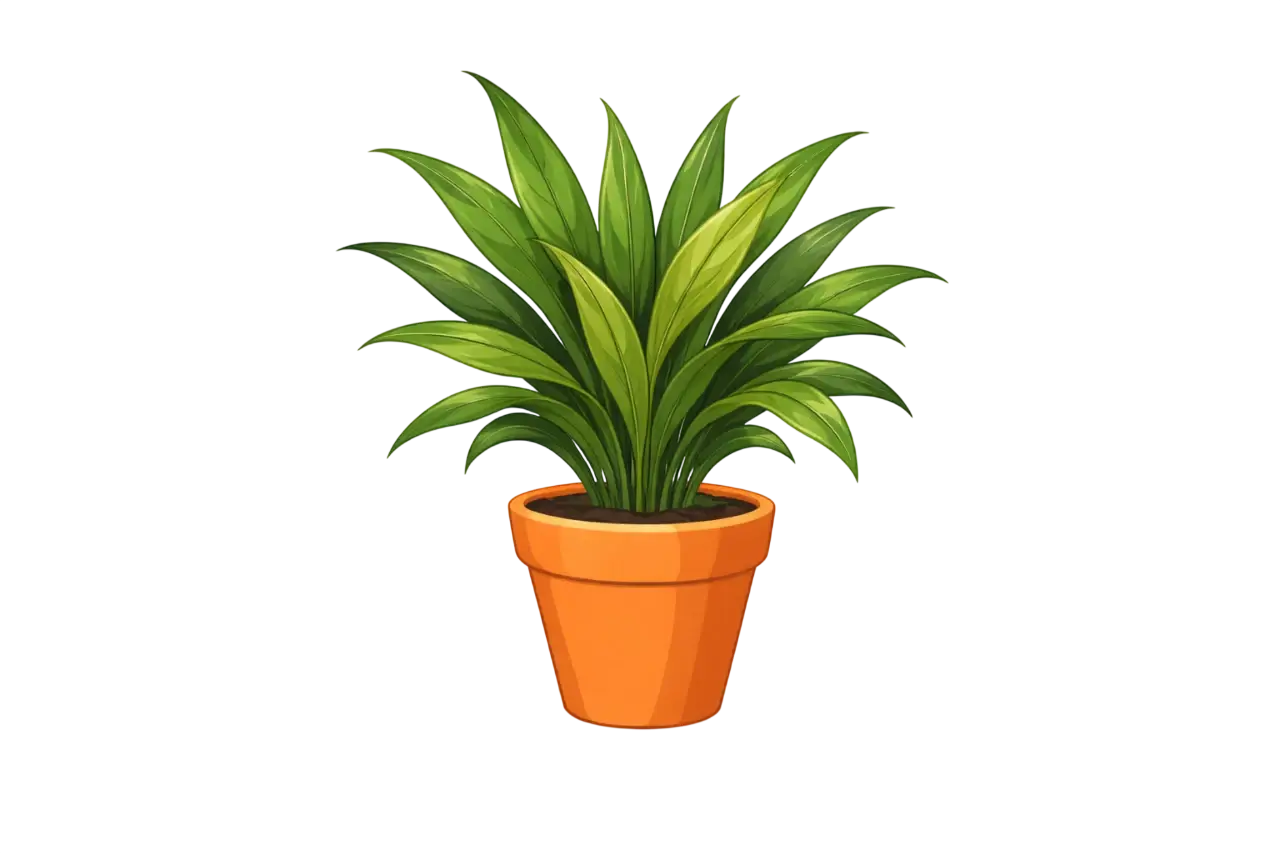
Aspidistra elatior grows in the forest understorey of southern Japan, on the Uji, Ōsumi and Tokara island chains according to Kew, with the Chinese, Korean and Taiwanese populations now treated as introduced. Leaves rise one at a time straight out of a fleshy underground rhizome, on petioles 7 to 12 inches long, reaching 20 to 24 inches of blade with 16 to 20 parallel veins running the length of it. There is no stem. That is why the plant reads as a clump of separate leaves and not as a shrub, and it has a practical consequence: every leaf you lose has to be replaced from below ground.
The name came out of Victorian houses. Plant Heritage, holder of the UK National Collection, records it reaching Britain in 1822 through Dutch traders who had exclusive access to Japan, and what made it ubiquitous was gas lighting: it coped with fumes and soot that turned other plants yellow and killed them inside two weeks. Oxford’s Plants 400 project adds poor light and the air of coal fires to the list it survived. None of that is period nostalgia, either. Mississippi State still documents the plant as a commercial cut-foliage crop with a vase life of three to four weeks.
Safety is uncomplicated here. The ASPCA lists Aspidistra elatior by name as non-toxic to dogs, cats and horses, with no toxic principles and no clinical signs, and NC State reaches the same verdict independently. No source reports irritant sap. The one handling warning on this page is the pest treatment section below, and that one exists to protect the plant, not you.
Quick Info
- LightLow
- WaterLow
- Size2-3 feet tall, 1-2 feet wide
- HumidityLow
- Temp59-86°F (15-30°C), down to 50°F in winter
- FloweringYes
- TypeTropical
- Dog SafeYes
- Cat SafeYes
- Kid SafeYes
Is Cast Iron Plant Toxic to Pets?
Pets: The ASPCA lists Aspidistra elatior as non-toxic to dogs, cats and horses, with no toxic principles and no clinical signs recorded, and NC State rates it non-toxic for the same three independently. The ASPCA entry prints the family as Liliaceae, which is out of date; current placement is Asparagaceae.
Kids: No toxic principle is recorded for the species, and no source reports irritant sap or a handling hazard.
Cast Iron Plant Varieties
‘Variegata’, picked by floral designers for the long streaks of creamy white Mississippi State describes. Plant Heritage treats ‘Okame’ as a synonym of it, and supplies the detail that matters in practice. The variegation holds in a lighter position. In a dark spot the plant may revert entirely to green, and then the plain green growth needs cutting out or it takes over. Mississippi State adds that variegated cultivars produce fewer leaves and are less uniform in colour, so the stripes cost you vigour.
‘Asahi’, with broadly lance-shaped leaves that are dark green fading out to white at the tips. The RHS lists it at half a metre to a metre tall and gives it two to five years to get there, quick by the standards of this genus, in full or partial shade and any aspect.
‘Milky Way’, a spotted cultivar carried by both Mississippi State and NC State. The familiar line about dark green leaves scattered with small white spots like a night sky is nursery copy, not a botanical description, so treat the heights and spreads quoted alongside it with suspicion.
NC State also lists China Star, Ginga Giant, Goldfeather, Goldspike, Hoshi-zora, Lennon’s Song, Mangetsu, Sekko-kan and Well Spotted. A warning about labels: Mississippi State notes that experts disagree over which species some cultivars belong to, and Plant Heritage reports that many plants sold as elatior cultivars are actually Aspidistra sichuanensis. You can pick that one out by serration along the leaf edge, a dark red star-shaped flower, a more open habit, and long leaves that bend off to the sides.
Cast Iron Plant Care Guide
Light
NC State files cast iron plant under deep shade, meaning less than two hours of direct sunlight down to none at all, and Missouri Botanical Garden lists heavy shade among its tolerances. The reputation is earned. There is a distinction inside it, though. The University of Arkansas puts the minimum at 25 foot-candles and the preferred band at 75 to 200, and the California Master Gardener Handbook footnotes figures at that low end as being for maintenance purposes only, since they will not permit satisfactory growth. Twenty-five foot-candles keeps a cast iron plant alive. Seventy-five to two hundred is where it makes leaves.
If you want growth and not just survival, a grow light on a shelf is the cheapest way out of the maintenance band. Direct sun is the one exposure to avoid. NC State calls the plant intolerant of it, MOBOT says direct sunlight damages leaf coloration, and the RHS warns that bright light scorches and browns the leaves. Scorch never heals. Leaves come up from the rhizome and do not grow outward from a stem, so a damaged leaf is only ever replaced by a new one, and at two leaves a year on a young plant that replacement is slow enough to matter.
Watering
Water regularly from spring to autumn and sparingly through winter while the plant rests. The RHS target is compost kept moist but never waterlogged. The one interval figure from a credible source comes from Plant Heritage, the National Collection holder: a small amount of water once every 7 to 10 days is enough, because the plant does not like being overwatered. Missouri Botanical Garden lists excess moisture causing root decay as the only cultural problem for the species. Nothing else is on that list.
Mississippi State gives a sign you can read across a room. Well-watered leaves are deep green and grow in strong, upright lines; water-stressed leaves lean off to the side and go slightly pale green. Soil should be moist but not saturated. NC State rates the plant drought tolerant and UF/IFAS calls it moderately so while noting it may still need irrigation in a real dry spell, so a moisture meter is mostly here to talk you out of watering.
Water at the soil, not over the foliage. Mississippi State attributes leaf spots on aspidistra specifically to overhead watering and warns that continually wet leaves invite Fusarium. If you do water from above, do it early in the day so the droplets evaporate before nightfall. For a pot that has already been kept too wet, recovering an overwatered plant is the place to start.
Soil
Mississippi State gives the pH: well-drained, rich, loamy soil that is slightly acidic to neutral, 6.0 to 7.0, with organic compost or well-rotted manure as useful amendments. NC State lists the plant as tolerating clay, loam, sand and high organic matter at acid, neutral or alkaline pH. Put those together and the soil type barely matters. Drainage is the part that does.
The RHS suggests half peat-free loam-based compost and half peat-free multi-purpose. Plant Heritage says it will grow in any open compost and rates coconut coir with bark chippings as the best peat-free combination. Since root decay from excess moisture is the only killer on the list, a terracotta pot with a clear drainage hole does more for this plant than any mix recipe. The clay wall sheds water through its sides between waterings, and that margin is exactly what this species wants.
Temperature and Cold Tolerance
Mississippi State puts the growing range at 59 to 86°F. Missouri Botanical Garden gives a winter minimum of 50°F indoors. The RHS says it is happiest between 40 and 70°F, so a cool room suits it and a spot beside a radiator does not. People tend to assume the opposite from the tropical-looking foliage.
Cold hardiness is where the sources part company, and which number applies depends on what you are asking. Mississippi State reports plants surviving heavy frosts and snow, with tolerance as low as 0°F and leaves injured when temperatures drop well below freezing, and advises cutting the cold-damaged leaves away in late winter before new ones emerge. The RHS rates it H3, minus 5 to 1°C, and MOBOT gives zones 8 to 10. The two sets reconcile once you notice they measure different things. The US figures describe established in-ground clumps where the rhizome survives and the foliage is written off. The RHS rating assumes a plant expected to keep its leaves looking presentable. For a pot indoors, work to 50°F.
Humidity
It does not need any, and that comes from the sources, not from folklore. The RHS puts it plainly: despite their tropical appearance, aspidistras do not need humidity, they are fine in the fairly dry air of typical homes. Missouri Botanical Garden lists not requiring a humid atmosphere among the reasons it grows easily indoors. A page handing you a 40 to 60 percent target for this plant has invented the requirement, because nobody authoritative states one.
Misting has no humidity rationale here either. The only legitimate reason for it I came across is pest-directed: Plant Heritage suggests regular misting to deter red spider mite, which prefers dry, hot conditions. Mississippi State warns in the same breath that continually wet leaves invite Fusarium, so the deterrent costs you something real. I keep the leaves dry and inspect for mites instead.
Fertilizing
It needs very little. NC State notes it tolerates nutrient-poor soils, Plant Heritage says liquid seaweed once a month is plenty, and the RHS calls for a general-purpose houseplant fertiliser monthly from spring to late summer. The University of Arkansas rates it medium fertility: monthly in spring and summer, every other month in winter, at a teaspoon of soluble houseplant food per gallon. Underfeeding is not how people lose this plant.
Mississippi State specifies a balanced slow-release 10-10-10 or 14-14-14 through spring and summer, and adds that micronutrient fertilizers can produce a deeper green leaf colour. A balanced liquid feed at label rate covers the same ground. No over-fertilising symptom is documented for aspidistra in any source I checked. Three independent sources agreeing that it wants little feed is reason enough not to push it.
Repotting
The widely repeated claim that cast iron plant resents disturbance and sulks for a year afterwards has no support from any extension service, the RHS, MOBOT or UF/IFAS. The National Collection holder says the opposite: Aspidistra can easily be split, and it can be done at any time of year. Mississippi State gives division instructions with no warning attached to them at all.
What people read as sulking is the growth rate. The RHS repots in spring when roots start to appear through the drainage holes, uses a container only slightly larger to avoid overpotting, and points out that these plants grow quite slowly and can stay in their original pots for several years. Mississippi State’s general step-up is one to two inches in top diameter. A fresh division is a young plant, and a young plant may produce two leaves in a year, so the season after potting looks like nothing happening because very nearly nothing is.
Pruning and Grooming
The RHS lists no pruning or training requirement, just removing any fading leaves. UF/IFAS says old foliage may be taken off in spring to make room for fresh growth. Mississippi State adds the one piece of timing that matters: cut away cold-injured leaves in late winter, before the new leaves emerge.
The plant is grown commercially for cut foliage, so Mississippi State publishes a harvest limit. It doubles as the best grooming rule anyone has written for this species. Do not remove more than 30 to 40 percent of the leaves from a single plant, since that cuts its ability to make and store the carbohydrates those leaves produce. On a plant replacing foliage at two leaves a year, stripping half of it in one session is a multi-season setback. Work through tatty leaves over a couple of years with clean shears and resist tidying it all at once.
MOBOT notes the leaves benefit from occasional washing. Do it for the look of the plant, and do it because wiping is how you find scale while there is still only a little of it.
Pest Treatment Cautions
Do not use horticultural oil on a cast iron plant. Mississippi State is explicit: horticultural oil is not recommended for controlling these insects because it penetrates the leaves and causes mottling on aspidistra. Oil and neem are the reflex answer online for scale and mites, so this is one plant where following general houseplant advice damages the thing you are treating.
That leaves physical removal and products labelled for the plant. Scale shows up as small white or brown bumps, particularly at the base of the leaf, so start looking there; wipe or scrape them off and check again weekly. Mites cause yellowing at the leaf terminals in heavy infestations, with stippling on the upper leaf surface, fine webbing between the leaves and a gritty feel when you rub one between your fingers. Working through houseplant pests goes into identification properly.
How to Divide a Cast Iron Plant
Rhizome division is the only route any authoritative source gives. There is no practical seed method for houseplant purposes and no leaf cutting method at all. Mississippi State divides in spring or fall, the RHS divides large clumps in spring by cutting through the thick fleshy rhizomes, and Plant Heritage says it can be split at any time of year.
How small a piece works is the question nobody answers, so take both ends of it. Plant Heritage gives the absolute minimum: the rhizome can be snapped off where it branches, and each part needs at least one leaf and at least an inch of rhizome. Note the mechanical instruction buried in that. Snap at a natural branch point, do not cut through solid tissue. Mississippi State sets a higher bar for a division that performs, at a minimum of two to three leaves with healthy roots attached, and the RHS asks for several leaves.
Pot each division into the same open, well-drained mix and water lightly. Nobody publishes establishment times, and the figures that circulate, six to twelve weeks to resume growth or several months of sulking, are unsourced. What is sourced is Mississippi State’s two leaves in the first year on a young plant. Dividing a mature clump resets the clock on its size, and that is the real cost of doing it, not any shock to the plant.
Putting divisions out as ground cover instead of into pots, Mississippi State spaces them 3 to 6 inches apart for cut-foliage production, which closes the gaps reasonably fast. In a container, plant at the depth the rhizome was sitting at before and no deeper, since Plant Heritage notes the flowers only show on plants that have not been potted up too deeply.
Common Cast Iron Plant Problems
A single old outer leaf yellowing and dying back is normal senescence. Plant Heritage separates the two cases: yellow leaves on aspidistra are usually nothing more than old leaves dying down, but several going at once points at overwatering, the one thing MOBOT lists as killing the plant. Reversing an overwatered pot is the fix.
Leaves leaning off to the side and paling to light green is water stress. Mississippi State’s healthy baseline is deep green leaves growing in strong upright lines, so the lean is the whole diagnosis. You do not need to dig for this one.
Bleached or browned patches come from direct sun. MOBOT says direct sunlight damages leaf coloration and the RHS says bright light scorches. The damage is permanent on that leaf, since replacements only come up from the rhizome, so move the plant before the rest of the foliage goes the same way.
Small white or brown bumps, concentrated at the base of the leaf, are scale. Take them off by hand and leave the oil alone, because Mississippi State warns it mottles aspidistra leaves.
Yellowing at the leaf terminals in a heavy infestation points at mites, and dry warm air next to a radiator is the classic trigger. Identifying and treating houseplant pests covers what to look for.
Leaf spots following overhead watering, and Fusarium where the foliage stays continually wet. Mississippi State’s control is to water so the leaves dry quickly, remove the infected ones, and use a fungicide labelled for aspidistra only if it keeps spreading.
A variegated plant turning all green is reverting because the light is too low. Move it somewhere brighter but still out of direct sun, and cut out the plain green growth before it crowds out the variegated leaves.
A plant making almost no new leaves is usually not sick at all, just young and sitting in dim light. Why a plant stops growing is for the cases where something really is wrong.
FAQs
It can live there. Living and growing are different things. NC State files it under deep shade, less than two hours of direct sun to none at all, and the University of Arkansas puts its minimum at 25 foot-candles. The California Master Gardener Handbook footnotes that low band as maintenance only, since it will not permit satisfactory growth, and gives 75 to 200 foot-candles as the preferred range. So a dark hallway keeps the plant alive for years on end, and a spot with some ambient daylight is where it puts out new leaves.
Almost always because it is young and the species is slow. Mississippi State states that young plants may produce only two leaves per year, and only after several seasons, as the rhizome clump builds, will they make many more. The RHS allows 10 to 20 years to reach full height. Dim light slows it further, so if you want visible progress, move it brighter and leave it in the same pot.
No authoritative source says so, and the one with the most experience says the opposite. Plant Heritage, which holds the UK National Collection, writes that Aspidistra can easily be split and that this can be done any time of year. No extension service, the RHS, MOBOT or UF/IFAS attaches a disturbance warning to it. What gets mistaken for sulking is the growth rate of a young division, which may make two leaves in its first year whether you disturbed it or not.
Not on this plant. Mississippi State states that horticultural oil is not recommended for controlling these insects because it penetrates the leaves and causes mottling on aspidistra. Since oil-based sprays are the standard online answer for scale and mites, this is one of the few cases where general houseplant advice will damage your plant. Remove scale physically from the leaf bases where it collects, and use a product labelled for aspidistra if you need to spray.
Yes, and this one has unusually solid backing. The ASPCA lists Aspidistra elatior by name as non-toxic to dogs, cats and horses, with no toxic principles and no clinical signs recorded, and NC State reaches the same conclusion independently for all three animals. One small thing to ignore on the ASPCA page: it prints the family as Liliaceae. That is out of date, and the current placement is Asparagaceae.
It does, at soil level, and almost nobody sees it. The flowers are cup-shaped and fleshy, about three to four centimetres across, cream outside with a burgundy-pink interior, sitting right on the ground in spring or early summer. NC State says it blooms very rarely and needs higher light to do it, and MOBOT notes they usually do not form on houseplants at all. Plant Heritage adds the one detail you can act on: they only show on plants that have not been potted up too deeply.
That was the story for about a century and it has been disproved. Kenji Suetsugu and Masahiro Sueyoshi at Kobe University spent two years watching the flowers day and night on Kuroshima in southern Japan and found the pollinators are fungus gnats, mainly Cordyla sixi and Bradysia species, which dive into the centre of the flower and leave carrying pollen. The flower works by mushroom mimicry, looking like gnat food and giving off a strong musty smell. The old slug claim came from observations made in Europe, outside the plant’s native range.
Victorian houses. Plant Heritage records it reaching Britain in 1822 through Dutch traders who had exclusive access to Japan, and what spread it everywhere was that it coped with the fumes and soot of gas lighting and heating, which turned other plants yellow and killed them inside two weeks. George Orwell borrowed it for the title of Keep the Aspidistra Flying in 1936, and a British wartime radio transmitter took the code name Aspidistra.
No. The RHS states that despite their tropical appearance, aspidistras do not need humidity and are fine in the fairly dry air of typical homes, and MOBOT lists not requiring a humid atmosphere among the reasons it grows easily indoors. Between them the RHS and MOBOT never put a number on it, so there is nothing to aim at. Skip the pebble tray and put the humidifier next to something that wants one.