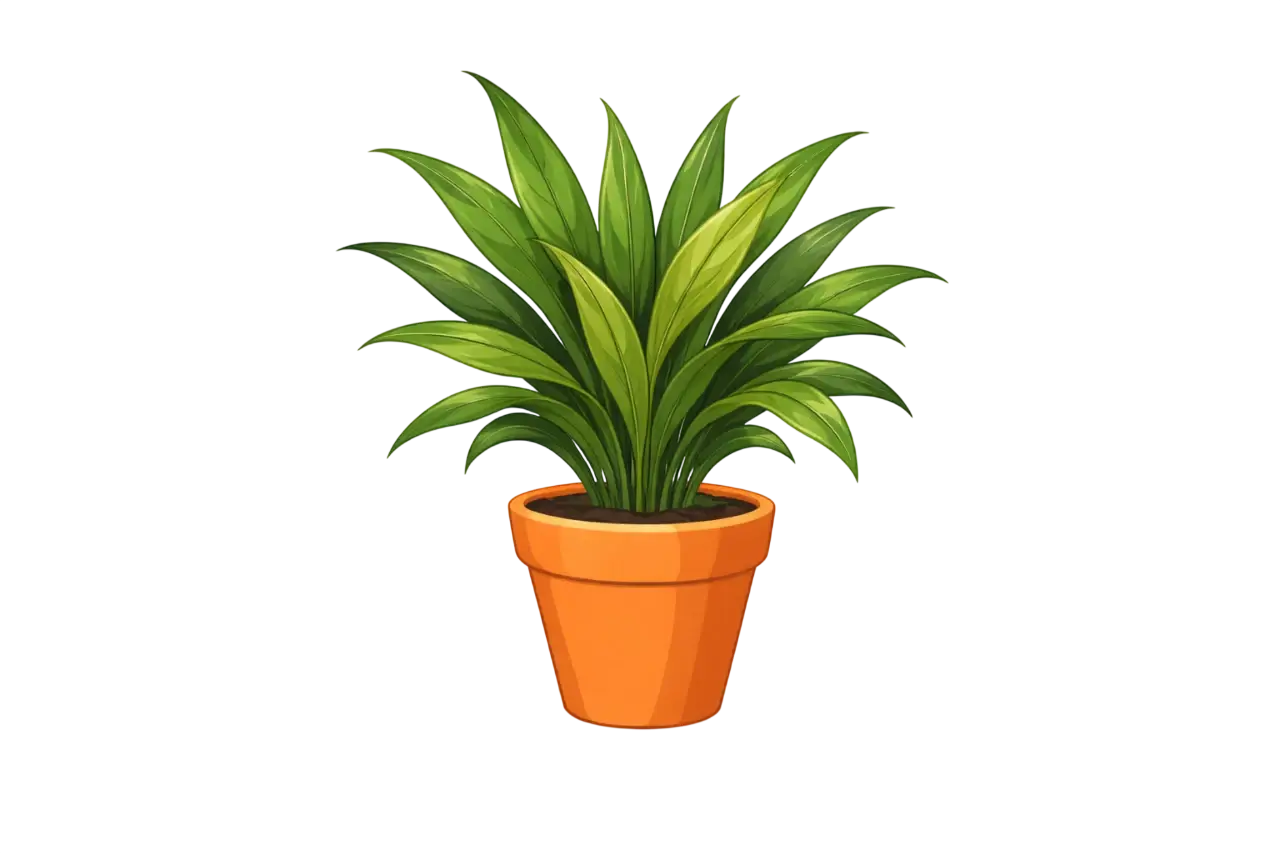
How to Care for a Chinese Evergreen
Aglaonema commutatum
The failure mode worth knowing about on this plant is cold, and the damage arrives late enough that people blame something else. UF/IFAS put twelve Aglaonema cultivars in walk-in coolers for 24 hours and reported chilling injury anywhere from just above freezing up to 59°F. Dark, greasy patches appeared between the midvein and the leaf margin, on the upper surface, two days after the cold ended.
‘Silver Queen’, one of the most widely sold cultivars there has ever been, had 30 percent of its leaf area injured at 55°F alone. A plant carried home in an unheated car in January can look fine on the shelf and ruin itself by Thursday.
Aglaonema commutatum comes from the Philippines and northeastern Celebes. That is narrower than the "tropical Asia" most pages give it, and the genus as a whole runs to 21 to 26 species across the Asia-Pacific depending on which UF/IFAS document you read. Missouri Botanical Garden calls this one Philippine evergreen and describes leaves 4 to 8 inches long and 2 to 3 inches wide, dark green with silver-grey blotches, on a plant about 20 inches tall. It is a close enough relative of dieffenbachia that MOBOT uses it as the comparison, and the two share both the look and the calcium oxalate problem.
The plant in your pot is probably not the species at all. UF/IFAS records that new cultivars were historically taken straight from the wild and were largely variants of Aglaonema crispum, A. commutatum or A. modestum, and that everything changed once Richard Henny worked out how to control Aglaonema flowering in 1983 and how to pollinate them in 1985. Breeders could finally make deliberate crosses. ‘Silver Bay’, an interspecific hybrid released by UF/IFAS at Apopka in 1992, became the template, and the pink and red cultivars filling shops today descend from that unlocking. It also means care advice written for the species is approximate for the hybrid you own.
On safety, treat the whole genus as an oral irritant. The ASPCA lists Chinese evergreen as toxic to dogs, cats and horses on insoluble calcium oxalates, filed under Aglaonema modestum, which happens to be one of the three parent species behind the modern trade. UF/IFAS describes the genus as low toxicity with calcium oxalate crystals in all parts, capable of causing dermatitis or internal problems. Nobody is describing a lethal plant. They are describing one that hurts to chew.
Quick Info
- LightLow
- WaterMedium
- Size1-3 feet tall and wide
- HumidityModerate
- TempAbove 60°F (16°C); chilling injury below 59°F
- FloweringYes
- TypeTropical
- Dog SafeNo
- Cat SafeNo
- Kid SafeNo
Is Chinese Evergreen Toxic to Pets?
Pets: The ASPCA lists Chinese Evergreen as toxic to dogs, cats and horses, with insoluble calcium oxalates as the toxic principle and oral irritation, pain and swelling of the mouth, tongue and lips, drooling, vomiting (not in horses) and difficulty swallowing as the signs. Its entry is filed under Aglaonema modestum, one of the three species behind most modern hybrids. UF/IFAS rates the genus as low toxicity, with calcium oxalate crystals in all parts.
Kids: UF/IFAS notes that all parts may cause dermatitis or internal problems if eaten. Keep it away from small children, and wash your hands after taking cuttings.
Chinese Evergreen Varieties
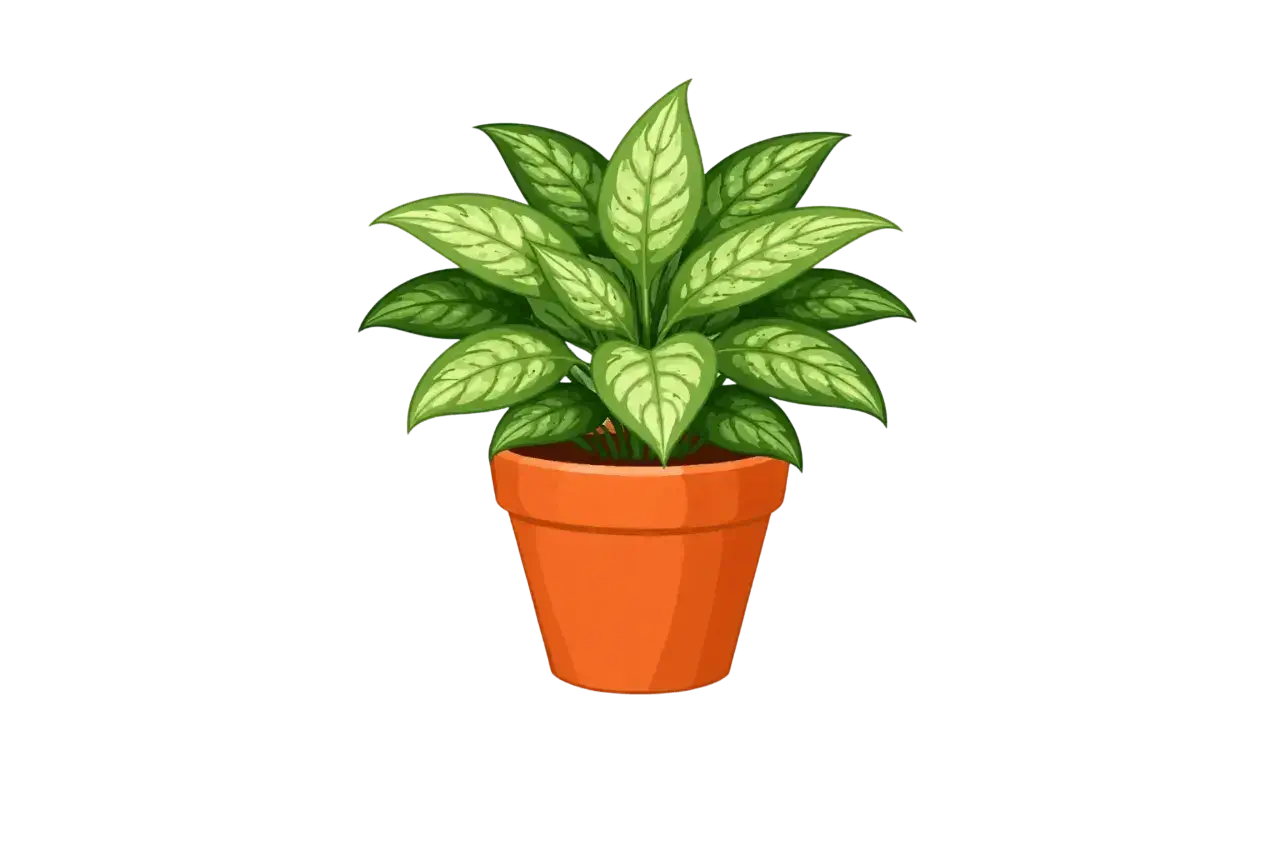
‘Silver Queen’, the cultivar that defined the category for decades, with heavy silver variegation over green. Worth pairing with one fact: it was the most chilling-sensitive of the twelve cultivars UF/IFAS tested, losing 30 percent of its leaf area to 24 hours at 55°F. A beautiful plant that really does need the warm spot.
‘Silver Bay’, an interspecific hybrid developed and released in 1992 by the UF/IFAS Foliage Plant Breeding Program at Apopka, and propagated commercially by tissue culture. UF/IFAS credits its staying power to the foliage, the growth habit and its performance in interior conditions. That is as close to a straight recommendation as an extension service gets.
‘Diamond Bay’, a mutant spotted among tissue-cultured ‘Silver Bay’ plants, noticed because it had lost one of the variegation patterns normally present in ‘Silver Bay’ leaves and petioles. UF/IFAS describe mature leaves as lance-shaped, 4 to 5 inches wide and 11 to 12 inches long, with a central grey-green area covering slightly more than half the leaf and green margins meeting it along irregular borders.
The pink and red selections are the modern face of the genus and come with a condition attached. UF/IFAS states that high colour selections require bright indirect light to retain their colour, where the green and silver forms are the ones that perform in low light. Buy the colour for a bright room and the silver for the dark one.
Chinese Evergreen Care Guide
Light, and Which Cultivar for a Dark Room
UF/IFAS puts it bluntly in the culture notes: the plant grows in the shade, and it will scorch in a brighter spot. MOBOT lists heavy shade among its tolerances and asks for diffuse sun or good indirect light, avoiding direct sun entirely. Very few houseplants get a heavy shade rating from a botanic garden. This one earns it.
There is a catch, and it decides which plant you should buy for a dark room. UF/IFAS states that the green and silver forms perform well as houseplants and in low-light settings, while high colour selections require bright indirect light to retain their colour. So a silver-and-green cultivar really does suit a north-facing hallway, while a hot pink one put in the same spot fades toward green and stays there. If the dark corner is non-negotiable and you want the pink, a grow light is the only honest answer.
Watering
MOBOT asks for consistent moisture from spring through autumn, then reduced watering from early autumn to late winter, without letting the pot dry out completely. UF/IFAS rates the plant’s drought tolerance as low, so this is not a species to treat like a ZZ or a snake plant. Let the top inch dry and then water properly, and keep a moisture meter in the pot if you tend to lose track over winter, when the plant wants noticeably less.
Overwatering is still the commoner mistake. MOBOT lists rots occurring if plants are overwatered, and UF/IFAS says roots can rot if the soil is kept too wet. The combination to avoid is cold and wet together, because the same winter conditions that slow the plant down are the ones that leave the compost saturated for a week. If a pot has already gone that way, recovering an overwatered plant is the place to start.
Mix, Feeding and the Salt Problem
A well-drained, peaty potting mixture is MOBOT’s recommendation, and UF/IFAS lists the plant as tolerating acidic, clay, sand and loam soils. In other words the texture is forgiving. What the two agree on is drainage, for the rot reason above.
One figure worth noting is the salt tolerance, which UF/IFAS rates as poor. That matters indoors more than it sounds, because fertiliser salts build up in a pot that is never flushed. Water thoroughly enough that some runs out of the bottom, and empty the saucer. A third of perlite in a standard houseplant compost gives you the drainage to do that without waterlogging the roots.
Feed through spring and summer with a balanced liquid fertilizer and stop over winter, when a slow-growing shade plant in a dim room has nothing to spend it on. UF/IFAS rates the growth rate slow, so this is not a hungry plant.
Given the poor salt tolerance, underdoing it beats overdoing it, and a periodic flush with plain water clears what has built up.
Humidity, and Where the Sources Disagree
The sources pull in two directions here, so take both. MOBOT says the plant tolerates atmospheric dryness, then lists leaf browning as a result of dry air or draughts on the same page. Both can be true: it survives dry air without complaint while still showing brown edges at the extremes, particularly with a radiator or a vent blowing at it.
No authoritative source sets a humidity percentage for Aglaonema, so there is no target to hit. Moving the plant away from the draught does more than any pebble tray, and that is the part both halves of MOBOT’s advice agree on.
Cold Damage, and Buying in Winter
Keep it above 60°F year round. MOBOT gives 60°F as the minimum winter temperature, and UF/IFAS, writing for growers, recommends that greenhouse facilities holding chilling-sensitive cultivars stay above the same mark. The hardiness rating is USDA 10B to 11B, so there is no cold tolerance to fall back on.
The damage pattern is specific enough to diagnose. Chilling injury occurs from just above freezing to 59°F, and the symptom is dark, greasy patches between the midvein and the leaf margin on the upper leaf surface, appearing two days after the exposure. Injured area ran from 10 to 80 percent of the leaf in the UF/IFAS trial. Below half the leaf, those leaves stayed alive for months; above half, they yellowed and dropped. Sensitivity varies by cultivar, and ‘Silver Queen’ was the worst of the twelve tested at 30, 38 and 68 percent of leaves injured by 24 hours at 55, 45 and 35°F.
Two practical consequences. Buy this plant in winter only if the shop will sleeve it, and get it into a warm car. And stop blaming your watering for marks that appeared the week of a cold snap or after someone left a window open behind the plant.
Repotting, Rarely
Every two or three years is enough for a plant UF/IFAS rates as a slow grower reaching 1 to 3 feet. Spring is the sensible time. Step up one pot size, since a large volume of wet compost around a root system that is prone to rot is the wrong trade.
UF/IFAS notes that roots are usually not a problem with this plant. Read that as: it does not strangle itself or crack pots. The trigger for repotting is the compost breaking down and staying wet, more than the roots running out of room.
Grooming and Leaf Hygiene
Remove faded lower leaves at the base and cut back any stem that has gone bare and leggy; the plant breaks from lower down. Use clean snips and mean it, because the hygiene point here is not decorative. Hawaii’s CTAHR documents that the bacterial blight of this genus spreads on cutting knives and tools, in soil and growth media, and by water splash.
Wipe the leaves with a damp cloth now and then. On a plant grown for silver and pink patterning, dust costs you the effect faster than on a plain green plant, and the wipe is how you find mites early.
How to Propagate a Chinese Evergreen
Cuttings are the method UF/IFAS gives, in three words: propagation is by cuttings. Take a stem with several leaves on it, cut cleanly below a node, and set it into moist, free-draining mix. Keep it warm, which matters more for this plant than most, since the whole genus starts taking damage below 59°F and a cutting has no reserves to spare.
Division is the other route and the easier one on a mature, clumping plant. Turn it out in spring, separate the basal shoots so each piece keeps its own roots, and pot them individually. Named cultivars come true from both methods, since both are vegetative. That is the whole reason the trade can sell a consistent ‘Silver Bay’ at all.
Sterilise the blade first, and this is not fussiness. CTAHR lists cutting knives and tools among the ways bacterial blight moves between Aglaonema plants, alongside contaminated media and water splash. It also notes that cuttings taken from infected plants may already be infected. A parent plant that looks healthy can still be carrying it, so a clean blade and fresh compost cost nothing and protect the whole batch. Tissue culture is how the commercial crop is produced. That explains both the uniformity on a shop bench and how sports like ‘Diamond Bay’ get spotted at all. It is not a home operation; cuttings cost you nothing by comparison.
Common Chinese Evergreen Problems
Dark, greasy patches between the midvein and the leaf margin on the upper surface are chilling injury, and they show up about two days after the cold exposure. UF/IFAS records this from just above freezing to 59°F. Leaves with under half their area affected can carry on for months; past half, they yellow and drop.
Yellowing leaves with compost that stays wet is overwatering, which MOBOT lists as causing rots and UF/IFAS flags as the way roots fail. Let the top inch dry before watering again and check the pot actually drains. Yellow leaves on other plants explains what the other patterns mean.
Brown leaf edges and tips come from dry air or draughts. That is MOBOT’s attribution, printed on the same page where it says the plant tolerates atmospheric dryness. Move it off the radiator and out of the vent before buying anything. Brown tips across other plants covers the other causes.
Mushy, foul-smelling rot in the main stem, or leaf spots that collapse fast with water-soaked tissue, point at bacterial blight. Hawaii’s CTAHR documents Dickeya chrysanthemi on Aglaonema and notes the progress can be rapid, with symptoms starting at leaf edges or in wounds and new leaves yellowing and wilting. The giveaway is the smell, and CTAHR does tell you to use your nose when you scout.
There is no cure for that one. CTAHR’s advice is to use new or sterilised pots and media, avoid splashing water, skip overhead watering, keep plants uncrowded with decent air movement, and water early in the day. Discard plants that are badly affected rather than trying to save them.
Aphids, mealybugs, spider mites and scale are the pests MOBOT names, and UF/IFAS adds soilborne nematodes and mites while noting long-term health is usually not affected by pests. Identifying houseplant pests sorts out the four of them.
A pink or red cultivar fading toward plain green is a light problem with a sourced fix. UF/IFAS states that high colour selections require bright indirect light to keep their colour. Move it brighter, out of direct sun, and new growth comes back coloured; the faded leaves stay faded.
Drooping on a plant with moist compost and no cold event behind it usually means the roots are struggling rather than thirsty. Check for softness at the stem base before reaching for the watering can, since watering a rotting plant makes it worse.
FAQs
Yes, and it is one of the better choices available. UF/IFAS states that the plant grows in the shade and will scorch in a brighter position, and MOBOT lists heavy shade among its tolerances. The caveat is which one you buy. UF/IFAS specifies that the green and silver forms perform well in low-light settings, while high colour selections need bright indirect light to hold their colour.
That is cold damage, not a watering fault. UF/IFAS describes exactly this symptom, dark and greasy patches between the midvein and leaf margin on the upper leaf surface, appearing two days after chilling. The injury range runs from just above freezing to 59°F. Think back to a cold delivery, an open window, or a car journey in winter about two days before the marks appeared.
Anything below about 59°F starts to cause injury, and 24 hours is enough. MOBOT gives 60°F as the minimum winter temperature, and UF/IFAS recommends growers keep chilling-sensitive cultivars above 60°F. In the UF/IFAS trial, ‘Silver Queen’ had 30 percent of its leaves injured by a single day at 55°F, so the threshold is higher than most tropical houseplants.
Overwatering is the usual answer. MOBOT lists rots occurring if plants are overwatered and UF/IFAS says roots can rot if the soil is kept too wet, so start by checking whether the compost stays wet for days and whether the pot drains. Also rule out cold, since badly chilled leaves yellow and drop once more than half the leaf area is injured.
It is not getting enough light. UF/IFAS states that high colour selections require bright indirect light to retain their colour, in contrast with the green and silver forms that cope with low light. Move it somewhere brighter but out of direct sun, which would scorch it. New leaves will come in coloured, and the leaves that have already faded will not change back.
Yes. The ASPCA lists it as toxic to dogs, cats and horses, with insoluble calcium oxalates as the toxic principle, causing oral irritation, pain and swelling of the mouth, tongue and lips, drooling, vomiting and difficulty swallowing. The ASPCA entry is filed under Aglaonema modestum, one of the three species behind most modern hybrids. UF/IFAS separately rates the genus as low toxicity with calcium oxalate crystals in all parts.
It does, and the flower is not the point of the plant. UF/IFAS describes yellowish-green flowers borne on a spadix and protected by a spathe, generally inconspicuous next to the foliage. MOBOT says the species rarely flowers indoors and puts the bloom in late summer to early autumn. Red fleshy berries can follow on a stalk and UF/IFAS describes those as showy, though it notes they may be rare depending on light levels.
UF/IFAS gives 1 to 3 feet in both height and spread, depending on species and cultivar, with a slow growth rate. MOBOT puts the straight species at a more compact 1 to 1.5 feet, around 20 inches tall. Since most plants sold now are interspecific hybrids rather than the species, the wider range is the one to plan around.