How to Care for Burro's Tail
Sedum morganianum
 Save
Save
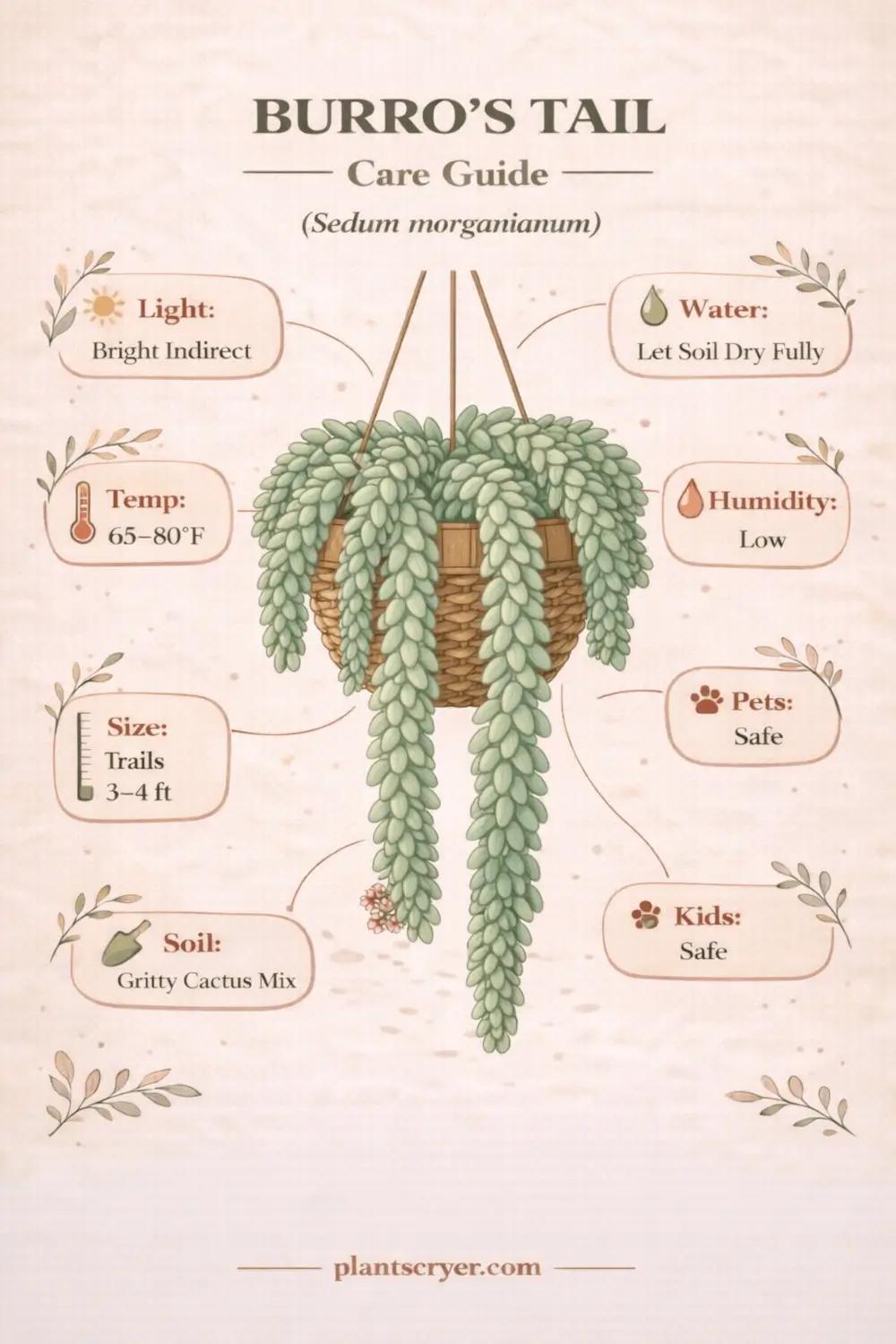
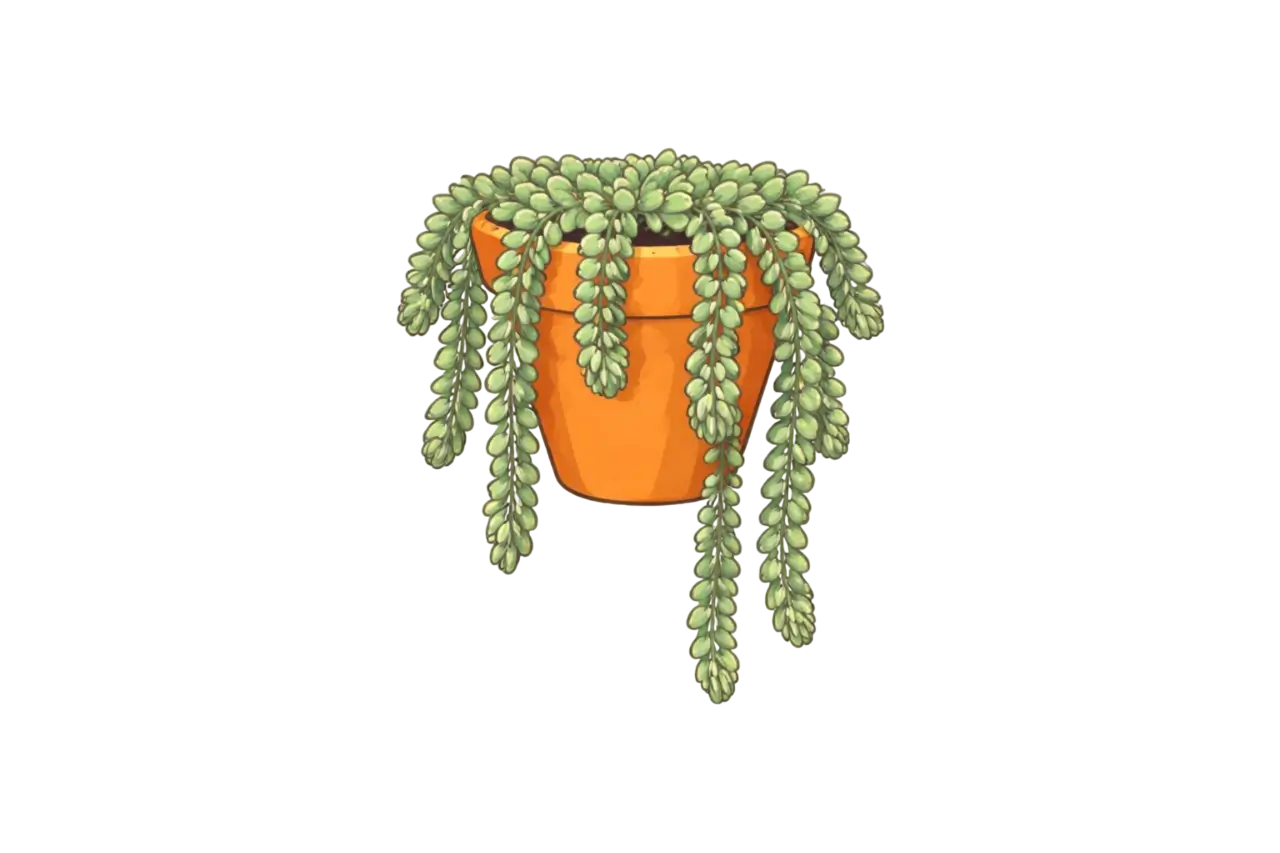
Burro's Tail (Sedum morganianum) is one of the most visually captivating trailing succulents you can grow. Its long, cascading stems are densely packed with plump, blue-green leaves dusted with a faint silvery bloom, creating a braided, rope-like texture unlike any other houseplant. Native to the vertical igneous rock cliffs and sheltered ravines of Veracruz, Mexico, it's adapted to bright light, fast-draining soil, and long dry periods between rainfall.
It's also one of the most hands-off plants in any collection, but with one meaningful catch. Burro's Tail rewards the "set it and forget it" approach completely, but it punishes moving. The leaves detach at the slightest touch or vibration, which means every time you handle, bump, or relocate the plant, you lose leaves. The winning strategy is simple: find a bright, permanent spot, water it every week or two when dry, and leave it alone.
In the right conditions, mature plants with stems at least 10 inches long may produce small clusters of star-shaped pink to red flowers at the stem tips in late summer. Though this is rare indoors without a summer outside or a cool winter rest.
Quick Info
- LightBright
- WaterLow
- SizeStems can grow 2–4 feet long
- HumidityLow
- Temp60–80°F (16–27°C)
- FloweringYes
- TypeSucculent, Vine
- Dog SafeYes
- Cat SafeYes
- Kid SafeYes
Toxicity Info
Burro's Tail vs. Donkey's Tail: What's the Difference?
The names "Burro's Tail," "Donkey's Tail," "Horse's Tail," and "Lamb's Tail" are all used interchangeably in nurseries and online. They generally refer to the same plant. The more useful distinction is between Sedum morganianum and its close relative Sedum burrito (also sold as S. morganianum 'Burrito'):
Sedum morganianum: the true Burro's Tail / Donkey's Tail. Longer, pointed, banana-shaped leaves that taper at the tip. Leaves detach very easily with handling. Stems grow to 3–4 feet. The classic form.
Sedum burrito (Baby Burro's Tail): a separate but related species with shorter, rounder leaves shaped like grains of rice or jellybeans. Slightly bluer in color. Shorter stems overall. Crucially: the leaves hold on better, making it a friendlier option for homes where the plant will occasionally get bumped. First distributed from a California nursery in the 1970s; its true origin in the wild is still unknown.
What most nurseries sell as "Burro's Tail" is typically S. burrito. It ships more reliably because fewer leaves fall in transit. If your plant has noticeably rounder leaves, you likely have 'Burrito.' Care is identical for both.
Burro’s Tail Care Guide
Light
Burro's Tail needs substantial bright light. This is the most critical care requirement. Without it, stems become elongated and etiolated, leaves space far apart, and the plant loses its signature dense, braided texture. A south- or west-facing window is ideal. East-facing windows can work if the exposure is strong.
The direct sun nuance: Unlike many other succulents, Burro's Tail is sensitive to intense afternoon sun, especially in summer. A few hours of gentle morning or early afternoon direct sun is fine. Harsh afternoon sun scorches the leaves. You'll see bleached patches rather than the healthy red stress tinge you see in jade or echeveria. Bright indirect light with some gentle direct exposure is the sweet spot.
Note that handling the plant to reposition it will cause leaf drop. See the section below on leaf drop before moving the plant to a better light spot.
Grow lights: A full-spectrum grow light for 12–14 hours daily maintains compact, healthy growth in lower-light homes or through winter.
How to Water Burro's Tail
Use the soak-and-dry method: water thoroughly until water runs freely from drainage holes, then allow the soil to dry out completely before watering again.
Seasonal rhythm:
- Spring/summer (active growth): every 10–14 days
- Fall/winter (slow growth): every 3–4 weeks or longer
Reading the leaves:
- Plump, turgid leaves → on track; don't water yet
- Slightly soft, beginning to wrinkle → time to water
- Shriveled, crinkled → overdue; water deeply now
- Mushy or translucent → overwatered; let dry completely, check roots
Always drain saucers. Never let the plant sit in standing water. Use room-temperature water. Cold water can shock the roots.
Soil
Use a gritty, fast-draining succulent or cactus mix. A purchased cactus mix amended with perlite or pumice (50/50) gives the rapid drainage this plant needs. Water should flow through almost immediately. Standard indoor potting mix retains too much moisture and will lead to root rot.
Terracotta is the ideal pot material. Porous walls allow excess moisture to evaporate through the sides, adding an extra buffer against overwatering.
Temperature & Humidity
Burro's Tail does best in typical indoor conditions: 65–80°F (18–27°C). It tolerates heat well but is cold-sensitive. Move indoors before outdoor nights drop below 40°F. The plant can handle brief dips to this temperature but suffers below it. Not frost-hardy.
Low humidity is ideal. This plant comes from arid conditions and actively prefers dry air. Never mist, don't place near humidifiers, and avoid grouping with tropical plants that require regular moisture in the air. Excess humidity around the leaves promotes rot. Keep away from cold drafts, AC vents, and heating vents.
Fertilizing
Low needs, feed once or twice during spring and summer with a balanced or succulent-specific fertilizer at half strength. Skip fall and winter entirely. Less is better: over-fertilizing produces weak, floppy growth. When in doubt, skip it. Burro's Tail does fine without regular feeding.
Why Do Burro's Tail Leaves Fall Off?
Leaf drop is the defining challenge of Burro's Tail, and understanding why changes how you manage the plant.
Causes:
Handling and vibration. The most common cause, and unavoidable above a threshold. Each leaf is attached to the stem by a narrow, fragile point that disconnects at the slightest contact. Even walking past the plant too close, adjusting it slightly, or brushing it while watering will dislodge leaves. This is the plant's natural biology, it's how S. morganianum reproduces on cliff faces in the wild, with fallen leaves rooting wherever they land.
Overwatering: mushy or translucent leaves that fall off softly, often with soft stem tissue below
Underwatering. Shriveled leaves that fall when reserves are exhausted
Repotting. Almost always causes significant leaf loss; accept this as unavoidable
Sudden environment changes: moving from low to high light, temperature changes, or relocation stress
The strategy: permanence. The single most effective thing you can do is find a bright, high-up spot the plant can stay in permanently (a ceiling hook, a tall shelf, a hanging window) and stop moving it. A plant that's never touched drops leaves only occasionally. Every fallen leaf can be propagated. See the propagation section below.
Repotting
Repot every 2–3 years to refresh soil rather than to upsize. Burro's Tail is tolerant of crowding and doesn't need much more root space than it has. Spring is the best time.
Accept leaf loss during repotting. There's no way to avoid it entirely. Work quickly, handle the root ball rather than the stems, and lay a tray below to catch fallen leaves for propagation. After repotting, set the plant in its final location immediately and don't move it again.
Mature plants with long, heavily laden stems become top-heavy. Use a heavy, wide pot (terracotta is ideal) to prevent tipping. A deeper pot also helps anchor long stem cuttings when propagating.
Flowering
Burro's Tail rarely flowers indoors. Mature plants with stems at least 10 inches long can produce small terminal clusters of 1–6 star-shaped pink to red flowers with bright yellow stamens in late summer. Flowers attract bees and flies.
To encourage flowering: move the plant outdoors for summer (acclimated gradually), and keep it on the cooler side in winter (50s–60s°F). The combination of stronger outdoor light and a cooler winter rest is the most reliable way to trigger blooming.
How to Propagate Burro's Tail
Burro's Tail is one of the easiest succulents to propagate: leaves that fall during handling root readily on their own. Spring and summer are ideal, but propagation works year-round in warm, bright conditions.
Important: don't use water propagation. Unlike jade plant, Burro's Tail stems rot before they root in water. Stick to soil only.
The callus rule is shorter here than most succulents. Leaves only need about 24 hours to callus before planting. Short stem tip cuttings need 2–3 days; longer, thicker stems benefit from up to a week.
Method 1: Stem cuttings (faster, produces trail-length growth)
Cut a healthy stem 3–6 inches long using clean scissors. Remove leaves from the bottom inch to expose stem for rooting. Allow to callus 2–7 days (longer for thicker stems) in a dry, bright-but-shaded spot.
Plant the calloused end about 1 inch deep in dry succulent mix. If the stem is long or heavy, anchor it with floral pins, chopsticks, or stakes. The weight of the leaves will pull an unrooted cutting right out of the soil. Wait 5–7 days before watering lightly.
Roots develop in 3–6 weeks for short tip cuttings. Long or thick stems can take several months. Confirm by gentle tug: resistance means rooted.
Method 2: Leaf cuttings (effortless, uses fallen leaves)
Gently twist a healthy, plump leaf cleanly off the stem. The entire base must detach. A torn leaf base won't root. Callus for 24 hours, then lay flat on top of dry succulent mix with the calloused end touching the soil. Don't bury.
Pro tip: place leaves directly back into the parent plant's pot to fill in bald patches. This is how nurseries propagate these plants, and the new growth looks intentional as it fills in.
Mist the soil lightly every few days once tiny roots appear (usually 2–4 weeks). A small rosette follows. Be patient: a usable trailing plant from a single leaf takes 6–12 months. The original leaf shrivels as it feeds the new plant, completely normal.
Leaf cuttings have a lower success rate than stem cuttings but cost nothing when using fallen leaves. More attempts at once improves overall yield.
Common Problems
Leaf drop from handling. Prevention is the strategy; find a permanent spot and stop moving the plant. Fallen leaves propagate freely. See the leaf drop section above.
Shriveled or wrinkled leaves: underwatering; water deeply and leaves plump up within a few days.
Mushy leaves or rotting stem base. Overwatering or poor drainage. Remove affected material, let dry completely, repot into fresh dry succulent mix if needed.
Bleached, pale, or translucent patches (too much intense direct sun (not underwatering) watering won't fix sun scorch). Move slightly away from the window or add a sheer curtain for afternoon.
Elongated stems, leaves spaced far apart. Insufficient light (etiolation). Move to brighter conditions; existing etiolated stems won't compact, but you can take tip cuttings to restart compact growth.
Pests. Generally resistant. Mealybugs are the most common issue: treat with isopropyl alcohol on a cotton swab, then follow with neem oil. Check thoroughly before bringing inside after any time outdoors.
FAQs
The leaves attach to the stem by a narrow, fragile point that releases at the slightest contact. This is the plant's natural biology, not a sign of poor health. In the wild, fallen leaves root wherever they land on cliff faces. The best approach: find a permanent bright spot and stop moving the plant. Every fallen leaf is a free propagation opportunity.
In most contexts the names are interchangeable. The more useful distinction is between Sedum morganianum (pointed, banana-shaped leaves) and Sedum burrito (rounder, rice grain-shaped leaves that hold on more firmly). Most plants sold at nurseries are S. burrito because it ships better. Care is identical for both.
Every 10–14 days in spring and summer when the soil is completely dry; every 3–4 weeks in fall and winter. Use the soak-and-dry method. Water thoroughly each time, then wait for complete dryness before watering again. Overwatering is the most common cause of plant loss.
Yes, as long as it gets substantial bright light: ideally a south- or west-facing window. Without enough light the stems etiolate and leaves space apart, losing the dense cascading look. A grow light works well in lower-light homes.
Fallen leaves propagate themselves: just lay them on dry succulent mix and mist lightly once roots appear. For faster results, take 3–6 inch stem cuttings, allow to callus 2–7 days, then plant in dry succulent mix. Anchor heavier stems with floral pins or chopsticks. Don't root in water. It causes rot rather than rooting.
Shriveled or wrinkled leaves mean the plant needs water. Its stored reserves are depleting. Water deeply and leaves should plump back within a few days. If leaves are also mushy or translucent, that's overwatering (the opposite problem) rather than underwatering.
Rarely, but it can. The plant needs mature stems at least 10 inches long, strong light, and ideally a summer outdoors followed by a cooler winter rest. Flowers are small pink-to-red star-shaped clusters that appear at the stem tips in late summer.
Yes. Sedum morganianum is non-toxic to cats, dogs, and humans. It's one of the few trailing succulents that's safe in a pet-inclusive household, making it a popular choice where other hanging plants would be off-limits.