How to Care for Areca Palm
Dypsis lutescens
 Save
Save
Areca palm (Dypsis lutescens) is one of the most effective houseplants for adding moisture to indoor air. In NASA's study of 50 plants tested for air purification, the areca palm ranked first for overall effectiveness: filtering airborne toxins, transpiring moisture into the air, and being easy to maintain. A mature areca palm can transpire up to a litre of water into the air per day, which is more meaningful for room humidity than any amount of misting.
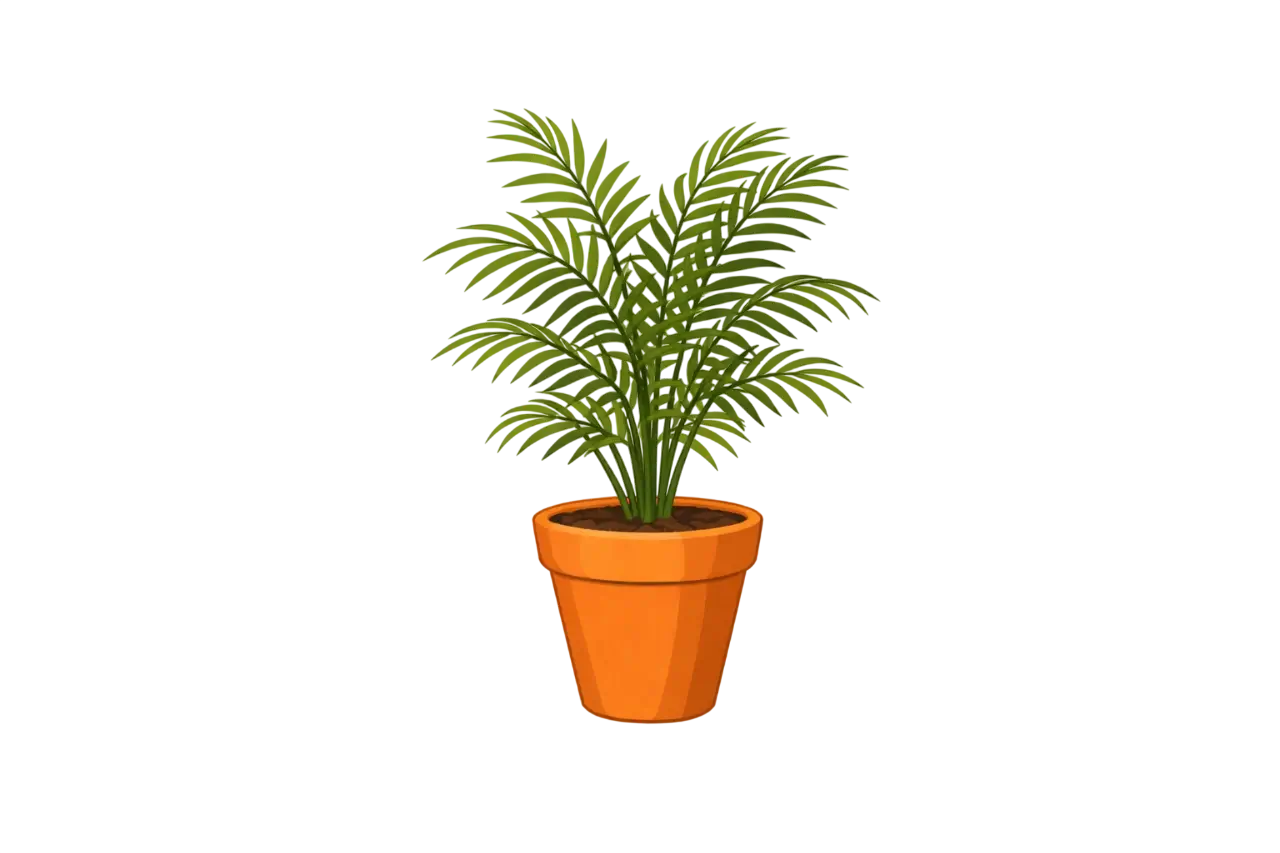
Native to the humid forests of Madagascar, areca palm grows as a clumping palm with multiple golden-yellow cane-like stems (which is where the common name "golden cane palm" and "butterfly palm" come from). Indoors it reaches 6 to 10 feet over several years, growing slowly, roughly 6 to 10 inches per year in good conditions. The arching, feathery fronds give it a soft, tropical look that fills vertical space without feeling heavy.
The main indoor challenge is the tips. Brown leaf tips on areca palm are so common that some growers consider them unavoidable. They are not, but preventing them requires attention to two things most people overlook: humidity (areca wants 50%+ and most heated homes sit at 30%) and water quality (the plant is sensitive to fluoride and chlorine in tap water, which accumulate in the leaf tips over months). Switch to filtered or rainwater and raise the humidity, and the browning slows dramatically.
Non-toxic to cats, dogs, and horses per ASPCA. One of the safest large indoor plants for homes with pets.
Quick Info
- LightBright
- WaterMedium
- Size6 to 10 feet tall indoors
- HumidityHigh
- Temp60–80°F (16–27°C)
- FloweringNo
- TypePalm
- Dog SafeYes
- Cat SafeYes
- Kid SafeYes
Is Areca Palm Toxic?
Pets: Non-toxic to cats, dogs, and horses per ASPCA. One of the safest large indoor plants for pet households. Ingesting whole fronds could cause a gastrointestinal obstruction, so discourage chewing.
Kids: Non-toxic. Safe around children.

Areca Palm Care Guide
Light
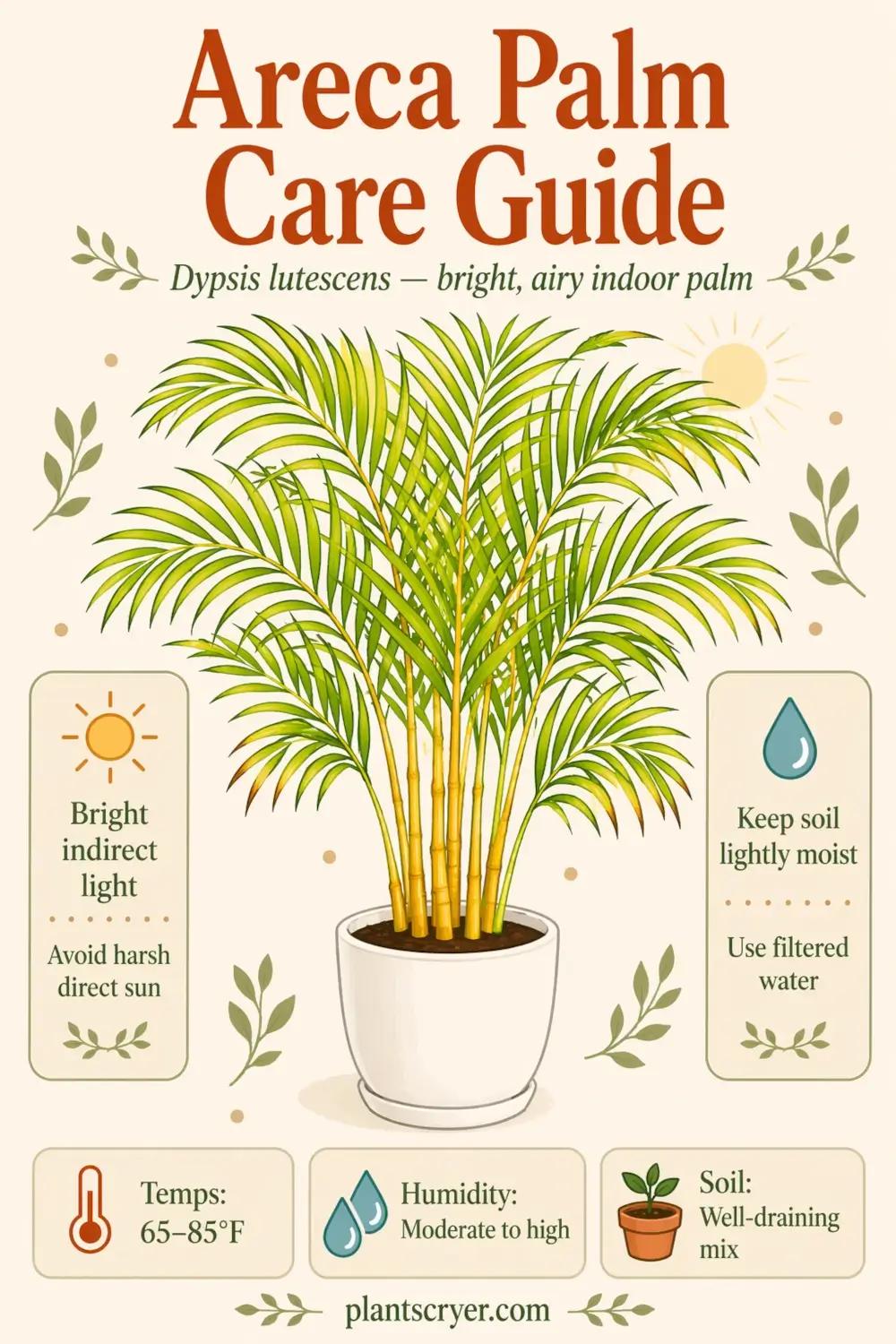
Bright indirect light. 6 to 8 hours of bright indirect or filtered light daily. An east- or west-facing window is ideal. Areca palm tolerates some gentle direct morning sun but scorches in strong afternoon sun, which bleaches and burns the delicate fronds. It also tolerates lower light better than many palms, but growth slows significantly and the fronds become sparse and pale.
If fronds are yellowing and sparse on the interior of the plant while the outer fronds stay green, the inner growth is not getting enough light. Rotate the plant a quarter turn every 2 weeks for even growth. In rooms without strong natural light, a grow light helps maintain frond density through winter.
Watering
Keep the soil consistently moist but never waterlogged. Water when the top 1 to 2 inches of soil feel dry. During spring and summer this may be twice a week in warm, bright conditions. In winter, once a week or less. Areca palm has a higher water demand than most houseplants of similar size because of its high transpiration rate, the same quality that makes it effective at humidifying a room.
Water quality matters more for areca palm than for most houseplants. The plant is sensitive to fluoride, chlorine, and mineral salts in tap water. These accumulate in the leaf tips over months and cause the characteristic browning that plagues indoor arecas. Use filtered water, rainwater, or leave tap water to sit in an open container for 24 hours before use (this disperses chlorine but not fluoride). A filtered water pitcher is the simplest long-term solution. Flush the soil thoroughly with plain filtered water every 2 to 3 months to wash out accumulated salts.
Soil
Well-draining but moisture-retentive. A standard indoor potting mix amended with perlite (about 70% potting mix to 30% perlite) works well. The soil should hold moisture between waterings without staying soggy. A slightly acidic pH (6.0 to 6.5) helps prevent fluoride uptake, which reduces tip browning. Avoid heavy clay-based soils that compact over time. The pot must have drainage holes.
Temperature and Humidity
60 to 80°F (16 to 27°C). Avoid temperatures below 50°F, which cause cold damage to the fronds. Keep away from cold drafts, exterior doors, and single-pane windows in winter. Areca palm tolerates warm temperatures well but dislikes sudden temperature swings, which can trigger frond yellowing.
Humidity is critical. Areca palm needs 50% humidity or higher. Below that, leaf tips brown and crisp regardless of how well you water. In winter with central heating, most homes drop to 20 to 30% humidity. A humidifier near the plant is the most effective fix. Misting helps for minutes but does not meaningfully raise ambient humidity. Grouping with other plants helps moderately. The irony is that the areca palm humidifies the room for you, but it needs humidity to do that without browning its own tips.
Fertilizing
Feed with a balanced liquid fertilizer at half strength once a month during spring and summer. Stop in fall and winter. A palm-specific fertilizer with added magnesium and potassium helps prevent the lower frond yellowing that areca palms develop when those nutrients run low. Over-fertilizing causes salt buildup that burns the tips (the same browning pattern as fluoride), so less is better than more.
Repotting
Every 2 to 3 years, in spring. Areca palm prefers being slightly rootbound and dislikes frequent root disturbance. When you do repot, go up only 2 inches in diameter. Use this opportunity to refresh the soil, which compacts and loses drainage over time. A heavy pot helps with stability; a tall areca in a lightweight plastic pot tips over easily.
Pruning
Only remove completely dead or fully brown fronds by cutting at the base of the stem. Do not cut brown tips off individual fronds. Cutting the tip of a frond creates a wound that often causes the entire frond to yellow and die back faster than if you had left the brown tip alone. The brown tips are unsightly but the green portion of the frond is still photosynthesizing and feeding the plant. Only remove a frond when it is entirely spent. Use clean pruning shears.
Propagation
Division is the only practical method, and it is slow and difficult. Areca palm grows as a clump of multiple stems from a shared root system. During repotting, you can separate a cluster of stems with their attached roots and pot it independently. Each division needs at least 3 to 4 stems with healthy roots to survive. The divided sections often drop fronds from shock and take months to recover. Most growers buy new plants rather than dividing, and that is a reasonable choice.
Common Areca Palm Problems
Brown leaf tips The most common areca palm problem. Three causes produce the same symptom: low humidity (below 50%), fluoride/chlorine/salt buildup from tap water, and over-fertilizing. The fix depends on which cause is active. Raise humidity with a humidifier. Switch to filtered or rain water and flush the soil every 2 to 3 months. Cut fertilizer to half strength monthly, spring and summer only. Do not trim the brown tips; cutting them accelerates die-back of the whole frond.
Black leaf tips Different from brown tips. Black tips usually mean overwatering or fertilizer burn. Check the soil; if wet, reduce watering. If you recently fertilized, flush the soil with plain water. How to save an overwatered plant covers root inspection and recovery if overwatering has progressed to rot.
Yellow lower fronds If only the oldest, lowest fronds are yellowing while the upper growth looks healthy, this is either natural aging (normal for palms to shed old fronds) or magnesium/potassium deficiency. If more than one or two lower fronds yellow at a time, feed with a palm fertilizer containing magnesium. If the plant has not been fertilized in months, nutrient deficiency is the likely cause.
Spider mites The most common pest on indoor areca palms, especially in dry air. Look for fine webbing on the undersides of fronds and tiny moving dots. Spider mites flourish in low humidity, so raising humidity is both a cure and prevention. Treat active infestations with neem oil or wash fronds under a strong shower spray to physically remove the mites.
Sparse, pale fronds Not enough light. The plant thins out and new fronds come in pale. Move to a brighter spot. Areca palm does not regrow fronds that have been lost, so prevention is better than recovery. The existing stems will produce new fronds from the top once light improves.
FAQs
Three things cause brown tips: low humidity (below 50%), fluoride or chlorine in tap water, and over-fertilizing. All three produce the same look. Switch to filtered water, raise humidity with a humidifier, and reduce fertilizer to half strength monthly. Flush the soil with plain filtered water every 2 to 3 months to wash out accumulated salts. Do not cut the brown tips off; this accelerates die-back of the whole frond.
When the top 1 to 2 inches of soil feel dry. In warm, bright conditions this may be twice a week in summer, once a week or less in winter. Areca palm prefers consistently moist soil but rots in waterlogged conditions. The high transpiration rate means it uses more water than most houseplants of similar size.
Yes. Areca palm ranked first among 50 plants tested in NASA studies for overall air purification effectiveness. It filters airborne toxins and transpires up to a litre of water per day into the surrounding air, which actively raises room humidity. The air quality benefit is real and measurable.
Yes. Areca palm is non-toxic to cats, dogs, and horses per ASPCA. It is one of the safest large indoor plants for pet households. Discourage pets from chewing the fronds, as ingesting large pieces of fibrous leaf material could cause a gastrointestinal blockage, but the plant itself contains no toxic compounds.
No. Cutting the tip of a frond creates a wound that often causes the entire frond to yellow and die back faster than if you left the brown tip alone. The green portion is still photosynthesizing. Only remove a frond when it is completely brown and dead. Cut it at the base of the stem.
If only the oldest fronds at the bottom are yellowing while upper growth looks healthy, it is either natural aging (all palms shed lower fronds) or magnesium/potassium deficiency. If more than one or two fronds yellow at once, feed with a palm fertilizer containing magnesium. If the plant has not been fertilized in months, nutrient deficiency is the likely cause.
Only by division, and it is slow and stressful for the plant. During repotting you can separate a cluster of 3 to 4 stems with their attached roots and pot independently. The divided sections often drop fronds from shock and take months to recover. Most growers buy new plants rather than dividing.