How to Care for a Parlor Palm
Chamaedorea elegans
Most palms sold as houseplants want more light than a house has. This one does not, and the sourcing behind that is better than the marketing usually is. NC State lists the parlor palm as tolerating deep shade, meaning under two hours of direct sun down to none at all, and puts heavy shade among its named tolerances.
Missouri Botanical Garden notes that it adapts very well to the limited light and controlled temperatures of indoor locations. That is why it has been a fixture in homes, offices and shopping malls for well over a century. It belongs on any list of houseplants that are hard to kill.
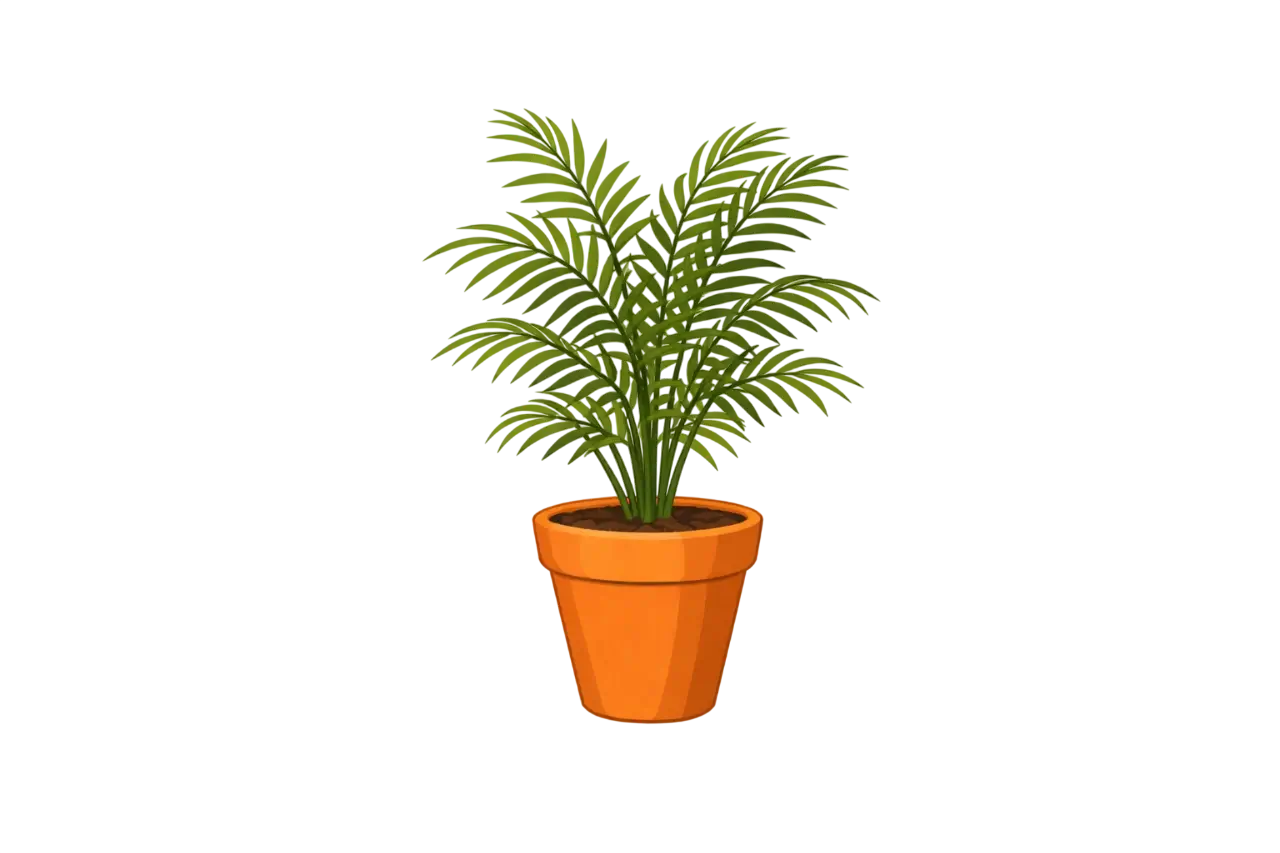
Chamaedorea elegans comes from the forest understorey of southern Mexico and northern Central America, as far south as Honduras. That habitat is exactly what explains the shade tolerance. The fronds are around 8 inches long, light green, arching to drooping, each carrying 11 to 20 narrow leaflets. Growth is slow by every account. MOBOT settles the size question that most pages fumble: it reaches 5 to 6 feet in shaded landscape planting, while as a houseplant it usually grows to about 4 feet.
Now the part where this page parts company with most parlor palm advice. Brown leaf tips get blamed on two things, low humidity and fluoride in tap water, and neither holds up well for this plant. NC State lists the parlor palm as tolerating low to medium humidity, so dry air is a weaker explanation here than on a calathea. And the extension literature documenting fluoride injury names Dracaena, Chlorophytum, Gibasis, Calathea and Maranta; I could not find Chamaedorea in it. Both explanations circulate widely and I would not put money on either.
What is documented points at water. NC State says the plant prefers moist soil and tolerates drought and dry soil only for short periods, and MOBOT names no serious disease problems while describing rich, moist, well-drained soil as the requirement. So the likeliest cause of a tired-looking parlor palm is irregular watering in one direction or the other, not the air. On safety the plant is clean: the ASPCA lists it as non-toxic to dogs and cats.
Quick Info
- LightLow
- WaterMedium
- SizeUsually 4 feet indoors (2-6 feet overall)
- HumidityLow
- Temp65-80°F (18-27°C); no frost tolerance
- FloweringYes
- TypeTropical, Palm
- Dog SafeYes
- Cat SafeYes
- Kid SafeYes
Is the Parlor Palm Toxic to Pets?
Pets: The ASPCA lists Chamaedorea elegans as non-toxic to dogs and cats, with no clinical signs recorded; its page does not cover horses. NC State gives the plant a low toxicity rating on one narrow ground, which is that juice from the fruit may irritate the skin of sensitive people. Indoor plants rarely fruit at all.
Kids: Nothing in the foliage is recorded as poisonous. The only caution anywhere is NC State noting that juice from the black fruit may irritate sensitive skin, and indoor plants rarely fruit.
Parlor Palm Care Guide
Light, Including Deep Shade
NC State files it under both dappled sunlight and deep shade, and names heavy shade among its tolerances. MOBOT asks for filtered sun, part shade or shade and says to avoid direct sun outright, adding that best growth happens in moist, shady positions. The preference inside that range is bright indirect light near a north or east-facing window. For comparison, an areca palm wants six to eight hours of bright indirect light and goes sparse and pale without it, which is the gap this plant exists to fill.
Direct sun is the one thing to keep off it. An understorey palm has no adaptation for full exposure and scorches instead. It is the single most common way people damage an otherwise indestructible plant. If you want a shade-tolerant companion for the same corner, a cast iron plant takes the same conditions and the two look nothing like each other.
Watering, and the Commoner Error
NC State records a preference for moist soil and notes it tolerates drought and dry soil for short periods only. MOBOT asks for rich, moist, well-drained compost. So the target is evenly damp with the top inch allowed to dry between waterings, and the margin for forgetting is shorter than the plant’s easy reputation suggests. A moisture meter earns its keep if several palms share a watering round, since pot size changes the interval more than anything else.
Overwatering is still the more common error indoors, and yellowing fronds on compost that stays wet is the usual sign. Water until it runs out of the bottom, then empty the saucer, and never leave the pot standing in water. Yellowing on other plants covers the patterns that mean something different.
Compost and Repotting
MOBOT specifies a peaty, soil-based potting mix, and NC State describes high organic matter with a loam or silt texture and good drainage. An ordinary houseplant compost does the job: this is not a plant that needs a special blend, and the chunky mixes people build for aroids drain faster than it wants.
What matters is that water can leave. Root problems from compost that never dries are the realistic failure mode on an otherwise trouble-free plant, and a pot with a working hole plus a saucer you actually empty handles it. Several palms are usually potted together to look full, so expect a dense root mass when you turn one out.
Rarely. Growth is slow, the root system is fibrous rather than aggressive, and MOBOT notes no serious problems from being container-grown for long periods. Every two or three years in spring, stepping up one size, is ample, and a plant that has filled its pot will flower and look full, not suffer.
Be careful lifting a multi-stemmed clump out, since what looks like one plant is usually several seedlings potted together and the stems snap more easily than they look. Keep the clump intact unless you specifically want to divide it, because a single stem on its own looks sparse for years at this growth rate.
Feeding, and Salt Build-Up
Lightly, and only in spring and summer. A balanced liquid feed at label strength once a month through the growing season is plenty for a plant that every source rates a slow grower, and nothing over winter.
Palms generally resent accumulated fertiliser salts, and the symptom is brown tips and margins, which puts it on the same short list as the causes above. Watering thoroughly enough that some drains away, instead of small sips that leave everything in the pot, is the practical defence. If a white or yellow crust appears on the compost or the pot rim, flush the pot with plain water.
Humidity, and the Palm Reputation
NC State lists low to medium relative humidity as tolerated, making this one of the easier palms to keep in a heated home. No authoritative source sets a percentage target for it, so there is no figure to chase and no reason to buy equipment on this plant’s behalf. That deserves stating plainly, because palms have a reputation for wanting humidity, and some do. This one is sold on its tolerance of ordinary indoor conditions, and NC State’s own humidity rating supports that. If you already run a humidifier for ferns, the palm will sit happily in that air without needing it.
Temperature, and Keeping It Out of Draughts
NC State gives the hardiness as USDA zones 10a to 12b, MOBOT as 10 to 12. Neither band includes a frost. Ordinary room temperature suits it, and MOBOT makes the point that these plants adapt well to the controlled temperatures of indoor spaces, half the reason they have lasted as office plants.
Past the zone ratings there is no published optimum to work to. The specific indoor ranges attached to parlor palm around the web are inferences drawn by writers, and they are not all the same inference. What MOBOT does flag is wind: it advises siting plants away from strong winds, which translates indoors to keeping the palm out of the draught from a door or an air conditioning vent, where the fine leaflets dry and shred.
Grooming, and Never Cut the Top
Take whole fronds off low on the stem with clean snips as soon as they brown, and do nothing else. The rule that matters on any palm is never to cut the top off a stem: each stem grows from a single terminal bud, so topping it does not encourage branching, it ends that stem permanently. On a clumping palm like this you lose one of several, survivable and still pointless.
Trimming brown tips off otherwise green leaflets is cosmetic and the cut edge browns again, so it buys you little. Wiping the fronds is more useful: dust settles on the fine leaflets and the wipe is also how you find the pests below while there are still only a few.
Pests, and What to Expect
NC State’s list is longer than most for this plant: red spider mites, mealybugs, banded greenhouse thrips, greenhouse thrips, fern scale and root mealybugs. MOBOT reports no serious insect or disease problems while naming scale, nematodes, spider mites and mealybugs as things to watch indoors. Identifying houseplant pests sorts out the common ones.
Spider mites are the ones to expect in a dry, warm room, showing as fine stippling and webbing between the leaflets. Neem oil is a reasonable first treatment here, with the usual caution about testing a frond and keeping the plant out of direct sun while it is wet.
How to Propagate a Parlor Palm
Seed is the real answer, and it is why you almost never see anyone propagate this plant at home. Palms do not root from cuttings, because each stem grows from a single terminal bud with no nodes to break from, so there is nothing to take. Commercial growers raise parlor palms from seed by the thousand and pot several seedlings together, so the plant you bought is a clump.
NC State records the flowers and the round, fleshy black fruit, noting that fruiting is rare indoors. If you do get fruit, the seed inside is viable, needs warmth and patience, and germinates unevenly over weeks to months. Given that the plant is slow even once established, growing one from seed is a multi-year project rather than a weekend one. Dividing an existing clump is the only other option and it is a trade rather than a win. Because the pot holds several separate seedlings rather than one spreading plant, you can tease them apart in spring with their roots intact. The trade is a poor one: you end up with three thin plants instead of one that looks finished, and at this growth rate they stay thin for years.
If you do divide, keep each piece’s roots as intact as you can and pot straight into the same peaty, soil-based mix. Keep them out of direct sun and evenly moist while they settle. Nobody publishes an establishment time for divided parlor palms, so expect it to be slow and judge progress by new fronds, not by any schedule.
Common Parlor Palm Problems
Brown frond tips are the usual complaint, and the two explanations you will read most often are the two I would trust least on this plant. NC State rates it as tolerating low to medium humidity, and the fluoride injury literature names other genera and not Chamaedorea. Look at watering regularity and accumulated fertiliser salts first. Brown tips across other plants covers the causes that are better documented elsewhere.
Yellowing fronds with compost that stays wet is the overwatering signal. NC State says the plant tolerates dry soil only for short periods, so it does want real moisture, but the roots still need air. Check that the pot drains and that no decorative outer pot is quietly holding water.
Scorched, bleached patches come from direct sun. MOBOT says to avoid direct sun and that the best growth comes in moist, shady positions. Move the palm back from the glass; the marked fronds stay marked, so judge the fix on new growth.
Shredded or crisped leaflet edges on a plant that is otherwise fine often means airflow. MOBOT advises siting plants away from strong winds, and indoors the equivalent is a heating vent, an air conditioner or a frequently opened external door.
Fine stippling with webbing between the leaflets is spider mites, the likeliest of NC State’s long pest list to turn up in a home. Thrips, fern scale and mealybugs are the others worth knowing by sight. Working through houseplant pests goes into identification.
Barely any new growth is usually normal, not a fault. Every authority rates this palm a slow grower, and deep shade slows it further without harming it. A plant holding firm green fronds is fine; brighter indirect light is the only lever that reliably speeds it up.
Small yellow or orange sprays appearing among the fronds are flowers, not a problem. NC State describes them as small light yellow to orange-red panicles that look like little balls without petals, emerging below or among the leaves. Round black fruit can follow, though rarely indoors.
FAQs
Yes, and this is the best-sourced claim about the plant. NC State lists it as tolerating deep shade, defined as under two hours of direct sunlight down to none at all, and names heavy shade among its tolerances. MOBOT adds that it adapts very well to the limited light of indoor locations. The preference within that range is bright indirect light near a north or east window, where it will grow faster, but a dim room will not defeat it.
Yes. The ASPCA lists Chamaedorea elegans as non-toxic to dogs and cats with no clinical signs recorded, though its page does not mention horses. NC State attaches a low toxicity rating on one narrow ground: juice from the fruit may irritate sensitive skin. Since indoor plants rarely fruit, that is close to academic. One thing to ignore on the ASPCA page is the family, printed as Palmae, which is the old name for Arecaceae.
MOBOT gives the clearest answer: as a houseplant it usually grows to about 4 feet, while in shaded landscape planting where it is hardy it reaches 5 to 6 feet. The overall range quoted for the species is 2 to 6 feet tall with a spread of 2 to 3 feet. Growth is slow by every account, so a plant bought at a foot tall will take years rather than seasons to get there.
Probably not for the two reasons you will read most often. NC State lists this palm as tolerating low to medium humidity, so dry air is a weaker explanation here than for a calathea, and the extension literature on fluoride injury names Dracaena, Chlorophytum, Calathea and Maranta, not Chamaedorea. Start with watering regularity, since NC State says it tolerates dry soil only for short periods, and with fertiliser salts if you have been feeding little and often without flushing the pot.
You can, but it achieves little, because the cut edge browns again and the frond ends up shorter and oddly shaped. Removing whole fronds at the base once they are mostly brown is the better habit. The one thing never to do on any palm is cut the top off a stem: each stem grows from a single terminal bud, so topping it ends that stem rather than making it bush out.
Realistically, you buy another one. Palms cannot be grown from cuttings, since a stem has a single terminal bud and no nodes to break from, so seed is the only true propagation route and it is slow and uneven. The clump in your pot is several seedlings grown together by the nursery, and you can separate them in spring with roots attached. That gives you several sparse plants where you had one full one, rarely an improvement.
It does, and more readily indoors than most palms. NC State describes small light yellow, yellow or orange-red flowers in panicles that look like little balls without petals, appearing below or among the fronds. Round, fleshy black fruit under an inch across can follow, though that is rare indoors. The flowers are harmless and can be left or snipped off as you prefer.
Not quite, and the ASPCA entry muddies this by listing Bamboo Palm among the parlor palm common names. Bamboo palm usually means Chamaedorea seifrizii, a taller relative with more upright canes. They are in the same genus and have similar needs, so care advice transfers reasonably well, but if you are buying for a specific height the distinction matters.