How to Care for Tree Aeonium
Aeonium arboreum
 Save
Save
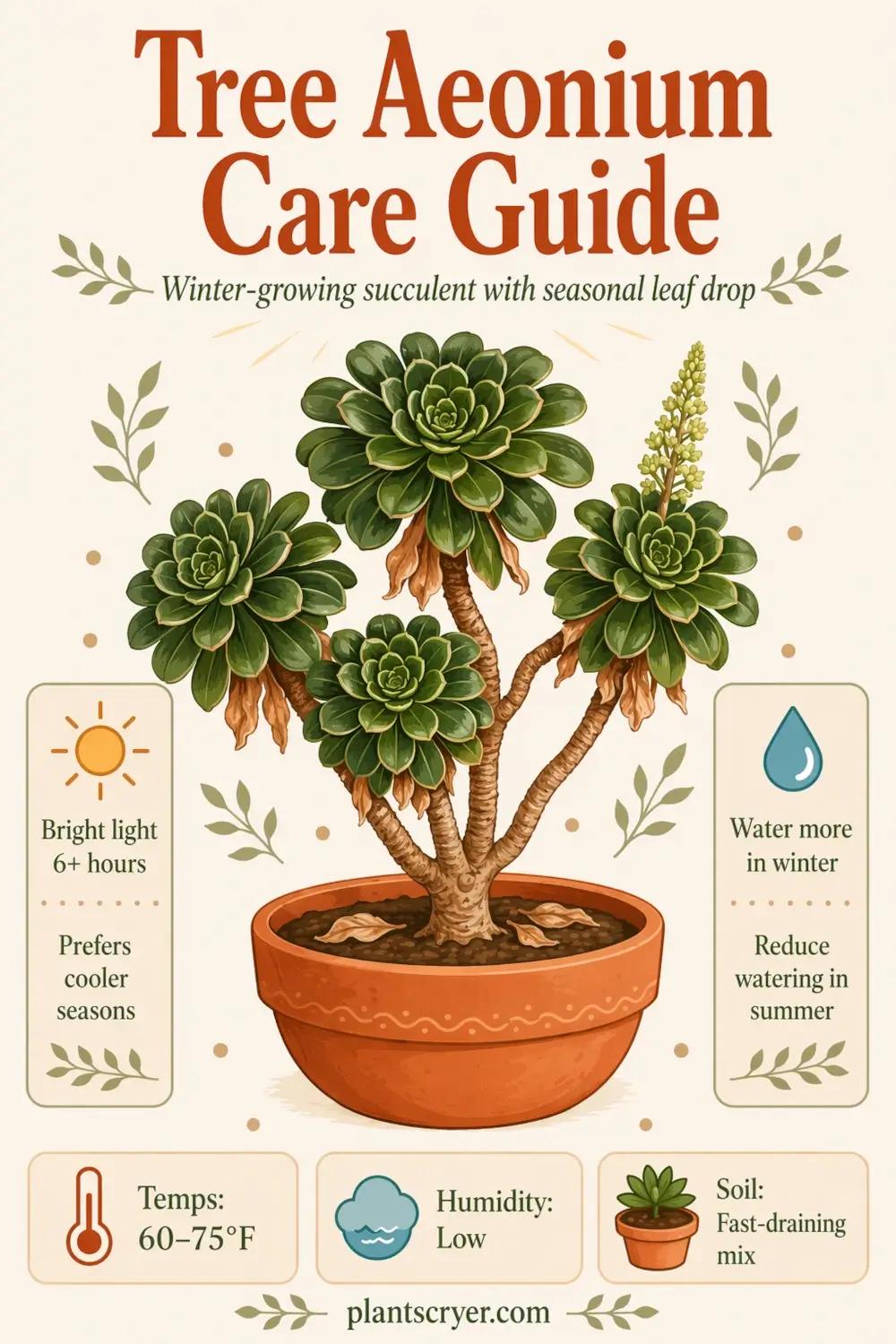
Tree aeonium (Aeonium arboreum) does everything backwards compared to most succulents. It grows actively during fall, winter, and spring, then goes dormant in summer when temperatures climb. During dormancy the rosettes close up, the lower leaves dry and drop, and the plant looks like it is dying. It is not. This is the single most important thing to understand about aeonium care, because misreading dormancy as a problem leads to overwatering a resting plant, which actually does kill it.
Native to the Canary Islands off the northwest coast of Africa, tree aeonium grows as a branching shrub on rocky, dry hillsides with mild, wet winters and hot, dry summers. That Mediterranean climate pattern is why it flips the growing schedule. Indoors it reaches 2 to 3 feet tall over several years, forming a tree-like structure with woody stems topped by rosettes of spoon-shaped leaves.
Tree aeonium is monocarpic: each individual rosette flowers once, sets seed, and dies. On branching species like A. arboreum this is not a catastrophe because only the rosette that flowers dies. The rest of the plant continues growing and producing new rosettes. Unbranched species (like A. tabuliforme) die entirely after flowering. If your tree aeonium sends up a tall flower spike from one rosette, that rosette is done. Let it finish, remove the dead rosette, and the surrounding branches will fill the space.
Non-toxic to cats, dogs, and humans. No toxicity concerns.
Quick Info
- LightBright
- WaterLow
- Size2 to 3 feet tall indoors
- HumidityLow
- Temp40–90°F (5–32°C)
- FloweringYes
- TypeSucculent
- Dog SafeYes
- Cat SafeYes
- Kid SafeYes
Is Tree Aeonium Toxic?
Pets: Non-toxic to cats and dogs. Not listed on the ASPCA toxic plants list. Large amounts may cause mild stomach upset, but no toxic compounds are present.
Kids: Non-toxic. Safe around children.

Tree Aeonium Care Guide
Light
Bright light with at least 6 hours of direct or bright indirect sunlight daily. A south- or west-facing window works well. Tree aeonium tolerates some direct sun, though intense afternoon sun in summer (when the plant is dormant) can scorch the rosettes. Dark-leaved varieties like 'Zwartkop' need strong light to maintain their deep purple-black colour; in insufficient light they revert toward green.
Without enough light, stems stretch rapidly between rosettes and the plant becomes leggy and top-heavy. A grow light running 10 to 12 hours daily is especially useful through the winter growing season when natural daylight hours are shortest.
Watering
The watering schedule follows the reversed growing season. Water more frequently from fall through spring (the active growing period): let the top inch of soil dry, then water thoroughly. This is roughly every 7 to 10 days during active growth. In summer, reduce dramatically or stop watering almost entirely. The plant is dormant and using very little water. A dormant aeonium sitting in wet soil rots quickly.
This reversed schedule confuses people who are used to watering succulents more in summer and less in winter. With aeoniums, you do the opposite. A moisture meter helps navigate the seasonal transition, especially in the early months when you are still learning the plant's rhythm.
Soil
Well-draining mix. A cactus and succulent mix amended with extra perlite or horticultural grit (roughly 60% mix, 40% grit) gives the fast drainage aeoniums need. Standard potting soil holds too much moisture, especially during summer dormancy when the roots are barely active. Use a terracotta pot with drainage holes for maximum moisture evaporation.
Temperature
40 to 90°F (5 to 32°C). Tree aeonium prefers mild temperatures and dislikes both frost and extreme heat. Keep above 40°F at all times. Temperatures above 90°F trigger dormancy and the plant shuts down. The ideal indoor range is 50 to 75°F. In winter, a slightly cooler room (50 to 60°F) suits the plant's active growing period well. No humidity requirements; dry to moderate indoor air is fine.
Fertilizing
Feed during the active growing season only (fall through spring). Apply a balanced liquid fertilizer at half strength once a month from October through April. Stop completely during summer dormancy. Feeding a dormant aeonium forces weak growth the plant cannot sustain and risks root burn from unused nutrients sitting in the soil.
Repotting
Every 2 to 3 years, in fall at the start of the active growing season. Use a pot just slightly larger than the root ball. Tree aeonium becomes top-heavy as it branches, so choose a heavy pot (terracotta or ceramic) or place a weight in the bottom to prevent tipping. Refresh the soil completely when repotting to restore drainage and nutrient content.
Pruning
Prune in fall or early winter (start of active growth) to control height and encourage branching. Cut stems back to the desired length with clean pruning shears. The plant branches from below the cut, producing multiple new rosettes where there was one. Pruned stem sections root easily as cuttings (see Propagation). Remove dead rosettes that have finished flowering at any time.
Propagation
Stem cuttings are the standard method and root very reliably. Cut a 4 to 6 inch stem section with a rosette at the top. Let the cut end dry and callus for 2 to 3 days. Plant the calloused end in slightly moist, gritty cactus mix. Keep in bright indirect light and water sparingly until roots establish, typically 2 to 4 weeks. The best time to propagate is fall through early spring, during the active growing season. Summer cuttings root slowly or not at all because the plant is dormant.
Leaf propagation is possible but unreliable with aeoniums. Unlike many succulents, individual aeonium leaves rarely produce new plants. Stick with stem cuttings for consistent results.
Common Tree Aeonium Problems
Rosettes closing and leaves dropping in summer Normal summer dormancy. The rosettes tighten up, the lower leaves dry and fall, and the stems look bare. This happens every summer and is not a sign of poor care. Do not increase watering in response. Leave the plant alone, water minimally, and it will open back up in fall when temperatures cool.
Rosette dying after flowering Normal monocarpic behaviour. The rosette that flowered is finished and will not recover. On branching types like Aeonium arboreum, only that one rosette dies; the rest of the plant continues. Cut the dead rosette off at its stem. The surrounding branches will fill the gap.
Leggy, stretched stems Not enough light. Aeonium stems elongate rapidly between rosettes when light is insufficient. Move to a brighter spot. Prune leggy stems back in fall to encourage branching and compact new growth. The cut sections can be rooted as new plants.
Root rot Soft, dark stem base with mushy roots. Most commonly caused by watering during summer dormancy when the roots are barely functioning. Cut above the rot, let the stem callus for a few days, and replant in dry mix. Root rot vs soil mold covers how to confirm the diagnosis.
Aerial roots on stems Small roots growing from the stem above the soil line. This is a stress response, usually indicating the plant wants more moisture, better soil contact, or more humidity than it is getting. It is not harmful. If the aerial roots bother you, increase watering slightly during the active growing season and ensure the pot is not too tall relative to the root system.
Mealybugs White cottony clusters in the spaces between rosette leaves and at stem joints. Treat with rubbing alcohol on a cotton swab or neem oil for larger infestations. Check deep between the rosette leaves where pests hide.
FAQs
Normal summer dormancy. Aeoniums are winter growers that go dormant when temperatures rise. During dormancy the rosettes close, lower leaves dry and drop, and the plant looks bare. This happens every summer. Do not increase watering; reduce it. The plant will reopen and resume growth in fall when it cools down.
More in fall through spring (the active growing season), less in summer. During active growth, water when the top inch of soil is dry, roughly every 7 to 10 days. In summer dormancy, water sparingly or not at all. This reversed schedule is the opposite of most succulents, which grow in summer and rest in winter.
Aeoniums are monocarpic: each rosette flowers once and dies. On branching types like Aeonium arboreum, only the rosette that flowered is lost. The rest of the plant continues growing. Remove the dead rosette and the surrounding branches will fill in. Unbranched species die entirely after flowering.
No. Aeonium is not listed as toxic on the ASPCA website and is considered safe for cats, dogs, and humans. Eating large amounts of any plant material may cause mild stomach upset, but no toxic compounds are present.
Strong direct light. The deep purple-black colour of Aeonium arboreum 'Zwartkop' depends on high light intensity. In insufficient light the leaves revert toward green. A south-facing window with 6+ hours of direct sun maintains the dark colour. A grow light helps through winter when natural daylight is weaker.
Cut a 4 to 6 inch stem with a rosette at the tip. Let the cut end callus for 2 to 3 days. Plant in slightly moist cactus mix and keep in bright indirect light. Roots form in 2 to 4 weeks. Propagate during the active growing season (fall through spring) for the best success rate. Individual leaf propagation is unreliable with aeoniums.
Not enough light. Aeonium stems elongate rapidly between rosettes when light is insufficient. Move to a spot with more direct sun. Prune leggy stems back in fall to encourage branching. Each cut produces multiple new rosettes. The pruned sections root easily as new plants.