How to Care for Crown of Thorns
Euphorbia milii
 Save
Save
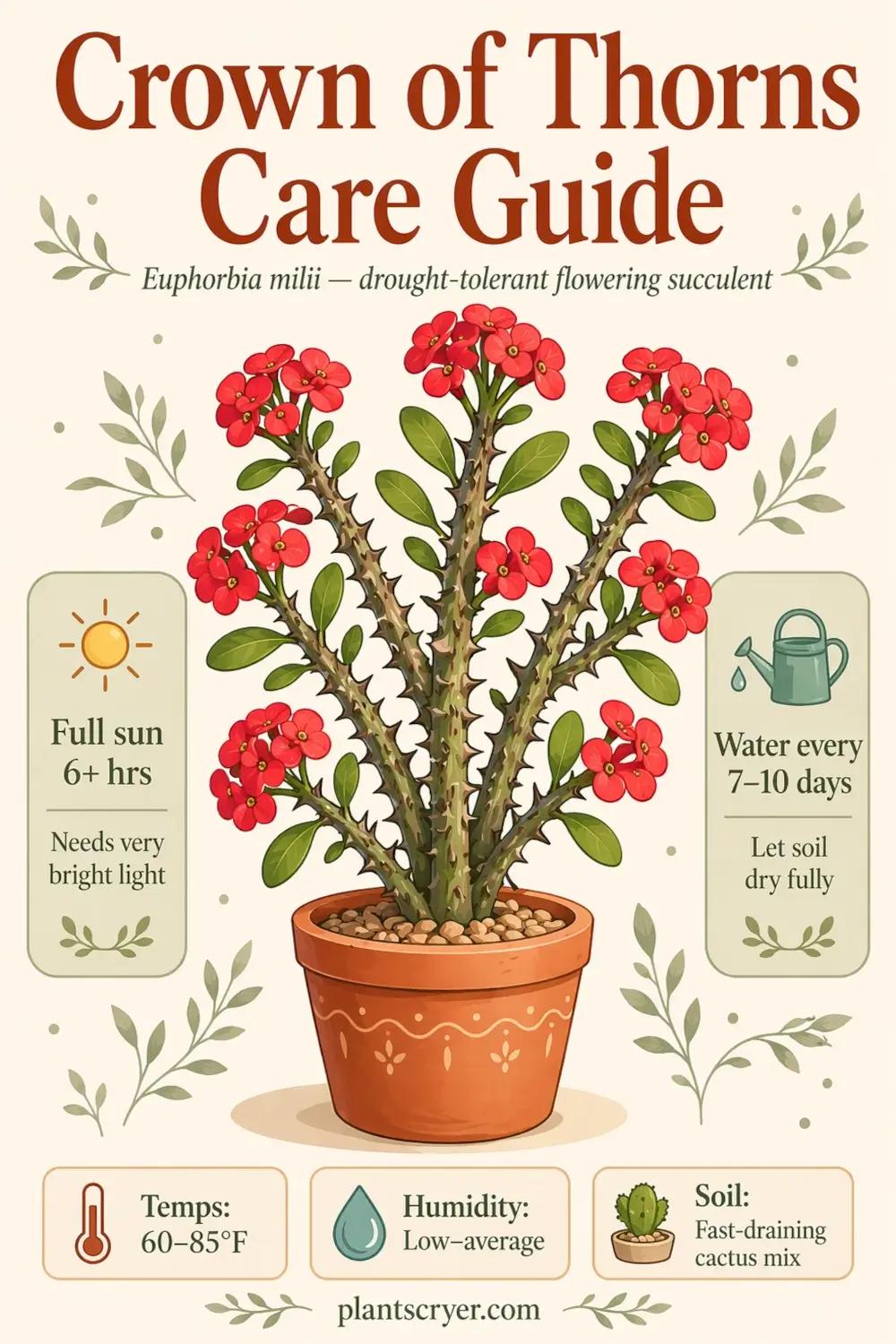
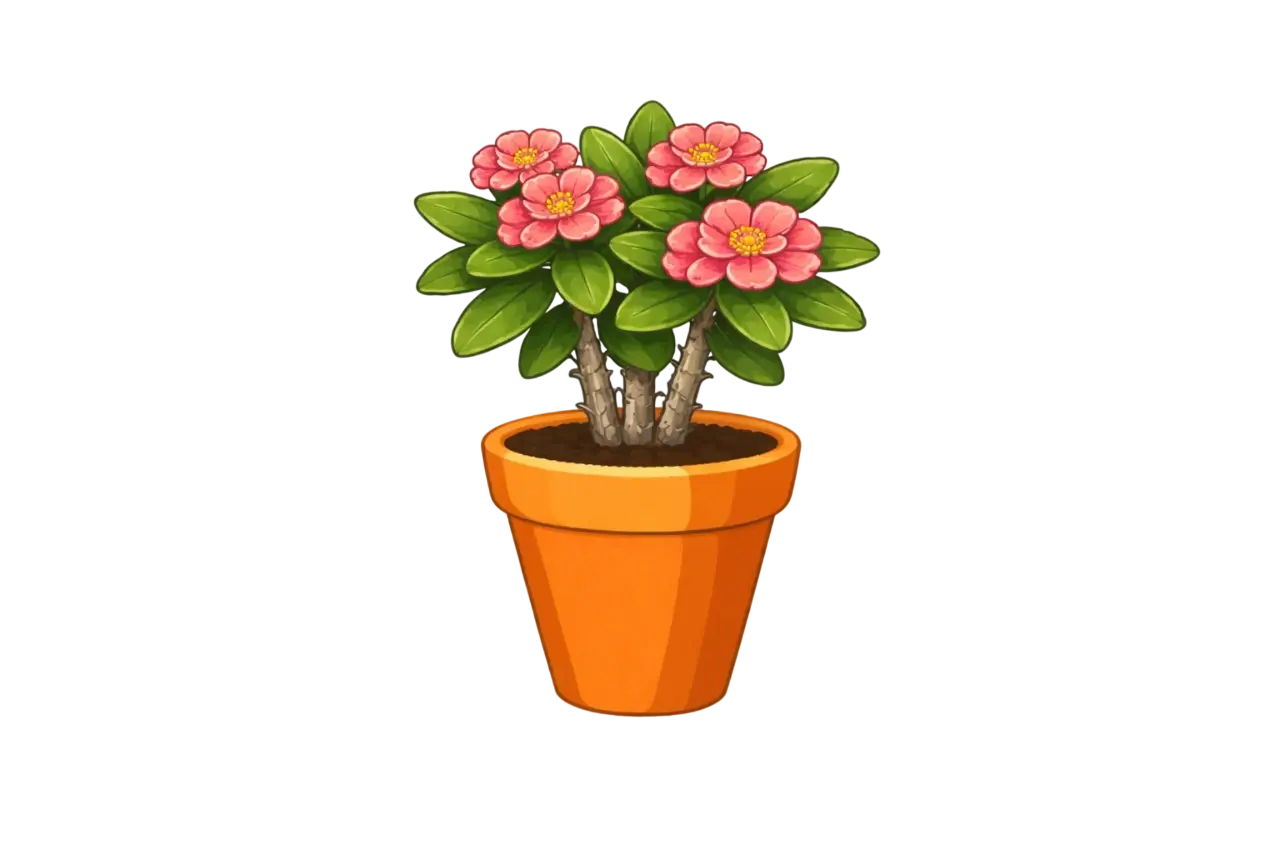
Crown of thorns (Euphorbia milii) is one of the few houseplants that flowers reliably and almost continuously indoors. Given enough direct light, it produces small clusters of colourful bracts (the petal-like structures are actually modified leaves, not true petals) in red, pink, yellow, salmon, or white throughout the year. Most flowering houseplants bloom for a few weeks and stop. Crown of thorns keeps going as long as the light holds.
Native to Madagascar, this is a woody succulent with thick, spiny stems that can reach 3 feet or more indoors over many years. Growth is slow. The thorns are real and sharp, dense enough that handling the plant without thick gloves is unpleasant. The milky white sap that bleeds from any cut or broken stem is a skin and eye irritant and is toxic if ingested. Crown of thorns is not a plant you want in reach of small children or curious pets.
The care is forgiving. Crown of thorns tolerates dry air, infrequent watering, poor soil, and neglect better than most flowering plants. It blooms when rootbound and does not need regular repotting. The main requirement is light, and enough of it. Without strong direct sun, the plant grows but stops flowering, which defeats the purpose of owning it.
Toxic to cats, dogs, and humans. The latex sap causes oral irritation, drooling, vomiting, and diarrhea if ingested. Skin contact causes dermatitis. Sap in the eyes can cause temporary blindness. Always wear gloves when handling or pruning.
Quick Info
- LightBright
- WaterLow
- Size1 to 3 feet tall indoors
- HumidityLow
- Temp55–85°F (13–29°C)
- FloweringYes
- TypeSucculent
- Dog SafeNo
- Cat SafeNo
- Kid SafeNo
Is Crown of Thorns Toxic?
Pets: Toxic to cats and dogs. The milky latex sap contains diterpene esters that cause oral irritation, drooling, vomiting, and diarrhea if ingested. Skin contact causes dermatitis. Sap in the eyes can cause temporary blindness. Keep well out of reach of pets.
Kids: Toxic if ingested. Sap causes blistering of lips and mouth. Contact with skin or eyes causes irritation. The thorns can cause puncture injuries. Keep out of reach of children.
Crown of Thorns Care Guide
Light
Full direct sun. Crown of thorns needs at least 6 hours of direct sunlight daily to bloom. A south- or west-facing window is ideal. The plant survives in less light but stops producing flowers, and the stems become leggy and sparse-leaved.
One detail most guides miss: crown of thorns also needs uninterrupted darkness at night to initiate bloom cycles. Room lights, hallway lights, or even a TV screen left on in the evening can suppress flowering. If your plant gets strong daytime sun but will not bloom, check whether it is getting genuine darkness for 12 to 14 hours overnight. A grow light on a timer (12 hours on, 12 hours off) solves both the light and darkness requirements in rooms without strong natural sun.
Watering
Let the top inch of soil dry out between waterings. During the growing season this is roughly every 7 to 10 days. In winter, reduce to every 2 to 3 weeks. Crown of thorns is a succulent and stores water in its thick stems, but it is not as drought-tolerant as desert cacti. If the soil stays bone dry for too long, the plant drops its leaves as a survival response. They grow back once watering resumes, but repeated drought stress reduces flowering.
Yellow leaves that fall off usually mean overwatering. Green leaves dropping suddenly usually mean cold exposure or a drastic change in conditions. A moisture meter helps find the balance between too wet and too dry, especially in winter when the margin is thinner.
Soil
Well-draining mix with some richness. Unlike most succulents, crown of thorns appreciates a slightly richer soil. A cactus and succulent mix amended with extra perlite and a small amount of compost or worm castings works well. The mix should drain freely but hold a bit more organic matter than a pure desert cactus blend. Use a pot with drainage holes. Terracotta is ideal because it wicks excess moisture.
Temperature
65 to 85°F (18 to 29°C) during the growing season. Never below 55°F for extended periods. Below 50°F the plant drops its leaves; below 35°F it can die. A slight winter cool-down to 60°F is fine and may improve spring blooming. Keep away from cold drafts and single-pane windows in winter. Crown of thorns does well in dry heated indoor air, which is unusual for a flowering plant.
Fertilizing
Light feeder. Apply a succulent fertilizer at half strength once a month during spring and summer. Stop in fall and winter. Over-fertilizing is counterproductive: it pushes vegetative growth (more stems, more thorns) at the expense of flowers. If the plant is growing vigorously but not blooming, reduce feeding and check the light.
Repotting
Crown of thorns blooms well when rootbound, so there is no rush to repot. Every 2 to 3 years or when the plant is clearly unstable in its pot is enough. Go up only 1 inch in pot diameter. Repot in spring or summer during active growth. Wear thick leather gloves and work over newspaper to catch sap drips. The thorns will snag on fabric and skin; wrap the stems loosely in layers of newspaper before handling.
Pruning
Prune in spring to control size and promote bushier growth. You can cut stems back by up to half their length. New branches will emerge from buds just below each cut, making the plant fuller. Since flowers only appear on the tips of actively growing stems, pruning generates more growing tips and eventually more flowers.
Sap handling: Use a sharp knife rather than shears (the sticky sap gums up shear blades). When you cut, the stem will bleed milky latex. Dip the cut end in cold water or press powdered charcoal against it to stop the flow. Wear gloves and eye protection. Do not touch your face during pruning. Clean all tools and work surfaces with rubbing alcohol afterward.
Propagation
Take stem cuttings 3 to 6 inches long from the tips of healthy stems. Dip the cut end in cold water immediately to stop sap flow, then let the cutting dry for 2 to 3 days until the cut end forms a callus. Insert into barely moist, well-draining cactus mix. Do not water heavily; keep the mix just barely damp. Place in bright indirect light (not full sun) while rooting. Roots develop in 5 to 8 weeks. The cutting may drop its leaves during rooting. This is normal; new leaves will emerge once roots establish.
Common Crown of Thorns Problems
Leaf drop The most common complaint. Green leaves dropping suddenly usually means cold exposure, a sudden temperature change, or a drastic shift in conditions (like being moved). Yellow leaves dropping means overwatering. Shriveled leaves dropping means the plant has been too dry for too long. Some lower leaf shedding is normal as the stems grow and lignify; each individual leaf only lasts a few months before it falls naturally.
Not blooming Almost always a light problem. Crown of thorns needs 6+ hours of direct sun to flower. If the light is adequate, check for nighttime light pollution; even dim ambient light in the room at night can suppress bloom cycles. Over-fertilizing also reduces flowers by pushing leafy growth instead. Reduce feeding, increase light, and ensure 12+ hours of genuine darkness at night.
Leggy, sparse growth Not enough light. The stems elongate with wide gaps between leaves. Prune back by up to half in spring and move to a brighter spot. The plant branches from the cut points and comes back fuller. Without more light, the new growth will stretch again.
Root rot Soft, darkened base with mushy roots. Caused by overwatering or soil that stays wet too long. If caught early, trim the rot, let the base callus for a few days, and replant in dry mix. Root rot vs soil mold covers how to confirm the diagnosis.
Mealybugs White cottony clusters in leaf axils and around the thorns. The most common pest on indoor crown of thorns. Treat with rubbing alcohol on a cotton swab for small infestations or neem oil for larger ones. The thorns make treatment awkward; a spray bottle is easier than swabbing between the spines.
FAQs
Give it at least 6 hours of direct sunlight daily and 12 to 14 hours of uninterrupted darkness at night. Artificial room lights in the evening can suppress flowering. Reduce fertilizer to avoid pushing leafy growth at the expense of flowers. In strong light with proper darkness cycles, crown of thorns blooms almost continuously.
Yes. The milky latex sap contains compounds that cause oral irritation, drooling, vomiting, and diarrhea if ingested. Skin contact causes dermatitis. Sap in the eyes can cause temporary blindness. The thorns also cause puncture injuries. Keep this plant well out of reach of pets and children.
Sudden green leaf drop usually means cold exposure or a drastic change in conditions. Yellow leaves dropping means too much water. Shriveled leaves dropping means too little water for too long. Some lower leaf shedding is normal; each leaf only lasts a few months. If the leaf drop is severe, check temperature, watering, and whether the plant was recently moved.
Every 7 to 10 days during the growing season, every 2 to 3 weeks in winter. Let the top inch of soil dry between waterings. Crown of thorns is more drought-tolerant than most flowering plants but not as tough as desert cacti. Extended drought causes leaf drop; extended wet soil causes root rot.
Yes. Prune in spring by cutting stems back by up to half their length. The plant branches from just below each cut, producing a fuller shape and more flowering tips over time. Wear thick gloves and eye protection. Dip cuts in cold water or charcoal to stop the sap flow. Use a knife rather than shears, as the sticky sap gums up shear blades.
Take 3 to 6 inch stem tip cuttings. Dip the cut end in cold water to stop sap, let it dry for 2 to 3 days to form a callus, then plant in barely moist cactus mix. Roots develop in 5 to 8 weeks. The cutting may lose its leaves during rooting, which is normal. New leaves appear once roots establish. Wear gloves throughout.
Rarely. It blooms well when rootbound and does not need frequent repotting. Every 2 to 3 years is enough, or when the plant is clearly unstable in its pot. Use a pot only 1 inch wider than the current one. Wrap the stems in newspaper for handling and wear thick leather gloves to avoid the thorns and sap.