How to Care for Echeveria
Echeveria spp.
 Save
Save
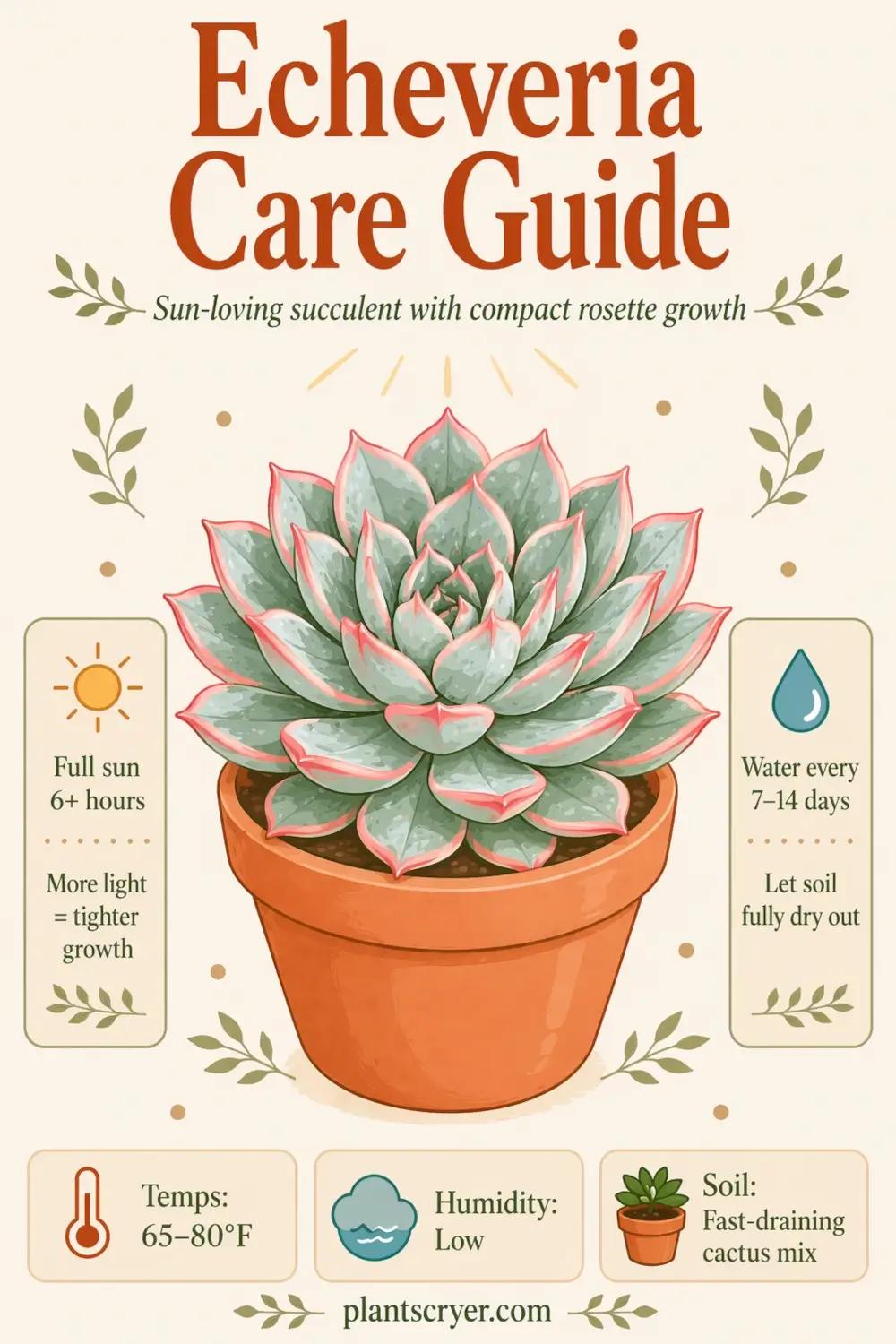
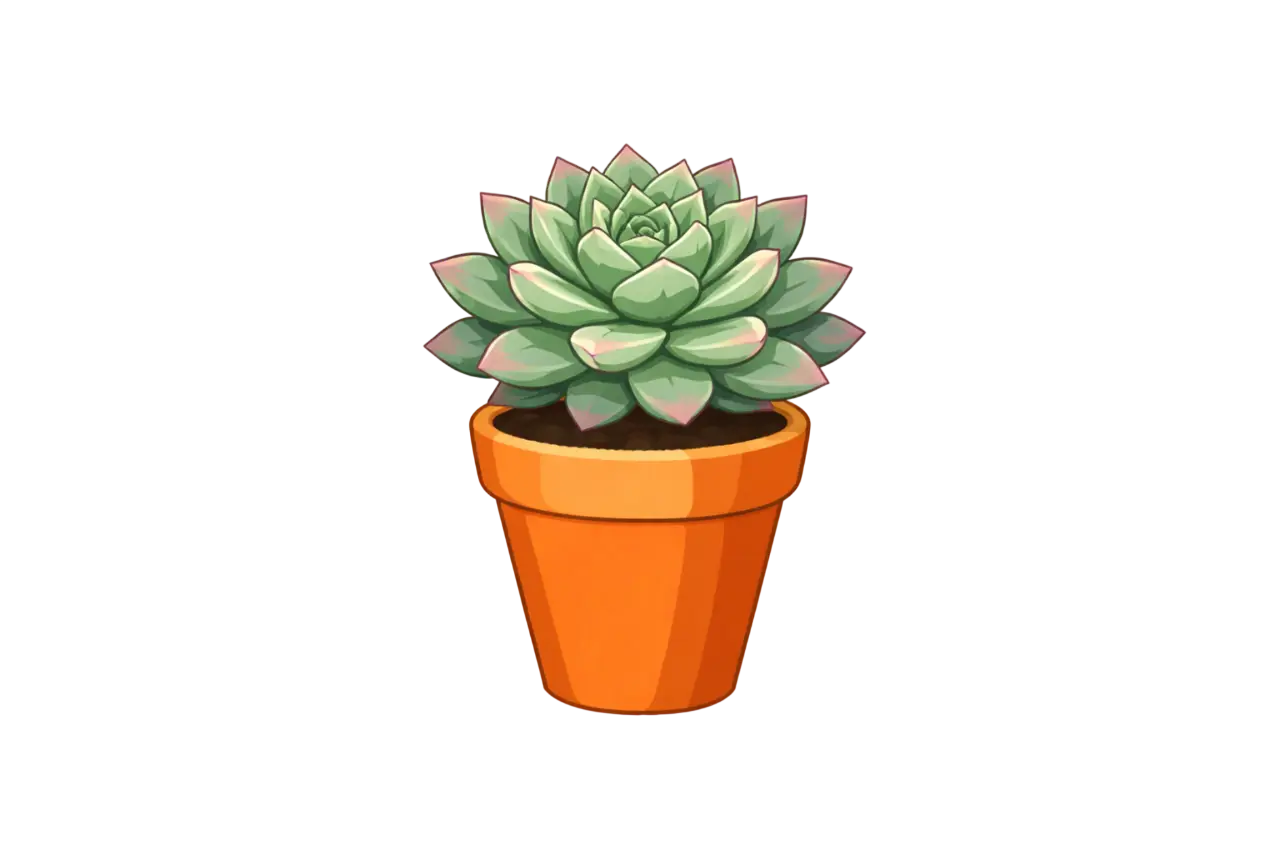
Echeveria is the succulent most people picture when they think of succulents: a tight, symmetrical rosette of thick leaves in shades of green, blue, pink, purple, or near-black depending on the species and how much light it gets. The genus includes over 150 species native to the semi-desert regions of Mexico and Central America, and the number of cultivars and hybrids runs into the thousands.
The colour is not fixed. Echeveria shifts its leaf colour based on light intensity, temperature, and water stress. In strong direct sun, many species develop vivid pink, orange, or purple tones at the leaf edges and tips. In lower light, the same plant reverts to plain green or blue-grey. These stress colours are a sign the plant is getting enough light, not a sign of damage. If your echeveria looks green and flat, it probably wants more sun.
Most echeveria leaves are coated in a powdery white substance called farina, a natural wax the plant produces to protect itself from UV damage and retain moisture. The farina does not grow back once rubbed off, so handle by the base or stem rather than the leaves. A fingerprint on the farina is permanent on that leaf, though new leaves produce their own coating.
Non-toxic to cats, dogs, and horses per ASPCA. One of the safest succulents for households with pets.
Quick Info
- LightBright
- WaterLow
- Size2 to 12 inches tall and wide depending on species
- HumidityLow
- Temp40–90°F (5–32°C)
- FloweringYes
- TypeSucculent
- Dog SafeYes
- Cat SafeYes
- Kid SafeYes
Is Echeveria Toxic?
Pets: Non-toxic to cats, dogs, and horses per ASPCA. Safe for pet households.
Kids: Non-toxic. Safe around children.
Echeveria Care Guide
Light
Full sun. Echeveria needs at least 6 hours of direct sunlight daily. A south-facing window is the minimum viable indoor position. This is the single most important care requirement and the one most often underestimated. Echeveria will survive in bright indirect light for a while, but within weeks the rosette starts stretching upward (etiolating), leaves space apart, and the compact form is permanently lost.
Use the rosette shape as a light meter. Tight, compact rosettes with colourful edges mean light is adequate. A rosette that is opening up, pointing leaves downward, or growing tall on a stretching stem needs more sun immediately. A grow light running 12 to 14 hours daily is the most reliable solution for rooms without a strong south-facing window. One critical warning: if a plant has already etiolated, do not move it into full direct sun suddenly. Reintroduce light gradually over 1 to 2 weeks or the pale, stretched leaves will sunburn.
Watering
Soak and dry. Water thoroughly until it drains from the bottom, then let the soil dry out completely before watering again. During the growing season (spring and summer) this is roughly every 7 to 14 days. In winter, every 3 to 4 weeks. The leaves store water and the plant tolerates drought far better than excess moisture.
Water the soil, never the rosette. Water pooling between the leaves is the fastest route to rot, especially in lower light or poor ventilation. Bottom watering (setting the pot in a dish of water for 15 to 20 minutes, then draining) avoids wetting the rosette entirely. A moisture meter confirms the soil is dry before you add more.
Soil
Fast-draining, gritty mix. A cactus and succulent mix with added perlite or pumice (about 50/50 mix to grit) drains fast enough for echeveria. The mix should feel coarse and drain within seconds. Standard potting soil retains too much moisture. Use a shallow, wide pot with drainage holes. Terracotta wicks excess moisture and is the best pot material for this plant. Avoid deep pots; they hold water at the bottom where echeveria's shallow roots cannot reach it.
Temperature and Ventilation
40 to 90°F (5 to 32°C). Keep above 40°F at all times; frost kills echeveria quickly (the leaves turn to mush overnight). Normal room temperatures are fine. Echeveria does well in dry air and needs no humidity at all.
Good air circulation is more important for echeveria than for most succulents. Poor ventilation combined with any moisture on the leaves or soil surface promotes botrytis (grey mould), which can destroy a rosette in days. Place near a window that opens, or use a small fan on low in stagnant rooms. Avoid steamy kitchens and bathrooms.
Fertilizing
Light feeder. Apply a succulent fertilizer at half strength once a month during spring and summer. Stop in fall and winter. Over-fertilizing pushes soft, rapid growth that is more susceptible to rot and reduces the stress colours that make the plant attractive.
Repotting
Echeveria has a small, shallow root system and rarely needs repotting for root space. Repot every 1 to 2 years to refresh the soil, or when offsets have filled the pot. Use a shallow, wide container slightly larger than the rosette. This is a good time to separate offsets. Handle by the base; touching the leaves removes farina. Wait 3 to 5 days after repotting before watering.
Propagation
Three methods, all effective.
Leaf propagation: Gently twist a healthy leaf from the stem with a clean snap at the base (the whole base must come off intact, or the leaf will not root). Set on top of dry succulent soil, do not bury it. Mist lightly every 2 to 3 days. Roots and a tiny rosette appear in 2 to 4 weeks. This is the slowest method but produces the most plants from a single parent.
Offsets: Mature echeveria produce offsets (baby rosettes) at the base. Once an offset has its own visible roots and is at least 1 inch across, twist it away from the parent or cut the connecting stolon. Let the cut callus for a day, then plant in dry cactus mix. Water after one week.
Beheading (for etiolated plants): If the rosette has stretched on a tall stem, cut the rosette off 1 to 2 inches below the lowest leaf with clean pruning snips. Let the cut end callus for 2 to 3 days, then plant in dry cactus mix. The rosette roots in 2 to 4 weeks. The old stump often produces multiple new rosettes from the remaining nodes, giving you several new plants from one stretched parent.
Common Echeveria Problems
Stretching (etiolation) The most common indoor echeveria problem. The rosette grows tall on an elongating stem, leaves point downward, and the compact form is lost. This means the plant is not getting enough direct light. The stretched growth is permanent. Fix by beheading: cut the rosette off, let it callus, and replant. Move to stronger light before the new growth stretches again. Do not move an etiolated plant into full direct sun suddenly; acclimate over 1 to 2 weeks or the pale leaves will sunburn.
Rot (mushy leaves or stem) Almost always overwatering, water sitting in the rosette, or poor ventilation. The lower leaves go soft and translucent, then the stem follows. If caught early, remove all soft tissue, let the healthy portion callus, and replant in dry mix. If rot has reached the centre of the rosette, it is usually too late. Salvage healthy outer leaves for leaf propagation.
Sunburn Brown or white scorched patches on the leaves, usually after a sudden move from low light to full direct sun. Echeveria that has been in low light needs to be reintroduced to sun gradually over 1 to 2 weeks. Burned patches do not heal but new leaves will grow in healthy once acclimated.
Dried lower leaves Normal. Echeveria reabsorbs water and nutrients from its oldest, lowest leaves as part of its growth cycle. The dried, papery leaves at the base are not a problem. Remove them periodically to improve airflow and prevent pests from hiding underneath.
Botrytis (grey mould) Grey fuzzy growth on leaves or at the base, most common in poor ventilation with high humidity. Improve airflow immediately. Remove affected leaves. In severe cases, treat with a fungicide. Prevention is easier than treatment: keep the rosette dry and ensure air circulates around the plant.
Mealybugs White cottony clusters between the leaves deep in the rosette and on the stem. Hard to spot until the infestation is advanced because they hide in the tight leaf spaces. Treat with rubbing alcohol on a cotton swab or neem oil sprayed into the rosette. Check regularly by spreading the outer leaves gently.
FAQs
Not enough direct light. Echeveria needs at least 6 hours of direct sun daily. Without it, the stem elongates and the leaves space apart (etiolation). The stretched growth is permanent. Cut the rosette off (beheading), let it callus for 2 to 3 days, and replant. Move to stronger light before the new growth stretches again.
Every 7 to 14 days in spring and summer, every 3 to 4 weeks in winter. Let the soil dry out completely between waterings. Water the soil directly, never the rosette. Bottom watering (sitting the pot in water for 15 to 20 minutes) avoids wetting the leaves entirely.
Sun stress, and it is a good sign. Echeveria develops pink, orange, or purple tones at the leaf edges and tips in response to strong direct light and temperature fluctuations. These stress colours mean the plant is getting enough light. A green echeveria with no edge colour is not getting enough.
No. Echeveria is non-toxic to cats, dogs, and horses per ASPCA. It is one of the safest succulents for households with pets. Eating large amounts of any plant may cause mild stomach upset, but no toxic compounds are present.
Yes. Twist a healthy leaf cleanly from the stem (the whole base must come off intact). Set it on dry succulent soil, mist every 2 to 3 days, and roots plus a tiny rosette appear within 2 to 4 weeks. No rooting hormone is needed. Not every leaf succeeds, so start with several for the best odds.
No. The white coating is farina, a natural wax the plant produces for UV protection and moisture retention. It does not grow back on that leaf once removed. Handle by the base or stem, not the leaves. New leaves produce their own farina.
Behead it. Cut the rosette off the stretched stem with clean shears, let the cut end callus for 2 to 3 days, then plant in dry cactus mix. The rosette re-roots in 2 to 4 weeks. The old stump often sprouts multiple new rosettes. Move the new plant to stronger light to prevent the same problem.