String of Buttons Care Guide
Crassula perforata
 Save
Save
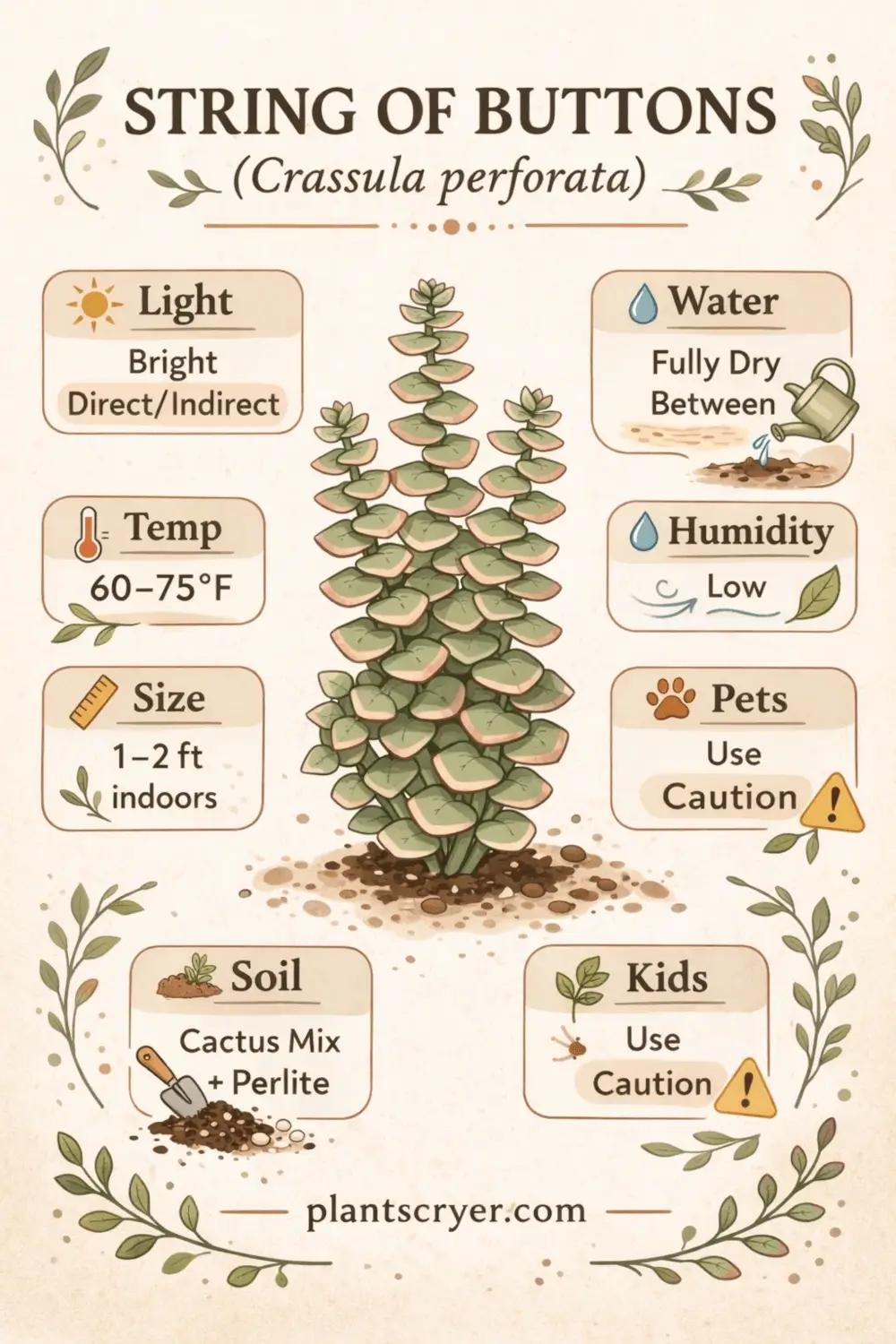
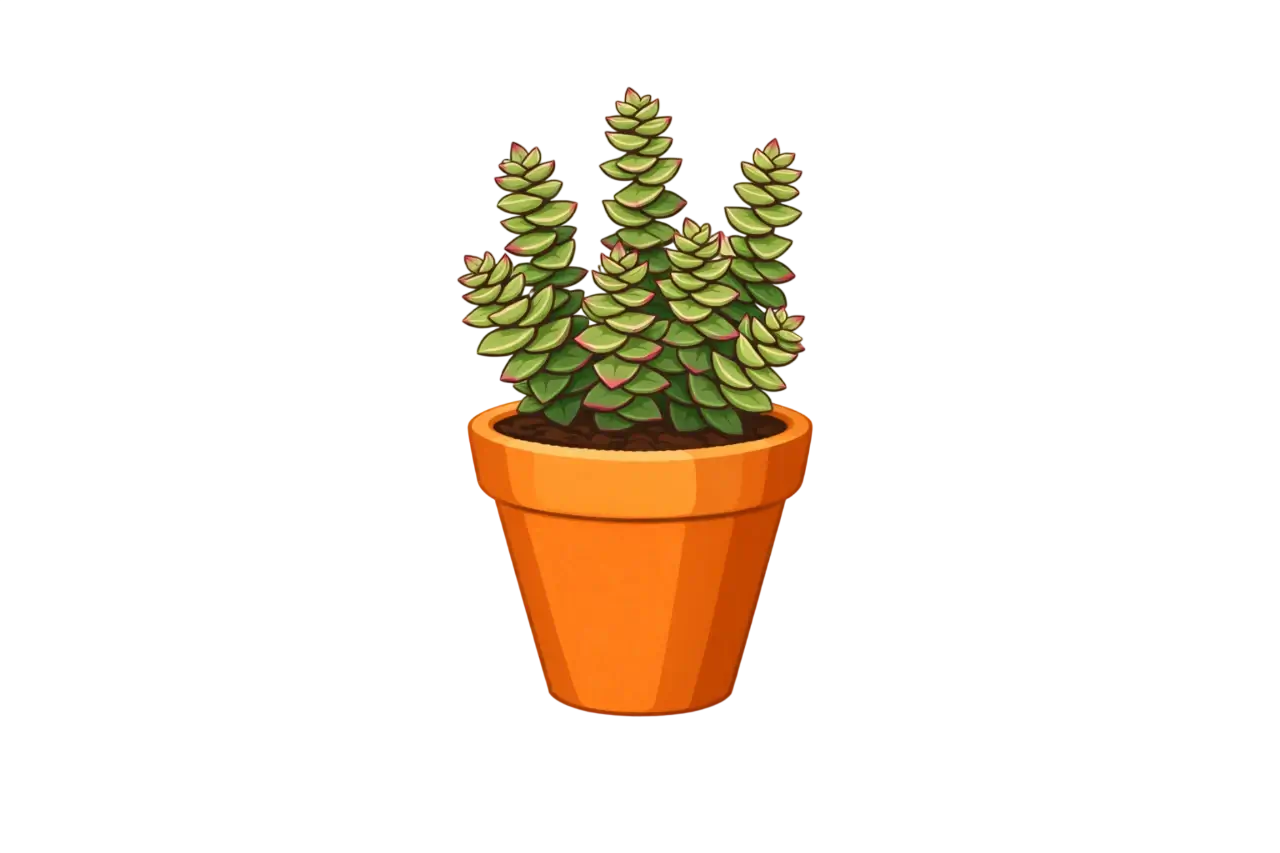
Crassula perforata, commonly called String of Buttons, is a unique succulent native to South Africa. It grows in spiraling, stacked formations, with pairs of gray-green triangular leaves edged in pink or red. The stems can grow upright or begin to trail as they mature, making this plant suitable for pots, hanging containers, or succulent arrangements.
It prefers bright, direct or indirect light, minimal water, and fast-draining soil. This plant is beginner-friendly and forgiving: just don’t overwater. With enough light and time, it may bloom with small, star-like pink flowers.
Its bold structure and growth habit make it a great option for succulent lovers looking for something visually different.
Quick Info
- LightBright
- WaterLow
- Size12–24 inches tall or trailing
- HumidityLow
- Temp60–75°F (15–24°C)
- FloweringYes
- TypeSucculent, Vine
- Dog SafeNo
- Cat SafeNo
- Kid SafeNo
Toxicity Info
Pets: Toxicity for Crassula perforata specifically is not definitively settled. The ASPCA does not list it individually, though they do flag the closely related Jade Plant (Crassula ovata) and other Crassula species as toxic to cats, dogs, and horses. The broader genus is associated with bufadienolide compounds that cause gastrointestinal distress in pets. The prudent approach: treat it as potentially harmful and keep it out of reach of pets and children.
Varieties & Lookalikes
Crassula perforata variegata: variegated form with streaks of yellow and cream alongside green. More striking coloration, slightly less vigorous.
Crassula perforata ssp. kougaensis: the less common subspecies; denser, more colorful foliage than the standard form.
Watch out for lookalikes: Crassula conjuncta is routinely mislabeled and sold as C. perforata, including under names like 'Giant Form' and 'Ivory Towers'. Garden Betty notes that most plants sold under these variety names are actually conjuncta. The practical difference is minimal (care is identical) but if botanical accuracy matters, look for perforata's more distinctly triangular leaves vs. conjuncta's slightly rounder, broader ones. Crassula rupestris is another convincing lookalike with near-identical care needs.
Care Instructions
Light
String of Buttons craves light more than almost any other care requirement. In its native South Africa it grows on open, rocky slopes with little overhead tree cover: adapted to high light intensity with minimal shade.
Place it in front of your sunniest window. South-facing in the Northern Hemisphere is ideal. It can handle some direct sun through glass, especially morning light, though intense afternoon sun in peak summer can scorch leaves. East-facing windows work as a second choice. If your home gets very dark in winter, a grow light can supplement what natural light lacks.
The clearest sign of insufficient light is etiolation: stems begin stretching noticeably between leaves, reaching toward the light source, giving the plant a spindly, elongated look. This is purely a light problem, not a watering issue. Move it to a brighter spot and the next growth flush will be compact; already-stretched stems won't shorten.
One visual reward of giving this plant plenty of sun: the leaf edges develop a beautiful rosy pink to reddish tinge. More light equals more intense color. In lower light the leaves stay uniformly grey-green.
Watering
Use the soak and dry method: water thoroughly until it drains freely from the bottom, then wait until the soil is completely dry before watering again. This mimics the plant's natural habitat: periodic rain followed by long dry periods.
Frequency varies by conditions. During active growth in spring and fall, every 1–2 weeks indoors is typical. In peak summer heat or winter when growth slows, stretch this to every 2–4 weeks or longer. Outdoors in summer heat it may need water every few days.
Two warning signs:
- Shriveled, slightly wrinkled leaves = underwatering. Water promptly. Leaves will plump back within a day or two.
- Yellowing, soft, mushy leaves that detach easily = overwatering. Check roots immediately for rot.
Always use a pot with drainage holes. Avoid getting water on the leaves, which can cause rot at the leaf base.
Soil & Potting
Drainage is everything. Standard potting soil retains too much moisture and will rot this plant. Two reliable options:
- Ready-made: Cactus and succulent mix used straight from the bag
- DIY mix: 50% standard potting soil + 50% perlite: cost-effective and reliable
Terracotta pots are ideal: porous material wicks moisture away from soil faster than plastic or glazed ceramics. Whatever you use, drainage holes are non-negotiable.
Repot every 2–3 years in spring, moving up only one pot size at a time. This plant is comfortable slightly rootbound and doesn't need much space.
Temperature & Humidity
String of Buttons prefers 60–75°F (15–24°C) and handles normal household humidity without any help. It does not tolerate sustained frost. Bring it indoors when temperatures reliably drop below 40°F (4°C). Interestingly, it's more cold-tolerant than many succulents: if the soil is kept dry, brief light frost won't cause permanent damage.
Avoid cold drafts from windows and air conditioning vents, which can cause leaf drop and stress.
Growth Pattern & Dormancy
String of Buttons grows most actively in spring and fall. Growth slows noticeably in peak summer heat and again in winter cold. It essentially has two rest periods rather than one clear dormancy season. Indoors in moderate temperatures, it may continue slow growth through summer; outdoors in hot climates, summer dormancy is more pronounced.
During slow periods, reduce watering significantly and hold off on fertilizing. Resume normal care when you see new growth pushing.
Stems start upright and grow compact columns. As they mature, stems become pendant and begin trailing attractively over pot edges: making this an excellent plant for hanging baskets and high shelves.
Fertilizing
This plant doesn't need much feeding. Apply a balanced liquid fertilizer diluted to half strength once per month during active spring and fall growth. Skip summer if growth has stalled, and skip winter entirely. Over-fertilizing produces weak, stretched growth and can burn roots. Less is more here.
Flowering
Given enough light and the right temperature conditions, String of Buttons blooms in spring: small, star-shaped clusters in white, cream, or pale yellow at the tips of stems. The flowers are charming rather than showstopping. Note: once flowering finishes, the dried flower stems become unattractive, and most growers trim them off at that point to keep the plant tidy.
To encourage flowering: maximize light, allow a temperature drop of 10–15°F between day and nighttime temperatures, and ensure the plant experiences a cooler (but above-freezing) winter period. This temperature differential triggers the natural bloom cycle.
Propagation
Stem Cuttings (Recommended)
Stem cuttings are the fastest and most reliable method.
- Cut a healthy stem 3–4 inches long using clean pruning snips.
- Remove the bottom leaves to expose bare stem.
- Allow the cut end to callous for 2–3 days in a dry, shaded spot. Essential to prevent rot.
- Place the calloused end into dry cactus mix. Wait 1–2 weeks before first watering.
- Roots develop within 2–4 weeks. New leaf growth signals successful rooting.
The mother plant will branch from where you cut, producing multiple new growing tips.
Leaf Cuttings
Leaf cuttings work but are slower and less reliable than stem cuttings. Gently twist a leaf free from the stem. It needs to come away cleanly with no torn base for best results. Allow it to callous for a day or two, then lay flat on lightly moist cactus mix. Mist occasionally. Expect several weeks before small rosettes appear.
Offsets
The plant naturally produces small offshoots at its base over time. Separate these gently once they're a few inches tall, allow the base to callous briefly, and pot individually.
Common Problems
Leggy, stretched stems. Not enough light. Move to a brighter spot; new growth will be compact.
Yellowing, mushy leaves. Overwatering or root rot. Let soil dry completely, remove affected leaves, and check roots. Brown, mushy roots need to be trimmed before repotting in fresh dry mix.
Shriveled, wrinkled leaves. Underwatering. Water thoroughly and the plant should recover within 24–48 hours.
Leaf drop: usually caused by a sudden temperature change, cold draft, or overwatering. Identify which and adjust.
Pink or red leaf edges. Not a problem at all. This is normal stress coloring from sun exposure and is desirable. Only a concern if accompanied by dry crispy patches, which indicate actual sunburn.
Mealybugs. The primary pest. Look for white cottony clusters in leaf joints. Treat with isopropyl alcohol on a cotton swab, or a neem oil spray.
Leggy growth in winter. Normal if natural light has dropped. A grow light supplement helps maintain compact growth through low-light months.
FAQs
Pink edges are a normal stress response to bright light. A sign the plant is getting good sun. Only a concern if accompanied by dry, crispy patches, which indicate sunburn rather than healthy stress coloring.
Insufficient light. Move it to your sunniest window. New growth will be compact; already-stretched stems won't shorten.
Growth slows during peak summer heat and again in winter cold. Active growth is primarily in spring and fall. Reduce watering and stop fertilizing during both slow periods.
It will survive but becomes progressively leggy and loses the pink leaf coloration. This plant needs bright light to stay compact and look its best.
Moderately fast during spring and fall, slow or stalled in summer heat and winter. Stems mature into pendant trailers over time, which is what makes this plant so attractive in hanging baskets.
Its toxicity is not definitively established for this specific species. Treat it as potentially harmful and keep out of reach of pets as a precaution.