
How Often to Water a Spider Plant

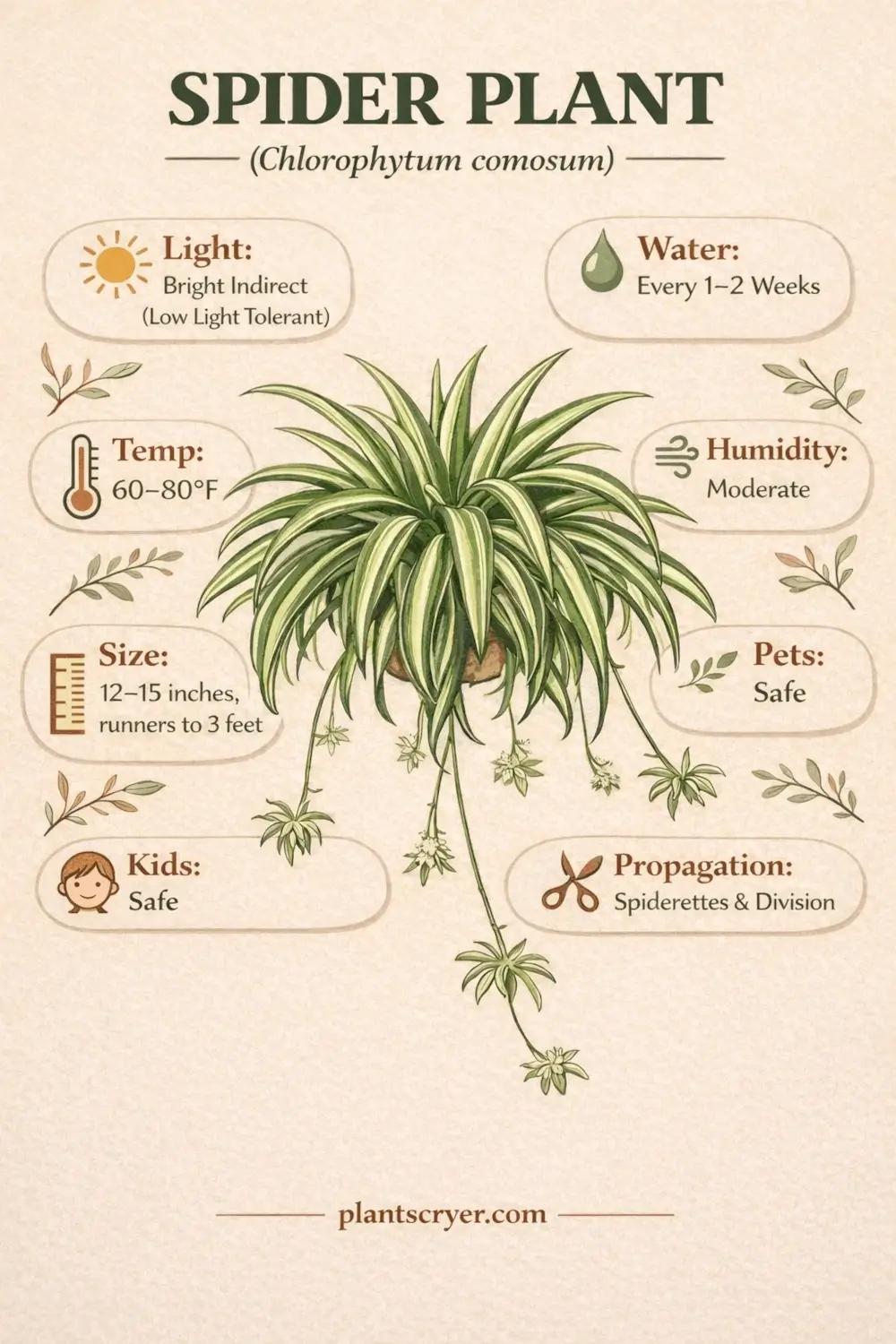
Spider plants need water every 7 to 10 days during the growing season and every 10 to 14 days in winter. They’re more forgiving than most tropicals because their thick tuberous roots store water between sessions, but they still want consistent moisture and will show you when they’re thirsty before real stress sets in.
One thing worth knowing upfront: if your spider plant has brown tips, the cause is almost never watering frequency. It’s usually fluoride or chlorine in tap water. More on that below.
Find Your Watering Schedule
Light Level
Season
Pot Material
Pot Size
Humidity
Use your light level, pot type, and season to get a personalised starting interval. Spider plants are adaptable enough that your specific conditions matter more than any fixed schedule.
How to Tell When Your Spider Plant Needs Water
Two signals are more reliable than any calendar.
Check the soil first. Push your finger into the soil up to the second knuckle — about 1 to 2 inches deep. If it comes out dry or just barely damp, it’s time to water. If it still feels moist, leave it for another day or two and check again. A soil moisture meter takes the guesswork out entirely, especially useful if you have multiple plants to track.
Watch the leaves. Spider plant leaves lose their upright arch slightly before visible wilting — they go from perky and outward-arching to slightly limp and drooping inward. This is the plant’s early thirst signal. If the leaves are already sagging noticeably, you’re a day or two past the ideal watering moment. The plant will recover fine but try not to make it a habit.
The reason spider plants give you this early warning is their tuberous root system. Spider plants are native to coastal Africa where many populations experience a winter dry season — those thick, fleshy roots evolved specifically to store water through dry periods. That storage capacity is why spider plants tolerate missed sessions better than most tropicals. It’s also why you shouldn’t wait for drooping as your primary trigger — by the time the plant is visibly wilting, the roots have been running on reserves for a while.
What Affects How Often You Water
Season
Spider plants grow actively from spring through summer and slow significantly in autumn and winter. In the growing season the soil dries faster and the plant uses more water — most plants land in the 7 to 10 day range. In winter, 10 to 14 days is more typical and some plants in cool, dim conditions stretch to three weeks without any stress.
Light level
More light means faster soil drying and more frequent watering. A spider plant sitting close to a bright window needs water more often than one in a darker corner. Spider plants in genuinely low light grow more slowly and are more susceptible to root rot from overwatering — a lower watering frequency in dim conditions isn’t just about drying time, it’s about matching water intake to growth rate.
Pot type and size
Terracotta pots dry out faster than plastic or ceramic because the porous clay wicks moisture through the sides. If yours is in terracotta, check the soil more frequently in summer. Larger pots hold more soil and dry more slowly — a spider plant in a 10 inch pot needs water less often than the same plant in a 4 inch pot.
Humidity
Spider plants are native to coastal South Africa and appreciate moderate to high humidity. In humid rooms the soil stays moist longer, which naturally stretches the watering interval. Higher humidity also reduces brown tip formation, which is partly a dry air problem on top of a water quality issue.
How to Water a Spider Plant Correctly
Water thoroughly each time until it drains freely from the drainage holes, then empty the saucer. Never let the pot sit in standing water — spider plants are susceptible to root rot if roots stay wet for more than a day or two.
The most important tip specific to spider plants: pay attention to your water source. Spider plants are sensitive to fluoride and chlorine in municipal tap water and both accumulate in leaf tissue over time, causing brown tips. The distinction matters though: letting tap water sit overnight in an open container disperses chlorine but does not remove fluoride. If brown tips are your specific problem, only filtered or distilled water actually solves it. A filtered water pitcher is the simplest long-term fix and makes a noticeable difference within a few weeks.
Spider Plant Watering Schedule by Season
Spring and summer
Check the soil every 5 to 7 days. Most plants need water every 7 to 10 days during active growth. Keep the soil consistently moist but not wet — spider plants in the growing season respond well to reliable moisture and will produce more spiderettes when conditions are consistent.
Fall
Growth slows in September and October. Start stretching your intervals gradually and let the soil guide you rather than the calendar.
Winter
Every 10 to 14 days is a good baseline. In cool, dim conditions some plants can go up to three weeks. Check the soil and leaf arch before watering — if the leaves still look upright and the soil has any moisture, leave it alone.
Watering Spider Plant Babies
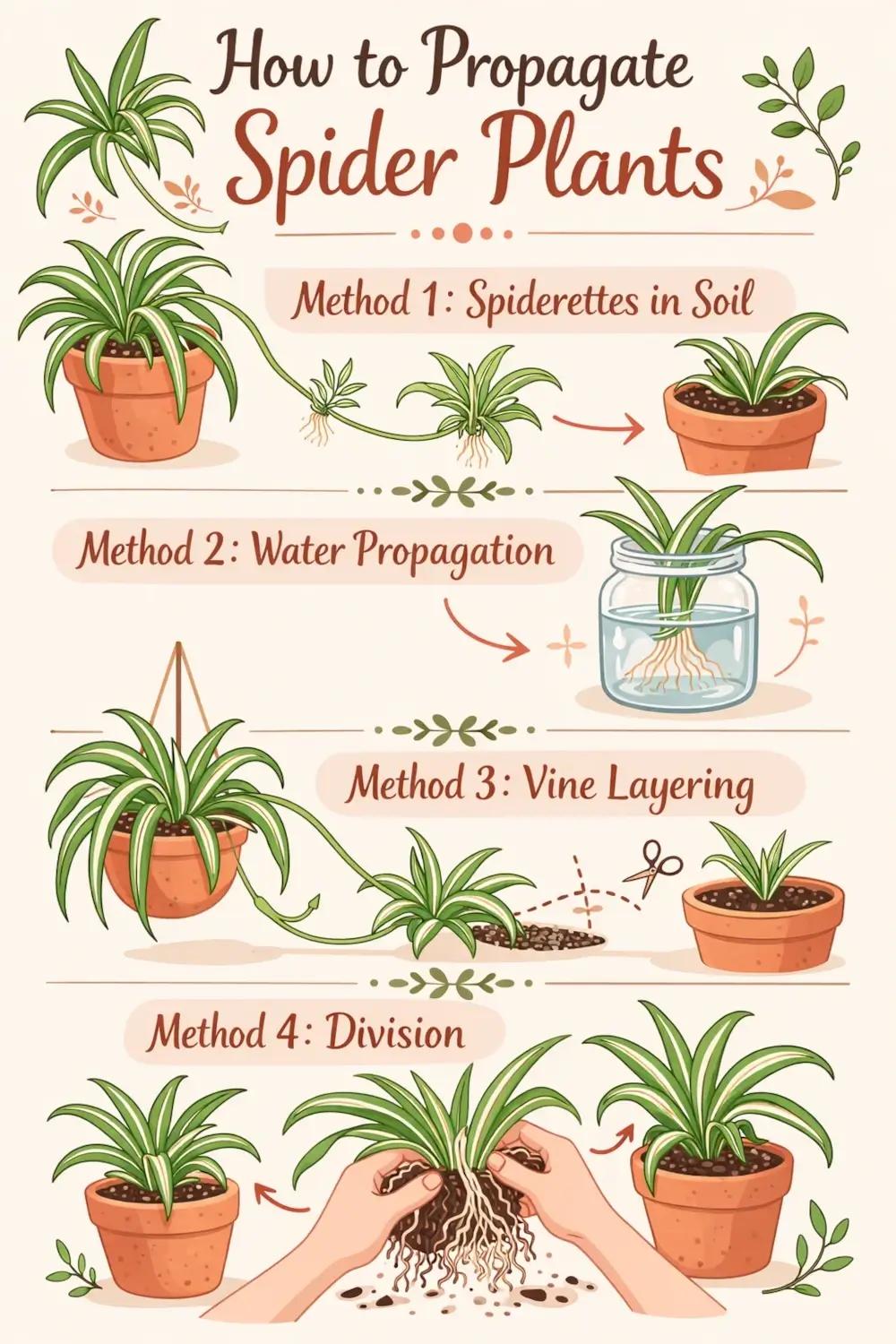
Spiderettes still attached to the mother plant on their runners don’t need separate watering — they draw moisture through the runner from the mother plant.
Once you’ve potted up a baby spider plant, it needs more consistent moisture than a mature plant. The small root system of a new cutting dries out faster and has none of the water storage capacity of established tuberous roots. Water when the top inch of soil feels dry rather than the top 2 inches, and don’t let it dry out completely in the first few weeks while roots are establishing. See the full spider plant propagation guide for potting up tips.
Signs You’re Getting It Wrong
One important clarification on brown tips: crispy brown tips are almost always a water quality issue — fluoride and chlorine in tap water — not a watering frequency problem. If your intervals and soil moisture are correct but tips keep browning, switch to filtered water before changing anything else. For overwatering recovery steps see our overwatered plant rescue guide. For root rot diagnosis see the root rot vs soil mold guide.
More spider plant guides
Frequently Asked Questions
Every 7 to 10 days in summer is typical for most indoor conditions. Check the top 1 to 2 inches of soil before watering. In very bright, warm spots the soil may dry faster and need water closer to weekly.
Every 10 to 14 days in winter as a starting point. Growth slows significantly and the plant uses much less water. Always check the soil first and watch for the early leaf droop signal rather than sticking to a fixed schedule.
Brown crispy tips are almost always caused by fluoride or chlorine in tap water, not watering frequency. Letting tap water sit overnight helps with chlorine but not fluoride — only filtered or distilled water removes fluoride. Switch to filtered water and the new growth should come in without brown tips within a few weeks.
You can, but it often causes brown tips over time due to fluoride sensitivity. Filtered water or distilled water are better options. If your tap water is heavily treated and brown tips are a persistent problem, a filtered water pitcher is the simplest fix.
Newly potted spiderettes need more frequent watering than mature plants — check the top inch of soil rather than 2 inches and don't let them dry out completely while roots establish. Once the plant develops its own tuberous roots, settle into the same routine as a mature plant.
Drooping or limp leaves usually mean the plant is thirsty. Check the soil — if it's dry, water thoroughly and the plant should perk up within a few hours. If the soil is wet and leaves are drooping or yellowing, overwatering or root rot is more likely. Let the soil dry completely before watering again and check the drainage holes are clear.