How to Care for a Purple Shamrock
Oxalis triangularis
More purple shamrocks are thrown out alive than die. The plant grows from small tubers and goes dormant as a matter of routine, and when it does the leaves collapse, brown off and vanish, which looks exactly like a plant that has been killed. NC State records that it may go dormant for a while in autumn, or if conditions get too hot or too dry, and that it will go dormant in winter and re-emerge in spring.
The pot of bare compost on your windowsill in January is not a failure. It is the plant doing what it does.
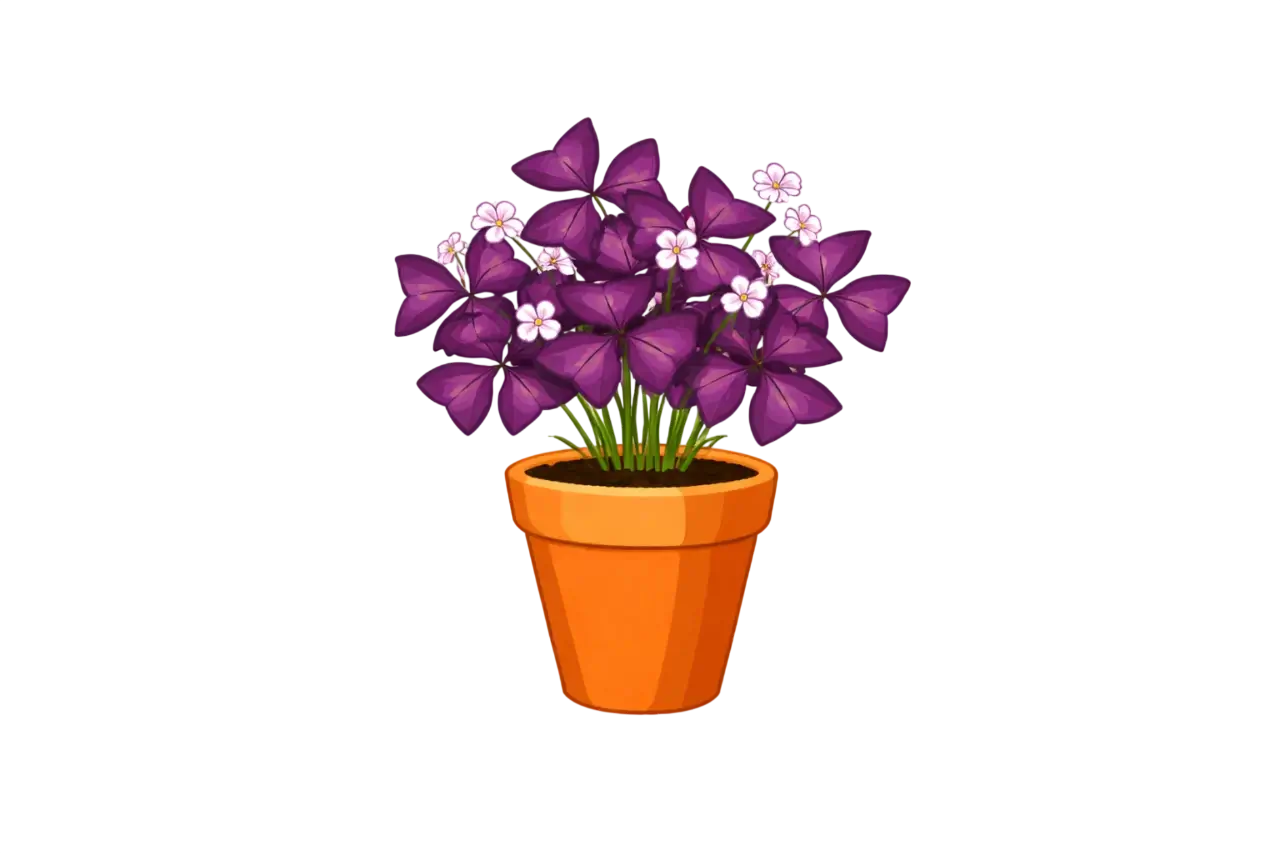
Oxalis triangularis is a South American wood sorrel, in the family Oxalidaceae. The leaves are trifoliolate, which is to say three triangular leaflets on a stalk, running from deep maroon through to green depending on the selection, and NC State notes they close at night. So do the flowers, which are five-petalled, white to pale pink, and appear from early summer through autumn. The folding is nyctinasty, the same circadian mechanism that moves a prayer plant, and on this plant it happens fast enough to watch over an evening.
Size and vigour are modest. NC State gives 6 inches to a foot and a half tall with a spread of 1 to 2 feet, a medium growth rate, and hardiness in USDA zones 8a to 11b, unusually cold-tolerant for something sold as a houseplant. It also reports no serious insect or disease problems, so the things that go wrong here are almost all about water, light and misreading dormancy.
One correction worth stating plainly, because this page got it wrong before. The purple shamrock was listed here as safe for pets and it is not. The ASPCA lists Shamrock Plant, meaning Oxalis species, as toxic to dogs, cats and horses, with soluble calcium oxalates as the toxic principle and salivation, tremors and rarely kidney failure as the clinical signs. NC State rates the severity low and notes that serious effects usually need large quantities eaten, so this is a plant to keep out of reach and not one to panic about.
Quick Info
- LightBright
- WaterMedium
- Size6-18 inches tall, 1-2 feet wide
- HumidityModerate
- Temp60-75°F (16-24°C); dies back below that
- FloweringYes
- TypeBulb
- Dog SafeNo
- Cat SafeNo
- Kid SafeNo
Is Purple Shamrock Toxic to Pets?
Pets: This page previously rated the plant pet safe, which was wrong. The ASPCA lists Shamrock Plant, Oxalis spp., as toxic to dogs, cats and horses on soluble calcium oxalates, with salivation, tremors and kidney failure (rare in dogs and cats) as the clinical signs. NC State rates the severity low and notes all parts have toxic potential, with serious effects usually limited to eating large quantities.
Kids: Soluble calcium oxalates throughout. NC State describes the risk of serious effects as usually limited to large quantities, so a nibble is unlikely to do harm, but it is not a plant to leave within reach of a toddler.
Purple Shamrock Care Guide
Light, and Brighter Than You Think
Brighter than most people give it. NC State lists full sun at six or more hours of direct light, or partial shade at two to six, a sunnier brief than the bright-indirect advice this plant usually attracts. A south or west window suits it, and the deep maroon colouring holds better there than in a dimmer spot.
In too little light the leaf stalks stretch, the plant flops open instead of holding a mound, and the colour washes toward green. None of that reverses on existing growth, though this plant renews its foliage often enough that a move to better light shows within a few weeks. A grow light is a reasonable option through a dark winter, if the plant has not gone dormant anyway.
Watering, and Stop When Dormant
NC State describes the moisture requirement as moist or occasionally dry, a forgiving range. Water when the top inch has dried and let the excess drain away. The tubers underneath are storage organs, so the plant has a buffer against a missed watering that most leafy houseplants do not. A moisture meter helps mostly in working out when dormancy has started.
The one rule that really matters: stop watering a dormant plant. Tubers sitting in damp compost with no leaves to draw the water up will rot, and that is how a plant that was merely resting ends up actually dead. Let the compost go dry and leave it until new growth appears. If you have been watering through a dormancy, reversing an overwatered pot is the place to look.
Mix, and Planting the Tubers Shallow
Loam or sand with good drainage, per NC State, which also records tolerance of acid, alkaline and neutral pH. An ordinary houseplant compost with some perlite stirred in is right, and the extra drainage earns its place during dormancy when the compost needs to dry out properly.
Plant the tubers shallowly, an inch or so deep, and do not use a deep pot. These are small storage organs with a modest root system, and a large volume of compost below them just stays wet. A wide shallow pot suits the spreading habit better and dries out faster, both of which help on a plant that spends part of the year asleep.
Feeding While in Growth
A balanced liquid feed monthly while the plant is in active growth, and nothing at all while it is dormant. Feeding a dormant tuber achieves nothing except leaving salts in the compost for the next growing season.
Label strength is the ceiling here, not a target. Overfed plants run to long, soft leaf stalks that cannot hold themselves up. A shamrock flopping open from the middle is more often a well-fed one than a sick one. If the plant is filling its pot and flowering, it is being fed enough.
Temperature, Heat and Dormancy
NC State stretches the hardiness to USDA zones 8a to 11b, which means the tubers survive genuine winter cold in the ground. Indoors, ordinary room temperature through the growing season is fine. No indoor optimum has been published for Oxalis triangularis, and on a plant this cold-hardy the question matters far less than the dormancy trigger does.
Heat is the more interesting trigger. NC State notes the plant may go dormant if it gets too hot or too dry, so some plants disappear in midsummer instead of midwinter. A purple shamrock that collapses during a heatwave has not been underwatered into decline; it has decided the season is over. Keep it cool and out of hot afternoon glass if you would rather it kept going.
Treat this as a care task and not a problem, because it is the part that decides whether you keep the plant. When the leaves start browning off and the plant stops producing new ones, stop watering and stop feeding. Cut the spent foliage away at the base once it has died back, and move the pot somewhere cool and out of direct sun.
Then leave it alone. NC State describes dormancy as lasting a while in autumn or being triggered by heat or drought, with a winter dormancy that re-emerges in spring, so the length varies with what set it off. A few weeks to a couple of months is normal. Start watering again sparingly only when you see new shoots, and build back up as the leaves fill out.
Humidity, and Keeping Water Off the Leaves
There is no published requirement and no practical one. No authoritative source sets a humidity requirement for this species, and it is not a plant that shows the usual dry-air symptoms. Ordinary indoor air suits it.
Avoid watering over the foliage even so. The leaves are thin and the stalks are soft, and water sitting in the crown where dozens of stalks emerge from a shallow tuber is an invitation to rot at the one point the plant cannot spare. Water the compost, not the plant.
Grooming, and Cutting Back a Leggy Plant
Cut spent flowers and dying leaves right down at soil level with clean snips. On a plant made of dozens of thin stalks from a shallow tuber, dead material left lying in the crown holds moisture against the growing points, so this is tidying with a purpose.
A plant that has gone leggy mid-season can be cut back to the compost entirely, and it will regrow from the tubers within a few weeks given light and water. That is a harder reset than most houseplants tolerate, and it is one of the useful things about growing a plant that keeps its reserves underground.
How to Propagate a Purple Shamrock
Division of the tubers is the method NC State lists first, and it is as simple as houseplant propagation gets. Tip the plant out, either during dormancy or when you repot in spring, and separate the small tubers you find in the compost. Each one is a complete plant in waiting.
Pot them an inch or so deep in free-draining compost, several to a pot for a full-looking result, and water sparingly until shoots appear. A single tuber will produce a plant, but a dozen in a wide shallow pot gives you the mounded shape people buy this species for. There is no need for rooting hormone or any special treatment.
Dormancy is the natural moment for this, the opposite of most plants. With the foliage gone there is nothing to damage and nothing drawing on the tubers, so lifting and dividing causes no setback at all. You can simply do it while you are waiting for the plant to wake up. NC State also lists seed as a propagation route, though there is little reason to use it when the tubers multiply on their own. Division keeps a particular leaf colour true, which seed would not, and it gets you a plant in weeks instead of a season.
Common Purple Shamrock Problems
Leaves collapsing, browning and disappearing is dormancy and not death. NC State records it in autumn, in winter, and in response to heat or drought. Stop watering, let the compost dry, remove the dead foliage, and wait. The commonest way to lose this plant is to keep watering a dormant tuber until it rots.
Yellowing leaves while the plant is in active growth points at the compost staying too wet. The tubers rot readily, so check drainage before anything else. Yellowing on other plants covers the causes that mean something different.
Long floppy leaf stalks that will not hold the plant up is a light problem. NC State puts this species in full sun or partial shade, brighter than most people assume, so move it to a sunnier window. New growth comes in shorter and stiffer.
Colour fading from deep maroon toward green is the same light shortage showing in a different way. The darkest colouring develops in the brightest positions, and leaves that have already faded will not darken again.
Leaves folding shut in the evening is normal and nothing to do with stress. NC State notes both the leaves and the flowers close at night. The movement is nyctinasty, it runs on a circadian rhythm, and a plant that does it is behaving correctly.
A plant that vanished in midsummer instead of winter was most likely too hot or too dry. NC State lists both as dormancy triggers. Treat it the same way as a winter dormancy, and if you want to avoid it, keep the plant cooler and out of hot afternoon sun.
NC State reports no serious insect or disease problems for this species, unusual enough to be worth saying. Aphids and spider mites can still turn up on the soft stalks in dry indoor air, so identifying houseplant pests is worth a look if something is feeding on it.
Nothing coming back after months of dormancy, with no new shoots in spring, means the tubers have probably rotted. Tip the pot out and look: firm tubers are still viable and should be repotted into fresh, barely damp compost, while soft or hollow ones are gone.
FAQs
Yes, mildly, and this page previously said otherwise, which was wrong. The ASPCA lists Shamrock Plant, meaning Oxalis species, as toxic to dogs, cats and horses on soluble calcium oxalates, with salivation, tremors and rarely kidney failure as clinical signs. NC State rates the severity low and notes serious effects usually require eating large quantities. So it is a plant to keep out of reach and not one to remove from the house.
Very probably not. This plant goes dormant as routine, and NC State records it happening in autumn, through winter, or in response to heat or drought. The leaves brown off and disappear, leaving a pot of apparently empty compost. Stop watering, cut the dead foliage away, keep the pot cool and dry, and wait for new shoots. Watering a dormant tuber is the one thing that will actually kill it.
A few weeks to a couple of months, depending on what triggered it. NC State describes a dormancy that may last a while in autumn, a winter dormancy that re-emerges in spring, and dormancy brought on by heat or dryness at other times. Resume watering sparingly only when you can see new growth, then build up as the leaves fill in.
It is nyctinasty, a circadian movement, and NC State notes that both the leaves and the flowers close at night. The plant is not reacting to being touched or to stress, it is following an internal clock, and on this species the folding is quick enough to watch happen over an evening. A plant that does it is healthy.
More than it usually gets. NC State lists full sun at six or more hours of direct light, or partial shade at two to six hours, so a south or west window is appropriate and not excessive. In dimmer positions the leaf stalks stretch, the plant flops open instead of forming a mound, and the maroon colouring drifts toward green.
Not enough light, in nearly every case. The stalks elongate reaching for a window and then cannot support the leaves, so the plant spreads out flat instead of holding a tidy mound. Move it somewhere brighter and the new growth comes in shorter and stiffer. You can also cut the whole plant back to the compost, and it will regrow from the tubers.
Separate the tubers. Tip the pot out, either during dormancy or when repotting in spring, and divide the small tubers you find in the compost, then replant them an inch deep in free-draining mix. Several to a pot gives the mounded look. NC State lists division first and seed second, but seed is slower and would not keep a particular leaf colour true.
In a mild climate, yes. NC State gives the hardiness as USDA zones 8a to 11b, more cold-tolerant than most plants sold as houseplants, because the tubers survive underground while the foliage dies back. In colder zones you can grow it outside through summer and lift the tubers before frost, treating it the way you would a tender bulb.