How to Care for Panda Plant
Kalanchoe tomentosa
 Save
Save
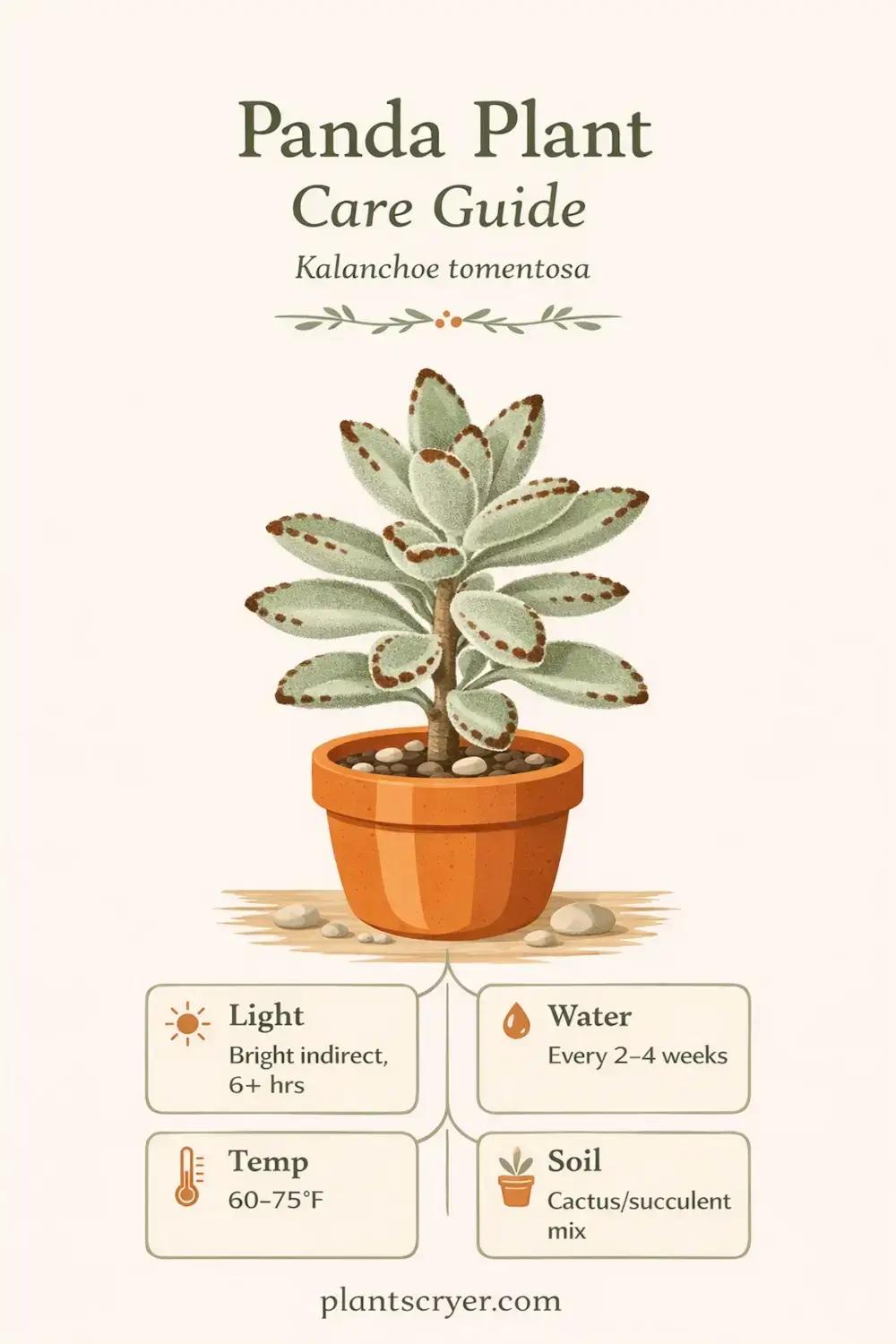
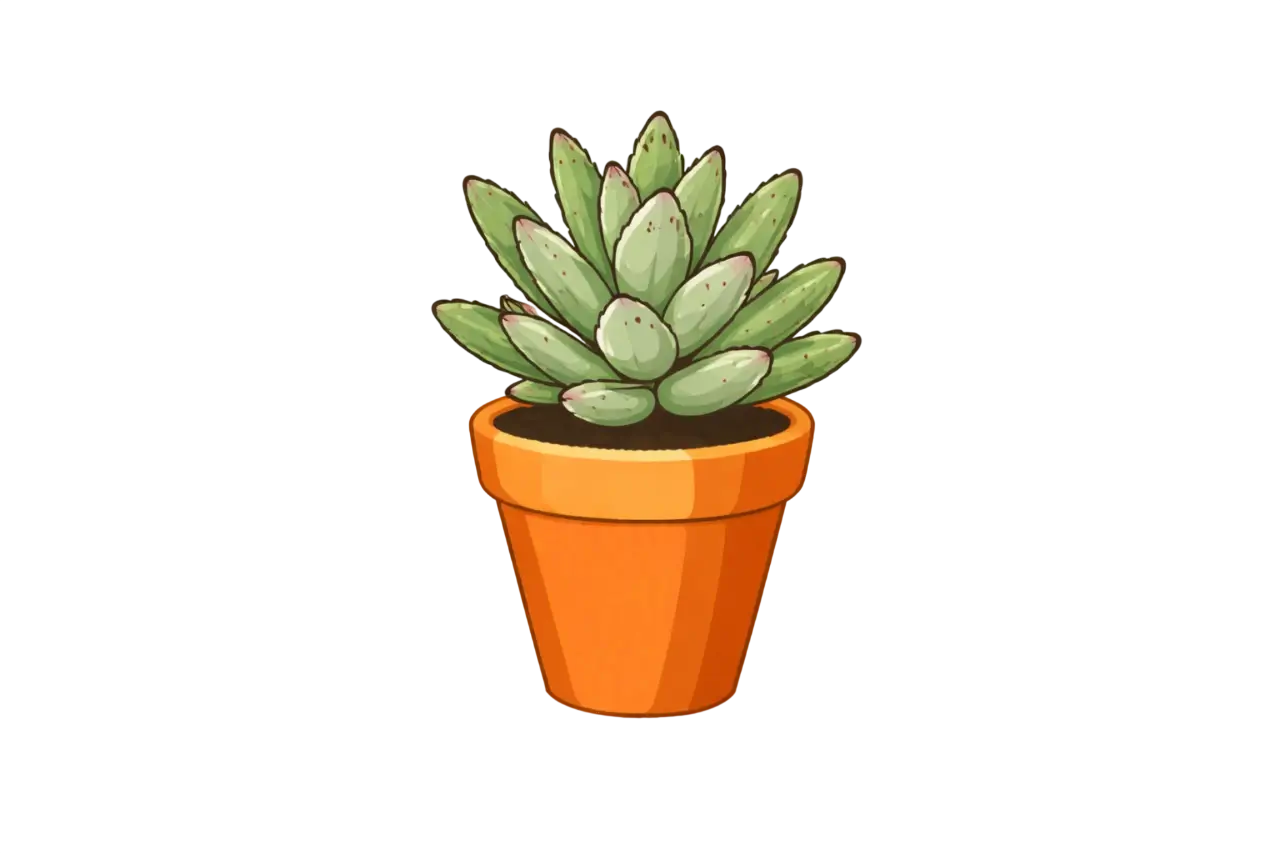
The panda plant is a slow-growing succulent from Madagascar with thick gray-green leaves covered in dense silver hairs and edged in chocolate brown. The fuzz isn't decorative. The hairs are called trichomes, and in the wild they help the plant survive intense sun and dry, rocky conditions. Indoors, that adaptation works in your favor: this plant handles neglect, dry air, and irregular watering without complaint.
It grows to about 18 inches indoors, stays compact with good light, and rarely flowers outside its native habitat. The foliage is the point.
Quick Info
- LightMedium
- WaterLow
- Size12–18 inches tall
- HumidityLow
- Temp60–80°F (16–27°C)
- FloweringYes
- TypeSucculent
- Dog SafeNo
- Cat SafeNo
- Kid SafeNo
Toxicity Info
Pets: Toxic to pets if ingested
Varieties
Most panda plants sold as houseplants are standard Kalanchoe tomentosa, but a few varieties are worth knowing:
Chocolate Soldier: narrower leaves, more pronounced dark brown edges, slightly golden undertone to the fuzz. Sometimes sold under its own name.
Nigra. The brown leaf edges are so dark they appear nearly black. Strong contrast against the silver-gray leaves.
Rubra. Leaves have a reddish hue, especially along the edges. The whole plant has a warm golden-red shimmer in good light.
Teddy Bear: rounder, more compact leaves, almost black markings at the tips, very dense fuzz.
Snow White (Kalanchoe eriophylla): whiter, softer fuzz than standard tomentosa, considered slightly more cold-hardy.
Care Instructions
Light
Panda plant needs more light than most people give it. A south or west-facing window is ideal. It tolerates a few hours of direct sun through glass, which helps it hold its compact form and keeps the brown edging crisp.
Low light is where problems start. Without enough, the stems stretch toward the light source, new leaves come in smaller and paler, and the plant loses its tight rosette shape. Once a stem goes leggy it won't revert. The fix at that point is propagation, not moving it to a brighter spot.
Aim for at least 6 hours of bright light per day.
Watering
Water deeply when the soil is completely dry: not just dry at the surface, but all the way through. Stick a finger 2 inches down. If there's any moisture, wait.
In spring and summer that's typically every 2–4 weeks depending on your pot size, soil mix, and how much light it gets. In winter, cut back significantly: once a month or less. The plant slows down and the soil takes much longer to dry out.
Use our Succulent Watering Calculator if you're unsure how often to water based on your conditions.
Bottom watering works better for panda plant than top watering. The fuzzy leaves collect moisture easily, and water sitting in the hairs or at the base of stems invites powdery mildew and rot. Set the pot in a tray with an inch or two of water for 10–15 minutes, let the soil absorb from the bottom, then remove and let it drain fully.
If you top water, keep it at soil level only and off the leaves.
Soft or mushy leaves at the base mean root rot. It's usually advanced by the time you notice it above soil. Shriveled, wrinkled leaves mean it's too dry, which is the easier fix.
Soil and Pot
Use a cactus or succulent potting mix. Regular potting soil retains too much moisture. For extra insurance, cut the mix with perlite: roughly 50% mineral grit if you tend to overwater.
Pot size matters. Panda plant does best slightly root-bound. Oversized pots hold excess soil that stays wet long after watering, which is one of the more common ways this plant dies. When repotting, go up only one pot size. Terra cotta pots are a good choice: the porous walls help the soil dry out faster between waterings.
Drainage holes are non-negotiable.
Repotting
Every 2 years is typical. Repot in early spring at the start of the growing season, moving up only one pot size and using fresh succulent mix. After repotting, wait a week before watering to let any disturbed roots settle.
Temperature and Humidity
Comfortable at normal indoor temperatures. 60–75°F is the sweet spot. Keep it away from cold drafts and heating vents. It's not frost-hardy and can't survive freezing. Outdoor growing is only viable in USDA zones 9–11.
Low humidity is fine. It's adapted to dry conditions and doesn't need misting. Avoid getting water on the leaves: moisture sitting in the fuzz marks the hairs permanently and creates conditions for fungal problems.
Fertilizing
A diluted liquid succulent fertilizer once a month during spring and summer is enough. Skip it in fall and winter. In the first year after repotting, skip it entirely. Fresh soil has enough nutrients.
Propagation
Panda plant propagates from stem cuttings and leaf cuttings. Spring is the best time for both.
Stem cuttings are faster and more reliable. Cut a healthy stem 2–3 inches long just above a leaf node. Remove the lower leaves. Let the cut end sit exposed to air for a few days until a callous forms. Don't skip this step. Plant the calloused end in dry succulent mix and wait a week before watering. Roots typically develop within 2–4 weeks.
Leaf cuttings work but are slower. Pull a healthy leaf cleanly from the stem. The entire base needs to come off intact, not torn. Let it callous for a day or two, then lay it flat on top of dry succulent soil. Don't bury it. Mist lightly once roots appear at the base. Expect 4–8 weeks, and not every leaf will take.
Keep new cuttings out of direct sun until rooted.
Common Problems
Mushy leaves or black stem base. Overwatering or poor drainage. Unpot the plant, cut away any black or mushy roots, let everything dry out for a day, then repot in fresh dry mix. Don't water for a week after.
Leggy growth, small new leaves. Not enough light. The stretched stems won't recompact. Take cuttings from healthy compact parts and propagate fresh.
White powdery coating on leaves: powdery mildew from moisture sitting on the leaves or poor airflow around the plant. Switch to bottom watering and improve ventilation.
Irregular brown patches (not the natural brown tips): sunburn from sudden intense direct sun, or rot from water sitting on the leaves. The natural chocolate brown edging on the leaf margins is normal; patchy brown elsewhere is not.
Mealybugs. The most common pest. Look for white cottony clusters at the base of leaves or in stem joints. Wipe them off with a cotton swab dipped in rubbing alcohol. Check regularly. They spread fast and will move to nearby plants.
Leaf hairs turning dark or matted: physical damage from handling. The trichomes mark permanently when touched repeatedly. A soft dry brush is the better tool for cleaning dust off the leaves.
FAQs
The gray-green leaves with chocolate brown tips loosely resemble panda coloring. Other common names include pussy ears, donkey ears, cat ears, chocolate soldier, and plush plant.
Sparingly. The fine hairs mark and mat easily: oils and moisture from handling leave permanent dark spots. Move it by the stem or pot, not the leaves. Use a soft dry brush to clean off dust.
Rarely under normal conditions. In its native habitat it produces small tubular flowers in spring and summer, but it almost never blooms indoors. If flowering is the goal, Kalanchoe blossfeldiana is a better pick.
Not enough light. The plant is stretching toward the light source. Move it somewhere brighter and take cuttings from any compact, healthy parts to propagate. The stretched stems won't tighten back up.
Yes, for this plant specifically. The fuzzy leaves collect moisture easily, and water sitting in the hairs creates conditions for powdery mildew. Bottom watering keeps the leaves dry while the roots get what they need.
Temporarily. It will stretch, lose its compact form, and become more vulnerable to rot. Bright light is a real requirement, not a preference.
Toxic to cats and dogs. Most ingestions cause stomach upset: vomiting and diarrhea. Cardiac effects are rare but possible with larger ingestions. Keep it out of reach and call your vet if your pet chews on it.