How to Care for Hen and Chicks
Sempervivum tectorum
 Save
Save
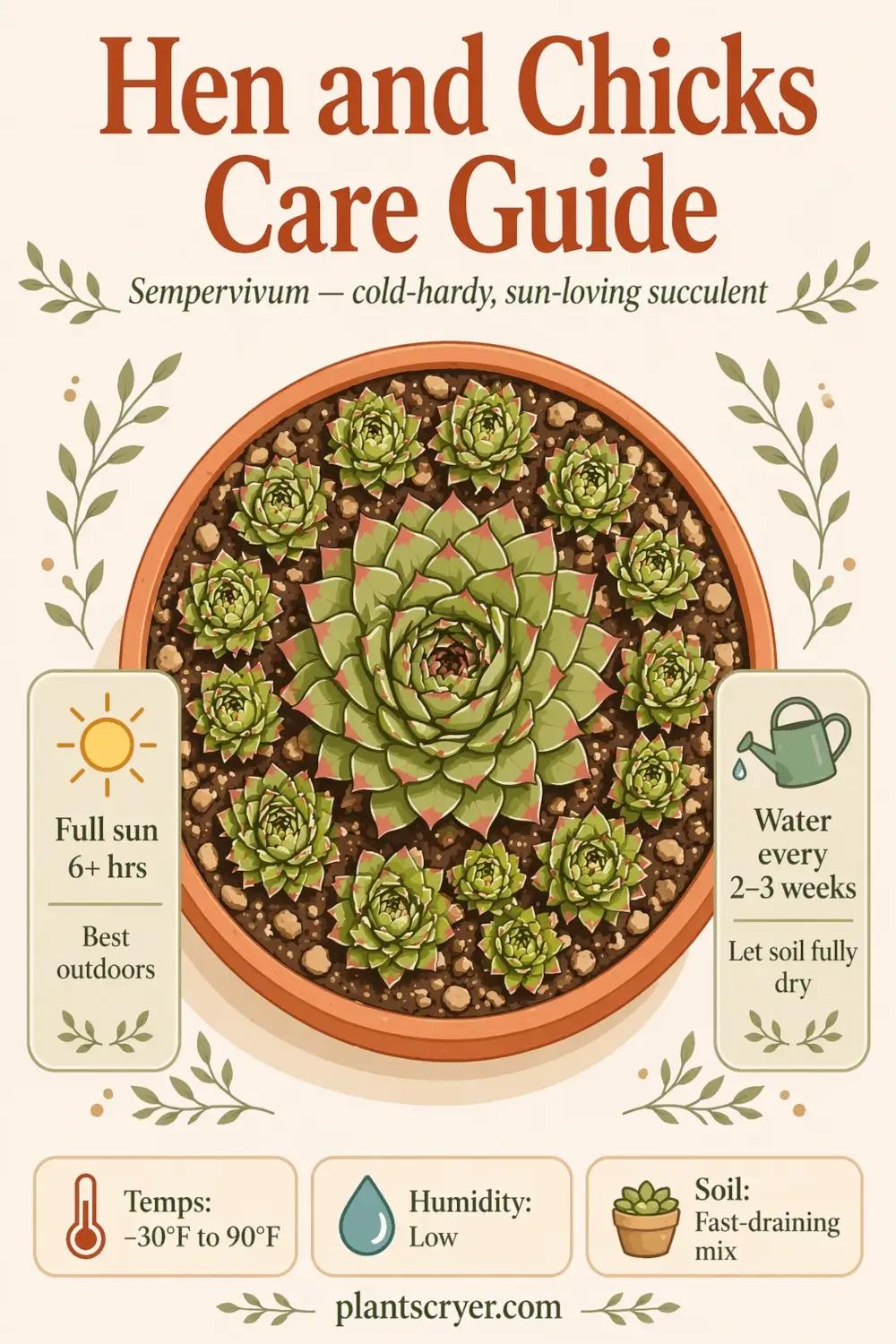
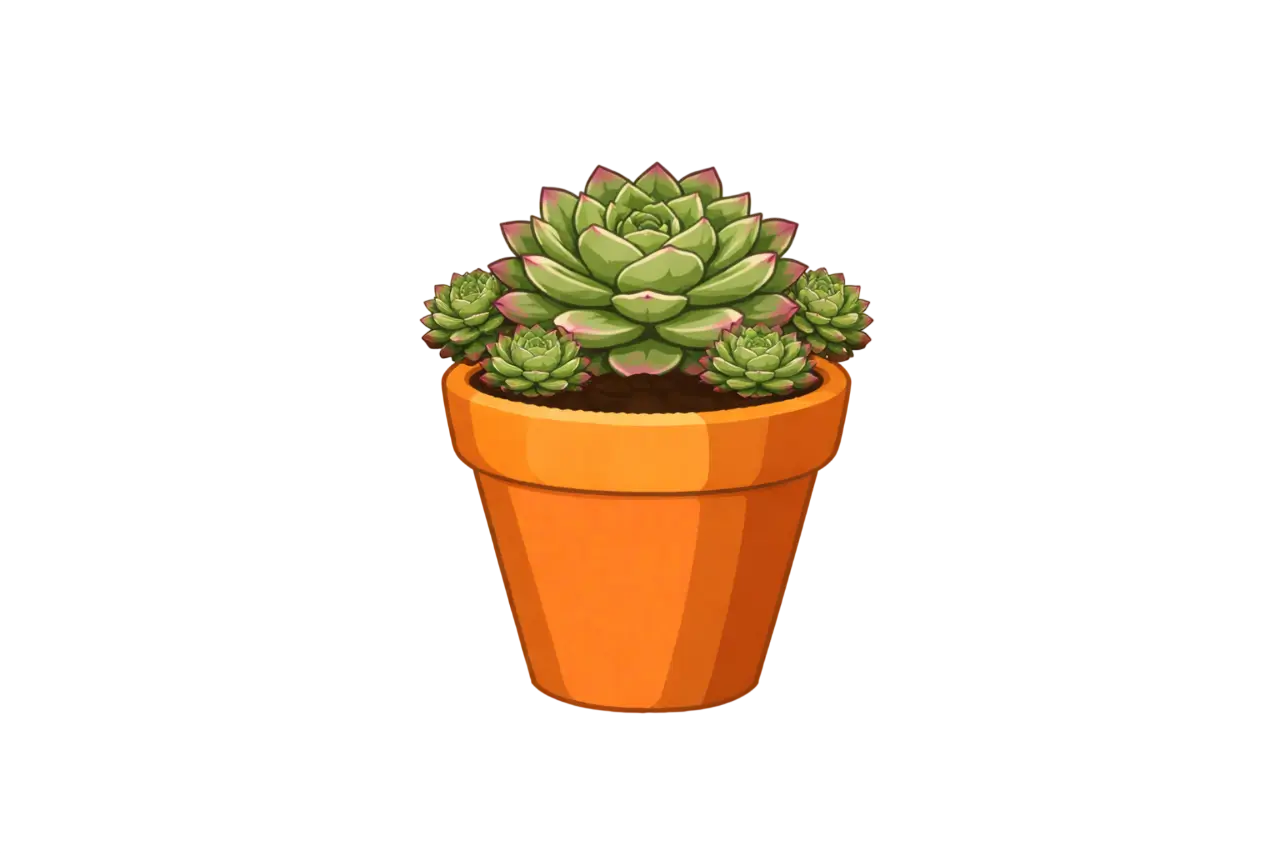
Hen and chicks (Sempervivum tectorum) is a succulent that replaces itself as it grows. The central rosette (the hen) produces offsets (the chicks) on short stolons around its base. After 3 to 6 years the hen flowers once, sets seed, and dies. By that point it has already produced enough chicks to fill the pot several times over. The death is built into the plant's lifecycle, not a sign that something went wrong.
Native to the rocky slopes and rooftops of the European Alps (the Latin name means "always alive" and "of roofs"), Sempervivum is cold-hardy down to USDA zone 3, roughly -30°F. It survives freezing, drought, and thin rocky soil with almost no organic matter. What it does not survive is sitting in wet soil for extended periods, which makes indoor care trickier than outdoor care. Indoors, overwatering and insufficient light are the two most common problems.
There are thousands of named Sempervivum cultivars in colours ranging from green to deep red to purple to silver-tipped. The care is identical across all of them. Some varieties colour up more intensely with cold exposure or high light, which is worth knowing if your plant looks different from the photo you bought it for.
Non-toxic to cats, dogs, and horses per ASPCA. Safe for households with pets and children.
Quick Info
- LightBright
- WaterLow
- Size3 to 6 inches tall, 6 to 12 inches wide per rosette cluster
- HumidityLow
- Temp-30 to 90°F (-34 to 32°C)
- FloweringYes
- TypeSucculent
- Dog SafeYes
- Cat SafeYes
- Kid SafeYes
Is Hen and Chicks Toxic?
Pets: Non-toxic to cats, dogs, and horses per ASPCA. Leaf sap may cause mild skin irritation (contact dermatitis) in sensitive individuals.
Kids: Non-toxic. Leaf sap may cause mild skin irritation in sensitive individuals.
Hen and Chicks Care Guide
Light
Full sun. Hen and chicks needs at least 6 hours of direct sunlight daily. A south-facing window is the minimum viable indoor position. These are alpine plants adapted to intense mountain sun at high elevation, and most indoor settings do not provide enough light to keep them compact.
Without enough direct light, the rosette stretches upward and the leaves space apart (etiolation). This is the most common indoor problem and it happens faster than most people expect. Once a rosette has stretched, it will not compress back down; you have to propagate from an offset and start fresh in better light. A grow light running 12 to 14 hours daily helps significantly in rooms without strong direct sun.
Watering
Very little. Soak the soil thoroughly, then let it dry out completely before watering again. Indoors this typically means once every 2 to 3 weeks in summer and once a month or less in winter. The rosettes store water in their thick leaves and tolerate drought far better than excess moisture.
Water the soil, not the rosette. Water pooling in the centre of the rosette is the fastest route to rot, especially in lower-light indoor conditions where it will not evaporate quickly. A moisture meter is useful for checking that the bottom of the pot is dry before you add more water.
Soil
Fast-draining, gritty, and low in organic matter. A cactus and succulent mix with 30 to 50% added perlite, pumice, or coarse sand. In the wild, Sempervivum grows in cracks between rocks with almost no soil. The indoor mix should drain within seconds and dry out within a few days. Rich, moisture-retentive potting soil will rot the roots. Use a shallow, wide pot (terracotta is ideal) with drainage holes. Deep pots hold moisture at the bottom where roots cannot reach it.
Temperature
Extremely cold-hardy outdoors (USDA zones 3 to 8, down to -30°F). Indoors, normal room temperatures of 60 to 80°F are fine during the growing season. Winter cold exposure (down to 35 to 50°F) is actually beneficial and improves colour intensity on many cultivars. An unheated room, enclosed porch, or windowsill near a single-pane window in winter provides the cold these plants appreciate. Avoid hot, stuffy rooms with no air circulation, which encourage rot.
Fertilizing
Almost none needed. Hen and chicks evolved in nutrient-poor rocky soil and does not need regular feeding. If you want to fertilize, apply a succulent fertilizer at quarter strength once in spring and once in midsummer. Over-fertilizing pushes soft, leggy growth that is more susceptible to rot and loses the tight rosette form that makes the plant attractive.
Repotting
Repot when offsets have filled the pot and there is no room for new growth, typically every 1 to 2 years. Use a wide, shallow container. Sempervivum roots are short and do not need depth. When repotting, this is the natural time to separate offsets and start new pots or share with other growers. Let any damaged roots dry for a day before replanting. Wait 3 to 5 days after repotting to water.
Propagation
The plant does most of the work for you. The hen produces chicks on short stolons (runners) that radiate outward from the base. Once a chick has developed its own root system (visible as small white roots at its base), it can be separated and potted individually. Twist or cut the stolon connecting it to the hen, let the cut end dry for a day, and plant in dry cactus mix. Do not water for the first week.
Chicks that are still small (under 1 inch across) survive better if left attached to the hen until they are larger. There is no rush to separate them. Some growers leave the entire colony connected and only divide when repotting.
Common Hen and Chicks Problems
Stretching (etiolation) The most common indoor problem. The rosette grows upward, leaves space apart, and the plant loses its compact form. This means it is not getting enough direct light. Move to the brightest spot available or add a grow light. Etiolated rosettes will not compress back down. Propagate from a compact offset and discard the stretched parent.
Mushy, translucent leaves Overwatering. The leaves swell with excess water and turn soft and translucent before rotting. Stop watering immediately and let the soil dry out completely. If the rot has reached the centre of the rosette, the hen is lost but the chicks can usually be saved by separating and replanting in dry soil.
Mother plant dying after flowering Normal. Sempervivum is monocarpic: the hen flowers once (a tall stalk with star-shaped blooms), sets seed, and dies. This happens after 3 to 6 years and is not a care failure. The chicks survive and continue growing. Remove the dead hen after it has dried out to make room for the offsets to fill in.
Root rot Browning stems, soft base, dark mushy roots. Caused by soil that stays wet too long, pots without drainage, or water sitting in the rosette centre. If caught early, remove the affected plant, trim rot, let it dry, and replant in grittier mix. Root rot vs soil mold covers how to tell the two apart.
Dried lower leaves Normal. Sempervivum naturally sheds its lowest, oldest leaves as the rosette grows. The dried leaves brown and papery at the base are not a problem. Remove them periodically to improve airflow and prevent pests from hiding underneath.
Mealybugs and aphids Mealybugs appear as white cottony clusters between the leaves near the rosette centre. Aphids cluster on flower stalks and new growth. Treat with rubbing alcohol on a cotton swab for small infestations or neem oil for broader coverage. Check deep between the leaves where pests hide.
FAQs
Sempervivum is monocarpic, meaning each rosette flowers once and then dies. This is the plant's normal lifecycle, not a care failure. The hen typically blooms after 3 to 6 years, produces a tall flower stalk with star-shaped blooms, and then dries out. The chicks it produced during its life survive and take its place. Remove the dead rosette to make room.
Every 2 to 3 weeks in summer, once a month or less in winter. Let the soil dry out completely between waterings. Water the soil directly, not the rosette centre. These plants store water in their thick leaves and handle drought far better than excess moisture. Overwatering is the most common cause of death indoors.
Yes, but they need strong direct light. A south-facing window with at least 6 hours of direct sun is the minimum. Without enough light, the rosettes stretch upward and lose their compact shape. Hen and chicks actually performs better outdoors in most climates because it gets full sun and natural temperature swings, but indoor growing works if the light is strong enough.
Wait until the chick has developed visible roots at its base and is at least 1 inch across. Twist or cut the stolon (runner) connecting it to the hen. Let the cut end dry for a day, then plant in dry cactus mix. Do not water for the first week. Smaller chicks survive better if left attached to the mother plant until they are larger.
No. Sempervivum is non-toxic to cats, dogs, and horses according to the ASPCA. The leaf sap may cause mild skin irritation (contact dermatitis) in sensitive individuals, but the plant contains no compounds that are dangerous if ingested.
Not enough direct light. Hen and chicks needs at least 6 hours of direct sun daily. Without it, the rosette grows upward and the leaves space apart (etiolation). Once stretched, the rosette will not compact back down. Propagate from a tight offset and provide better light for the new plant. A grow light helps in rooms without strong natural sun.
Yes, down to USDA zone 3 (roughly -30°F). Sempervivum is one of the most cold-hardy succulents available. The key to outdoor winter survival is drainage, not temperature. The plant tolerates extreme cold but rots quickly in wet winter soil. Amend the soil with gravel or plant in raised containers that drain freely.