How to Care for Ghost Plant
Graptopetalum paraguayense
 Save
Save
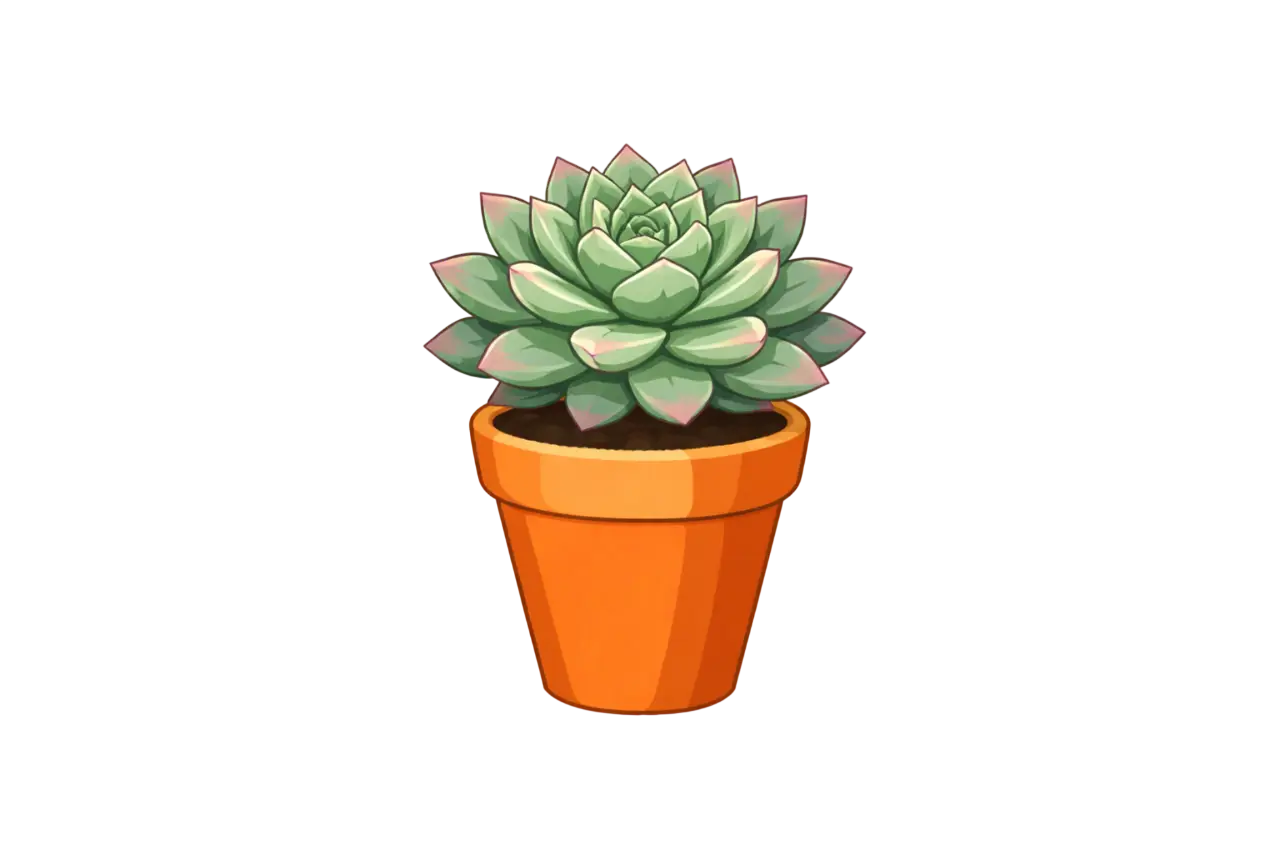
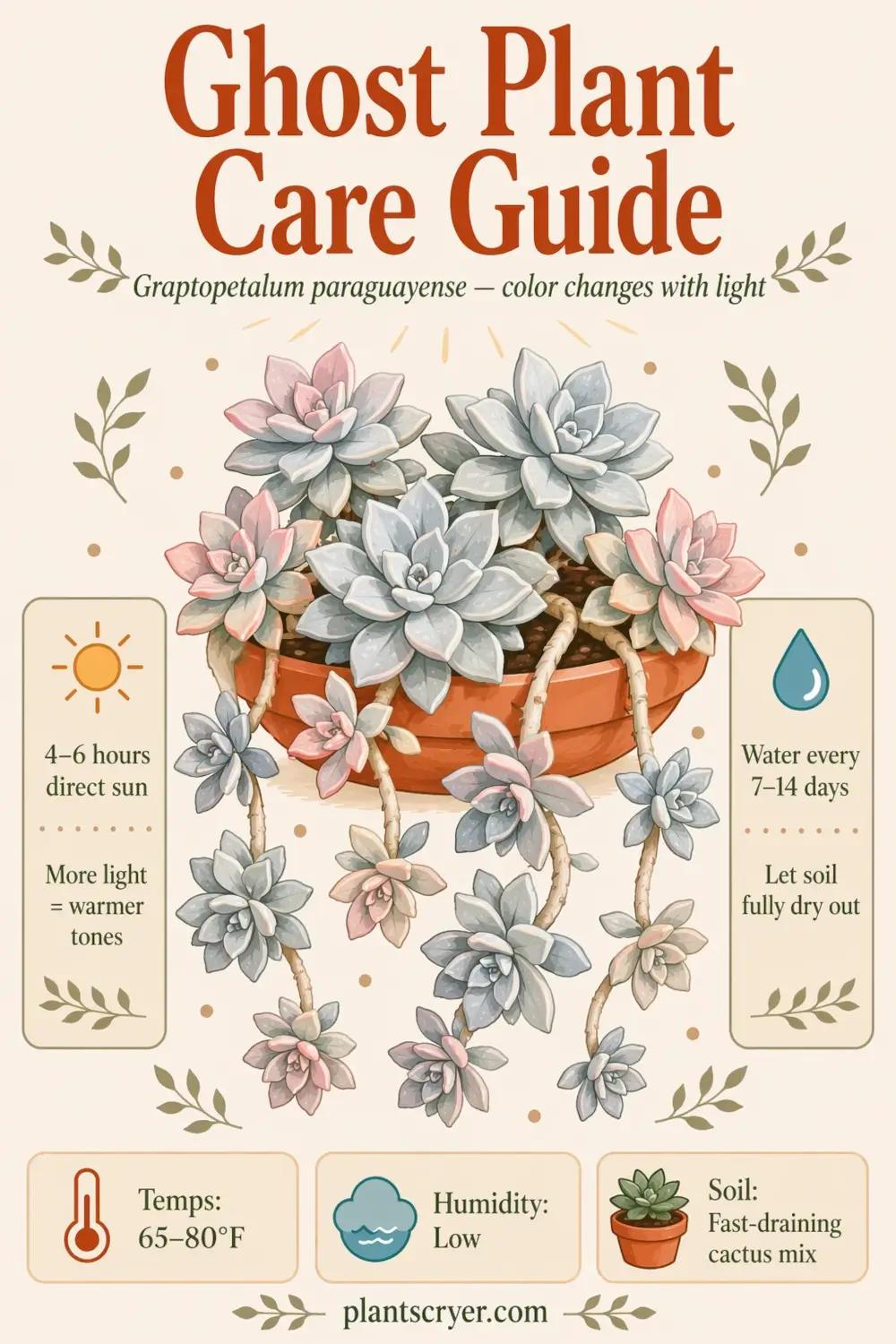
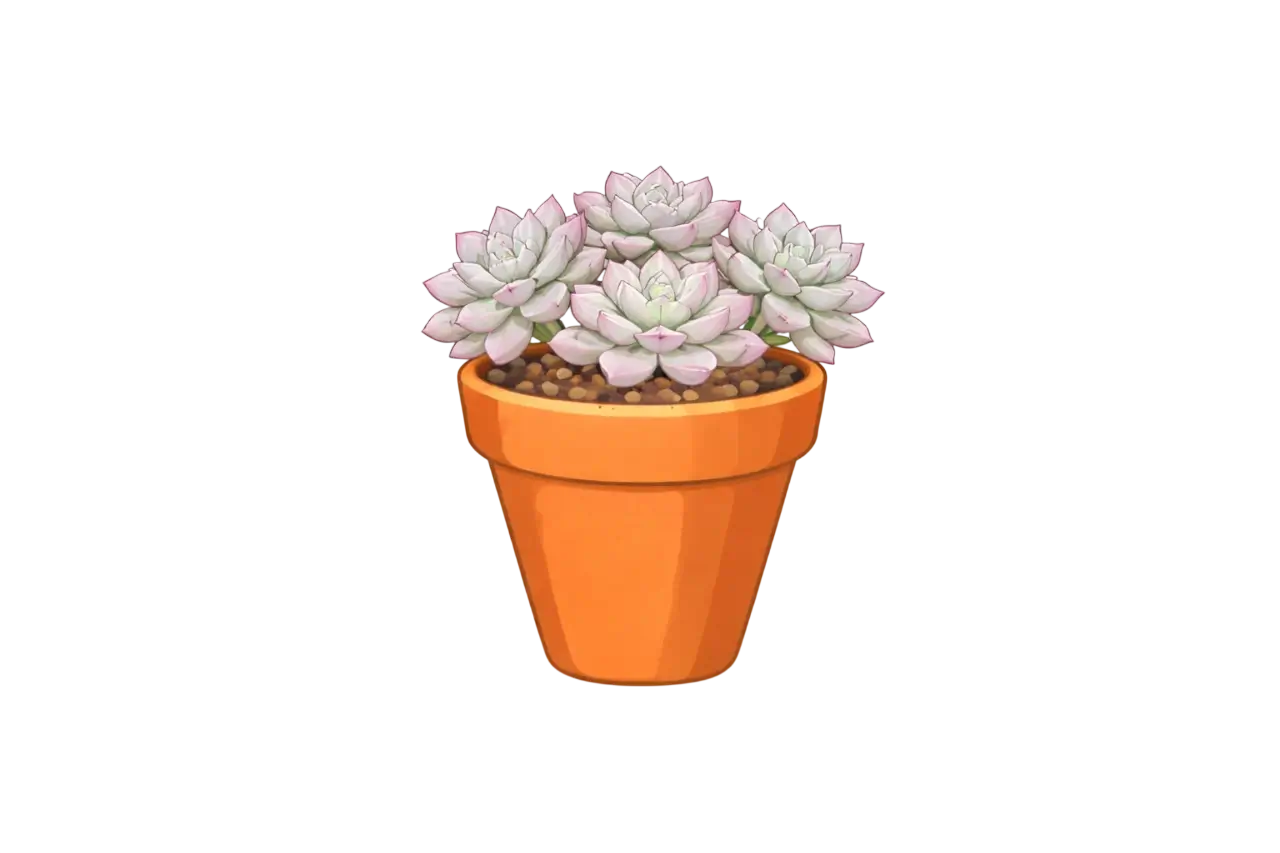
Ghost plant (Graptopetalum paraguayense) is a colour-shifting succulent that tells you exactly how much light it is getting. In bright direct sun, the rosettes flush pinkish-yellow. In partial shade, they turn pale blue-grey, almost translucent. The ghostly, washed-out appearance in lower light is where the common name comes from. If your plant looks grey, it wants more sun. If it looks pink, it is getting what it needs.
Native to the rocky cliffs of northeastern Mexico, ghost plant grows as a trailing succulent with rosettes at the tips of brittle, sprawling stems that can reach 2 to 3 feet long over time. The trailing habit makes it a natural fit for hanging baskets and shelf edges where the stems can cascade. Each rosette is 3 to 6 inches across and coated in a powdery white substance called farina. That coating is not dirt or mold. It is a natural sunscreen the plant produces to protect itself from UV damage. Do not wipe it off.
Ghost plant is one of the easiest succulents to propagate. A single leaf placed on moist soil can produce one or more new rosettes within a few weeks, no rooting hormone needed. Stems snap off easily (the stems are brittle by nature, not from poor health), and any piece that touches soil will root. This makes it one of the best starter succulents for anyone learning propagation.
Non-toxic to cats, dogs, horses, and humans. No toxicity concerns at all.
Quick Info
- LightBright
- WaterLow
- Size6 to 12 inches tall, spreads 2 to 3 feet wide
- HumidityLow
- Temp15–95°F (-9–35°C) depending on protection
- FloweringYes
- TypeSucculent
- Dog SafeYes
- Cat SafeYes
- Kid SafeYes
Is Ghost Plant Toxic?
Pets: Non-toxic to cats, dogs, and horses per ASPCA. Completely safe for pet households.
Kids: Non-toxic. Safe around children.
Ghost Plant Care Guide
Light
Bright light with at least 4 to 6 hours of direct sun daily. A south- or west-facing window is ideal. Ghost plant tolerates partial shade better than most succulents and will survive in lower light, but the rosettes will turn grey-blue, stretch, and lose the compact form that makes them attractive. More direct sun produces pinker, tighter rosettes.
Use the plant's colour as a light meter. Grey-blue rosettes mean it wants more sun. Pink or yellow-toned rosettes mean light levels are right. If new growth is stretching upward with wide spacing between leaves, the plant is etiolating and needs significantly more light. A grow light running 10 to 12 hours daily works well in rooms without strong natural sun.
Watering
Soak and dry. Water thoroughly until it drains from the bottom, then let the soil dry out completely before watering again. During the growing season this is roughly every 7 to 14 days. In winter, every 3 to 4 weeks. Ghost plant is very drought-tolerant. The leaves begin to wrinkle slightly when the plant is thirsty, which is a reliable visual cue that it is time to water.
Avoid getting water on the rosettes. Water sitting in the centre of a rosette promotes rot, especially in lower light where it evaporates slowly. Water the soil directly, not the leaves. A moisture meter confirms the soil is dry all the way through before you add more.
Soil
Fast-draining, gritty mix. A cactus and succulent mix with extra perlite or coarse sand mixed in works well. Ghost plant grows naturally in rocky cliff crevices with almost no organic soil. The potting mix should drain within seconds and dry out completely within a few days. Use a pot with drainage holes; terracotta is ideal because it wicks excess moisture.
Temperature
Normal room temperatures of 60 to 85°F are fine during the growing season. Ghost plant is cold-tolerant for a succulent: with protection (dry soil, shelter from wind), established plants can survive brief dips to 15°F (-9°C). Indoors, keep above 40°F to be safe. No humidity requirements; dry indoor air is ideal. High humidity combined with poor air circulation promotes rot and fungal problems.
Fertilizing
Almost none needed. Ghost plant grows well without any feeding. If you want to fertilize, apply a succulent fertilizer at quarter strength once in spring and once in summer. Over-fertilizing pushes soft, leggy growth and reduces the colour intensity that makes the plant attractive. Less is more.
Repotting
Every 1 to 2 years, or when the plant has outgrown its pot. Ghost plant spreads more than it grows tall, so a wide, shallow container works best. Handle carefully; the stems are naturally brittle and snap easily. Any stems or leaves that break off during repotting can be propagated (see below). Wait 3 to 5 days after repotting before watering.
Propagation
Ghost plant is one of the easiest succulents to propagate. Three methods work, all reliably.
Leaf propagation: Gently twist a healthy leaf from the stem, making sure the base of the leaf comes off cleanly (a torn leaf will not root). Set the leaf on top of dry succulent soil. Do not bury it. Mist lightly every 2 to 3 days. Roots and tiny baby rosettes appear within 2 to 4 weeks. A single leaf can produce more than one rosette. This is the lowest-effort propagation method for any succulent.
Stem cuttings: Cut or snap a stem section with a rosette at the tip. Let the cut end callus for 1 to 2 days. Plant the calloused end in dry cactus mix. Do not water for a week. Roots form in 2 to 3 weeks.
Fallen pieces: Any leaf or stem section that breaks off (the stems are brittle, this happens regularly) will root if it lands on or near soil. Ghost plant propagates itself by accident more readily than almost any other succulent.
Common Ghost Plant Problems
Stretching (etiolation) The most common indoor problem. The rosette stretches upward with wide gaps between leaves, and the colour shifts to grey-blue. This means the plant is not getting enough direct light. Move to a brighter spot. The stretched portion is permanent; propagate from the rosette tip and give the new plant better light. Stretched ghost plants remain healthy, they just look leggy.
Mushy, translucent leaves Overwatering. The leaves absorb too much water and turn soft, translucent, and fall off. Stop watering immediately and let the soil dry out completely. If the stem base is also soft, check for root rot. Unaffected rosettes can be cut off and propagated into fresh dry soil.
Farina rubbed off The powdery white coating on the leaves (farina) is a natural UV sunscreen the plant produces. Once rubbed off, it does not grow back on that leaf. The exposed area is more susceptible to sunburn. Avoid touching the leaves unnecessarily. New leaves will produce their own farina. This is cosmetic, not a health problem, but the plant looks better with the coating intact.
Stems snapping Normal. Ghost plant stems are naturally brittle. This is not a sign of poor health or underwatering. The brittleness is actually part of the plant's propagation strategy: broken pieces root where they land. Treat any snapped stems as free propagation material.
Mealybugs and aphids Mealybugs hide in the crevices between rosette leaves as white cottony clusters. Aphids cluster on flower stalks. Treat with rubbing alcohol on a cotton swab or neem oil sprayed onto affected areas. Check deep between the leaves where pests hide.
FAQs
Grey-blue colour means the plant is not getting enough direct sun. Ghost plant shifts colour based on light intensity: pink-yellow in strong sun, grey-blue in shade. Move to a brighter spot with more direct light. The colour change is not damage; it reverses once light improves. New growth will come in pinker if light is adequate.
Every 7 to 14 days during the growing season, every 3 to 4 weeks in winter. Let the soil dry out completely between waterings. The leaves wrinkle slightly when the plant is thirsty, which is a reliable cue. If in doubt, wait a few more days. Overwatering causes translucent, mushy leaves and rot.
Yes, and it is one of the easiest succulents to do this with. Twist a healthy leaf cleanly from the stem, set it on top of dry succulent soil, and mist every 2 to 3 days. Roots and tiny rosettes appear in 2 to 4 weeks. A single leaf can produce more than one new rosette. No rooting hormone needed.
No. Ghost plant is non-toxic to cats, dogs, and horses per ASPCA. It is also non-toxic to humans. No toxicity concerns at all, making it one of the safest succulents for pet households.
Ghost plant stems are naturally brittle. This is not a sign of poor health, dehydration, or disease. The brittleness is actually part of the plant's natural propagation strategy: broken pieces root where they fall. Any stems that snap off can be propagated by letting the cut end callus for a day and planting in dry soil.
No. The white powdery coating is farina, a natural sunscreen the plant produces to protect itself from UV damage. Once rubbed off, it does not regenerate on that leaf. Handle the plant by the stems rather than the leaves to keep the farina intact. New leaves will produce their own coating.
Not enough direct light. The rosette stretches upward and the leaves space apart (etiolation). Ghost plant needs at least 4 to 6 hours of direct sun daily. Move to a brighter spot. The stretched portion will not compact back down, but you can cut the rosette tip, let it callus, and replant it for a fresh, compact start.