How to Care for Prickly Pear Cactus
Opuntia spp.
 Save
Save
Prickly pear (Opuntia spp.) is one of the most widespread and cold-hardy cacti in the world. The genus includes over 150 species native across North, Central, and South America, from the deserts of Arizona to the grasslands of Canada. Some species survive winter temperatures down to -30°F (USDA zone 3), making prickly pear one of the very few cacti that grows outdoors year-round in cold climates.
The flat, paddle-shaped pads (called cladodes) are the plant's stems, not its leaves. Each pad stores water, produces new growth from its edges and tips, and is covered in clusters of glochids: tiny, barbed, hair-fine spines that detach at the slightest touch. Most Opuntia species also have larger visible spines, but the glochids are the ones that cause the most grief because they are nearly invisible once embedded in skin.
Both the pads (nopales) and the fruit (tunas) are edible once the spines and glochids are removed. The pads taste similar to green beans with a slightly tart, citrus edge. The fruit ranges from sweet and watermelon-like to fig-like depending on the species, and ripens to red or purple in mid to late summer. Indoor plants rarely fruit because they need a winter cool period and strong sustained light to bloom, but outdoor specimens in the right climate produce reliably.
Non-toxic to cats, dogs, and horses. The spines and glochids are the only hazard, but they are a serious one. Keep well out of reach of pets and children.
Quick Info
- LightBright
- WaterLow
- Size1 to 5 feet tall indoors (species dependent); up to 20 feet in the wild
- HumidityLow
- Temp-30 to 100°F (-34 to 38°C) depending on species
- FloweringYes
- TypeCactus
- Dog SafeYes
- Cat SafeYes
- Kid SafeYes
Is Prickly Pear Cactus Toxic?
Pets: Non-toxic to cats, dogs, and horses per ASPCA. The spines and glochids (barbed hair-like bristles) are the real hazard. Glochids embed in skin, eyes, and mouths on contact and are very difficult to remove.
Kids: Non-toxic. Glochids cause painful skin irritation. Keep out of reach of children.
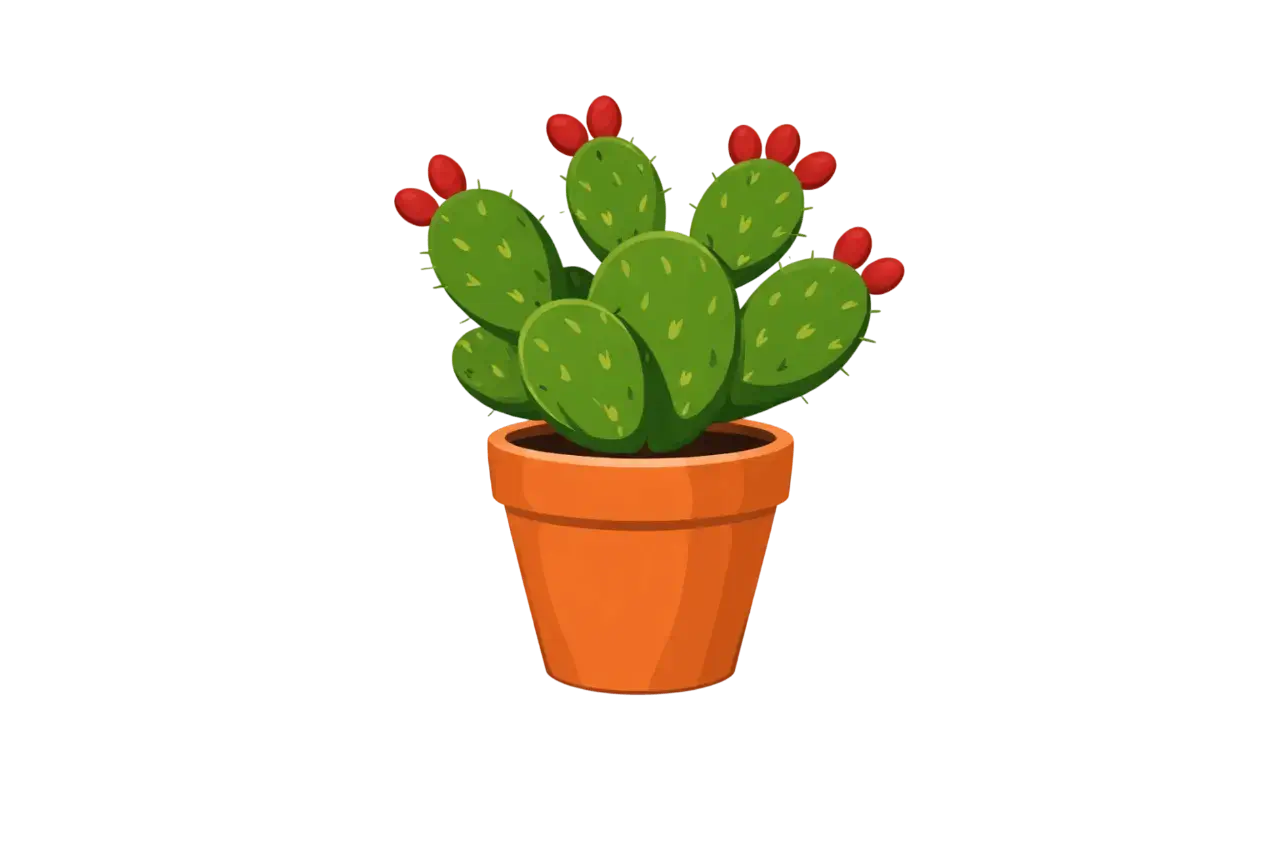
Prickly Pear Cactus Care Guide
Light
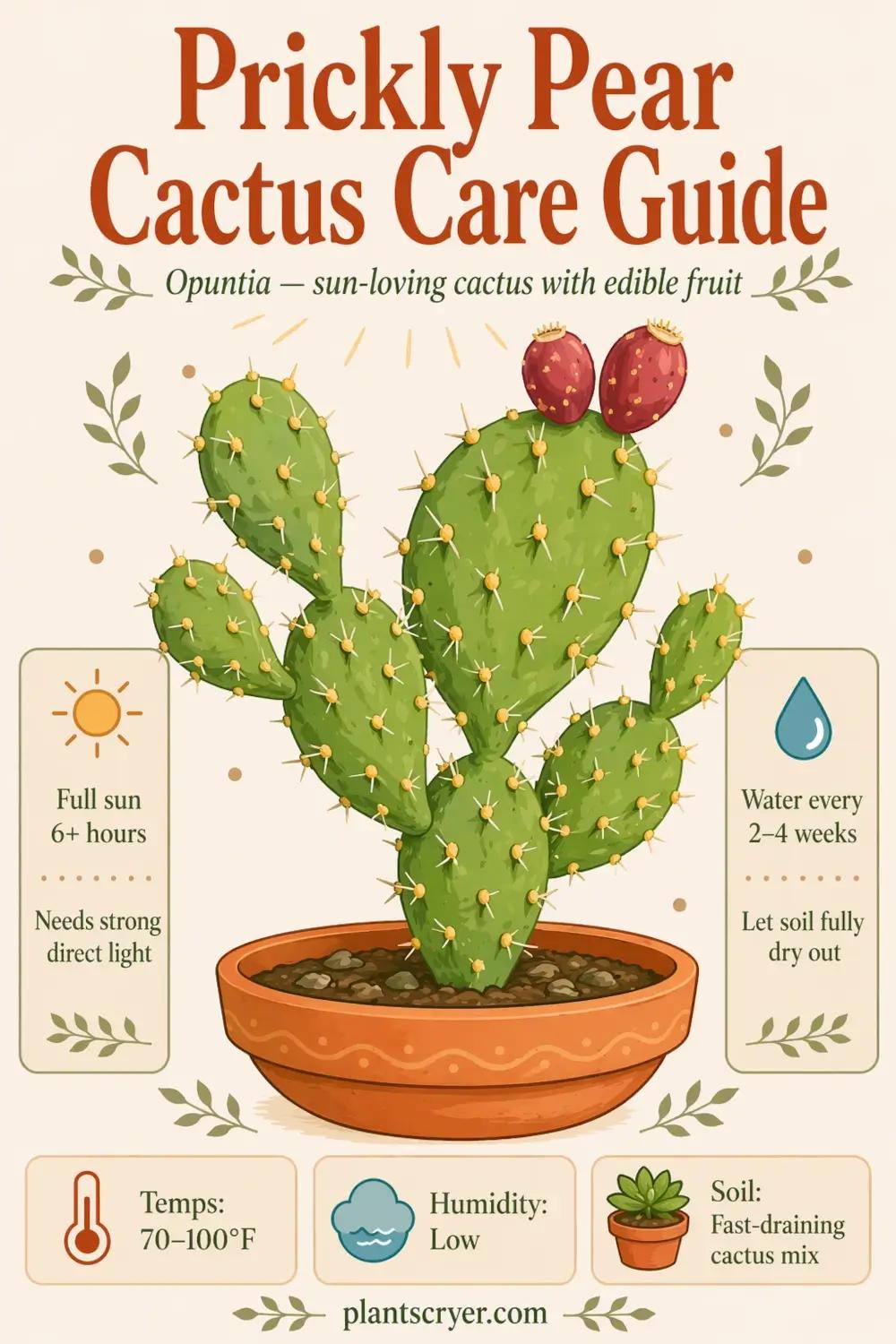
Full direct sun. Prickly pear needs at least 6 hours of direct sunlight daily, and more is better. A south-facing window is the best indoor position. These are full-sun desert plants that grow in open, exposed terrain with no shade at all. Anything less than strong direct light produces thin, elongated pads and prevents flowering.
Rotate the pot a quarter turn every 2 weeks to prevent the plant from leaning toward the window. If indoor light is marginal, a grow light running 12 to 14 hours daily supplements effectively. Prickly pear handles full, unfiltered afternoon sun without burning, unlike many other houseplants.
Watering
Very little. Soak the soil thoroughly, then let it dry out completely. During the growing season this means every 2 to 4 weeks. In winter, once every 4 to 6 weeks or not at all. The pads store a substantial volume of water and the plant survives extended drought without visible stress. Overwatering rots the base pads and roots faster than almost any other care mistake.
Drooping or soft pads mean a watering problem, but both overwatering and underwatering produce the same symptom. Check the soil before acting. A moisture meter confirms whether the soil is dry at the bottom of the pot before you add more water.
Soil
Fast-draining, mineral-heavy mix. A cactus and succulent mix with extra perlite, pumice, or coarse sand mixed in (at least 50% mineral grit) replicates the sandy, rocky soil these plants grow in naturally. The mix should drain in seconds and dry out within a few days. Rich, moisture-retentive potting soil causes root rot. Use a terracotta pot with drainage holes; the porous clay wicks moisture away from the roots.
Temperature
Varies dramatically by species. Cold-hardy species (like Opuntia humifusa) survive down to -30°F (USDA zone 3). Tropical species need to stay above 50°F. Indoors, normal room temperatures of 60 to 85°F work for all species during the growing season. For blooming, most species benefit from a winter cool period of 45 to 55°F for 6 to 8 weeks. An unheated room or enclosed porch provides this. No humidity requirements; dry indoor air is ideal.
Fertilizing
Light feeder. Apply a succulent fertilizer diluted to half strength once a month during spring and summer. A low-nitrogen formula (5-10-10) encourages flowering and pad development over soft growth. Stop fertilizing from October through February. Over-fertilizing pushes weak, soft growth that attracts pests.
Repotting
Every 2 to 3 years, or when the plant has clearly outgrown its pot. Use a wide, shallow container (prickly pear spreads more than it grows tall). The main challenge is handling: wrap pads in several layers of thick newspaper or use long-handled tongs. Thick leather gloves help but glochids still penetrate most fabrics. Wait 3 to 5 days after repotting before watering.
Propagation
Pad cuttings are the fastest method. Using tongs or thick gloves, twist or cut a pad at the joint where it connects to the parent. Choose a pad that is at least 6 months old. Let the cut end dry and callus for 1 to 2 weeks in a dry, shaded spot. This callusing period is longer than most succulents and is critical; planting before the callus forms invites rot. Plant the calloused end about 1 inch deep in dry cactus mix, upright. Do not water for 2 to 3 weeks. Roots develop in 3 to 6 weeks. New pads emerge from the top and edges of the cutting once established.
Safe Handling
Prickly pear has two types of armour: visible spines and glochids. The spines are large and obvious. The glochids are hair-fine, barbed, cluster in the hundreds at each areole, and detach on the lightest contact. Once embedded in skin, they are nearly invisible and extremely difficult to remove with tweezers because they break when pulled. The most effective removal method is pressing duct tape firmly over the affected area and peeling it off, or applying a thin layer of white craft glue, letting it dry completely, and peeling the dried sheet off. Always use tongs, thick leather gloves, or folded newspaper when handling any part of this plant.
Common Prickly Pear Cactus Problems
Drooping or soft pads Both overwatering and underwatering cause pads to soften and droop. Check the soil before deciding which fix to apply. If the soil is wet, stop watering and improve drainage. If bone dry with shriveled pads, give a thorough soak. Consistently wet soil leads to root rot, which is harder to recover from than drought stress.
Thin, elongated pads Not enough light. New pads that grow narrow and stretched instead of the characteristic wide oval shape are etiolating. Move to stronger direct sun. The stretched pads are permanent but new growth will be compact once light is adequate.
Root rot Dark, soft base pads with mushy roots. Caused by overwatering or soil that retains too much moisture. If only the lowest pads are affected, remove them, let the cuts callus for several days, and replant in fresh dry mineral-heavy mix. Root rot vs soil mold covers how to confirm the diagnosis.
Cochineal scale A pest specific to Opuntia. Cochineal insects produce a white, cottony coating on the pads that looks similar to mealybug. Crush one and it produces a vivid red or purple dye (carmine). Treat by scrubbing off with a brush and soapy water or applying neem oil. Heavy infestations may require removing and discarding badly affected pads.
Corking at the base A hard, brownish woody texture on the lowest pads is corking, a natural ageing process for structural support. It is firm and dry, not soft or mushy. No treatment needed. If the brown area is soft when pressed, that is rot, not corking.
FAQs
Yes. Both the pads (nopales) and the fruit (tunas) are edible and widely eaten in Mexican and Southwestern cuisine. The pads taste similar to green beans with a tart edge. The fruit is sweet, ranging from watermelon-like to fig-like depending on the species. All spines and glochids must be completely removed before eating. Scrape the pads with a knife and peel the fruit, or singe the glochids off over an open flame.
Every 2 to 4 weeks during the growing season, every 4 to 6 weeks or not at all in winter. Let the soil dry out completely between waterings. The pads store water and the plant handles extended drought without visible stress. Overwatering is the most common way prickly pear dies indoors.
Some species are among the most cold-hardy cacti in the world. Opuntia humifusa (Eastern prickly pear) survives down to USDA zone 3, roughly -30°F. Tropical species need to stay above 50°F. If you want to grow prickly pear outdoors in a cold climate, choose a species native to your hardiness zone.
Possible but uncommon. Indoor blooming requires a winter cool period of 45 to 55°F for 6 to 8 weeks, strong direct light year-round, and a mature plant (at least 2 to 3 years old). The flowers appear in late spring to early summer in yellow, orange, red, pink, or white depending on the species.
Non-toxic to cats, dogs, and horses per ASPCA. The spines and glochids are the real danger. Glochids are hair-fine barbed bristles that embed on contact and are extremely difficult to remove. Keep well out of reach of pets. If a pet contacts the plant, use tape to remove visible glochids and consult a vet if eyes or mouth are affected.
Twist or cut a pad from the plant using tongs. Let the cut end dry and callus for 1 to 2 weeks (longer than most succulents). Plant the calloused end 1 inch deep in dry cactus mix. Do not water for 2 to 3 weeks. Roots form in 3 to 6 weeks. Choose a pad that is at least 6 months old for the best success rate.
Do not use tweezers; they break the glochids and make them harder to remove. Press duct tape firmly over the affected area and peel it off. Repeat with fresh tape until no more bristles come off. Alternatively, apply a thin layer of white craft glue, let it dry completely, and peel the dried sheet off. Both methods pull out embedded glochids that are too fine to grip individually.