How to Care for a Polka Dot Begonia
Begonia maculata
This plant asks for two things that sound like the same thing and are not: humid air and dry leaves. The Connecticut Agricultural Experiment Station lists powdery mildew, botrytis blight, four genera of leaf spot and bacterial leaf spot for begonias, and the control measures all point the same way, toward air circulation, spacing, and keeping water off the foliage. So raising humidity around a polka dot begonia is right and misting it is wrong, the opposite of the advice this plant usually gets. If you want something that will take the spray bottle, a Calathea orbifolia is a better target for it.
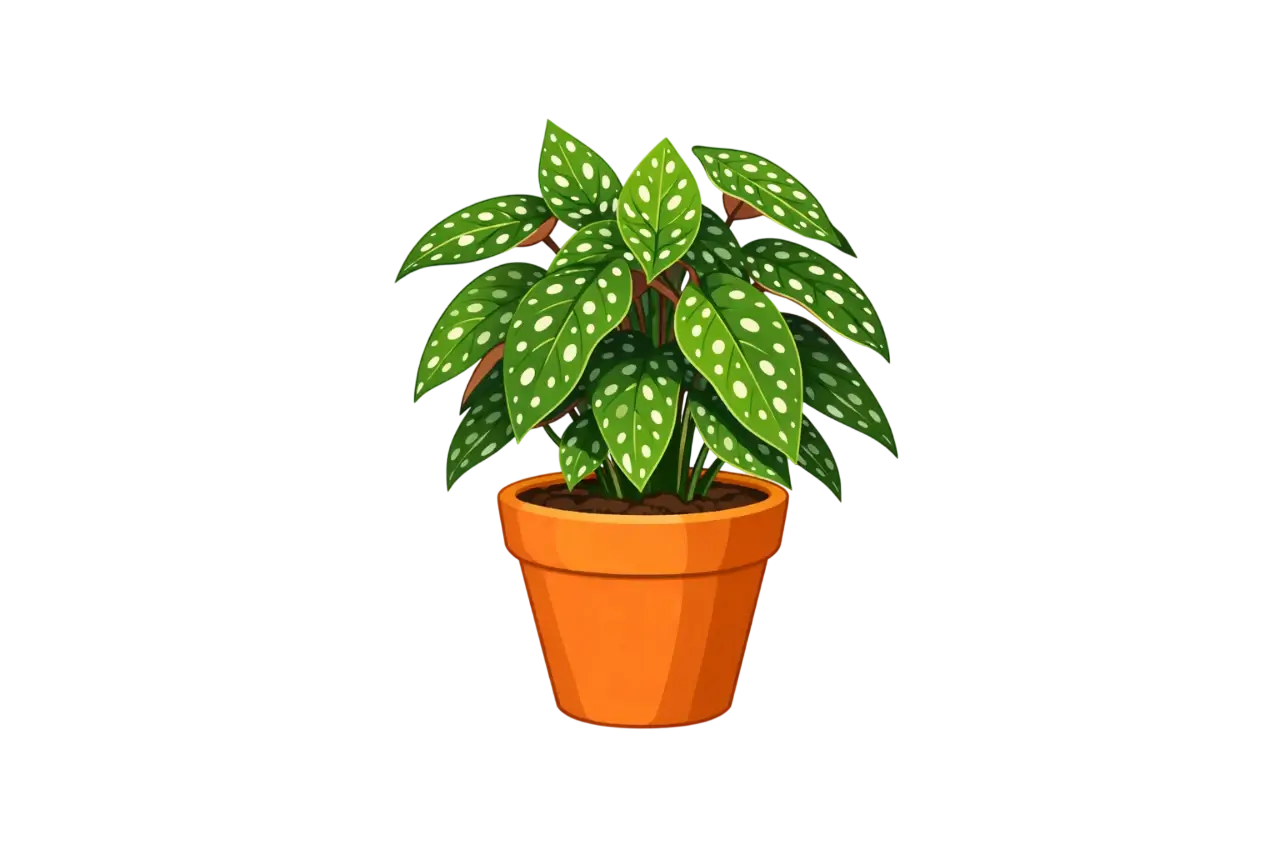
Begonia maculata comes from the understorey of the Atlantic rainforest in south-eastern Brazil, in shaded, wet, coastal forest. That is a warm, humid, dim and above all well-ventilated place. The silver spotting on the olive leaves and the deep maroon undersides are camouflage and light management for a forest floor, not decoration, though they work as decoration too.
It is a cane begonia, which dictates how you handle it. Growth comes from upright, jointed, bamboo-like stems and not from a low rosette, and those canes keep extending from the tip and going bare at the bottom unless you cut them back. The plant most people are disappointed by is one that was never pruned: three bare stalks with a tuft of leaves at the top. Pruning is not optional maintenance on this species, it is the whole shape of the plant.
On safety the detail worth knowing is where the toxin sits. The ASPCA lists Begonia species as toxic to dogs, cats and horses on soluble calcium oxalates, with vomiting and salivation in cats and dogs, and specifies that the most toxic part is underground. For a cane begonia that means the rhizome at the base of those stems, so a dog that digs in the pot is taking a bigger risk than a cat that bites a leaf.
Quick Info
- LightMedium
- WaterMedium
- Size1.5-3 feet tall
- HumidityHigh
- Temp65-80°F (18-27°C); no frost tolerance
- FloweringYes
- TypeTropical, Other
- Dog SafeNo
- Cat SafeNo
- Kid SafeNo
Is Polka Dot Begonia Toxic to Pets?
Pets: The ASPCA lists Begonia spp. as toxic to dogs, cats and horses on soluble calcium oxalates, with vomiting and salivation in dogs and cats and kidney failure in grazing animals, and adds that the most toxic part is underground. On a cane begonia that means the rhizome at the base, so a pet digging in the pot is a bigger worry than one chewing a leaf.
Kids: Soluble calcium oxalates in all parts, concentrated below ground. Keep it out of reach, and keep the pot where a small child cannot dig in it.
Polka Dot Begonia Care Guide
Light, and Watch the Canes
Bright but indirect, which follows from the habitat. An understorey plant from dense coastal rainforest gets strong ambient light filtered through canopy, and that is what an east window or a position a few feet back from a south or west one provides. Direct midday sun through glass scorches the leaves and bleaches the silver spotting.
Too little light shows up in the canes before the leaves. The stems stretch, the gaps between leaves open up, and the plant leans toward the window, all of which compounds the bare-stem problem the species already has. Somewhere bright enough that the canes stay stocky is the target, and the spotting stays crisper there too.
Watering, and Keep It Off the Leaves
Water when the top inch of the mix has dried, and water the soil, not the plant. CT CAES gives two instructions worth taking literally: avoid watering directly into the crown area, and water early in the day so the foliage has a chance to dry before nightfall. Both exist because wet tissue on a begonia is where disease starts. A moisture meter helps on a plant this sensitive at both ends of the range.
Overwatering brings root rot, and CT CAES names heavy soils and crown watering as the two conditions that invite it. Let the surface dry between waterings, empty the saucer, and never leave the pot standing in water. If you have already crossed that line, reversing an overwatered pot is the place to start.
Mix, and Pot Size for a Cane
A peat or coir-based houseplant compost opened up with perlite suits it. CT CAES specifically warns against overwatering in heavy soils, so the aim is a mix that holds moisture without compacting into something airless.
Pot size matters more than usual because of the cane habit. A tall begonia in a small pot is unstable, and a top-heavy plant that falls over snaps canes that will not regrow from the break. Go for a pot heavy enough to anchor it, and repot before the plant starts tipping, not after.
Humidity, Airflow and Temperature
High humidity, delivered without wetting the plant. That distinction is the whole of begonia care. A humidifier raises the moisture in the air around the plant, which is what it wants. A spray bottle puts water on the leaves, which is what the fungi want instead.
Pair the humidity with airflow, and this is the part people leave out. CT CAES recommends improving air circulation by thinning plants and avoiding overcrowded spacing for three separate begonia diseases. A humidifier running next to a begonia jammed into a corner behind other plants produces mildew; the same humidifier with the plant standing in moving air does not.
Warm and steady. The plant comes from coastal tropical Brazil and has no frost tolerance at all, so keep it well clear of cold draughts and winter windowsills. Sudden drops are what produce the dramatic overnight drooping people panic about.
An exact indoor range for Begonia maculata has never been published anywhere authoritative, so the bands you see quoted are inference. One temperature note from CT CAES is useful though, and it concerns disease and not comfort: botrytis is particularly troublesome through extended cloudy, humid, wet weather, which describes a cool damp winter room exactly.
Feeding, and Why Not More
A balanced liquid feed once a month from spring through summer, and nothing over winter. This is a fast grower in good conditions and it does make use of feeding, particularly if you are cutting it back regularly and asking it to rebuild.
Do not exceed what the label says. Soft, overfed cane growth is weaker and more prone to the fungal problems above, and it also stretches more, the exact shape fault you are pruning to avoid. Feed it steadily and not heavily.
Pruning, the Task That Matters Most
This is the care task that matters most on a cane begonia, and it needs doing more often than people expect. Cut a cane back to just above a node using clean snips and it branches from that point, so you get a full plant instead of a few bare stalks. Do it through the growing season, and take out any cane that has gone leggy instead of waiting for it to improve.
CT CAES gives a second reason to prune beyond shape: thinning the plant improves air circulation, which it lists as a control for both bacterial leaf spot and powdery mildew. So the cut that keeps the plant looking right is the same cut that keeps it healthy. Pick off any affected leaves as soon as you see spots, following CT CAES’s advice for mildew specifically.
Repotting, and the Bare Base
Spring, every year or two, moving up a single pot size. The trigger is often stability and not roots: a plant that has grown tall enough to be unsteady needs a wider, heavier pot whether or not it has filled the current one.
Take the opportunity to deal with a bare base at the same time. Repotting is the natural moment to cut tall canes back hard, since you are handling the plant anyway, and the cuttings you remove will root. Leave the feeding until a few weeks later, once the roots have taken hold again.
How to Propagate a Polka Dot Begonia
Stem cuttings are the obvious route, and the pruning you should be doing anyway supplies them. Take a cutting with two or three nodes from a healthy cane, remove the lowest leaf, and put it in water or straight into damp compost. Spring and summer are the productive months. Cane begonias root willingly, part of why they circulate so widely. Leaf cuttings also work on begonias and are the more interesting option. A healthy leaf laid flat on damp compost, with the main veins nicked through with a sterile blade and the leaf pinned down against the surface, will produce plantlets at the cuts. Rooting hormone is optional on either method and makes little difference to a plant that roots this readily.
Keep humidity up around cuttings and still keep the air moving. It is the same balancing act as the parent plant and it matters more here. A propagator or a loose clear bag raises the humidity, but a sealed bag with no ventilation on a begonia cutting produces botrytis instead of roots. Vent it daily, and take the cover off once roots have formed.
Use a clean blade and clean pots. CT CAES lists good sanitation among its begonia disease controls, and a cutting is at its most vulnerable precisely when it has a fresh wound and no roots. A parent plant carrying mildew will pass it to everything you take off it, so treat the plant before you propagate from it.
Common Polka Dot Begonia Problems
White powdery spots or patches on the leaves, and sometimes the stems, are powdery mildew, caused by Erysiphe or Oidium according to CT CAES. Its control advice is preventive: avoid overcrowded spacing and pick off affected leaves as soon as symptoms show. Wet foliage and still, humid air are what bring it, so check whether you have been misting.
Flowers turning papery brown with grey, fuzzy masses on them is botrytis blight, from Botrytis cinerea. CT CAES notes it is particularly troublesome during extended cloudy, humid, wet weather, and the prevention is good sanitation, adequate spacing, and avoiding wetting the flowers when you water.
Spots on the leaves with no powdery coating point at leaf spot, which CT CAES attributes to Phyllosticta, Gloeosporium and Cladosporium in begonias. The control is simple and specific: water early in the day so the foliage can dry before nightfall.
Angular, water-soaked spots that spread fast may be bacterial leaf spot, Xanthomonas begoniae. CT CAES recommends improving air circulation by thinning the plants and avoiding overhead irrigation. There is no spray that reverses it, so remove affected leaves and fix the conditions.
Crisp brown leaf edges on a plant that is otherwise sound usually means the air is too dry, the one problem on this list that humidity actually fixes. Brown leaf tips across other plants covers the causes that point elsewhere.
Bare canes with a tuft of leaves at the top is not a disease, it is the cane habit plus no pruning. Cut the stems back above a node and they branch. A plant left unpruned for a couple of years will need taking down hard, and it will look worse before it looks better.
Sudden dramatic drooping, often overnight, usually follows a cold draught or a sharp temperature drop, not anything you did with the watering can. Check the position before you water, since watering a cold-shocked plant adds a root problem to a temperature one.
Mealybugs tuck into the leaf joints along the canes, where the jointed stems give them cover, and thrips and spider mites both turn up on begonias in dry indoor air. Identifying houseplant pests covers telling them apart.
FAQs
No, and this is the single most common mistake with this plant. It wants humid air, but wet leaves are where its diseases start. CT CAES lists powdery mildew, botrytis, leaf spot and bacterial leaf spot for begonias. The controls all involve keeping water off the foliage, watering early in the day so leaves dry before dark, and improving air circulation. Raise the humidity with a humidifier instead, and give the plant room to breathe.
Yes. The ASPCA lists Begonia species as toxic to dogs, cats and horses, with soluble calcium oxalates as the toxic principle, causing vomiting and salivation in cats and dogs and kidney failure in grazing animals. It also notes the most toxic part is underground, which on a cane begonia means the rhizome at the base of the stems. A pet digging in the pot is the greater risk.
Because it is a cane begonia and it has not been pruned. Growth extends from the tips of upright jointed stems and the lower leaves drop as the canes lengthen, so without cutting back you end up with bare stalks and a tuft on top. Cut the canes above a node and they branch from that point. CT CAES also lists thinning as a disease control, so the pruning does double duty.
Powdery mildew, which CT CAES attributes to Erysiphe and Oidium in begonias and describes as white powdery spots or patches on leaves and occasionally stems. Its advice is to avoid overcrowded spacing and pick off affected leaves as soon as symptoms appear. Look at what brought it on too: still air, crowded plants and wet leaves are the combination it needs.
The understorey of the Atlantic rainforest in south-eastern Brazil, in shaded, wet, coastal forest. That habitat explains the care: bright filtered light instead of direct sun, warmth, high humidity, and the moving air of an open forest floor and not a stagnant corner.
Bright but indirect. As an understorey plant it is adapted to strong light filtered through canopy, which indoors means an east window or a few feet back from a south or west one. Direct midday sun through glass scorches the leaves and fades the silver spotting. Too little light makes the canes stretch and the leaf gaps widen, which worsens the bare-stem problem.
Stem cuttings are easiest and your pruning supplies them. Take a piece of cane with two or three nodes, strip the lowest leaf, and root it in water or damp compost in spring or summer. Leaf cuttings also work: lay a leaf flat on compost, nick the main veins with a sterile blade, pin it down, and plantlets form at the cuts. Keep cuttings humid but ventilated, since a sealed bag invites botrytis.
Most often a cold draught or a sharp temperature drop rather than thirst. The plant is from coastal tropical Brazil and has no cold tolerance, so an open window, a draughty door or a winter windowsill can cause dramatic drooping overnight. Check the position and the temperature before reaching for the watering can, because watering a cold-shocked plant just adds a root problem.