How to Care for Moon Cactus
Gymnocalycium mihanovichii
 Save
Save
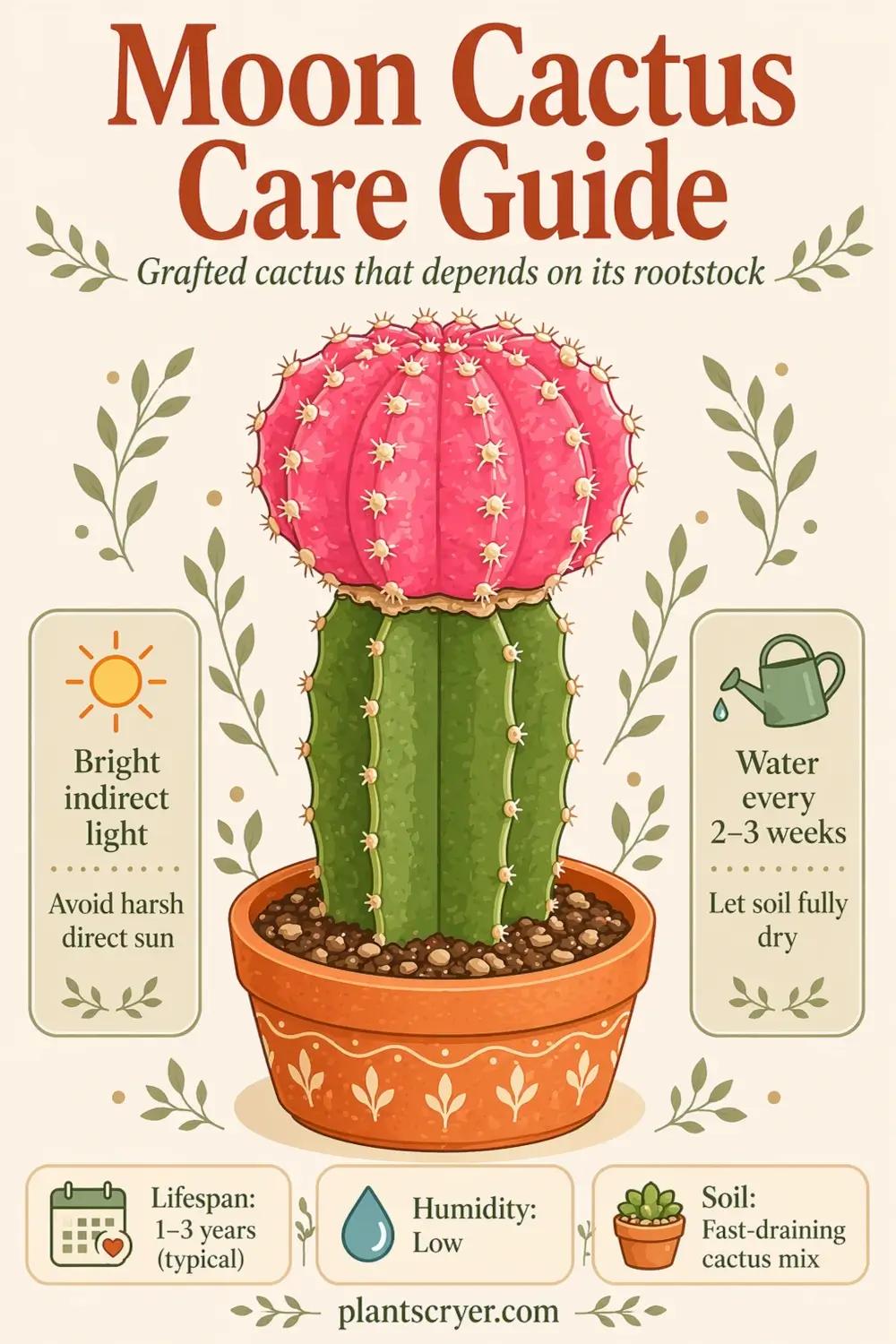
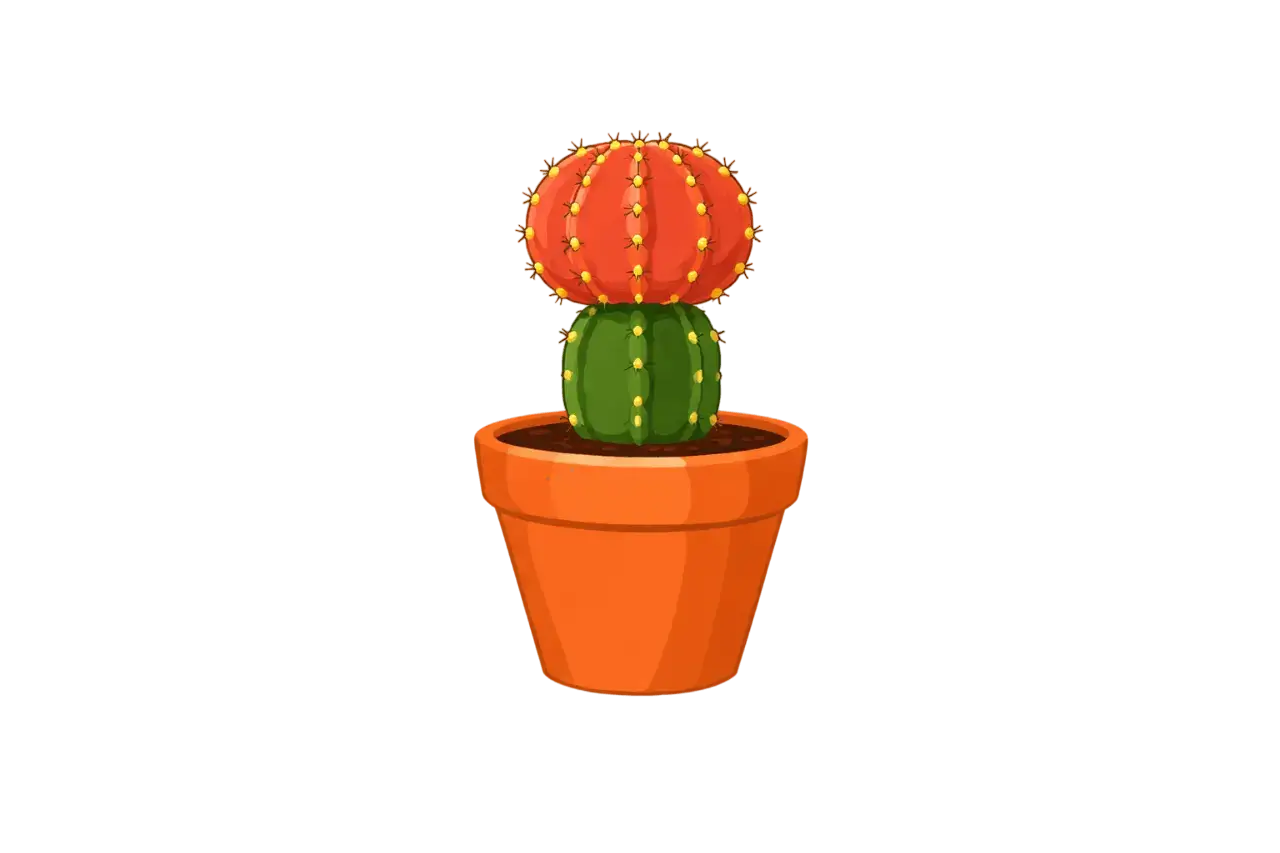
Moon cactus is not one plant. It is two different cacti grafted together: a colourful Gymnocalycium mihanovichii on top (the neon ball in red, pink, yellow, or orange) and a green Hylocereus undatus rootstock underneath. The colourful top is an albino mutant with no chlorophyll. It cannot photosynthesize, cannot produce energy, and will die within days if separated. Everything it needs comes from the green base doing the work for both of them.
That two-plant arrangement is the central fact of moon cactus care. The Gymnocalycium top is a small, slow-growing grassland cactus from Paraguay that prefers partial shade. The Hylocereus rootstock is a fast-growing tropical climbing cactus from Central America that wants more light and more water. They grow at different rates, want different conditions, and over time the rootstock tends to outgrow or reject the graft.
Be realistic about lifespan. A well-cared-for graft typically lasts 1 to 3 years. Some go to 5 with luck and regrafting. Many fail within the first year. When the rootstock starts to yellow, soften, or shrink at the graft junction, the combination is reaching its end. You can extend the plant's life by regrafting the top onto a fresh rootstock, but the original pairing has a built-in expiration date. Knowing this upfront changes how you approach the plant: enjoy it while it works and regraft when it doesn't.
Non-toxic to cats, dogs, and humans. The rootstock spines are the only physical hazard.
Quick Info
- LightBright
- WaterLow
- Size2 to 6 inches tall
- HumidityLow
- Temp50–85°F (10–29°C)
- FloweringYes
- TypeCactus
- Dog SafeYes
- Cat SafeYes
- Kid SafeYes
Is Moon Cactus Toxic?
Pets: Non-toxic to cats and dogs. The spines on the rootstock are the real hazard. Keep out of reach of curious pets to avoid puncture injuries.
Kids: Non-toxic. Spines can cause puncture injuries.
Moon Cactus Care Guide
Light
Bright indirect light with no more than 1 to 2 hours of gentle direct morning sun. This is a compromise between the two halves. The colourful top has no pigments to protect it from UV, so direct afternoon sun bleaches and burns it within hours. The green rootstock needs light to photosynthesize for both plants, so too little light starves the whole system.
An east-facing window is the best indoor spot. North-facing works if unobstructed. South or west windows need a sheer curtain or the plant set back 2 to 3 feet. If the colourful top develops beige or brown patches, it is getting too much direct sun. If the rootstock elongates and stretches upward, it is not getting enough. A grow light on a timer provides controlled, even light without the sunburn risk.
Watering
Water thoroughly, then let the soil dry out completely before watering again. In practice this means once every 2 to 3 weeks in summer and once a month or less in winter. The tiny Gymnocalycium top has almost no water demand. The Hylocereus rootstock is tropical and tolerates more moisture than a desert cactus, but it still rots in standing water. When in doubt, wait another few days. Overwatering is the single most common way moon cacti die.
The small pot size makes moisture hard to judge by feel. A moisture meter pushed to the bottom of the pot confirms whether it is dry all the way through. The soil should read dry at every depth before you water again.
Soil
Fast-draining cactus and succulent mix. Add 20 to 30% extra perlite or pumice for additional drainage. The mix should feel gritty and drain within seconds of watering. Standard potting soil retains too much moisture for this plant. Use a small pot with a drainage hole; terracotta is ideal because it wicks excess moisture away from the roots.
Temperature
50 to 85°F (10 to 29°C). Normal room temperatures are fine year-round. Never below 50°F: the Hylocereus rootstock is tropical and cold-sensitive. Keep away from cold drafts, single-pane windows in winter, and air conditioning vents. Dry indoor air is fine; no humidity requirements.
Fertilizing
Very light. Apply a succulent fertilizer diluted to half strength once in spring and once in early summer. That is enough for the entire year. The Gymnocalycium top grows slowly, and the rootstock does not need heavy feeding. Over-fertilizing in a small pot causes rapid salt buildup that damages roots faster than in larger plants. Do not fertilize in fall or winter.
Repotting
Rarely needed. Moon cactus stays small (2 to 6 inches total) and does not develop a large root system. Repot only if the rootstock has clearly outgrown the pot or the soil no longer drains well, typically every 2 to 3 years at most. Use a shallow pot one size up with drainage holes. Wait 3 to 5 days after repotting before watering to let any root disturbance heal.
How to Regraft a Moon Cactus
When the rootstock yellows, softens, or shrinks at the graft junction, the graft is failing. You can extend the plant's life by regrafting the colourful top onto a fresh rootstock. The process takes 10 minutes of work and a 6 to 8 week healing period.
Step 1: Get a fresh rootstock. Hylocereus undatus (dragon fruit cactus) is the standard. Myrtillocactus geometrizans is an alternative that often produces a longer-lasting graft because its growth rate is closer to the Gymnocalycium's.
Step 2: With a clean, sharp blade sterilized in rubbing alcohol, make a flat horizontal cut to separate the colourful top from the old rootstock. Make a matching flat cut on the top of the new rootstock. Both cuts need to be clean and level. Look for the vascular ring (the small circle visible in the centre of each cut surface); this is where the two plants exchange nutrients.
Step 3: Press the two cut surfaces together firmly, aligning the vascular rings as closely as possible. Secure with two rubber bands running vertically over the top and under the pot to hold the pieces in firm contact. Place in bright indirect light. Do not water for 7 to 10 days.
Step 4: After 6 to 8 weeks, remove the rubber bands. If the top holds firmly when lightly touched, the graft has fused. If it wobbles or lifts, the graft failed. Try again with a fresh cut on the rootstock. Not every graft takes on the first attempt.
How to Regraft a Moon Cactus
Moon cactus cannot be propagated by cuttings or seed in the traditional sense because the colourful top cannot survive without a host. The only propagation method is regrafting. If the Gymnocalycium produces small offsets (baby balls on its surface), these can be removed and grafted onto their own rootstocks following the same regrafting steps above. Each offset needs its own green base to survive.
Common Moon Cactus Problems
Rootstock turning yellow or soft The graft is failing. This happens naturally after 1 to 3 years as the two halves grow at different rates. If the yellowing is only at the graft junction and the base roots are still firm and white, you can regraft the top onto a new rootstock. If the entire rootstock is mushy, check for root rot first: overwatering may have killed the base before the graft's natural lifespan ran out.
Colourful top turning brown or beige Sunburn. The top has no chlorophyll and no UV-protective pigments, so even an hour of direct afternoon sun can cause permanent damage. Move to bright indirect light immediately. The burned patches will not heal, but the centre of the Gymnocalycium may produce new growth over time if the graft is still healthy.
Root rot Soft, mushy base with dark brown or black roots. Caused by overwatering or soil that stays wet too long. If rot has not reached the graft junction, cut the rootstock above the rot, let it callus for 2 to 3 days, and replant in dry cactus mix. If rot has reached the junction, remove the colourful top and regraft onto fresh rootstock. See root rot vs soil mold to confirm the diagnosis.
Rootstock stretching or elongating Not enough light. The Hylocereus is reaching toward the nearest light source. Move to a brighter position. The stretched growth is permanent but new growth will be compact once light is adequate.
Mealybugs and spider mites Mealybugs appear as white cottony clusters at the graft junction and in the rootstock ribs. Spider mites produce fine webbing on the colourful top. Treat with neem oil applied carefully to avoid pooling water at the graft junction. Check the junction regularly; it is the most common pest hiding spot.
FAQs
A grafted moon cactus typically lasts 1 to 3 years. The graft between the two cactus species eventually fails as they grow at different rates. You can extend the plant's life by regrafting the colourful top onto a fresh rootstock when the original base starts to yellow or soften. With regrafting, some specimens survive 5 years or more.
A yellowing rootstock usually means the graft is failing, which is a natural end-of-life event for these grafted plants. If only the graft junction is affected and the roots are still firm and white, regraft the top onto a new rootstock. If the entire base is soft and mushy, overwatering or root rot may be the cause rather than graft failure. Check the roots before deciding.
Every 2 to 3 weeks in summer, once a month or less in winter. Let the soil dry out completely between waterings. The small pot makes overwatering easy, and overwatering is the most common way moon cacti die. When in doubt, wait a few more days.
No. The colourful top (Gymnocalycium mihanovichii) is an albino mutant with no chlorophyll. It cannot photosynthesize and will die within days without a green rootstock supplying nutrients. It must always be grafted to a chlorophyll-producing cactus to survive.
No. Moon cactus is non-toxic to cats, dogs, and humans. The spines on the rootstock are the only physical hazard. Keep on a high shelf or stable surface to prevent pets from being injured by the spines.
Yes. Cut the colourful top from the old rootstock with a clean, sterilized blade. Make a matching flat cut on a fresh Hylocereus or Myrtillocactus rootstock. Press the two cut surfaces together, aligning the vascular rings in the centre. Secure with rubber bands running over the top and under the pot. The graft fuses in 6 to 8 weeks. Do not water for the first 7 to 10 days.
Brown or beige patches on the colourful top are sunburn. The Gymnocalycium has no chlorophyll and no UV-protective pigments, so it is very sensitive to direct sun. Move to bright indirect light. The damaged patches will not recover, but the centre may produce new growth over time if the graft is still healthy.