How to Care for Haworthia cooperi
Haworthia cooperi
 Save
Save
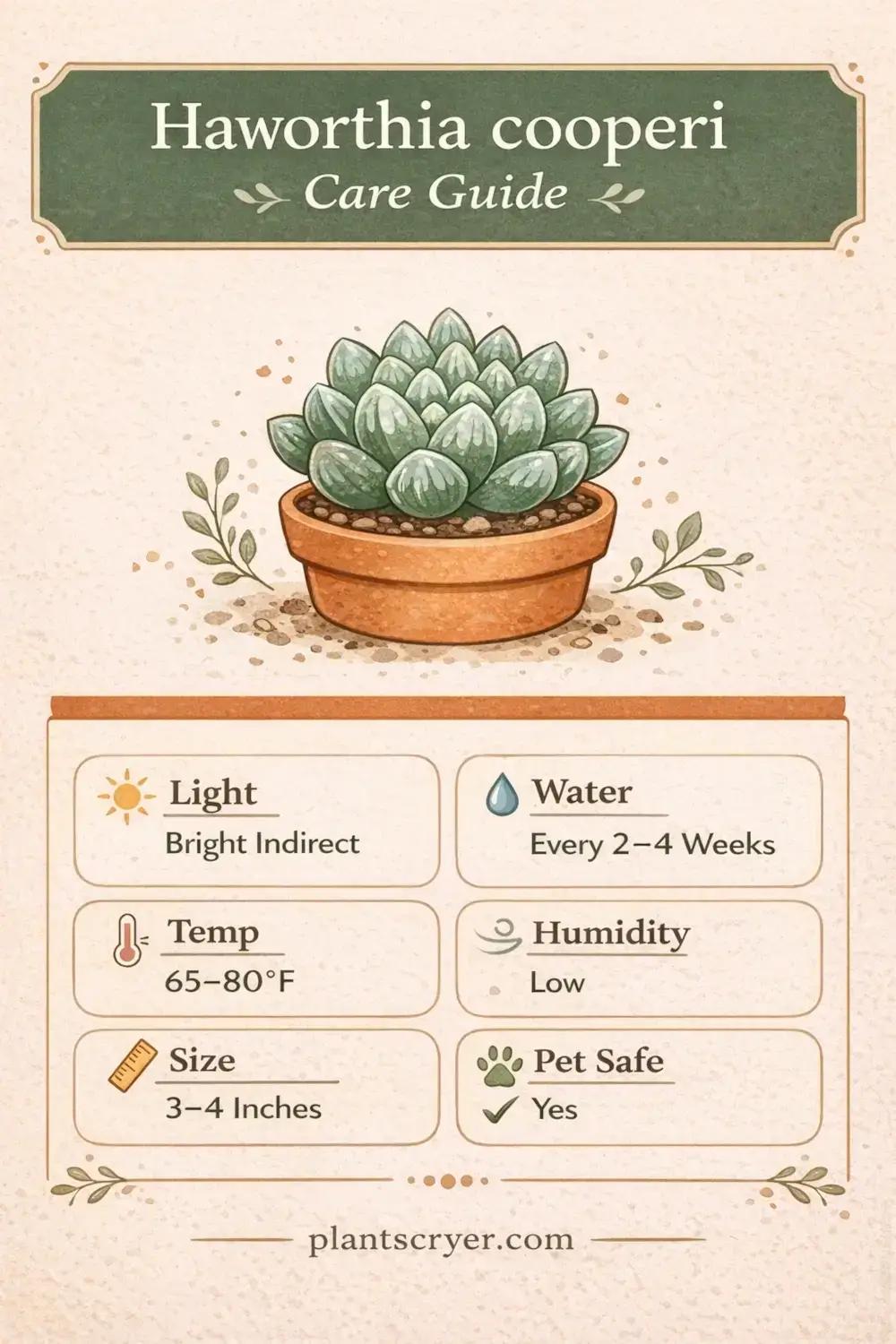
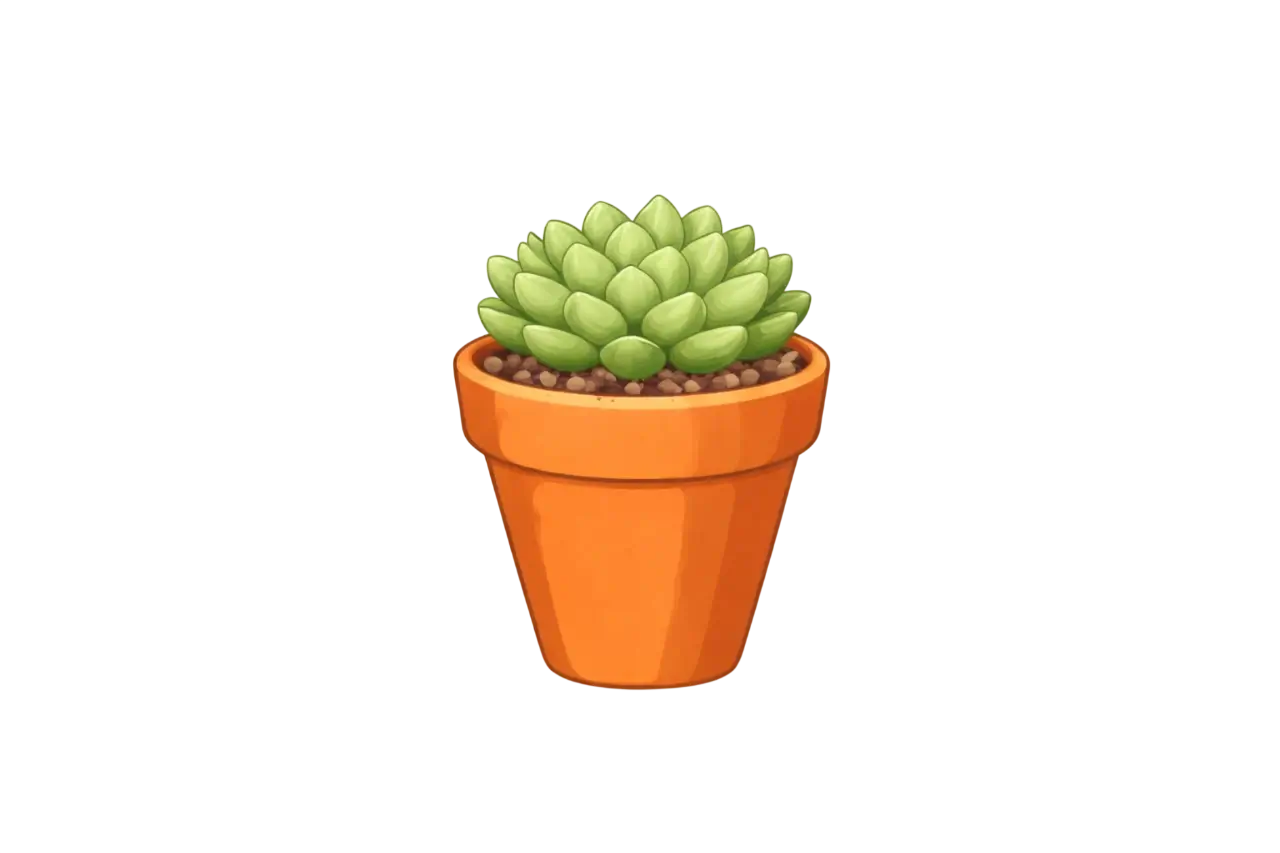
The Haworthia cooperi (also called the Window Haworthia, Glass Succulent, or Crystal Ball Succulent) is one of the most visually unusual plants you can grow indoors. Its rosette of fleshy, bubble-like leaves are tipped with small transparent "windows" that are nearly see-through. Hold one up to the light and you can watch it glow from the inside.
Native to the Eastern Cape of South Africa, it evolved partially buried in rocky soil with only its translucent tips exposed above ground. Those leaf windows act like tiny skylights, channeling filtered light down into the buried portions of the leaf where photosynthesis happens. That buried-in-soil origin explains the most important thing about caring for it: it wants filtered light rather than full sun, and it is extremely sensitive to overwatering.
It stays compact (3–4 inches across), grows slowly, and is completely non-toxic to cats, dogs, and children: making it one of the better desk or windowsill plants you can own.
A note on naming: Some botanical sources now classify this plant as Haworthiopsis cooperi following a genus reclassification. Both names refer to the same plant. You'll see either used depending on the source.
Quick Info
- LightMedium
- WaterLow
- Size2–4 inches
- HumidityLow
- Temp65–80°F (18–27°C)
- FloweringYes
- TypeSucculent
- Dog SafeYes
- Cat SafeYes
- Kid SafeYes
Toxicity Info
Varieties
Haworthia cooperi is highly variable, with several popular cultivars:
- H. cooperi var. truncata. Broad, flat-topped leaves that look like a cluster of green jelly candies or alien eggs. The most dramatic-looking variety.
- H. cooperi var. pilifera: Stubby leaves with a bluish-green tint and tiny soft hairs at the tips.
- H. cooperi var. obtusa: Dome-shaped, heavily transparent leaf tips. Very popular with collectors.
- H. cooperi var. picturata: Yellow-green leaves that develop a spherical, bloated shape as the plant matures.
Haworthia cooperi Care Guide
Light
Place your Haworthia cooperi in bright, indirect light. An east or north-facing windowsill is ideal. It can handle gentle morning sun but should be shielded from intense afternoon rays, which bleach the leaves white or cause a reddish discoloration.
Too much light: Leaves turn white, yellow, or reddish. Too little light: The plant stretches upward (etiolation), losing its compact rosette shape.
If moving the plant outdoors for summer, acclimate it gradually over 1–2 weeks. Even though it tolerates low light indoors, sudden high-intensity sun will burn it.
Watering
Overwatering is the primary way this plant dies. Haworthia cooperi stores water in its fleshy leaves and is highly drought-tolerant. When in doubt, don't water.
Water thoroughly only when the soil has completely dried out, then let it dry fully before watering again. General frequency:
- Spring and fall (active growth): Every 2–3 weeks
- Summer: Reduce if your home runs hot (above 85–90°F consistently); the plant may slow down significantly
- Winter: Once a month or less as growth slows in cooler conditions
When watering, tilt the pot gently afterward to drain any water pooled between the leaves: water sitting in the dense rosette significantly raises the risk of crown rot. Use our succulent watering calculator to dial in your specific schedule based on pot size and conditions.
Signs of overwatering: Mushy, yellowing, or water-logged leaves: especially at the base. Signs of underwatering: Wrinkled or shriveled leaves that don't plump back up after watering may indicate summer stress rather than drought. Don't water more aggressively if the plant is dormant.
Soil
Use a gritty, fast-draining succulent or cactus mix: something like this. Standard potting soil retains too much moisture and will cause root rot. Aim for a mineral-heavy mix: a good target is roughly 50–70% mineral grit (coarse perlite, pumice, or coarse sand) blended with potting mix. Fine sand can compact and reduce airflow around the roots, pumice or perlite are better choices.
A reliable DIY mix: equal parts potting soil, coarse perlite, and pumice.
Temperature
Haworthia cooperi is comfortable at 65–80°F (18–27°C): essentially standard indoor temperatures. It can briefly tolerate down to around 40°F (4°C) but should never experience frost. Keep it away from cold drafts near windows in winter, and away from heat vents that dry the air.
Fertilizer
A light feeder. Use a half-strength diluted succulent or cactus fertilizer: like this one: once in spring and once in early fall. Skip fertilizing entirely during peak summer heat and through winter. Over-fertilizing with nitrogen causes the leaves to grow bloated and weak.
Repotting
Repot every 2–3 years or when the plant has filled its pot with offsets. This plant does fine slightly root-bound, so don't rush it. Always use a pot with drainage holes, terracotta is ideal because it wicks moisture away from the soil faster than plastic or glazed ceramic. Choose a pot that is taller than it is wide to accommodate the plant's deep root system.
More Info
Why the Leaves Look Like Glass
The transparent leaf tips are a genuine biological adaptation called leaf windows. In the wild, Haworthia cooperi grows mostly buried in rocky soil. Only the glassy tips are exposed above the surface, acting as skylights that channel light down into the plant's interior. The stored water in the fleshy leaf tissue refracts and diffuses this light, allowing the chloroplasts deep inside the leaf to photosynthesize without exposing themselves to the drying heat of the surface.
This is why the plant tolerates lower light than most succulents. The windows are already optimizing whatever light enters. But "lower light" is relative: it still needs a reasonably bright spot near a window. A dark corner will cause it to stretch and collapse its compact shape over time.
Propagation
The easiest and most reliable method is offset (pup) propagation: small rosettes that form naturally at the base of a mature plant.
- Wait until the offset is at least 1–2 inches across and has begun forming its own roots
- Gently separate it from the parent plant, or use a clean sharp knife. Make sure to bring some roots with it
- Let the cut end callous in a warm, shaded spot for 1–2 days
- Plant in well-draining succulent mix and water lightly
- Place in bright indirect light and resume normal care after 2 weeks
Leaf cuttings are possible but significantly less reliable with this species. Offsets are the way to go.
Display Ideas
Haworthia cooperi's compact size and unusual appearance make it well-suited for:
- Terrariums (open ones only, closed terrariums trap too much humidity)
- Desk and shelf arrangements alongside other small succulents
- Small ceramic or terracotta pots that highlight the rosette shape
- Dish gardens mixed with other low-water succulents like snake plants or barrel cactus
Avoid grouping it with tropical houseplants that need frequent misting. The dry air that suits Haworthia cooperi is the opposite of what most tropicals want.
Common Problems
Mushy leaves or base: Overwatering or poor drainage. Let soil dry completely and check drainage holes. If you're also seeing mold in the soil, that's a secondary sign the mix is staying too wet.
Stretching / etiolation: Not enough light. Move to a brighter spot. An east-facing window is usually the sweet spot.
White, yellow, or red-tinged leaves: Too much direct sun. Move away from the window or filter light with a sheer curtain.
Wrinkled or shriveled leaves: Could be underwatering, or the plant is dormant. Water thoroughly and wait a few days. If the leaves plump back up, it was thirsty. If they stay wrinkled despite moist soil, it's likely dormant and needs less water, not more.
Mealybugs: White cottony clusters in the leaf crevices. Dab with a cotton swab dipped in rubbing alcohol, or treat with neem oil.
Spider mites: Fine webbing on leaves, usually in dry conditions. Rinse the plant with water and follow with neem oil.
Fungus gnats: Soil staying too wet. Increase time between waterings and consider top-dressing with dry sand.
FAQs
Yes. Non-toxic to cats, dogs, and children. One of the pet-safe succulents.
The transparent leaf tips are a natural adaptation called leaf windows. In the wild, the plant grows mostly buried in soil with only the clear tips exposed, channeling light into the buried leaf tissue for photosynthesis.
It tolerates lower light than most succulents. But "low light" is relative. It still needs a reasonably bright spot near a window. A dark corner will cause etiolation over time.
This is a naturally slow grower. It also slows significantly during winter cool-down (and in summer if your home is consistently above 85–90°F). If growth has stalled in spring or fall, check light levels and make sure it isn't being overwatered.
Same plant. Some taxonomists reclassified the Haworthia genus and moved several species including cooperi into the new Haworthiopsis genus. Both names are actively used.
Window Haworthia, Cooper's Haworthia, Glass Succulent, Crystal Ball Succulent, Cushion Aloe, Star Window Plant, and Pussy Foot.