
Why Is My Golden Pothos Getting Root Rot?
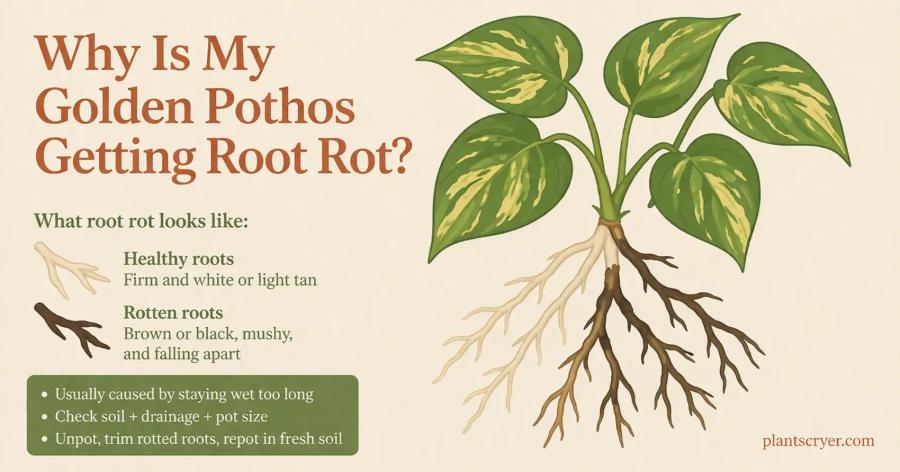
Root rot is the most common way golden pothos dies indoors, and it usually looks like something else at first. The earliest sign is yellowing leaves — which most people respond to by watering less. That helps, but if the roots are already rotting, pulling back on water alone won't save it. You have to unpot the plant and deal with the roots directly.
What causes it
Almost always one of three things: soil that stays wet too long, a pot without drainage holes, or a pot that's too large for the plant. When roots sit in waterlogged soil they're cut off from oxygen. Within days, pathogens in the soil start breaking down the roots — and once that starts it spreads fast.
Cold temperatures make it worse. A pothos sitting on a cold floor or near an AC vent in wet soil is at much higher risk than one in a warm spot with good airflow.
Watering on a fixed schedule without checking the soil is enough to cause rot over months, especially in winter when the plant barely drinks.
How to tell if that's what you have
The above-ground symptoms show up before most people think to check the roots:
Yellowing leaves starting at the base and working upward. Unlike normal lower-leaf aging, rot-related yellowing tends to hit multiple leaves at once and moves quickly.
Soft or mushy stems at the soil line. Healthy pothos stems are firm. If the base feels squishy, the rot has moved up from the roots into the stem.
Black or brown spots on leaves with a waterlogged look rather than dry crispy edges.
A sour smell from the soil. Healthy soil smells earthy — rot smells distinctly bad.
A pot that stays heavy and wet more than a week after watering. If the soil isn't drying out, the roots likely aren't taking up water.
To confirm, you have to unpot and look. Healthy roots are white or light tan and firm. Rotten roots are brown or black, mushy, and fall apart when touched.
How to save it
The earlier you catch it the better. A plant with a few rotted roots and mostly healthy ones has a good chance of recovery. One where more than half the root system is gone is harder — possible, but it needs careful handling.
Unpot and rinse the roots under lukewarm water to get a clear look.
Cut away every root that's brown, black, or mushy using clean scissors or pruning shears. Cut back to firm white tissue. If a root looks borderline, remove it — leaving questionable roots risks reinfection. Sterilize your tool between cuts if the rot is widespread.
Trim the leaves to match. This step gets skipped a lot. Roots support foliage — if you've removed a significant portion of the root system, the remaining roots can't support the same amount of vine. Cut back by roughly the same proportion as the roots you removed. It looks drastic but it gives the plant a real chance.
Treat the remaining roots. Spray the healthy roots with a diluted 3% hydrogen peroxide solution before repotting. It kills residual pathogens clinging to the healthy roots and reduces the chance of reinfection. Let them sit for a few minutes, then let the roots dry briefly — 30–60 minutes — before going into fresh soil.
Repot in fresh soil — never reuse the old mix, it harbors the same pathogens. A standard potting mix with added perlite works well. If you have cinnamon, dust the cut root ends lightly before potting — it has natural antifungal properties.
Use a pot with drainage holes. If the plant lost a lot of roots, downsize the pot — less soil volume dries out faster.
Aftercare
Water lightly for the first two to four weeks. The reduced root system can't take up much and the plant is under stress. Keep it in bright indirect light, away from cold drafts and direct sun.
Hold off on fertilizer for at least six weeks. Damaged roots are sensitive and fertilizer salts will burn them.
New leaf growth means the roots are re-establishing. Once you see new leaves, return to your normal watering routine.
Preventing it going forward
Always check the soil before watering. The top 1–2 inches should feel dry. Water the calendar instead of checking the soil and you'll eventually rot the roots.
Drainage holes are non-negotiable. Decorative pots without drainage work fine as cachepots with a nursery pot inside — just empty the saucer after watering.
Go up only one pot size when repotting. Oversized pots hold more moisture than the roots need and stay wet too long.
Cut watering frequency significantly in winter. The plant barely drinks when growth slows — what worked in summer will oversaturate the soil in January.
Frequently Asked Questions
Yes, if you catch it early enough. A plant with mostly healthy roots and only a few rotten ones has a good chance of full recovery. The key is removing all the damaged roots, repotting in fresh soil, and holding back on water while it re-establishes.
Overwatering and root rot often look identical above the soil — yellow leaves, drooping, soggy pot. The difference is that overwatering is the cause and root rot is the result. If pulling back on water doesn't improve things within a week or two, unpot and check the roots. Mushy brown or black roots confirm rot.
Water lightly immediately after repotting to help the soil settle, then hold back for the first two to four weeks. The reduced root system can't take up much water and the plant is under stress — too much water at this stage risks starting the rot cycle again.
The pathogens that cause root rot live in soil, not air. They won't jump between pots on their own, but contaminated soil or unsterilized tools can introduce them to healthy plants. Don't reuse soil from a rotted plant and clean your tools before working on other plants.
With healthy roots remaining and good aftercare, most plants show new growth within four to six weeks. Full recovery — a full canopy and normal growth rate — typically takes a few months depending on how much of the root system was lost.
For the full golden pothos care guide including watering schedule, light requirements, and fertilizing, visit our Golden Pothos Care Guide.