How to Care for Espostoa Cactus
Espostoa lanata
 Save
Save
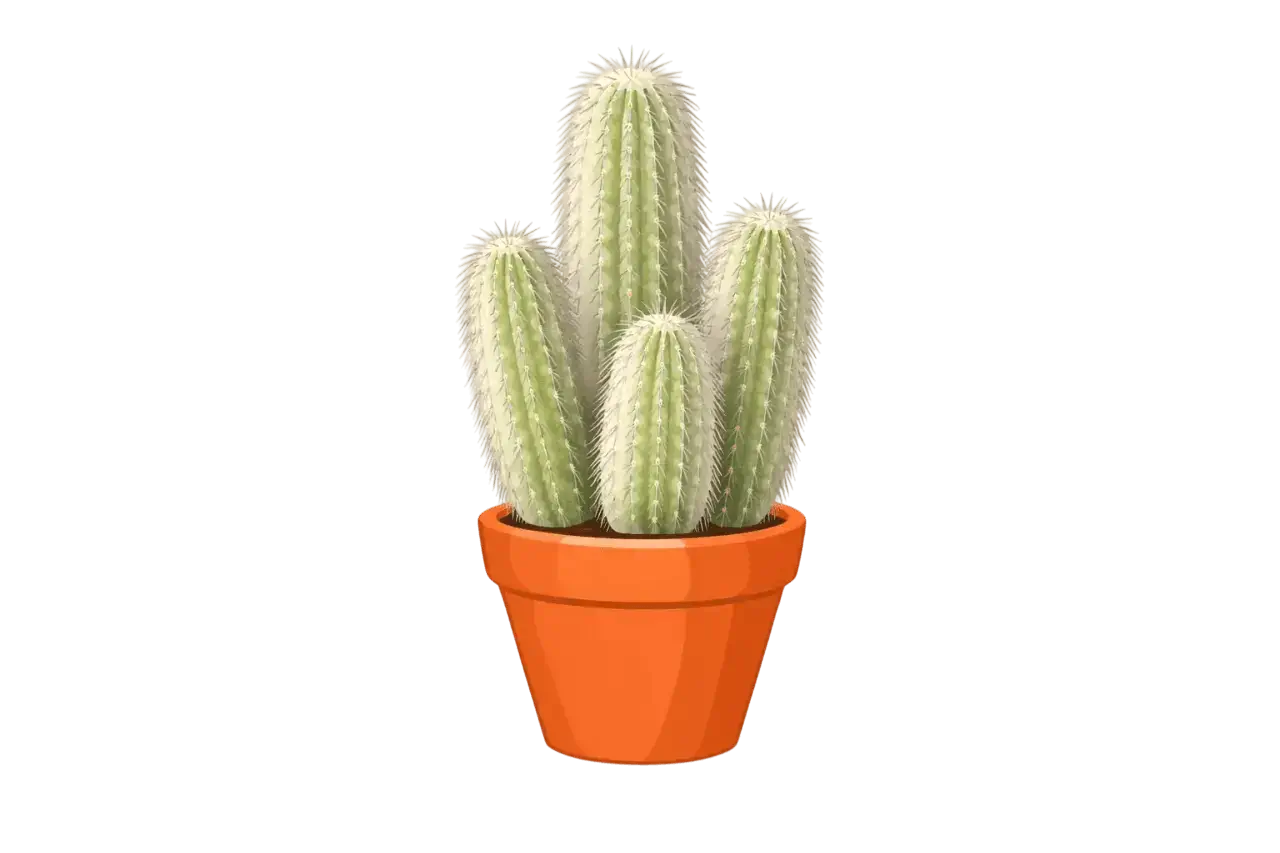
Espostoa lanata (the Peruvian old man cactus) is one of the most distinctive columnar cacti you can grow indoors. The dense coat of white woolly hair covering it from base to tip looks almost impossibly soft, but don't be fooled: sharp spines hide underneath. Native to the dry western slopes of the Andes in Peru and Ecuador, it grows at high altitudes where sunlight is intense, temperatures swing dramatically between day and night, and rainfall is minimal. Replicate those conditions indoors and it's low maintenance. Get them wrong and it declines slowly, which makes problems easy to miss until they're serious.
Espostoa lanata vs Cephalocereus senilis: Which Do You Have?
Two cacti share the "old man cactus" common name and they're regularly confused at plant shops.
This page covers Espostoa lanata: the Peruvian old man cactus, native to the Andes of Peru and Ecuador. Its white wool conceals sharp, prominent central spines. It tends to branch at the base as it matures and grows at high altitude, giving it slightly better cold tolerance than its Mexican cousin.
Cephalocereus senilis is the Mexican old man cactus. Same shaggy look, different origin. Its hidden spines are less prominent. Care is similar but not identical. If yours came labelled as "old man cactus" without a Peruvian or Espostoa reference, see our old man cactus guide
Quick Info
- LightBright
- WaterLow
- SizeUp to 2–3 feet indoors
- HumidityLow
- Temp60–85°F (15–29°C)
- FloweringYes
- TypeCactus
- Dog SafeYes
- Cat SafeYes
- Kid SafeYes
Toxicity Info
Espostoa Cactus Care Guide
Light
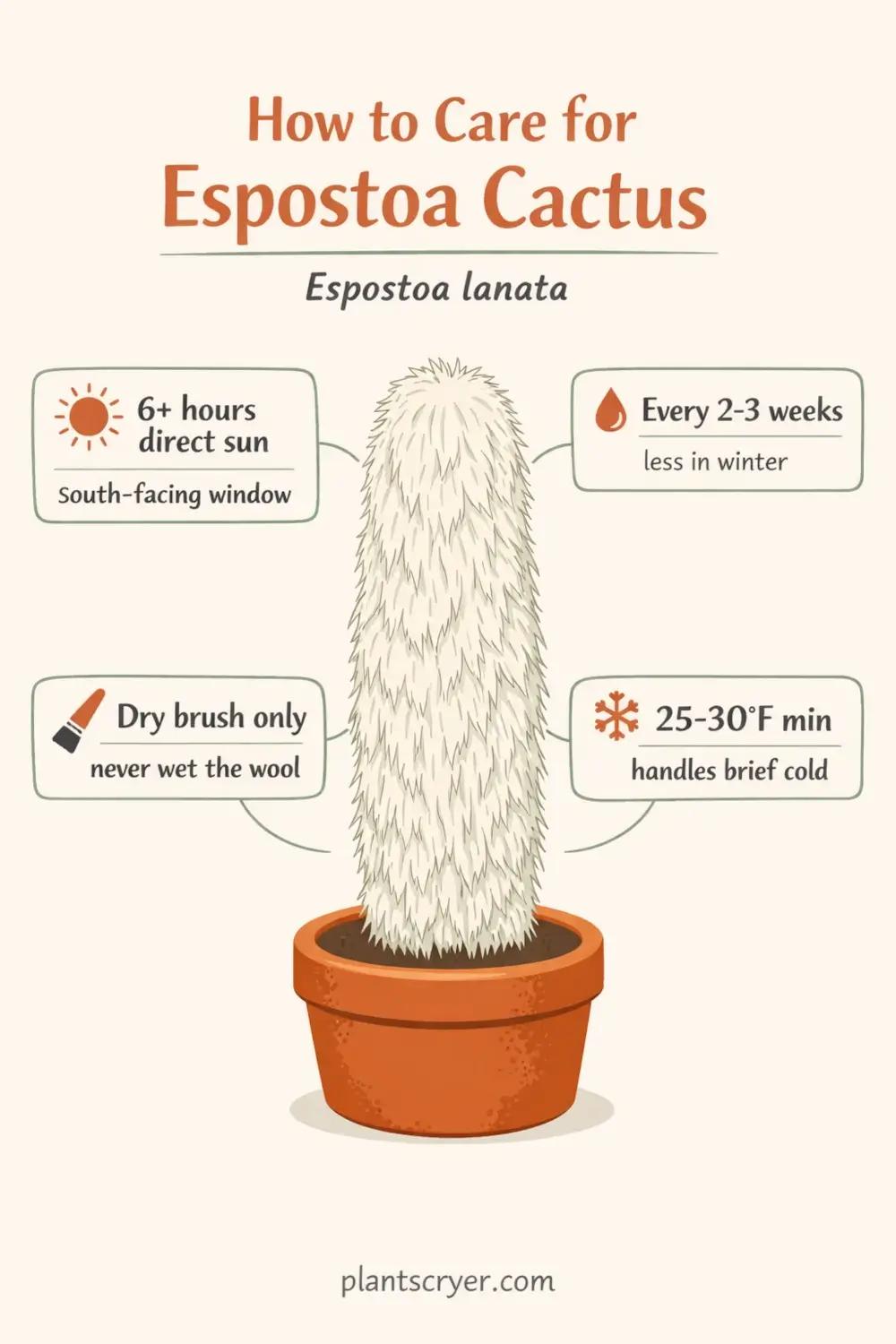
Espostoa lanata needs as much direct sun as you can give it indoors. A south-facing window with 6 or more hours of direct sunlight daily is the target. This plant grows on open Andean hillsides at high altitude where UV intensity is extreme: the white wool evolved specifically to reflect that intense light and insulate the stem against cold nights. A plant getting enough light maintains dense, compact white hair and grows slowly upward. One not getting enough light stretches, producing elongated stem sections with sparse hair coverage. That stretching is permanent.
A full-spectrum grow light run 12 to 14 hours daily works well in darker rooms. Position it close enough to deliver real intensity.
Watering
Deep and infrequent. Every 2 to 3 weeks during spring and summer is a reasonable starting point. In autumn and winter, cut back to once a month or less. Some plants in cool dim conditions go 6 to 8 weeks without any issue. Always let the soil dry out completely before watering again. The soak and dry method works well: water thoroughly until it drains freely from the bottom, then leave it alone until completely dry.
Never let water touch the white wool. Moisture trapped in the hair against the stem causes rot and permanent brown discolouration. Water at soil level only. Bottom watering is ideal: place the pot in a shallow tray of water for 15 minutes and let the soil absorb from below, keeping the wool completely dry.
Use the succulent watering calculator for a calibrated starting interval based on your light level, pot type, and season.
Soil and Pot
Fast-draining soil is essential. A commercial cactus and succulent mix works well, or mix regular potting soil 50/50 with perlite. Water should flow through almost immediately after watering. If it pools on the surface, the mix is retaining too much moisture.
Terracotta pots are the best choice. The porous clay wicks moisture away from the root zone between waterings, which matters especially for a plant this sensitive to overwatering. Drainage holes are required.
Don't overpot. Espostoa has a relatively compact root system and too much soil volume holds moisture the roots can't use. Go up one pot size when repotting, no more.
Temperature
Espostoa lanata grows at high altitude in the Andes and handles temperature swings better than most cacti. It's comfortable between 65 and 85°F indoors and tolerates brief dips to around 25 to 30°F in dry conditions. Sustained frost or prolonged cold will damage it. Keep it away from cold drafts, cold window glass in winter, and air conditioning vents. The combination of cold and wet is what kills it. Cold alone it can handle briefly.
Caring for the White Wool
The wool is the defining feature of this plant and it needs more attention than most care guides give it.
Dust and debris accumulate in the hair over time, dulling the white coat and giving pests somewhere to hide. Clean it once or twice a year with a soft dry brush, a clean soft-bristle paintbrush is ideal. Brush gently downward from the top to dislodge dust without matting the fibres.
Never mist, spray, or pour water over the wool. Moisture sitting in the hair against the stem is the primary cause of brown patches, rot, and fungal problems. Good airflow around the plant helps keep the wool dry between waterings.
Inspect the stem occasionally by parting the wool and checking the green column underneath. Firm and green is healthy. Soft, mushy, or discoloured patches at the base mean overwatering or rot developing.
As Espostoa matures it may develop a cephalium: a dense, often differently coloured woolly patch along one side of the upper stem. This is where flowers eventually emerge. It's a sign of a healthy, maturing plant, not a problem.
Fertilizing
Light feeder. Apply a cactus fertilizer diluted to half strength once a month during spring and summer only. Stop completely in autumn and winter. Over-fertilizing causes weak, soft growth. This is a naturally slow grower. Feeding won't speed it up significantly.
Propagation
Espostoa lanata can be grown from seed or stem cuttings. Seeds germinate reasonably well in warm conditions in a gritty well-draining mix, but the characteristic white hair takes several years to develop and most people buy established plants.
Stem cuttings are possible but the thick woolly stem needs a longer callous period than most cacti: at least a week in a warm, dry, airy spot before placing in dry cactus mix. Don't water until you see signs of new growth. Note that young plants grow relatively quickly in their first couple of years then slow significantly as they mature.
Common Problems
Rot at the base: overwatering or moisture trapped in the wool. Unpot and check the roots. Healthy roots are pale and firm. Rotten roots are dark, soft, and smell bad. See the root rot guide and the overwatered plant guide for recovery steps.
Brown or matted wool. Moisture contact is almost always the cause. Switch to bottom watering and keep the wool completely dry. Browned patches won't recover but new growth above will come in white.
Stretching and etiolation: not enough direct light. The stem elongates with wider gaps and sparser hair coverage. Move to the brightest available spot. Stretched sections are permanent.
Scale and mealybugs: hide in the wool and easy to miss. Part the hair regularly and inspect the stem, especially near the base. Treat with diluted neem oil applied carefully with a cotton swab directly to the stem, not over the wool.
FAQs
Every 2 to 3 weeks in spring and summer, once a month or less in winter. Always let the soil dry completely before watering. Water at soil level only: never over the wool.
Brown patches in the white wool almost always mean moisture contact: from watering over the plant or from high humidity. Switch to bottom watering and improve airflow around the plant. Already-browned patches won't recover but new growth will come in white.
They share the common name but are different plants. Espostoa lanata is the Peruvian old man cactus, native to the Andes of Peru and Ecuador. Cephalocereus senilis is the Mexican old man cactus.
Yes, as long as it gets plenty of direct sun. A south-facing window with 6 or more hours of direct light daily is the minimum. It will decline in low-light rooms and stretch toward the nearest light source.
The white hair is made of modified spines that evolved to reflect intense high-altitude sunlight and insulate the stem against cold Andean nights. It looks soft but conceals sharp central spines underneath. Always handle with gloves when repotting.
Possibly, but only on mature plants after several years. Flowers emerge from the cephalium: a dense woolly patch that develops along one side of the upper stem on mature plants. They are small, funnel-shaped, white to purple, and nocturnal. Don't expect flowering as a houseplant unless the plant is mature and conditions are ideal.