How to Care for Bunny Ear Cactus
Opuntia microdasys
 Save
Save
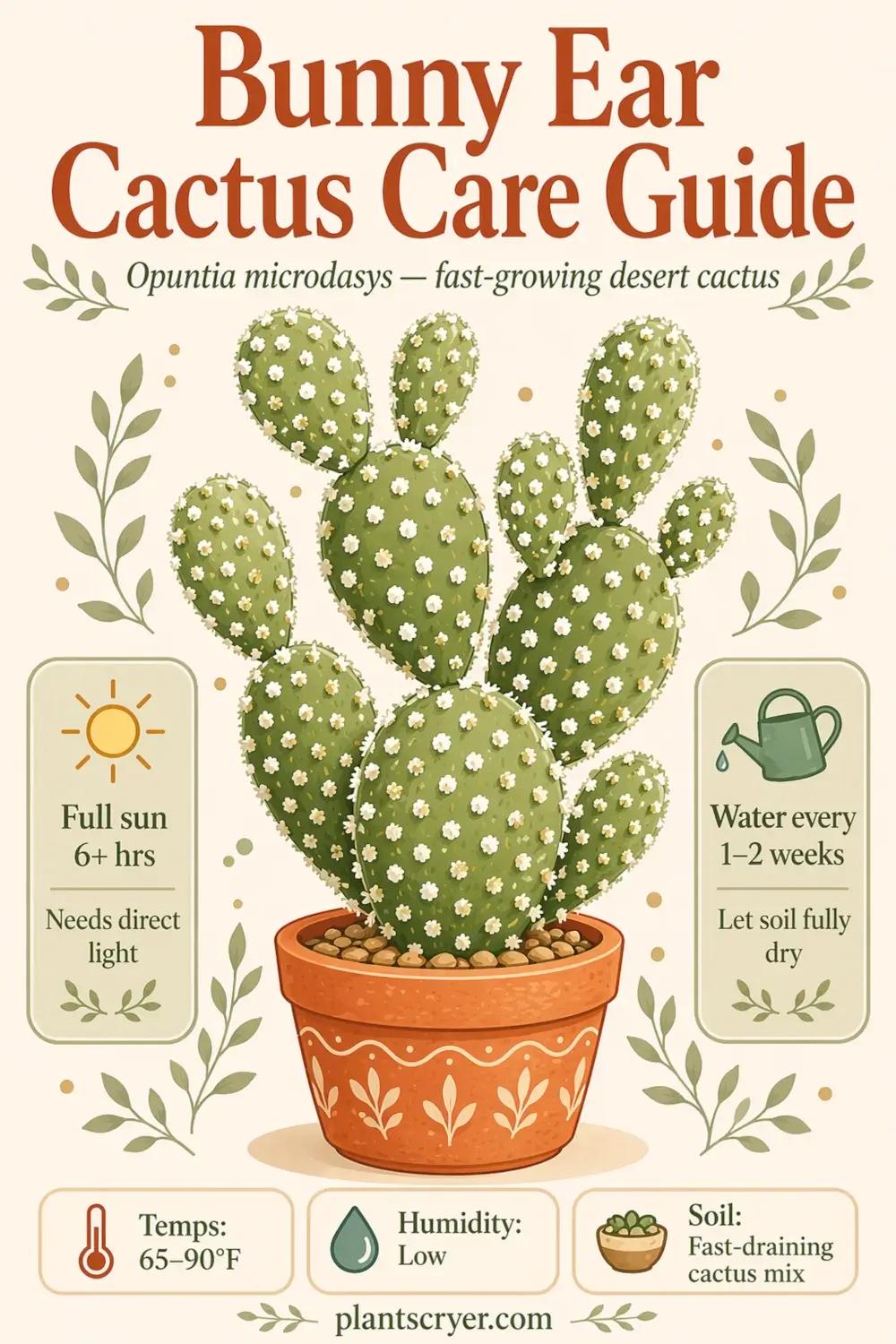
Bunny ear cactus (Opuntia microdasys) looks like it would be soft to the touch. It is not. Every white or yellow dot on those flat pads is a cluster of glochids: hair-fine, barbed spines that detach at the slightest contact and embed in skin where they are nearly impossible to see and painful to remove. Handle this plant with thick leather gloves or folded newspaper, never bare hands.
Native to the deserts and scrublands of northern Mexico, this Opuntia grows as a spreading shrub that can reach 2 to 3 feet tall and 4 to 6 feet wide in the ground. Indoors in a pot it stays much smaller, typically under 18 inches, growing slowly by adding new flat pads one or two at a time during the warm months. The pads branch in pairs that look like rabbit ears, which is where the common name comes from.
Mature plants produce creamy yellow, bowl-shaped flowers in spring followed by red to purple fruit, but indoor blooming is rare. It requires a winter cool period (50 to 55°F for several weeks) to trigger flower buds, and most heated homes do not get cold enough. If you want flowers, an unheated room or enclosed porch through winter is the way to get them.
Non-toxic to cats, dogs, and humans. The glochids are the only hazard, but they are a serious one. Place this cactus where nobody will brush against it accidentally.
Quick Info
- LightBright
- WaterLow
- Size2 to 3 feet tall, 4 to 6 feet wide (outdoors); stays smaller in containers
- HumidityLow
- Temp50–85°F (10–29°C)
- FloweringYes
- TypeCactus
- Dog SafeYes
- Cat SafeYes
- Kid SafeYes
Is Bunny Ear Cactus Toxic?
Pets: Non-toxic to cats and dogs. The glochids (barbed hair-like spines) are the real danger. They detach on contact and embed in skin, mouths, and eyes. Keep well out of reach of pets and children.
Kids: Non-toxic if ingested. Glochids cause skin and mucous membrane irritation on contact. Keep out of reach of children.
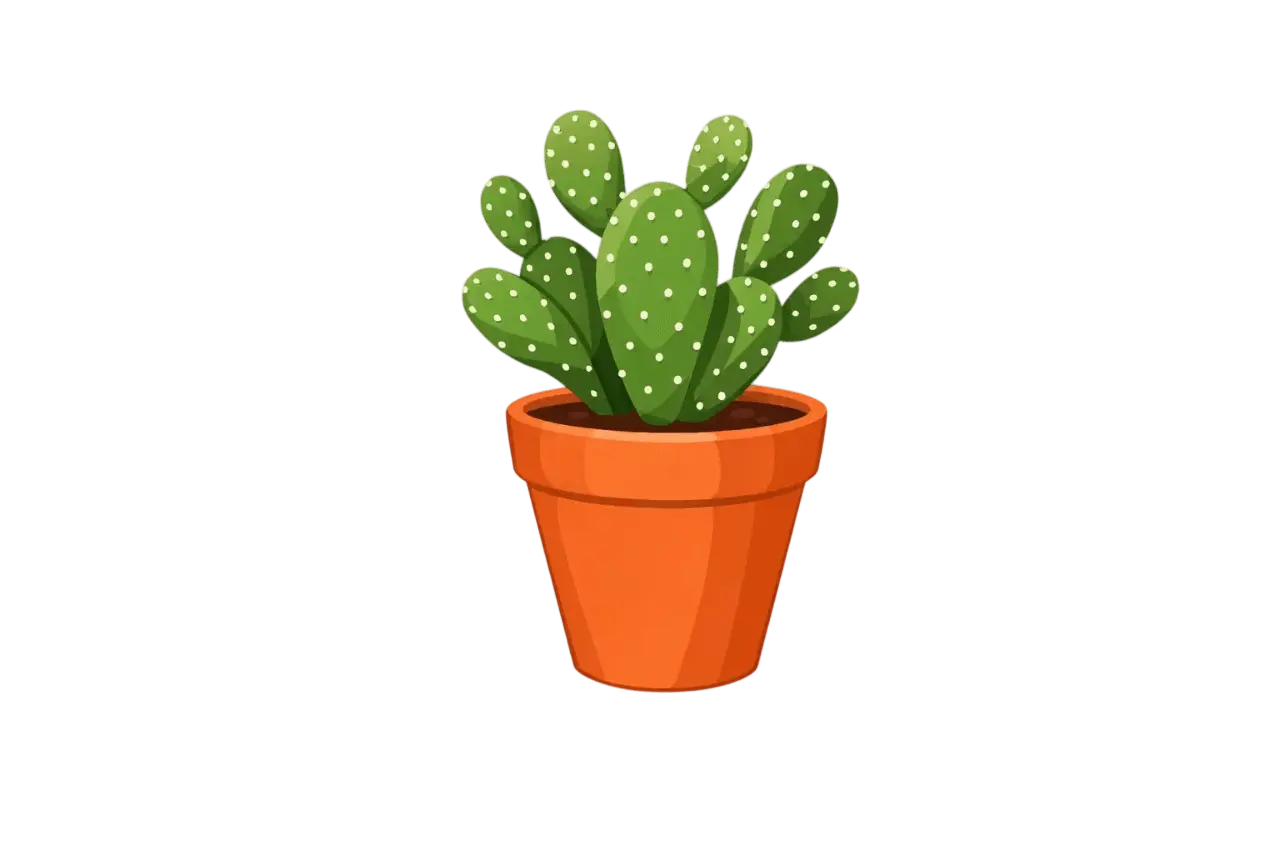
Bunny Ear Cactus Care Guide
Light
Full sun. Bunny ear cactus needs at least 6 hours of direct sunlight daily. A south-facing window is ideal indoors. East or west windows work if the plant gets several hours of unobstructed direct light. In its native Mexican desert habitat, this plant grows in full, unfiltered sun all day.
Without enough direct light, new pads grow thin and elongated instead of the compact oval shape that gives the plant its character. This etiolation is permanent on existing pads. If your brightest window still falls short, a grow light running 12 to 14 hours daily can supplement. Unlike many houseplants, bunny ear cactus actively benefits from some direct afternoon sun and will not burn in a south-facing window.
Watering
Soak and dry. Water thoroughly until it drains from the bottom, then do not water again until the soil is completely dry all the way through. During the growing season (spring through early fall) this is roughly every 1 to 2 weeks. In winter, cut back to once every 3 to 4 weeks or less. The pads store water, so the plant handles drought far better than excess moisture.
Drooping or soft pads are the first sign of a watering problem, but overwatering and underwatering both produce the same symptom. Check the soil before assuming which one it is. A moisture meter is helpful because cactus soil can feel dry on top while still being moist at the bottom of the pot.
Soil
Fast-draining, gritty mix. A cactus and succulent potting mix works as a base. For extra drainage, mix in 20 to 30% perlite, pumice, or coarse sand. The goal is a mix that drains within seconds of watering and dries out within a few days. Standard potting soil holds far too much moisture and will rot the roots.
Temperature
50 to 85°F (10 to 29°C). Handles heat well and tolerates temperatures up to 100°F. Not frost-hardy; keep above 50°F at all times. Normal room temperatures through spring and summer are fine. For the best chance of flowers, provide a winter cool period of 50 to 55°F for 6 to 8 weeks. An unheated spare room or enclosed porch works. Without this cool period the plant grows fine but is unlikely to bloom.
Fertilizing
Light feeder. Apply a succulent fertilizer diluted to half strength once a month during spring and summer. A low-nitrogen formula (like 5-10-10) encourages root and pad development over soft, stretchy growth. Stop fertilizing entirely from October through February during dormancy.
Repotting
Every 1 to 2 years, or when the plant has clearly outgrown its pot. Use a shallow, wide container with drainage holes, one size up from the current pot. Bunny ear cactus spreads more than it grows tall, so width matters more than depth. The biggest challenge is handling: wrap the plant in several layers of newspaper or use thick leather gloves to grip the base pad. Even then, some glochids will transfer. Do not use thin garden gloves; the barbs go right through fabric.
Propagation
Propagation by pad cuttings is simple. Using tongs or thick gloves, twist or cut a pad at the joint where it connects to the parent. Let the cut end dry and form a callus for 3 to 5 days in a dry, shaded spot. Planting before the callus forms invites rot. Insert the calloused end about half an inch into dry cactus mix. Do not water for the first 2 weeks. After that, water lightly and roots should develop within 3 to 4 weeks. New pads will emerge from the top of the cutting once it is established.
Safe Handling
Glochids are the defining care challenge of this plant. They are barbed, nearly invisible once embedded in skin, and extremely difficult to remove with tweezers because they break when pulled. The most effective removal method is pressing duct tape or white glue (let it dry, then peel off) over the affected area. Prevention is easier than removal: always use thick leather gloves, tongs, or folded newspaper when handling. Keep the plant where people and pets will not brush against it. Even a light touch transfers hundreds of glochids.
Common Bunny Ear Cactus Problems
Drooping or soft pads Both overwatering and underwatering cause pads to go soft and droop. Check the soil before acting. If wet, stop watering and let it dry completely. If bone dry and the pads look shriveled, give a thorough soak. Chronically wet soil leads to root rot, which is harder to recover from than drought stress.
Stretched or thin pads Not enough light. New pads that grow elongated and narrow instead of the characteristic oval shape are etiolating. Move to a spot with more direct sun. The stretched pads will not change shape, but new growth will come in compact once light is adequate.
Root rot Soft, dark base pads with brown or black mushy roots. Caused by overwatering or soil that stays wet too long. If caught early, remove rotted roots and pads, let the cuts callus for a few days, and replant in fresh dry cactus mix. Root rot vs soil mold explains how to confirm the diagnosis.
Mealybugs White cottony clusters that hide in the pad joints and under glochid clusters. They blend in easily with the white glochids, so inspect closely. Treat with rubbing alcohol on a cotton swab for small infestations or neem oil for larger ones. Check the undersides of pads and the joints between them, which are the favourite hiding spots.
Corking at the base Older pads near the base sometimes develop a brownish, woody texture. This is corking, a natural process where the cactus converts soft tissue to a harder bark-like surface for structural support. It is not disease or rot. The corked area will be hard and dry, not soft or mushy. No action needed.
FAQs
Every 1 to 2 weeks during spring and summer, allowing the soil to dry completely between waterings. In winter, reduce to once every 3 to 4 weeks or less. The pads store water, so the plant tolerates drought much better than overwatering. If in doubt, wait a few more days.
Bunny ear cactus does not have traditional spines. It has glochids: clusters of hair-fine, barbed bristles that detach on contact and embed in skin. They are not venomous or toxic, but they are painful, nearly invisible once embedded, and very difficult to remove. The best removal method is pressing duct tape or dried white glue over the area and peeling it off. Always handle with thick leather gloves.
Drooping pads have two opposite causes: overwatering (roots are waterlogged or rotting) and underwatering (pads are dehydrated). Check the soil. If it is wet, let it dry completely and check the roots for rot. If it is completely dry and the pads look shriveled, give a thorough soak. The soil moisture tells you which fix to apply.
Rarely. Indoor blooming requires a winter cool period of 50 to 55°F for 6 to 8 weeks, which most heated homes cannot provide. If you can keep the plant in an unheated room or enclosed porch through winter and then return it to full sun in spring, you may get creamy yellow flowers. Mature plants (several years old) are more likely to bloom.
Non-toxic to cats, dogs, and humans. The danger is physical, not chemical. The glochids detach easily and can embed in a pet’s skin, mouth, or eyes. Place the cactus well out of reach. If a pet contacts the plant, use tape to remove visible glochids and consult a vet if the animal shows signs of eye or mouth irritation.
Twist or cut a pad at the joint using tongs or thick gloves. Let the cut end dry for 3 to 5 days until a callus forms. Insert the calloused end half an inch into dry cactus mix and do not water for 2 weeks. After that, water lightly. Roots develop in 3 to 4 weeks. New pads grow from the top once established.
Thin, elongated pads are a sign of insufficient light. The plant needs at least 6 hours of direct sun daily. Move it to a south-facing window or add a grow light. The stretched pads will not change shape, but new pads will grow compact once light levels improve.